 Sign In










Do you want to rank on page 1 of Google? Well today’s your lucky day because I am going to show you how step-by-step.
But first… there’s a joke that asks, “Where should you bury something that you don’t want people to find?”
Answer: On the second page of Google.
Sure, it’s corny. But there’s still some truth to that statement.
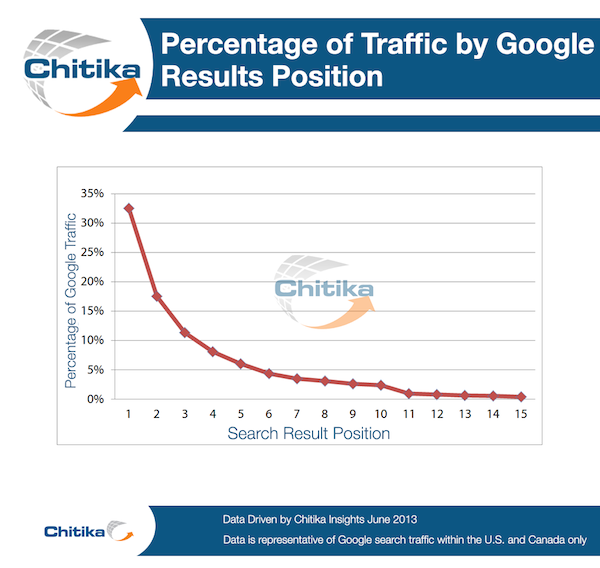
75% of people will never scroll past the first page on a Google search, which is why you need to rank on page 1 of Google.
You can’t afford to be ranking on the second, third, or fourth page.
You just won’t get the clicks and traffic you need to make SEO worth your time and money.
And you need that organic traffic because 93% of online experiences begin with a search engine.
On top of that, there are over 1 trillion searches every single month!
A good SEO presence has the power to drive inbound traffic that could grow your business for years to come.
But the average-joe website owner doesn’t have the power to rank on the first page of Google for the best keywords.
There are already countless high-profile websites capitalizing on the top industry keywords.
And there are thousands of other bloggers trying to rank for that keyword as well.
That means the deck is stacked. And it’s not in your favor.
You shouldn’t give up, though! There are a few proven methods that I’ve used and found success with to show up on the first page of Google.
And the best part is that you don’t need the authority or links to rank for many of these keywords.
I can teach you how to show up for them anyway.
First, I’ll explain why you’re doomed for now.
And second, I’ll show you how to use this problem to your advantage to rank on the first page of Google despite your shortcomings.
Ready to get started? Let’s do it.
Your efforts today will allow you to rank on the first page of Google soon
I’m going to be straight with you:
You’re pretty much doomed. If you’re trying to get noticed and rank organically on the first page for popular industry keywords like “SEO Guide,” it’s not going to happen anytime soon.
If you’re just starting out, you’ve got no domain authority, a tiny backlink profile, and hardly any traction as a result.
And if you take a look at Google’s first page results for “SEO Guide,” you’ll quickly see what the major problem you’re up against is:
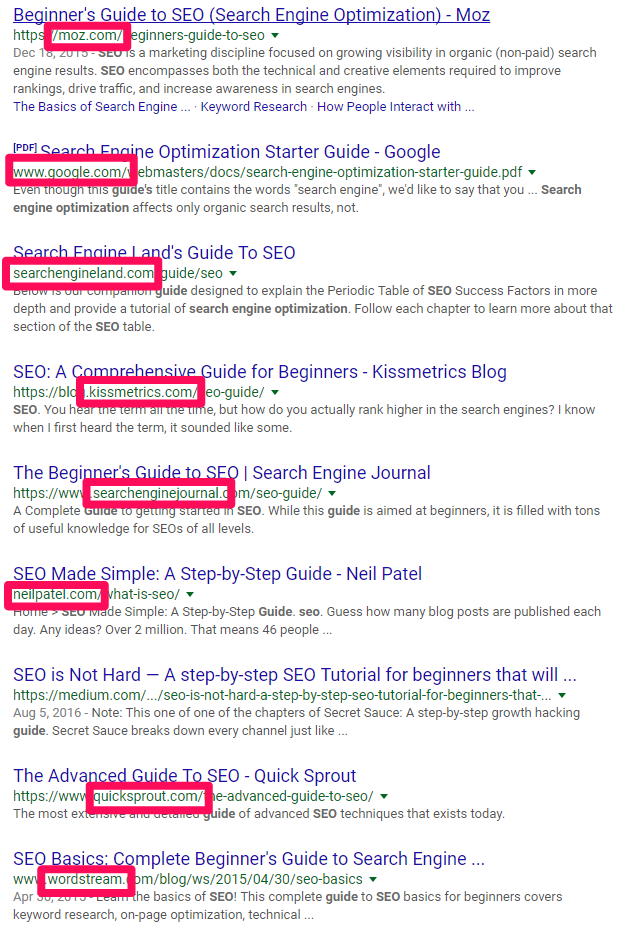
See what I mean? The domain authorities of these top page rankings are going to blow any new website out of the water.
Moz? 93 domain authority. Kissmetrics? 85.
How many backlinks does that #1 spot have? 18,389 to be exact.
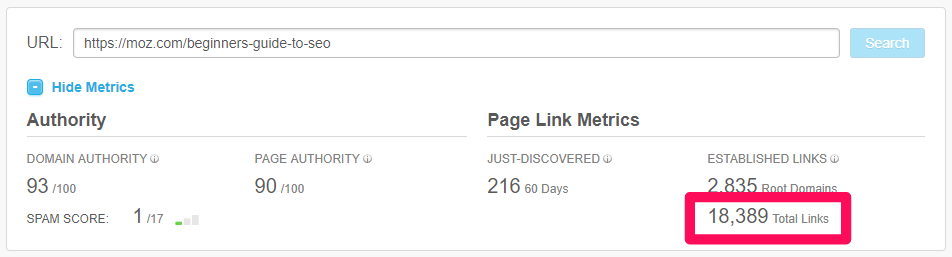
That’s more than most of us will get on our entire site. Ever.
Plus, these guides have been up for years!
The Beginner’s Guide to SEO from Moz has been up for five years or so. Their website claims that over three million people have read it.
You get the idea.
Sites that have been around for a long time are going to dominate the top page rankings for popular industry keywords.
These people are producing stellar content and getting countless backlinks to their content.
If you’re just starting out, you need to pursue different strategies.
You can’t afford to wait around for five years to rank on the bottom of the first page for “SEO Guide.” Not with the number of hours and dollars it would take.
But that’s OK!
Just realize that you’re not going to rank organically for it right now.
The good news is that you don’t need to. There’s still hope.
The trick is to readjust your strategy and use different methods to still show up for your target keywords.
Here’s how to do it.
1. Start by dominating long-tail keywords
There are more long-tail keywords out there than big, popular ones.
Here’s a simple comparison to explain the difference:
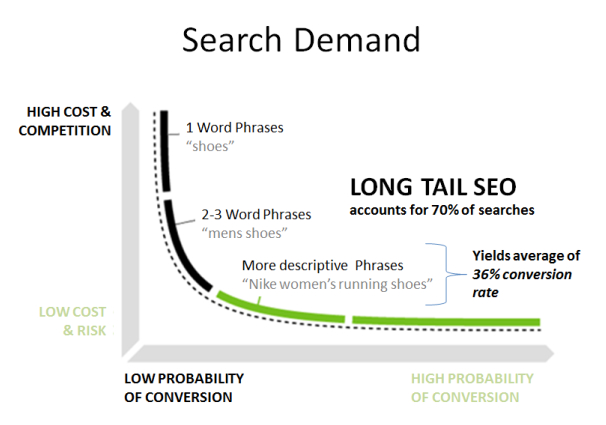
And my own beautifully simple example:
- ‘Head’ keyword = “SEO guide”
- Long-tail = “SEO guide for small businesses 2017”
Each might not send you a ton of traffic. However, long-tail keywords do in total when you add a bunch of them up.
For example, I was able to increase my organic traffic to 173,336 visitors monthly using a long-tail strategy.
Long-tail searches also make up the majority of searches on Google.
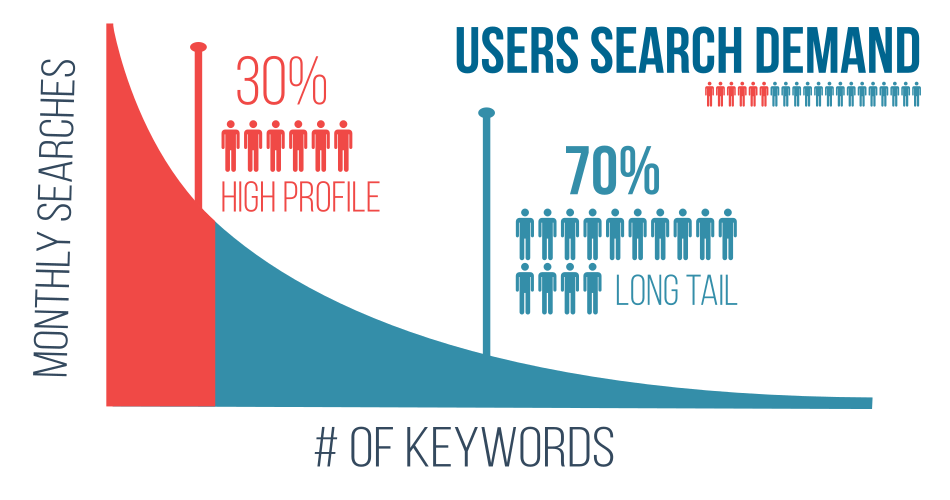
You should target these long-tail keywords because they’re easier to rank for. And that means they’ll usually take less time and money.
So you’re not going up against the mammoth, industry-leading companies on these search engine result pages (SERPs).
Still skeptical of the power of long-tail strategies? I was, too, at first!
But then I read about how Amazon makes 57% of their sales from long-tail keywords.
How? Because long-tail searches are looking for very specific information, whereas short-tail keywords are more general.
If you can give the searcher specific information, they’re going to stick around and convert.
Here’s an example SERP of a long-tail keyword search to help you get an idea of how it’s possible to rank for them.
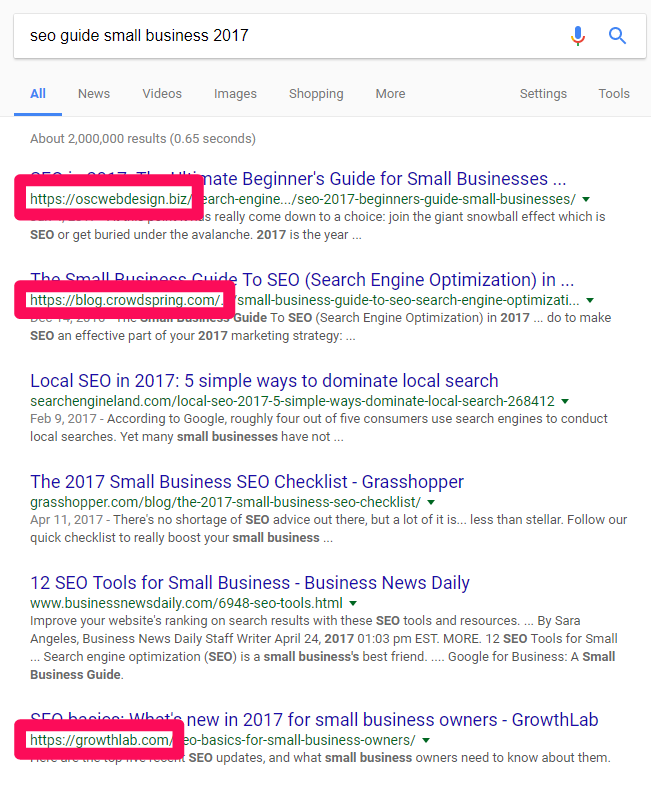
Do you notice that the SERP isn’t overcrowded with industry influencers and top blogs?
Sure, there are still a few in there, but the top-ranking sites are ones that you’ve probably never heard of.
Instead of going up against a website with a 93 domain authority, here’s what the first ranking page for this long-tail search query looks like:
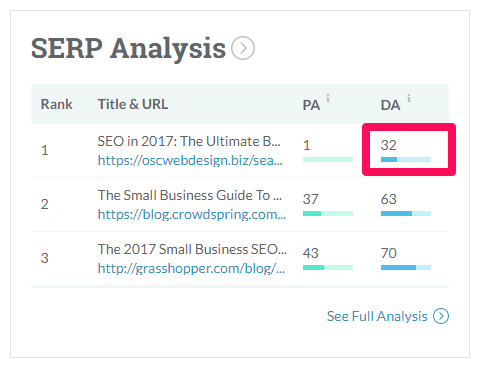
Now I’ve got your attention, right?
So sure, this keyword might have lower search volume than “SEO Guide.”
But remember that these long-tail keyword conversion rates are almost always higher.
And you know what I preach:
Traffic doesn’t mean anything if people don’t convert!
If you’re getting 50,000 visitors a month from a popular keyword, but nobody is converting, it’s not doing you much good.
Instead of putting all your eggs in one basket for “SEO Guide,” create more content and optimize it for long-tail searches to dominate the SERPs!
Now let’s talk about a few ways to rank for the more popular terms that you just can’t seem to resist. And let’s do it without any ‘classic’ SEO.
2. Pay to reach the top of the AdWords search network
Now, you may be thinking, “Neil, my friend, my mentor, you do know that AdWords is not organic search, right?”
Well, just hear me out on this one, okay?
I’m going to start this one off with an example because it’s the only way to understand how truly effective this strategy can be.
So let’s fire up a search for “Best CRM.”
Here’s what the results page looks like:
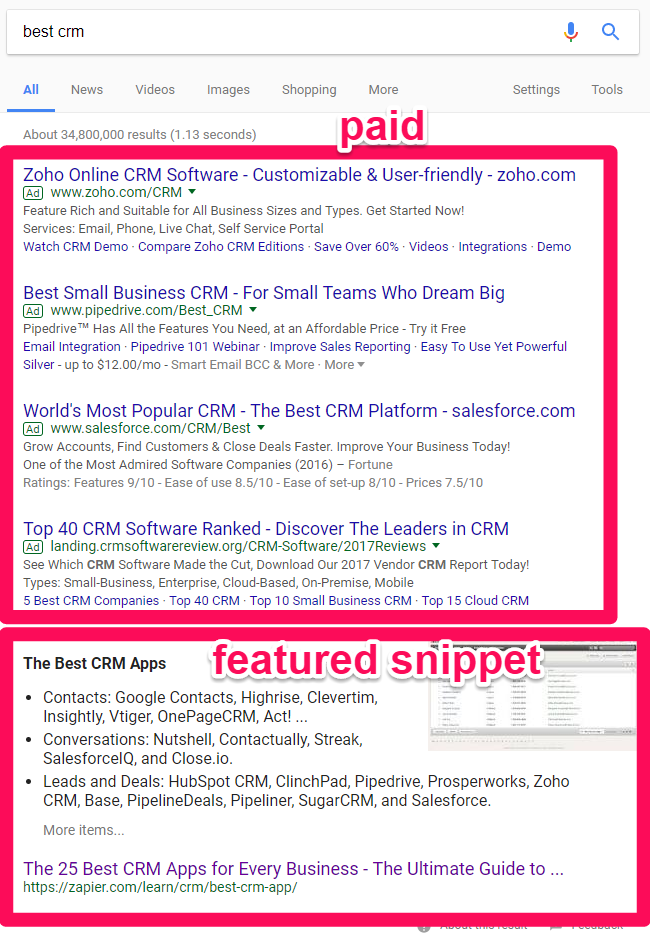
It looks a bit different, doesn’t it? There’s not a single organic result until you scroll past the fold.
You’ve got four AdWords search network ads and a featured snippet from a single organic result.
It takes the user multiple steps just to reach the organic results and decide what to click on this SERP.
But something even more important jumps out at me here.
The keyword intent and the results that appear don’t line up.
Here’s what I mean.
Check out the first three ads:
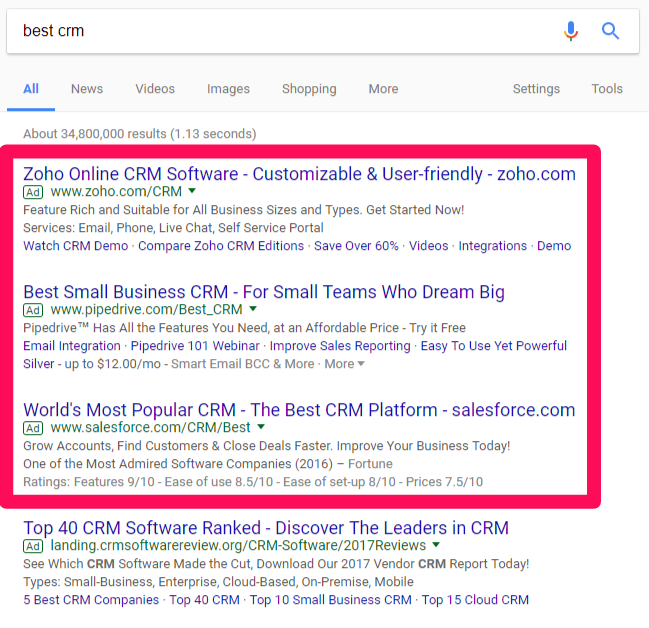
They all talk about their own CRM and say that they’re the best in the industry.
That’s not surprising, necessarily. Everyone wants their products and services to be seen as the best.
But for this search, that’s a problem.
And more importantly, this is an opportunity for you to show up for that keyword.
Here’s why.
What are people looking for when they type in “Best CRM?”
Are they looking for Salesforce or Zoho or Pipedrive right now?
No. They’re looking for a CRM comparison to see which one is the best. They want to consider their alternatives and options before deciding.
You can validate this by looking at the organic results, which all feature comparison articles and reviews.
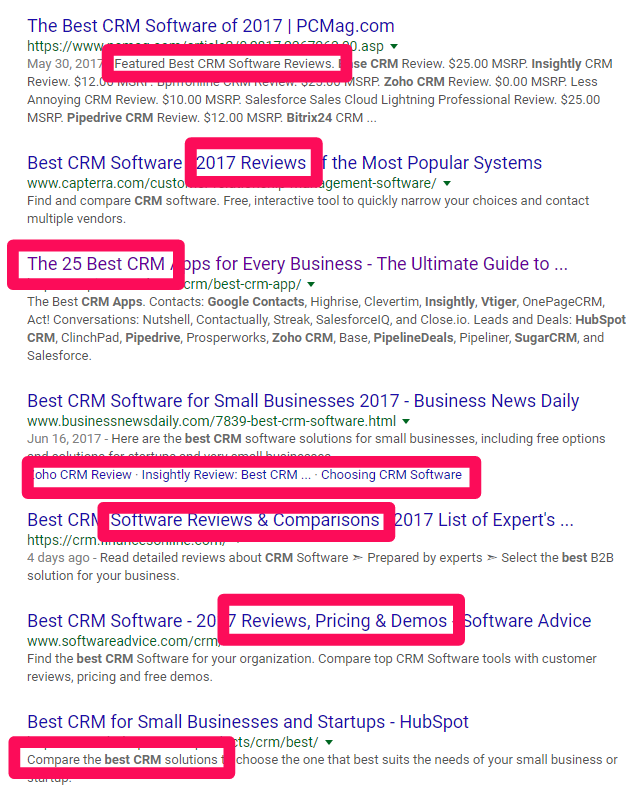
Google wants to help the searcher find what they’re looking for as fast as possible.
That means the top organic results usually reflect the searcher’s intent.
So instead of looking for a branded PPC ad about one product being the best, a searcher is looking for CRM comparisons!
Now, do you remember those top 3 PPC results? They’re probably not getting any clicks because they’re not answering the searcher’s question.
The content doesn’t match the intent behind the search query.
But look at the 4th result:
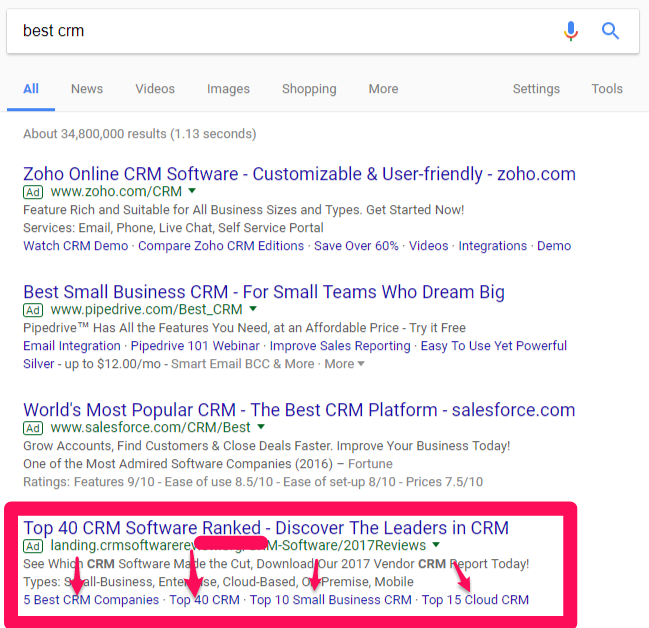
If I were a betting man (which I am), I’d bet you that this low-domain-authority website is getting countless clicks for “Best CRM.”
I’d bet that this ad outperforms the ones above it.
This no-name site can rank with the big boys because they’ve done a better job matching keyword intent with their ad.
It’s practically cheating the system, and it works perfectly.
Now check out all of the traffic you have the opportunity to steal without competing for it head-on with massive brands in the organic rankings:
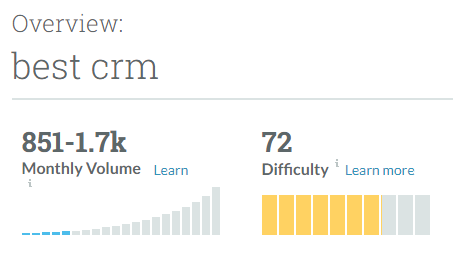
Instead of preaching about their product, the fourth ad lines up their content to look exactly like the organic results.
However, they show up before the organic results with no effort spent on link building.
You don’t need to organically rank for a keyword to get traffic for that keyword. Just remember to match the searcher’s intent and mimic the organic results to drive traffic.
3. Write more blog posts than your competition
What’s the downside of a long-tail keyword strategy?
You can’t stuff a bunch of random keywords onto the same page. You should still focus on one or two keywords per post, max.
That means you’re going to have to create a lot more content!
This is no great secret.
If you write more content, you’ve got a better shot at ranking on the first page of Google.
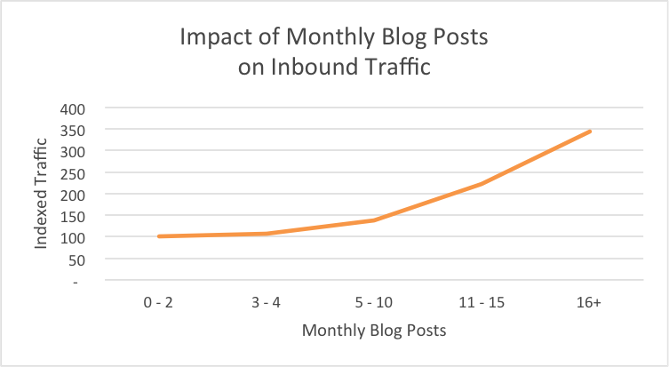
The more you write, the more pages get indexed, and the more traffic you bring to your site.
If you’re writing 5-10 posts a month, it’s still not enough.
Your competition and industry leaders are writing 16+ every single month.
You can’t reasonably expect to outrank a competitor or catch up to an industry leader by writing less, can you?
No way.
You need to write like your business depends on it. Because based on the information above, it does!
And it can’t be any old 500-word blog post that you slap together in an hour.
Here’s what the top content on Google looks like on average.
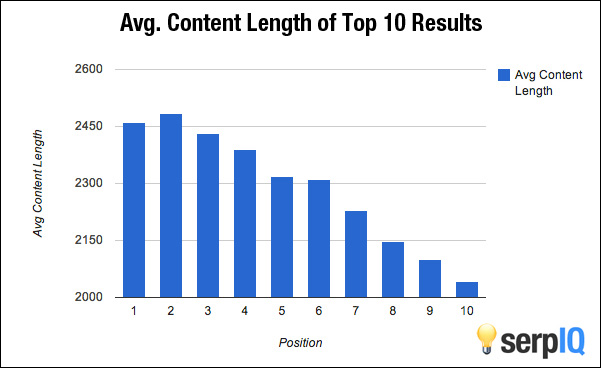
Everything on the first page of Google is over 2,000 words.
That means that you need to write more in-depth content that guides users through the process of solving their problems.
This content should be actionable and filled with images, examples, and step-by-step instructions.
Now is about the time when you start thinking, “How on Earth am I going to carve out time to write more?”
If that’s the case, maybe you need to hire someone.
The good news is that content marketing costs 62% less than other marketing mediums. All while generating 3x the number of leads.
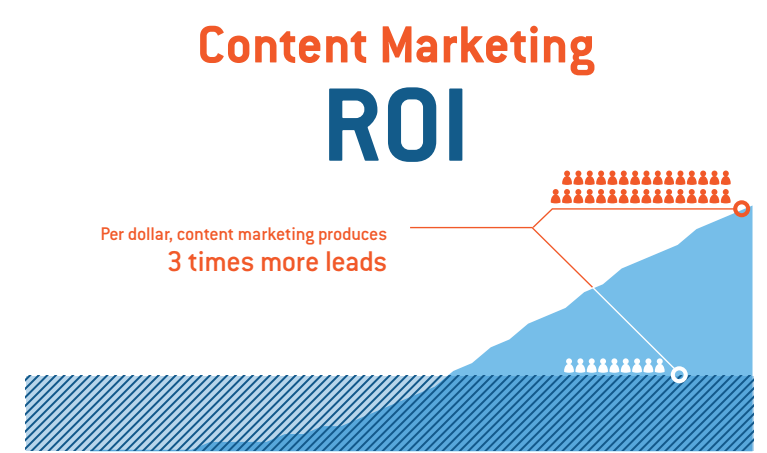
If you want to start ranking for the top keywords, you need to produce valuable, unique content — and lots of it.
On top of that, you also need to optimize your content to generate the highest CTR possible.
Why? Because optimizing headlines and meta descriptions for searchers can result in a 10% increase in CTR.
And an increase in CTR means you’re on your way to ranking higher.
Here’s an example:
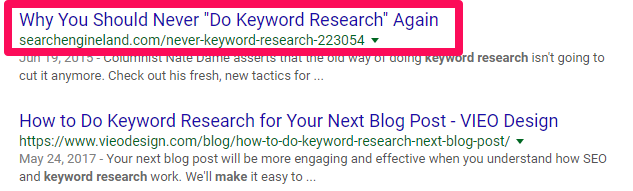
Why do you think this Search Engine Land post outranks the post below it?
Take a look at that headline!
Instead of a basic headline, they make you think about what you just searched.
It goes against the grain of normal, acceptable advice. It’s like a pattern interruption that causes you to stop what you’re doing.
Now you’re rethinking everything you once thought was true!
Here are a few powerful headline templates to try immediately to boost your organic CTR:
[ ______________ ] Using These 5 Strategic Moves
10 Quick Moves to [ ________________ ] and Increase Revenue
How I Used These 5 Moves to [ ____________ ]
Interested in more headline tips to increase your CTR and boost your rankings? Start with my in-depth guide on headlines.
4. Get reviewed and featured in round-ups
Sometimes, spending money on PPC ads to rank higher for keywords isn’t an option.
Spending too much time and money on creating long-form guides to rank for your desired keywords also may not be feasible.
Luckily, you can still get your name featured in top-ranking content! All while doing a fraction of the work.
Rather than having your official site placed on the top page of Google from AdWords or organic rankings, you can get featured in round-up posts with minimal time and effort.
Here’s what I mean:
Just go to Google and search “best SEO tools 2017”:
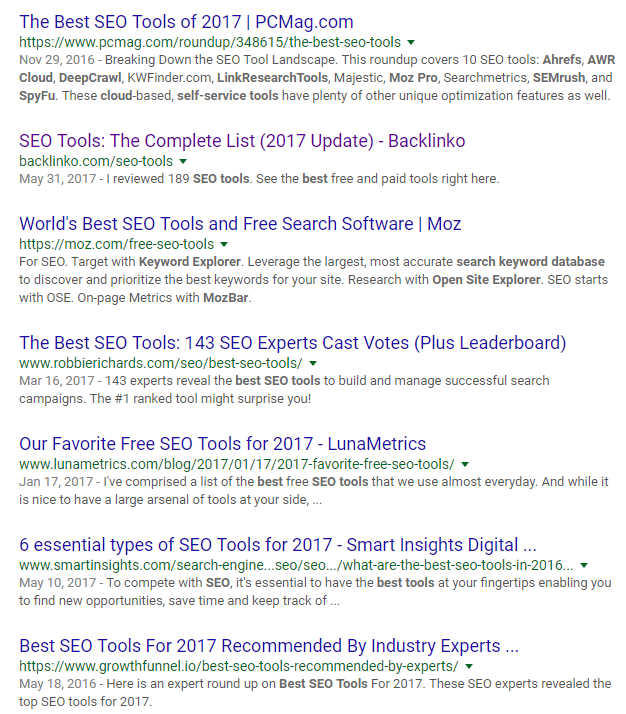
All the results are roundup-style posts in which the authors review and analyze the top tools.
It’s basically free advertising.
You can get your name out to thousands upon thousands of consumers a month who are clicking on those top-ranking posts.
For example, let’s click on the first result from PC Magazine:
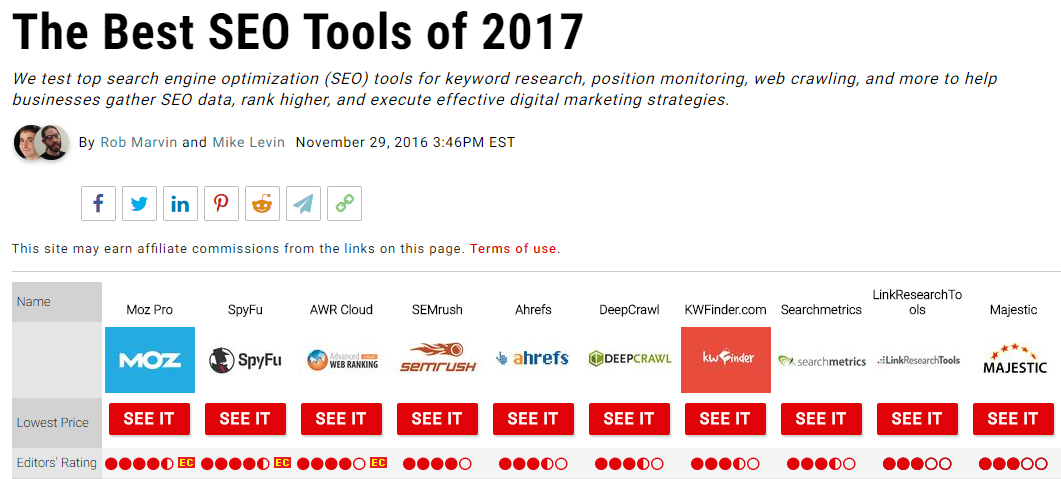
They cover each SEO tool, providing reviews of each feature the tools have and then helping to prioritize them for everyone else.
Now, you can use these roundup-style posts to your advantage. Rank well on these posts, and you’ll get tons of traffic in return.
For example, thousands of people are already searching for “SEO tools.”
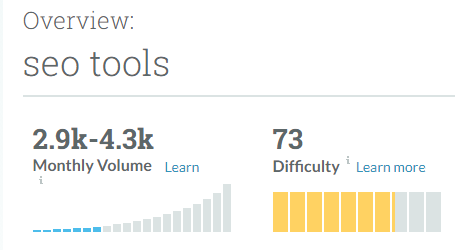
Then you can conduct outreach to have your tool featured in those comparisons.
And that traffic can be huge:
If you’re featured on all of the comparison posts that already rank on the top page, you’re going to get traffic from each one of those.
And this traffic will already be primed to buy from you.
A few simple outreach efforts can now save you years of grinding away in obscurity to get your brand in front of eager searchers.
No time, no money, and just a little effort can still get your brand in the top results.
If the deck is stacked against you in one game, just switch the game that you’re playing.
Conclusion
Showing up on the first page of Google is nearly impossible if you’re just starting out.
That’s harsh, but it’s also true.
Industry leaders who’ve been producing content for years dominate all of the best keywords and SERPs.
Many of them have been spending millions on big-budget ad campaigns, too.
So you can’t expect to rank first when you’re new.
The competition is already so far out ahead. They’ve been accumulating thousands of links and countless shares while this business was still a twinkle in your eye.
Their brands are well-established, and their authority is too high.
But you still need organic traffic to thrive and keep your business growing.
Thankfully, there are a few workarounds.
Try researching and producing content for long-tail keywords. The volume might be lower, but so is the competition.
Use sneaky tactics like PPC ads to rank above the organic results for an extremely popular ‘head’ keyword that you know you’ll never be able to rank for organically.
Try getting reviewed in roundup-style posts to get featured on top articles.
There’s plenty of unconventional methods to get your brand in front of the traffic that you crave.
You just have to get a little creative and understand that you might not always rank for the top terms.
But other methods exist to get similar results if you know where to look.
What strategies have you used to rank on the first page of Google?