 Sign In









Key Takeaways
- Audience-first SEO builds your keyword and content strategy around a specific, high-value audience instead of a broad topic or category.
- The tactics stay familiar (keyword research, content gap analysis, TAM (total addressable market) analysis), but the organizing principle behind all three changes.
- Programs using this approach see growth concentrated among the audiences that actually drive revenue, not just a bump in overall traffic.
- Applying it starts with defining your priority audience before you ever look at keyword volume.
- Integrated agencies have a built-in advantage here, since paid audience research already exists internally and can inform SEO strategy directly.
- Audience-first SEO also sets up your Digital PR targeting, since the same research tells you where that audience already spends its time.
Paid media has always started with the audience. Every campaign begins with who you’re trying to reach before it gets to what you’re going to say. Paid teams buy audiences, not channels.
SEO has worked the opposite way for years. Programs get organized around topics and keyword clusters first, then hope the right people show up once the content ranks. Audience-first SEO closes that gap by building your organic program the same way paid media already builds its targeting.
That gap matters more now than it used to. Search is fragmented across traditional results, AI-generated answers, and social, and attention is split thin across all of it. The brands winning right now are the ones cutting through to the specific audiences that move their business.
This isn’t a new set of tactics so much as a shift in starting point, one the strongest SEO programs are already using, often without a name attached to it. This piece names that instinct and lays out how to apply it on purpose.
What Audience-First SEO Actually Means
Traditional SEO is organized around topics and categories. A single topic can serve audiences with very different needs, intent levels, and business value, and that ambiguity is where a lot of traffic volume hides the fact that the wrong people are showing up.
Audience-first SEO flips that starting point. You define the specific audience you want to reach, usually the audience most valuable to the business rather than the largest one, and you run keyword research, content gap analysis, and TAM analysis through that lens.
The tactics themselves are the same ones you already run. What changes is the organizing principle behind them. Instead of asking which topics carry the most search volume, you ask which audiences matter most to the business, then find the keywords and prompts tied to them.
Paid media has operated this way for years. Every campaign starts with defining who you’re trying to reach before any decision gets made about creative or messaging. Audience-first SEO borrows that discipline and applies it to organic, with the same rigor paid teams bring to targeting, segmentation, and qualification.
The distinction between audience and topic shows up quickly once you look for it. A topic like wealth management could serve a first-generation saver building an emergency fund, a business owner preparing for an exit, or an ultra-affluent family managing a multi-generational estate. Content written to serve all of them tends to serve none of them particularly well, because their questions and buying triggers don’t overlap much.
This is where user personas for SEO earn their keep. Once you know which audience segment you’re writing for, keyword targets get sharper and content gets easier to write, because you’re solving one person’s problem instead of hedging for several readers at once.
The same logic applies to how you think about audience size. A larger audience isn’t automatically the right one to chase. Weighing audience size vs. revenue potential is often what separates a program that grows traffic from one that grows the business, and audience-first SEO forces that comparison earlier in the process instead of leaving it as an afterthought once the content is already live.
What It Looks Like When It’s Working
Plenty of programs succeeding with SEO right now are already running a version of audience-first SEO, even if nobody on the team has put a name to it. They’ve made deliberate calls about which audiences to prioritize, run their keyword and content work through that lens, and the results compound in ways topic-first strategies rarely do.
In one case, NP Digital was working with a financial services brand competing in a crowded search category with significant total addressable volume. Rather than chasing the broadest possible traffic, the SEO team built TAM analysis and content gap work around specific high-value audience segments, prioritizing the individuals and families most valuable to the business over the segment with the largest raw search volume. That decision started with the kind of audience segmentation work most brands skip, ranking each segment by demand, competitive difficulty, and long-term business value before a single piece of content got written.
Within six months, organic leads from the client’s highest-value segment, ultra-affluent individuals and families, had already surpassed the client’s full prior fiscal year total, hitting nearly 114% of the previous year’s volume before the year was even half over. Aflluent leads followed close behind at close to 90% of the prior year’s total, and the estimated pipeline impact tied to that lead volume grew from $1.46 billion for the full prior year to $2.13 billion year-to-date.
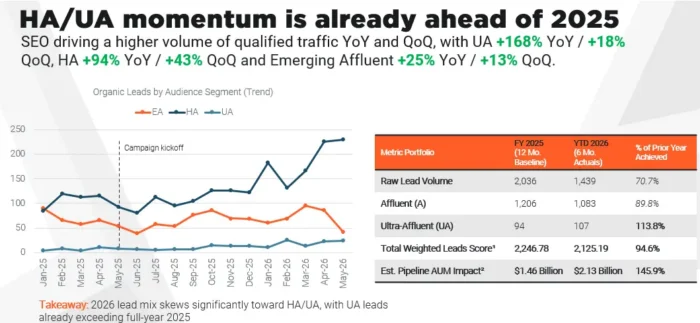
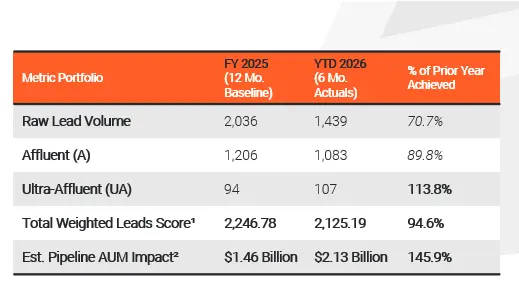
Keyword rankings still played a role here, but only not focusing on casting the widest net possible. Total organic lead volume across the whole program sat at roughly 71% of the prior year’s pace over the same six-month window, well behind the pace of the priority segments. The gap between those two numbers is the point: audience-first SEO deliberately trades some volume in lower-value segments for outsized gains in the ones that matter most to the business.
The insight from that program: when you build SEO strategy around a specific audience instead of a broad category, you make sharper calls about which keywords to pursue and which content gaps to close first. Raw traffic volume becomes a far less useful signal. Audience quality becomes the measure that matters.
How to Apply Audience-First SEO in Practice
Getting audience-first SEO right does not require a new toolset. It requires changing the order of operations, and that shift plays out in three practical moves.
Start with audience definition, not keyword volume. Before opening a keyword tool, decide which audience the business needs most. This usually means ranking segments by value to the business rather than by size, since the segment with the most search volume is rarely the one with the most revenue potential. A brand serving both mass-market and high-net-worth customers, for example, might find that general wealth management searches carry the most volume, while a much smaller audience of high-net-worth individuals and families carries far more business value per lead.
Run TAM analysis by audience segment. Rather than sizing the total addressable market around a single blended topic, break it out by persona. Score each segment on search demand, ranking difficulty, and business value, then map where those three overlap. That mapping tends to surface a small number of segments where the opportunity is real: enough search volume to matter, low enough difficulty to be attainable, and high enough value to justify the investment. It’s also important to do deeper research here on these audiences you find most important. This can range from using specialized tools to looking at information sources like Reddit or customer interviews.
Build content gap analysis around audience needs, not topic coverage. Once you know your priority segments, look at where your content already ranks for those specific audiences and where it doesn’t, rather than running a generic gap analysis against a topic list. A gap analysis run this way often turns up a surprising amount of untapped opportunity sitting several pages deep in the rankings, simply because it was never built with a specific audience in mind.
Put together, these three moves turn audience-first SEO from a concept into a repeatable process your team can run quarter over quarter, and each one gets easier once the audience definition from the first step is locked in.
Where Integrated Agencies Have an Advantage
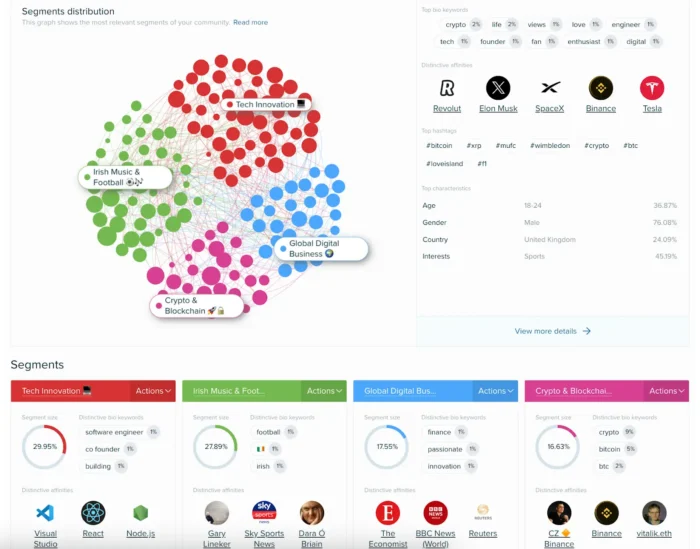
Paid media teams have always treated audience research as a starting point, not an afterthought. Tools like Reddit Ads and GWI (Global Web Index) give paid strategists a detailed picture of who an audience is, what they care about, where they consume content, and how they talk about their own needs. Google Ads’ Audience Insights and Insights Finder tools add another layer of that same intelligence, surfacing which segments actually convert and what related interests and trends they share. That research is directly applicable to SEO strategy, and brands running SEO and paid in separate silos are rarely putting it to use that way.
In an integrated agency, that audience intelligence flows into SEO from day one. Keyword strategy gets informed by what paid research already knows about the audience, and content positioning reflects how that audience actually talks about their problems rather than just how they type their searches.
Tools like Ubersuggest and AnswerThePublic add a further layer, surfacing the specific questions and language patterns an audience uses at different points in their journey. Combined with paid audience research, they help build a content strategy that is both search-optimized and genuinely useful to the people you’re trying to reach.
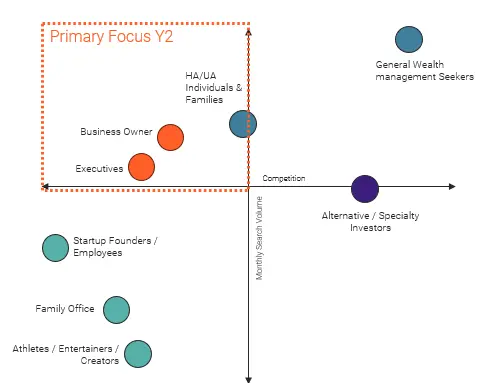
The audience opportunity matrix is one of the clearest outputs of this integrated approach. Mapping audience segments by search demand, keyword difficulty, and business value shows exactly where the strongest opportunities sit, and just as importantly, where they don’t.
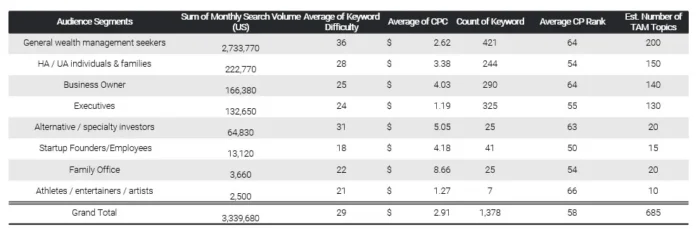
That same audience-first lens applies to sizing the opportunity. A TAM analysis broken out by segment, rather than blended across an entire category, shows which audiences carry the most untapped search volume relative to their ranking difficulty and business value, giving the team a clear place to focus first.
Audience-First SEO and Digital PR: Publishing Where Your Audience Already Goes
Traditional link building is organized around domain authority and topical relevance. Audience-first Digital PR is organized around presence: where does this specific audience actually go for information, and are you showing up there? Those questions are related, but they lead to different outreach lists.
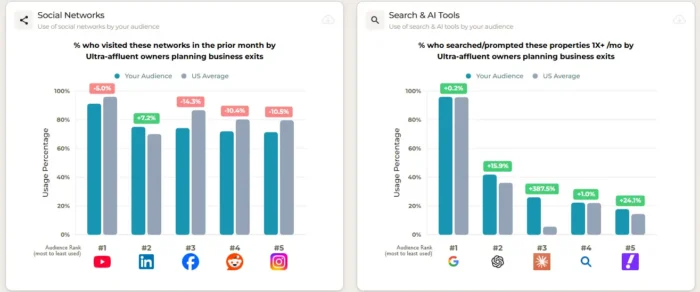
When audience research is done well, you already have that answer. Paid audience research tools, combined with SEO audience data, surface the publications, communities, and platforms where your target audience spends its time. That becomes the actual targeting brief for Digital PR outreach, rather than a generic list of high-authority sites in your industry vertical.
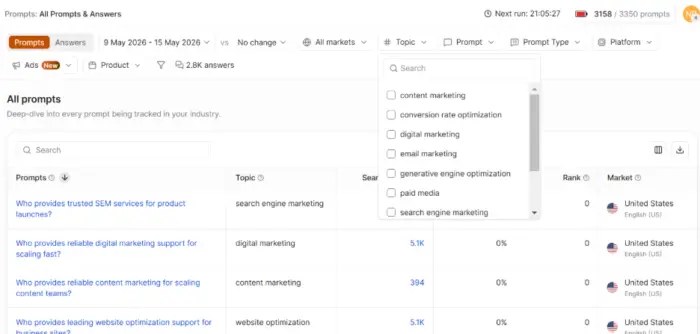
AI insight tools add one more layer here, showing which content is already getting cited for prompts relevant to your audience, so you know where AI-driven visibility is concentrated too.
This connection also strengthens the SEO program directly. Earned coverage on the sites your audience trusts builds authority signals that are harder to manufacture and more durable than links acquired through broad outreach. It also creates touchpoints with your audience outside of search, which builds brand recognition that shapes how they engage once they do find you organically. A reader who saw your brand mentioned on a site they already trust arrives at your organic content with a head start on credibility that a first-time visitor doesn’t have.
The integrated play here: audience research informs SEO content strategy and Digital PR targeting at the same time. One brief drives two channel strategies, both built around the same specific people, which also means the two teams stop duplicating research that already exists somewhere else in the building.
The Complement to Search Everywhere Optimization
Search Everywhere Optimization is the right ambition for brands with the resources to pursue visibility across every surface their audience uses: traditional search, AI-generated results, social, video, and beyond. Audience-first SEO answers the question that has to come first: which of those surfaces matter most for the specific audience you’re trying to reach, and what do they need to see from you there?
For brands that can’t optimize everywhere at once, audience-first SEO becomes the prioritization framework. Instead of spreading effort across broad topic coverage, you concentrate on the overlap between audience need, search opportunity, and business value. That’s a more defensible use of SEO budget and a much clearer brief for the team running the program.
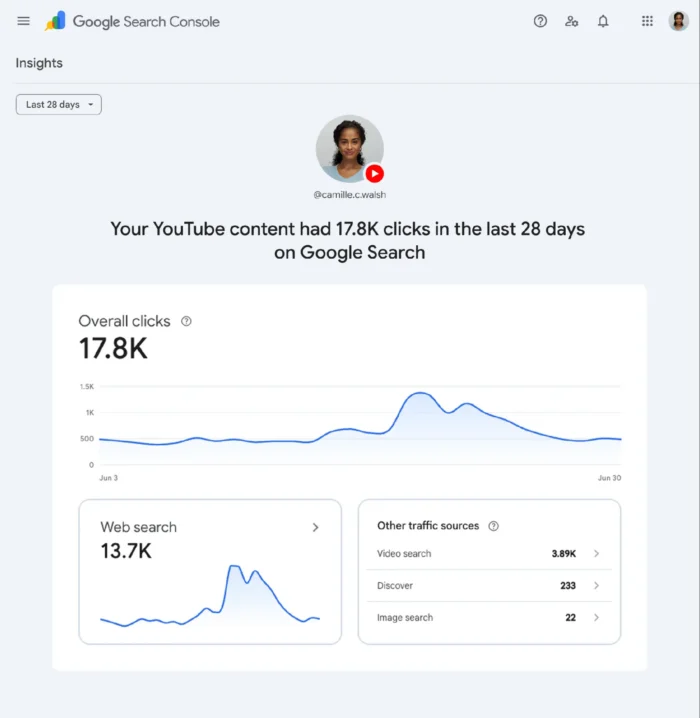
The two approaches work together rather than against each other. Audience-first SEO sharpens the who and the where. Search Everywhere Optimization expands the how. A brand with clarity on its priority audiences is better positioned to pursue visibility across surfaces, because it already knows what those audiences need and where they’re looking for it. It’s also worth noting that Google Search Console now surfaces how some of your social content performs on Google, giving audience-first teams one more data point for connecting the dots across surfaces.
For a marketing leader deciding where to invest next quarter, that ordering matters. Trying to run Search Everywhere Optimization without a clear audience definition underneath it usually means spreading budget across surfaces evenly instead of weighting it toward the ones your priority audience actually uses, which is a slower and more expensive way to get to the same result.
FAQs
How do I identify my target audience for SEO?
Rank your existing customer segments by business value, not by search volume, then check which of those segments has real search demand behind it. From there, build out SEO audience personas for the segments that clear both bars.
How does SEO engage an audience?
SEO engages an audience when the keywords, content, and site experience all reflect what a specific group of people needs, rather than serving a broad topic to whoever happens to land on the page.
How do I target an audience in SEO?
Run your keyword research, content gap analysis, and TAM analysis through an audience lens instead of a topic lens, and let that definition shape which keywords and content gaps you prioritize.
Conclusion
The best SEO programs are already doing some version of audience-first SEO. The question is whether your team is doing it on purpose or backing into it by accident.
Naming the approach matters because it makes the process repeatable. Define your priority audience, run your TAM and content gap analysis through that lens, and let audience quality, not raw traffic, tell you whether the program is working. Start with finding your target audience if that first step still feels undefined, and build out from there.
That’s the kind of program NP Digital builds and runs for clients every day, connecting audience research from paid media into SEO strategy so organic traffic starts working harder for the people who actually matter to your business.