 Sign In








 Ubersuggest
  AnswerThePublic
 Which AI Creates More Duplicate Content
Info
-
Source: NP Digital
-
Date: December 2024
-
Category: AI-Generated Content
-
Study Methodology: NP Digital analysis of 1,000 articles with input from 83 respondents.
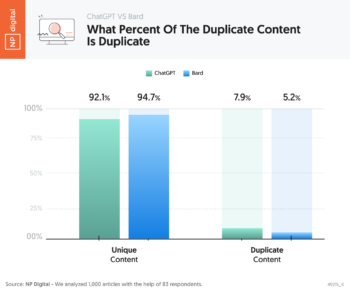
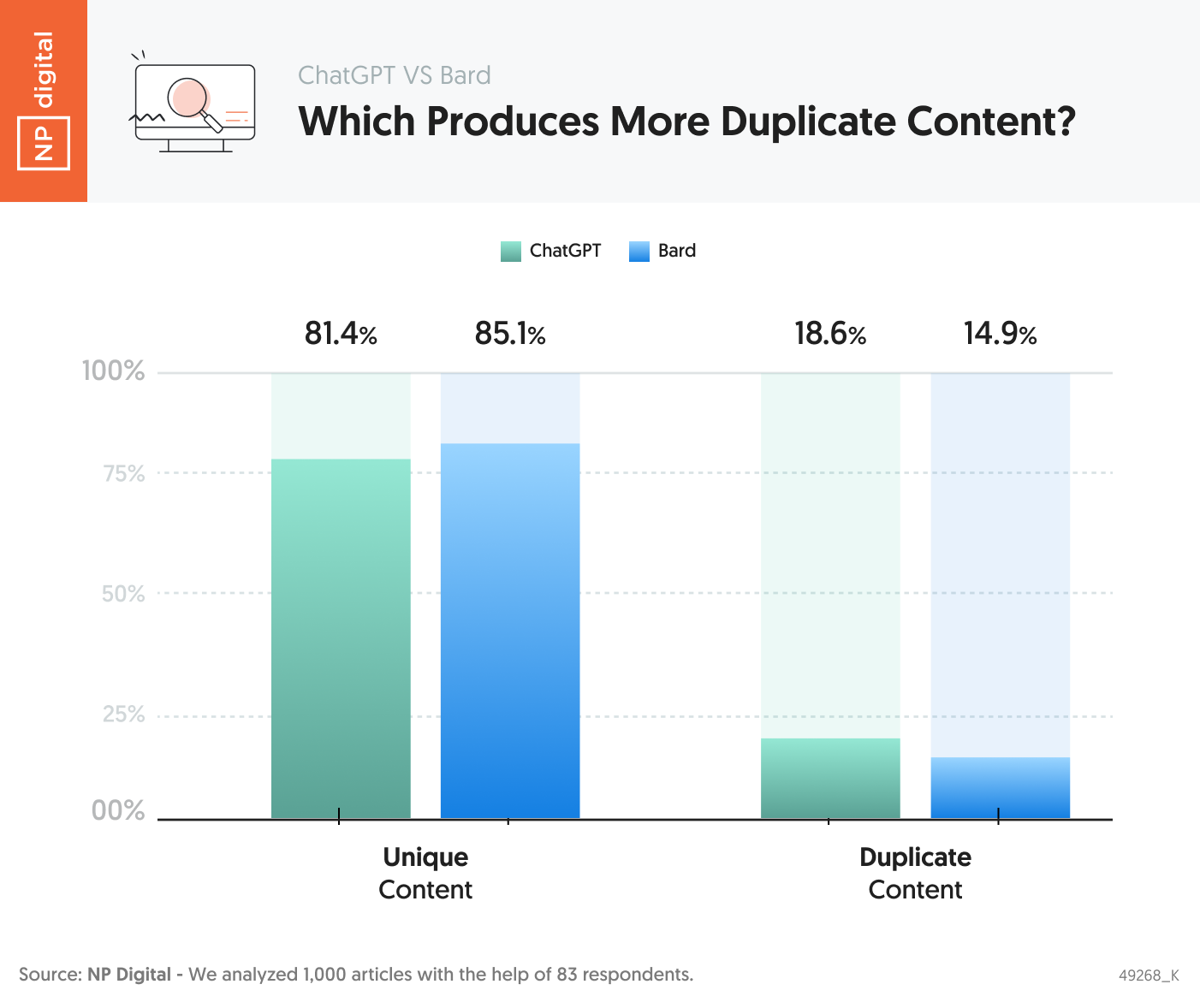
As marketers scale AI content, duplication risk becomes a real operational concern. This chart directly compares how often ChatGPT and Bard generate duplicate versus unique content. The results show meaningful differences in output behavior. Understanding these gaps helps teams choose tools more strategically.
Essential Statistics
- ChatGPT generated 18.6 percent duplicate content.
- Bard generated 14.9 percent duplicate content.
- ChatGPT produced 81.4 percent unique content.
- Bard produced 85.1 percent unique content.
- Bard outperformed ChatGPT on content uniqueness.
Key Takeaways
- Duplicate content risk varies meaningfully by AI tool.
- Bard produced measurably less duplicate content than ChatGPT.
- Higher uniqueness reduces SEO and brand risk at scale.
- Tool selection impacts long term content quality.
- Duplication compounds as production volume increases.
Actionable Insights
- Select AI tools based on scale plans. Bard’s lower duplication rate makes it better suited for large content libraries where repetition risk compounds quickly.
- Pair AI output with structural edits. Even with higher uniqueness scores, human restructuring helps eliminate subtle duplication patterns.
- Use different tools for different content layers. Consider using one AI for ideation and another for drafting to reduce systemic repetition.
- Audit duplication monthly. Track overlap rates over time to catch model drift before rankings or brand credibility are affected.
Limit template reuse in prompts. Repetitive prompt structures increase duplication regardless of the AI model used. – Neil Patel