 Sign In











Can I let you in on a secret?
You’re sitting on your most influential marketing force.
No marketing campaign – paid or organic – can quite measure up to its power.
I’m talking, of course, about your customers.
They can be your greatest champion, your most prolific sales team, and your most persuasive mouthpieces.
The best part? You don’t have to pay them a dime.
But there is one condition.
You need to know how to convert your customers into your brand advocates.
Jay Baer describes a brand advocate as a “volunteer marketer – a customer that proactively uses their time and social capital to promote a company or cause.”
Is advocacy difficult to foster? Not at all.
But it does require a solid strategy.
And it might take time to develop.
In this article, I’ll show you how to build, engage, and mobilize an army of customer advocates.
Before we jump in, let’s talk about why your customers are so powerful.
The power of customer advocacy
Today’s customer has more choice, more information, and more power than ever before.
The result?
The way that buyers research, engage with brands, and evaluate their purchase decisions has shifted dramatically.
What was once a very simple and linear customer journey is now far more complex.
What was once choosing between the two stores on Main Street is now a choice that spans thousands of options across the entire planet!
Here’s what the path to a purchase decision looks like today:
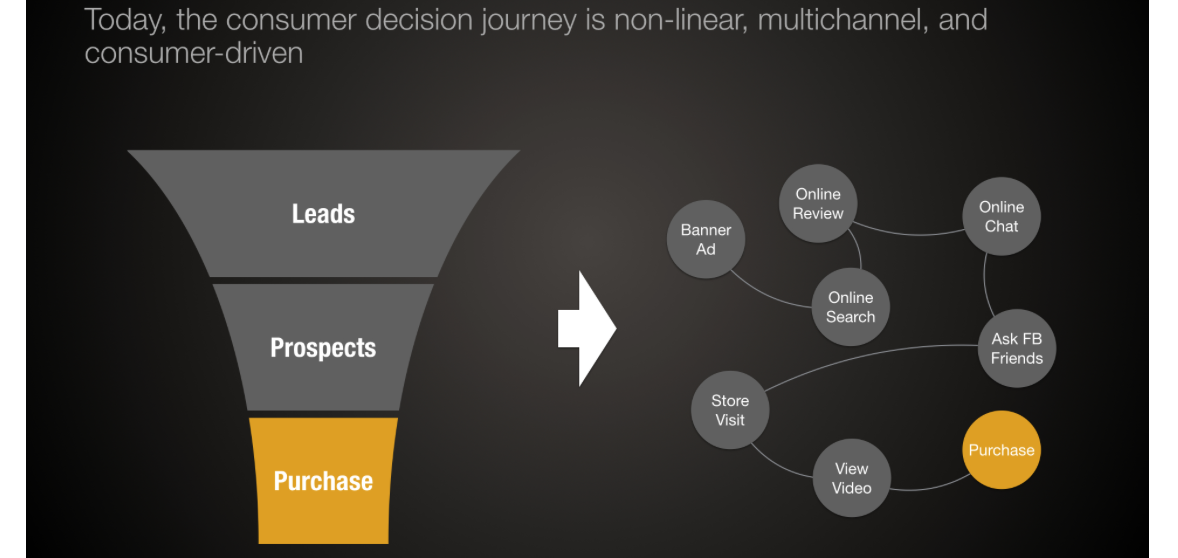
Why the shift?
Attention has become currency in the online space.
This means that brands have no choice but to provide more value at every step of the customer journey.
Where many businesses miss a golden opportunity is in failing to capitalize on the investment that customers have made in their brands.
No doubt, it’s infinitely more difficult to convert a customer.
But the value of that customer has also increased by many factors. A resounding 77% of people surveyed were considered to be brand loyal.
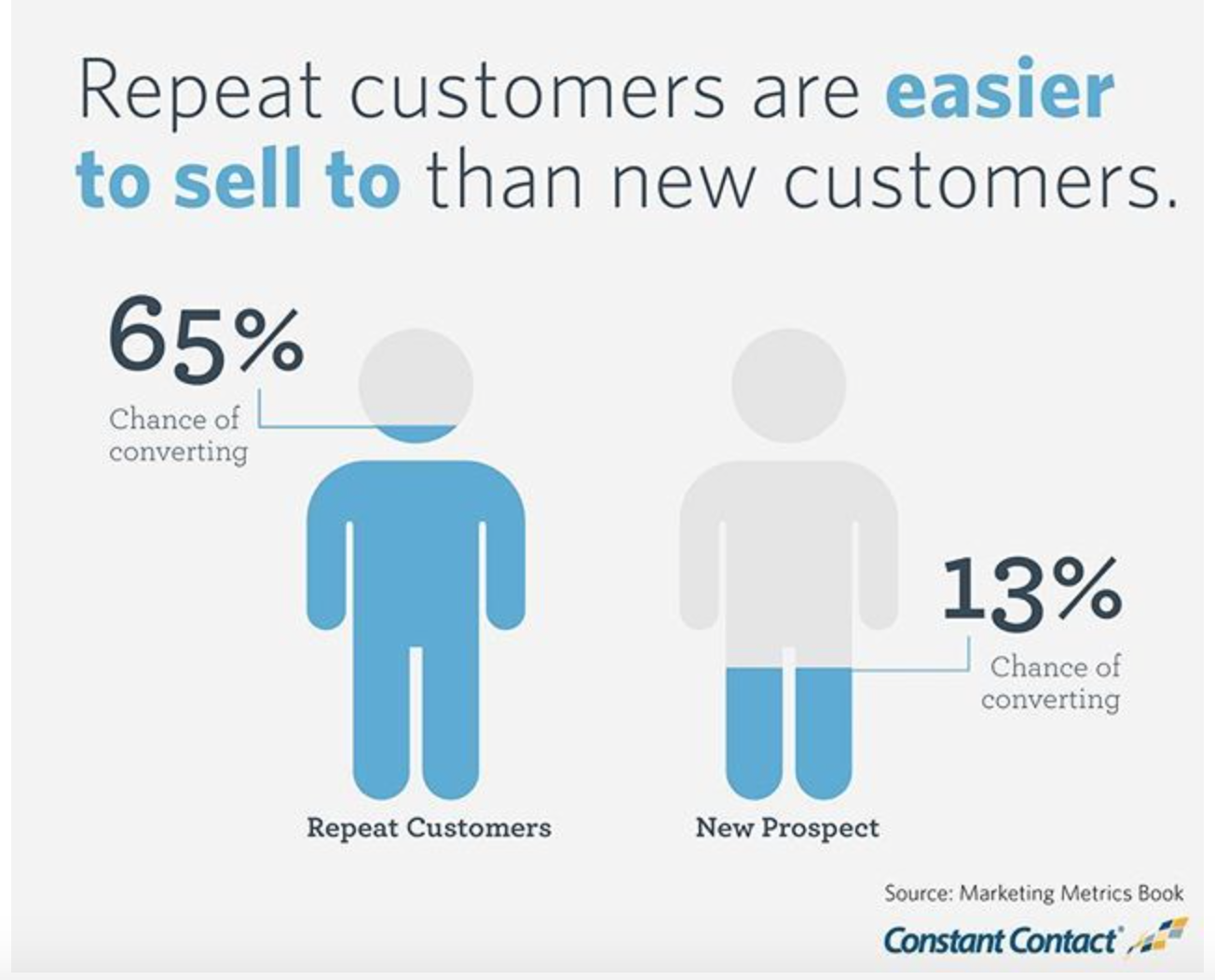
To top it off, these repeat customers have a 65% chance of converting as opposed to the 13% chance of conversion for new prospects.
It gets better.
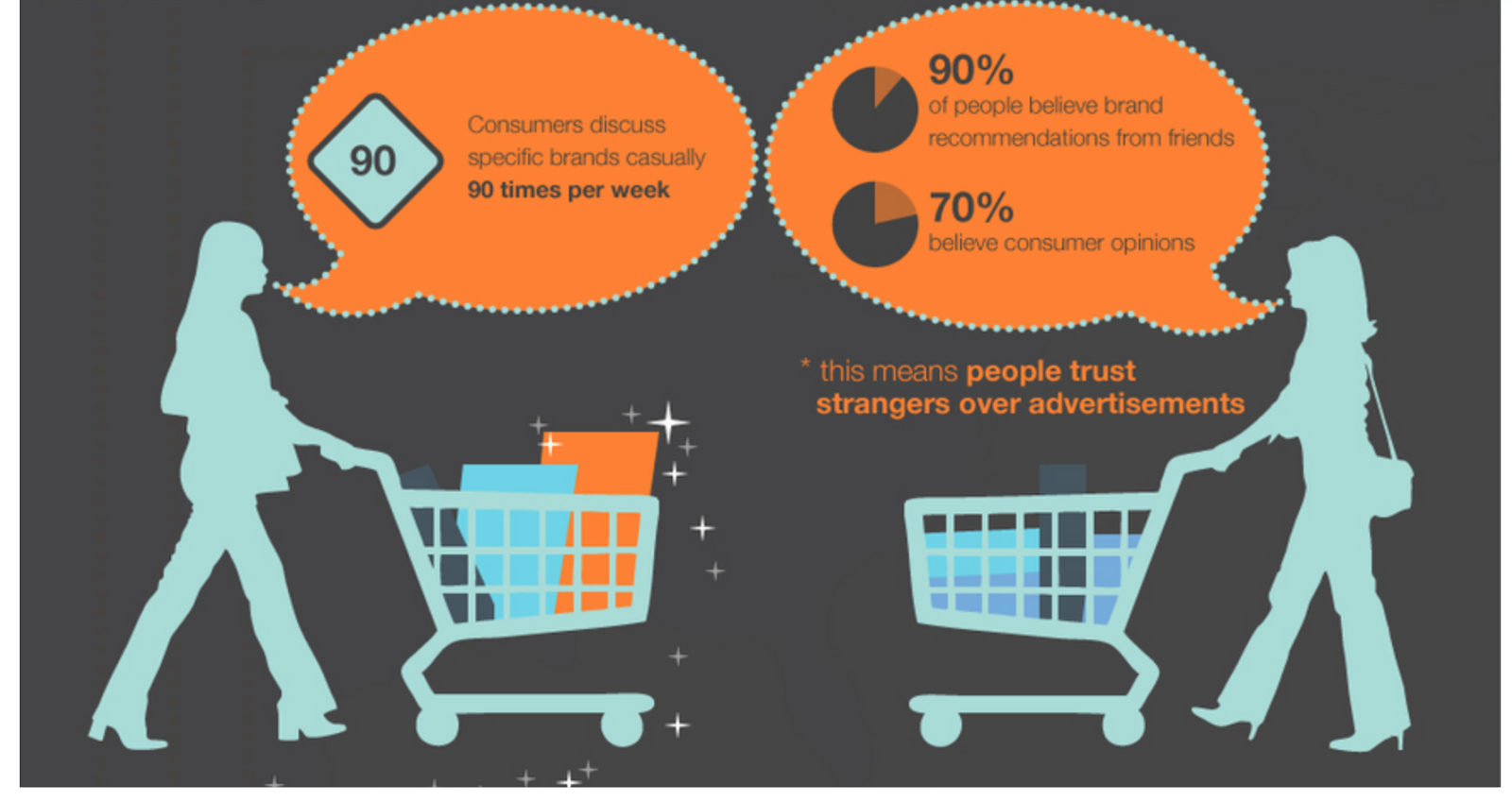
The opinions of your customers posted online carry the most weight with new prospects.
These potential customers are influenced by real people way more easily than they are by advertisements and branded messages.
In fact, 90% of people trust brand recommendations from friends, and 70% rely on consumer opinions.
What does this mean for your business?
Your customers are your greatest assets.
Here are some of the major benefits of getting your customers to market your business for you.
1. You can significantly lower your customer acquisition costs (CAC). This refers to the cost incurred when acquiring a new customer.
Your ability to keep these costs low has everything to do with how profitable your business will be.
The great news?
If your customers are driving conversions for you, it means your CAC will be minimal.
2. You can drive massive demand for your products and services. As more of your customers advocate for your brand, the interest and demand for your offers go up.
The result? More sales and revenue for your business.
3. You can multiply your social capital. When customers use their social networks to promote your business, their sphere of influence automatically becomes yours.
They will be utilizing their online assets to drive brand awareness, distribute your content, and power your overall marketing efforts.
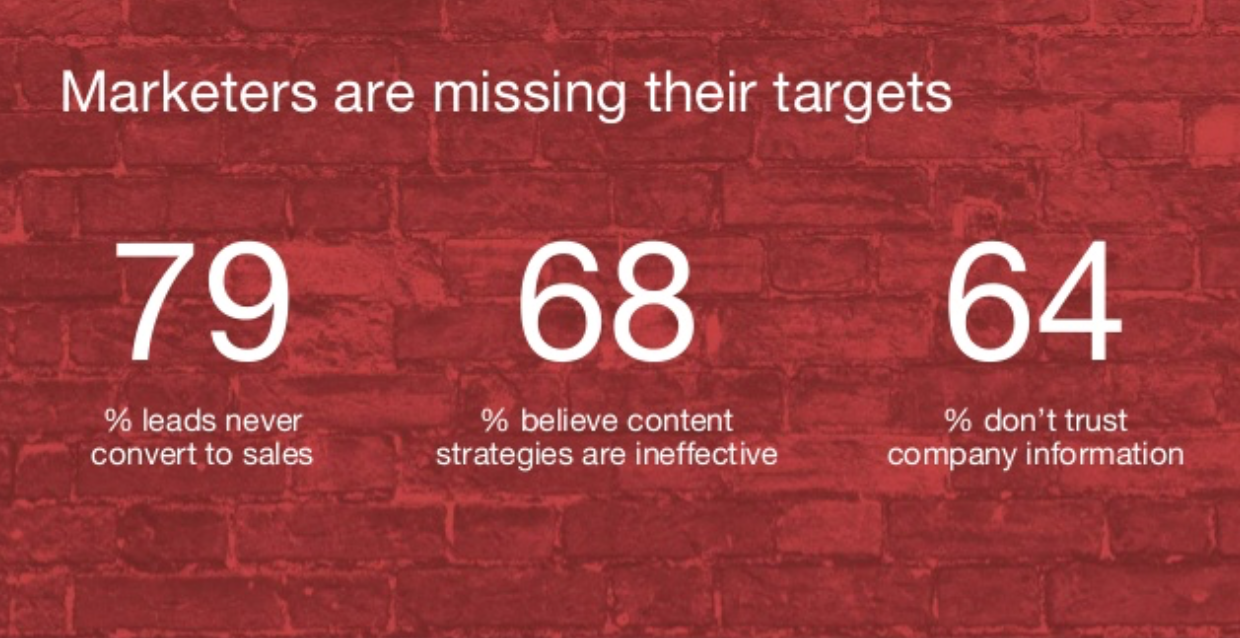
Considering that many marketers are consistently missing their targets, it’s a great idea to tap into your customers’ influence.
Did you know that 79% of leads never convert to a sale? Your customers can help with that!
4. You can have one of the most sustainable marketing models. Customer advocacy is an evergreen marketing strategy.
It means that it will keep bearing fruit for years down the line. That’s way more than you can say about strategies like influencer marketing.
Sure, you may experience a massive boost when an influencer promotes your brand.
But how committed are these outsiders to your business? Compared to your customers, they’re no match.
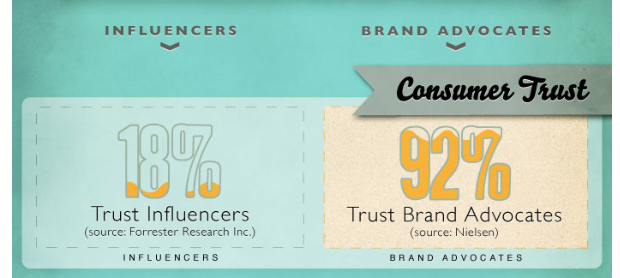
It looks like consumers agree.
A whopping 92% trust brand advocates over influencers!
Now that you understand what your customers can do to elevate your marketing, let’s look at how you can turn them into brand advocates.
Step #1: Come up with a strategy for your customer marketing campaign
Naturally, the first thing you’ll need is a plan.
Consider the following questions.
- What’s the current state of your marketing?
- What are you hoping to achieve with this marketing campaign?
These are the only elements that you need to come up with a solid strategy.
Let’s get into each of them.
What’s the current state of your marketing? This is where you’ll pinpoint any problems that you’d like to fix.
You may also decide that something is working well for your business and you’d like to maximize the results.
Either way, this step is all about getting an overview of your marketing landscape. Look for gaps, challenges, and missed opportunities.
For example, you may decide that it costs too much for you to acquire a new customer.
Your goals moving forward will be geared towards fixing that.
What are you hoping to achieve with your customer marketing campaign? It’s time to set your objectives.
Here are some of the goals that you may consider.
- Boost overall brand awareness.
- Mobilize your customers to promote a specific sales project.
- Encourage a new brand narrative.
- Increase your presence in a new subset of the market.
Ideally, your goals should be measurable and number-driven.
Why?
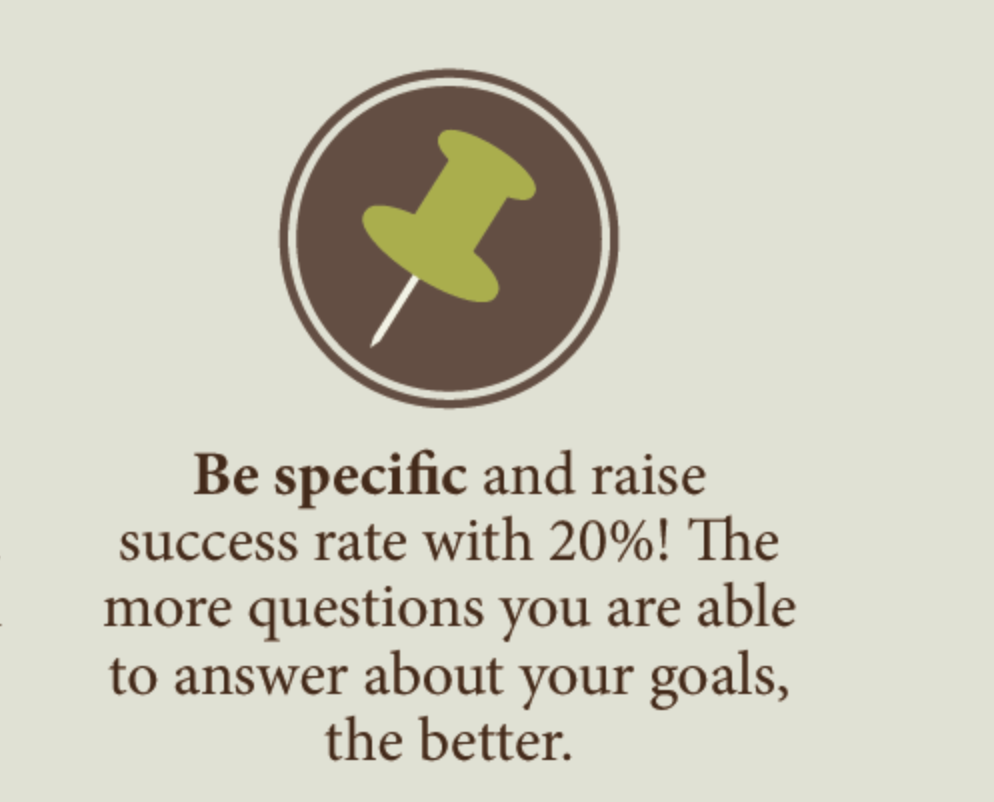
This specificity can increase your chances of achieving your goal by 20%.
Without these goals, you’ll have a difficult time mapping the action steps needed to get there.
It will also help you project how many customers you’ll need to convert into advocates to achieve your outcome.
Here’s a more number-driven perspective on the above goals.
- Increase Facebook followers by 10,000.
- Generate $50,000 in sales for new product launch.
- Get 1 million views on new brand story video.
- Gain 2,000 new female sign ups to your newsletter.
Note: These goals do not have to be separate from your overall business objectives.
In fact, they should be aligned.
You can target the same goals that you’ve already set for your business.
I recommend breaking these goals down into tiered goals. You can then designate a percentage of that to be achieved by your customer marketing campaign.
Step #2: Set the stage for a successful customer advocacy program
There are two critical elements to fostering advocacy among your customers.
- Have a great product.
- Provide unforgettable customer service.
Master these two things, and you’re on your way to reaping the rewards.
Let’s break it down.
Have a great product or service. This is a given. If your product or service sucks, nobody will be willing to advocate for it.
Unless, of course, they’re paid. That would defeat the organic purpose of customer advocacy.
What’s my best advice for ensuring that your product is a slam dunk win?
The number one reason why businesses fail is that there’s no market need for their offer.
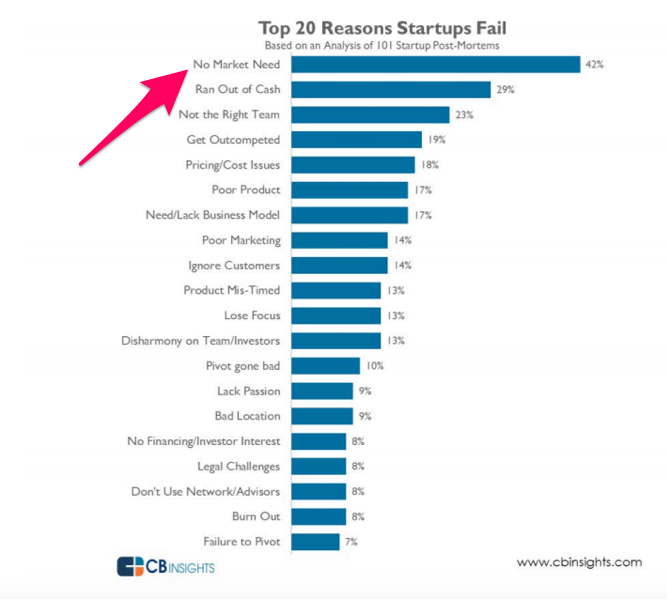
Ensure that you’re targeting the right people with your product or service.
More importantly, be sure that there’s even a market for you.
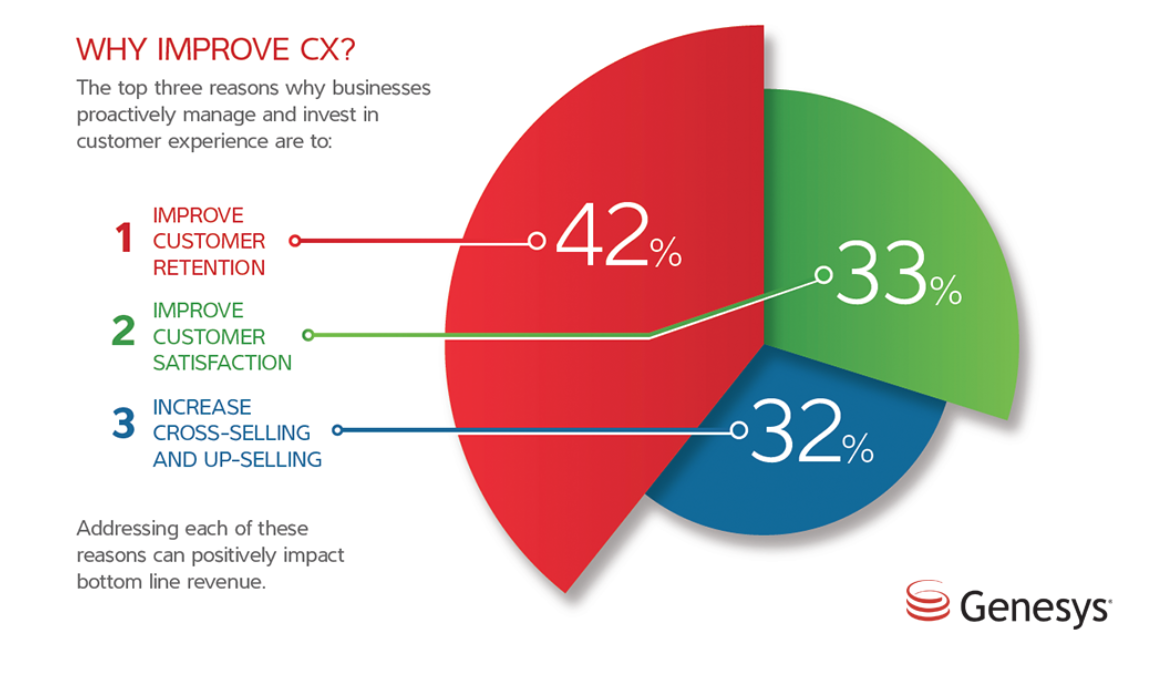
Provide unforgettable customer service. The customer experience can make or break you.
The more meaningful and memorable experience you provide for your customers, the higher your retention and customer satisfaction rates.
To top it off, you can increase your upselling and cross-selling rates by 32%.
How do you provide that unforgettable experience to customers?
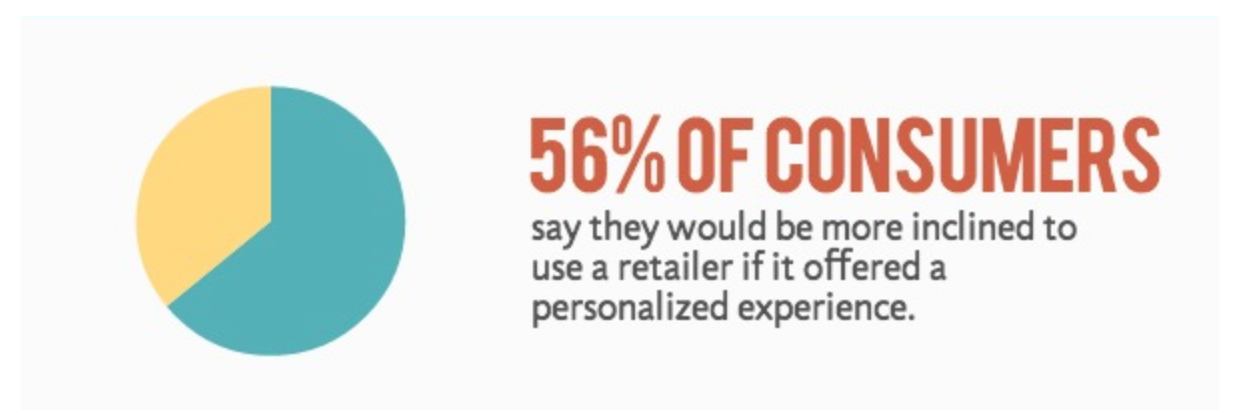
Be attentive to their needs and personalize each user’s experience as much as you can.
Personalization includes predicting a customer’s preference, identifying the most useful solutions, and recommending them at the right stages.
Do this and 56% of people will be more likely to patronize your business.
Step #3: Identify your customer advocates
What makes an ideal customer advocate?
Three things.
- Reach: You want to target customers with enough of a following to have an impact.
- Consistency: Your advocates need to consistently champion your business. Otherwise, they won’t build the trust among their followers that is needed to drive results.
- Authority: Nothing else matters if your customers can’t inspire their network to action.
How can you possibly know if your customers fit these criteria?
The easiest way is to monitor their social media activity. A tool like Klout can help you with that.
Simply type in a name or a keyword.

Here are the results when I search for my name:
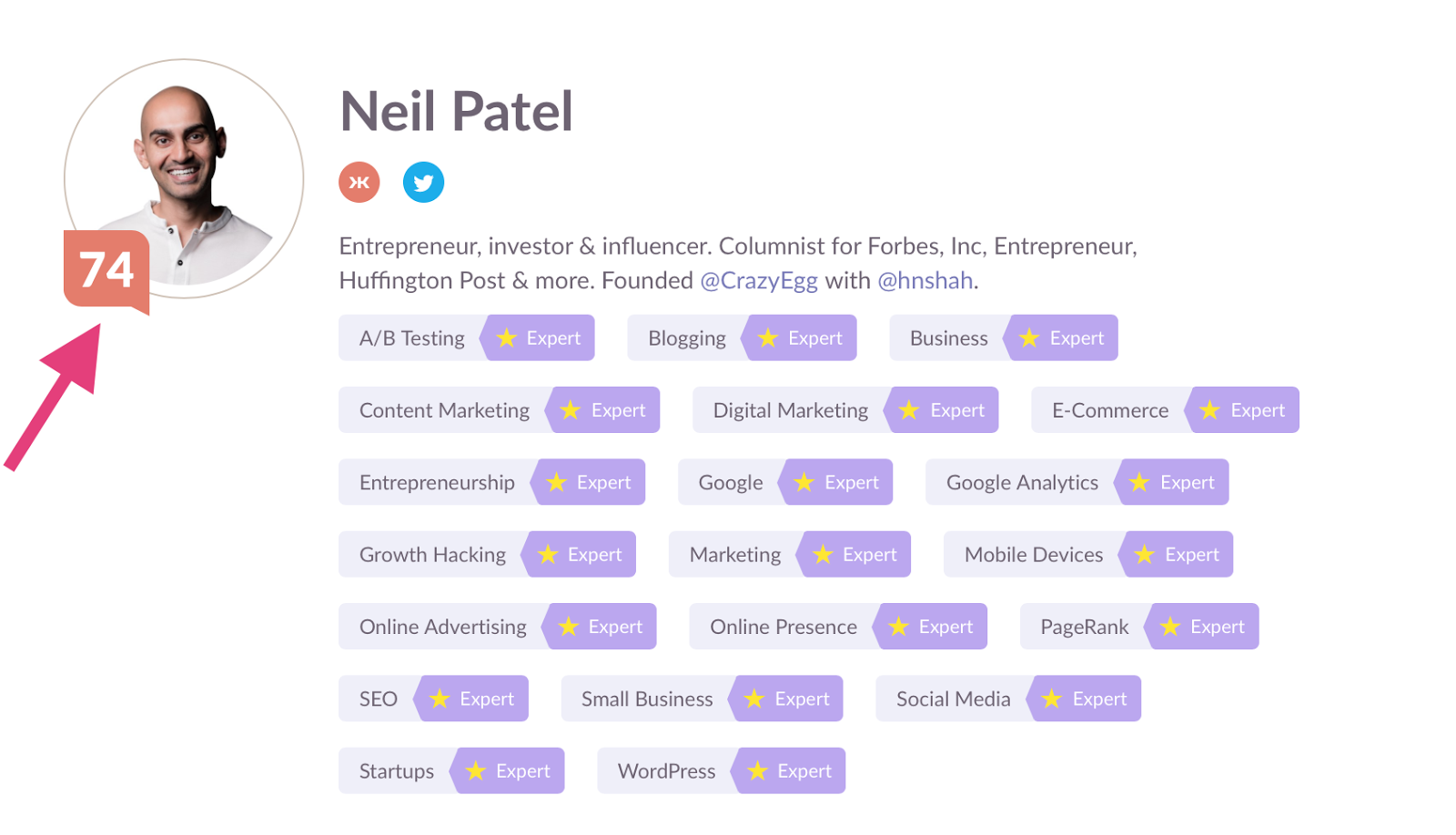
You can see an overall Klout score as well as the topics that I cover on social media.
If you hover over the individual topics, you’ll find out how I rank among everyone else who’s also covering the same topics.
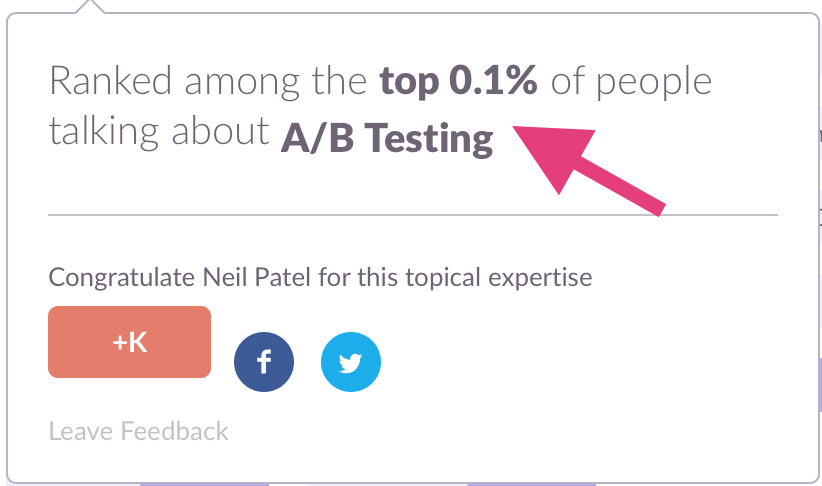
This will help you gauge a customer’s social capital and to identify more potential advocates.
You can create an ideal customer advocate persona based on the profiles you think would have the biggest impact on your marketing efforts.
Apart from monitoring social media, you can pinpoint advocates from your buyer’s email list.
Simply email your list with a short survey asking whether they’d be willing to recommend your business.
SurveyMonkey has a Net Promoter Score (NPS) survey template with some great questions that you can adopt.
Like this basic, but essential, one:

Step #4: Engage your customer advocates
Now that you’ve identified your best advocates, it’s time to engage and mobilize them towards your objective.
Here are some ways that you can supercharge your customers.
- Encourage customers to write reviews and give personal testimonies of their experience with your business.
- Give customers early bird or exclusive access to certain offers. You can also have them share these deals with their followers.
- Build a vault of branded content that customers can easily access and distribute across their networks.
- Educate customers on your offers, brand messaging, and company values. This way, they can represent your business in the best way possible.
- Consider investing in an advocacy system. It will make it way easier to arm your advocates with the tools that they need to promote your business.
- Encourage customers to produce and publish their own content on your behalf.
Let’s talk about content for a minute.
I highly recommend that user-generated content be a central part of your strategy.
It’s the number one tool to drive engagement and build trust within your fan base.
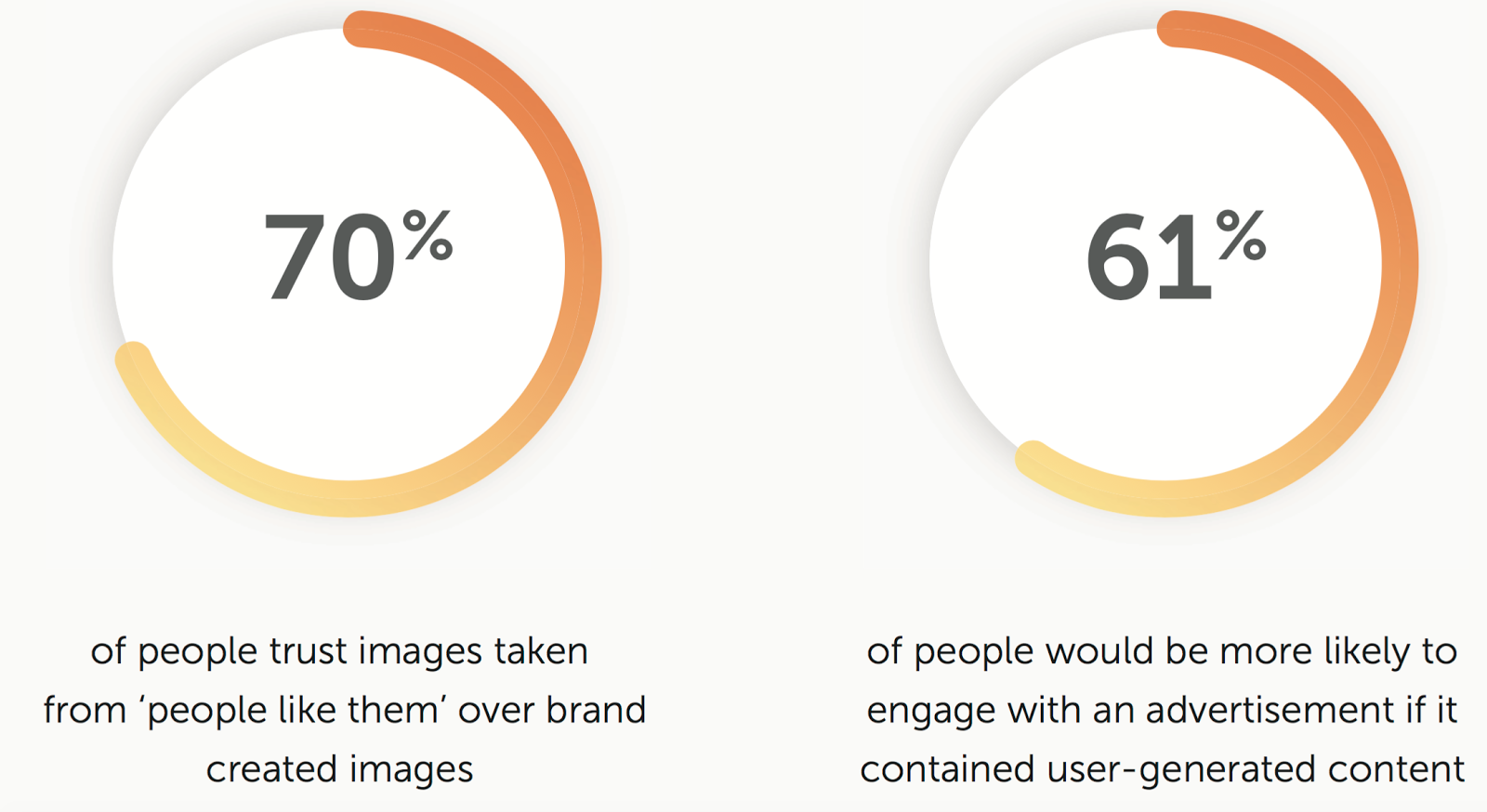
According to this study, 61% of people are more likely to engage with an advertisement if it contained content created by users.
Similarly, 70% trust images from regular people over branded images.
Step #5: Track the performance of your customer advocates
Of course, no marketing strategy is complete without a system to track and optimize performance.
There are many ways that you can measure how well your customer marketing campaigns are doing.
1. Assign tagged links to each customer with promo codes already embedded. This way you’ll know how many sales each advocate brings you.
You can also measure click through rates and conversion rates on tagged links. Take it a bit further and determine the total number of new customers acquired by each advocate.
2. Set up unique passwords for invite-only clubs or events. This will give you a good indication of the impact that customers have on engagement.
You can rate advocates based on the type and quality of engagements that they foster.
Group sign ups, newsletter sign ups, event attendance, and reviews are just a few of the interactions that you can track.
3. Calculate your customer acquisition costs. This is a super important metric to determine the effectiveness of your marketing.
Customer advocacy should have a major impact on this figure.
Why?
You’re minimizing churn, improving conversion rates, providing more value, and improving the overall customer experience.
These are the activities that lower acquisition costs.
There are a few ways to calculate this cost, but here’s a basic formula.
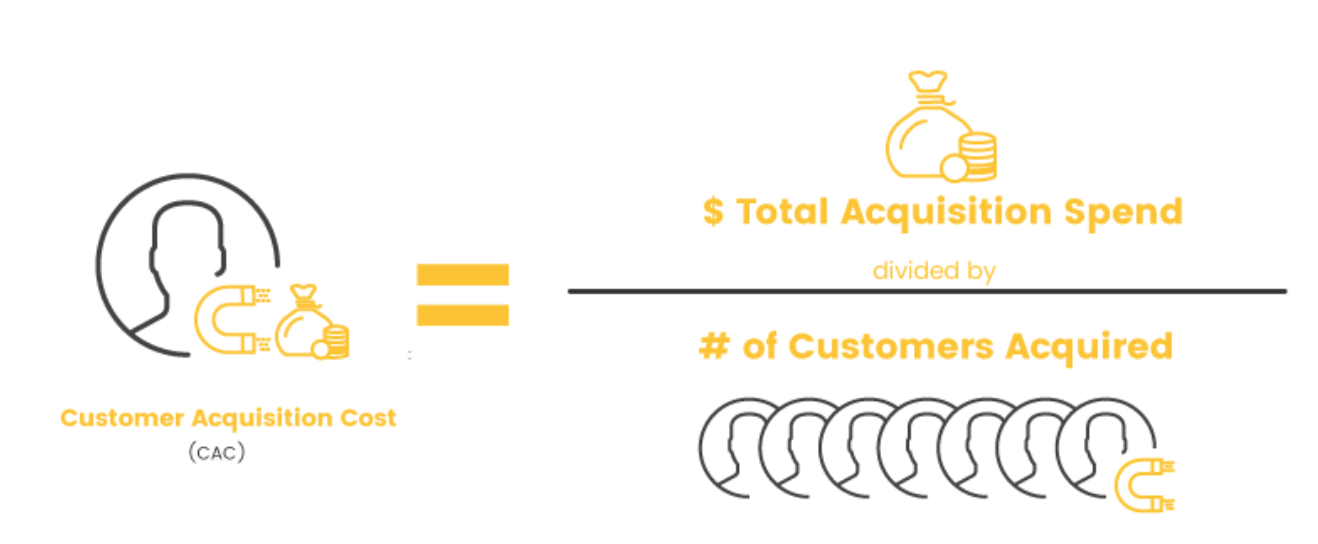
Your total acquisition spend includes your sales and marketing costs.
3. Calculate customer lifetime value. This is the total sum that a customer is worth to you over the entire future relationship with that customer.
Again, this can get complicated, but we’ll adopt a simple formula.
First, calculate your customer value.
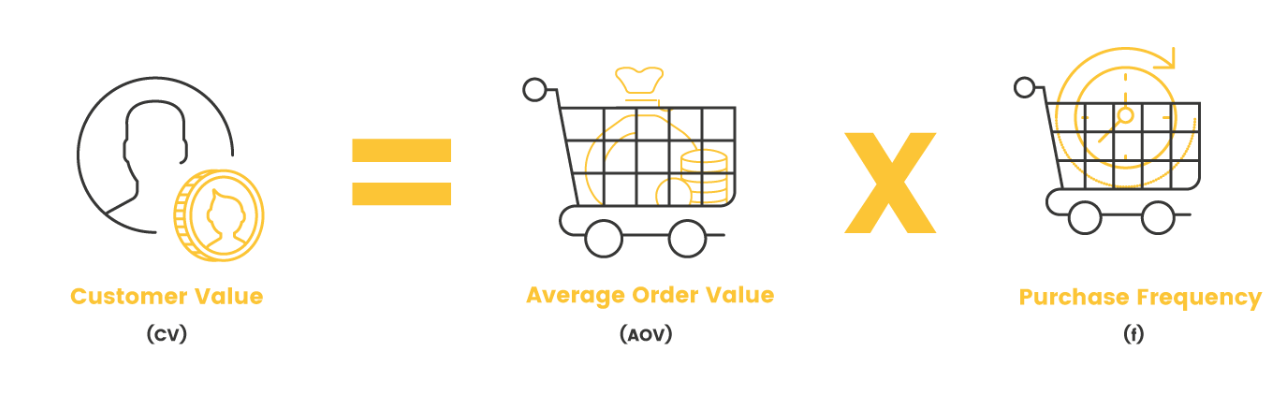
Then, calculate your average customer lifetime value.
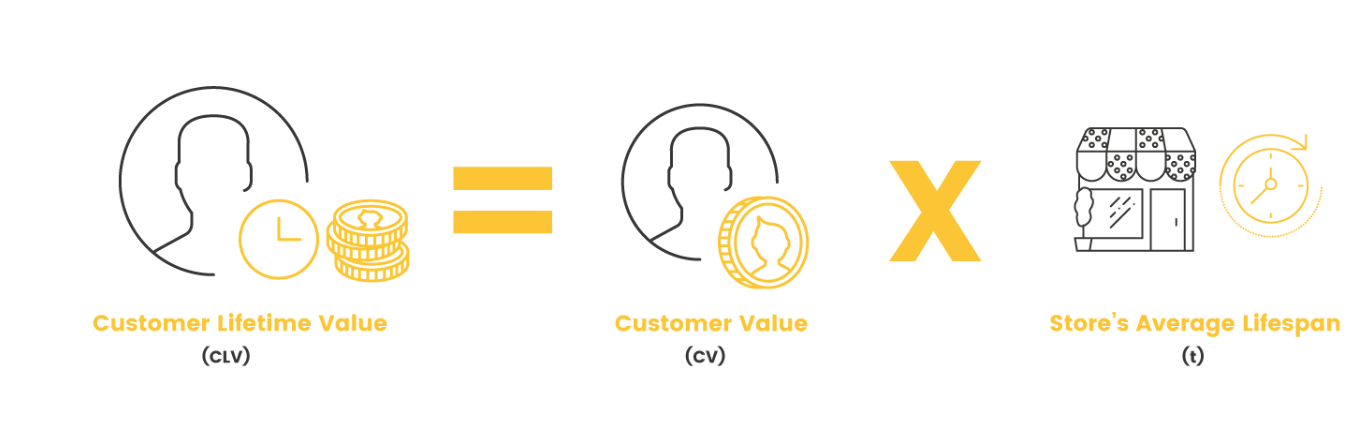
For more details, see this great post about customer acquisition cost and lifetime value.
Step #6: Have a results/reward system for your customer advocates
The most effective type of advocacy is organic.
You shouldn’t have to pay your customers to rave about how much they love you.
However, it’s important that your customers are rewarded for the value that they bring to the table.
There are several ways to do this.
Here are some ideas.
- Include your customers in the beta phases of a new product launch or give them sneak peeks of new projects.
- Hold exclusive events for your advocates.
- Have a point system where the highest performing advocates get a special prize.
- Feature your customers on your websites and social media pages.
- Give your advocates branded merchandise.
Conclusion
No doubt, your customers are your greatest allies.
If you give them a great product coupled with remarkable service, your job is half done.
Chances are, they’ll promote you at their own discretion.
But just imagine what you can achieve if you actively engage your most loyal customers as advocates for your brand.
You can elevate your results by empowering them with the tools needed to market your products and services.
The best part?
This is a sustainable strategy.
You don’t have to hand out referral commissions or expensive rewards.
Simply provide your customers with a transformative experience, and they’ll return the favor.
What strategies do you use to encourage customers to market your business for you?