 Sign In








More Marketing Technology Doesn’t Mean You’re More Advanced
Info
-
Source: NP Digital
-
Date: September 2026
-
Category: Measurement & Strategy
-
Study Methodology: Data from 600 survey respondents.
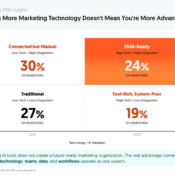
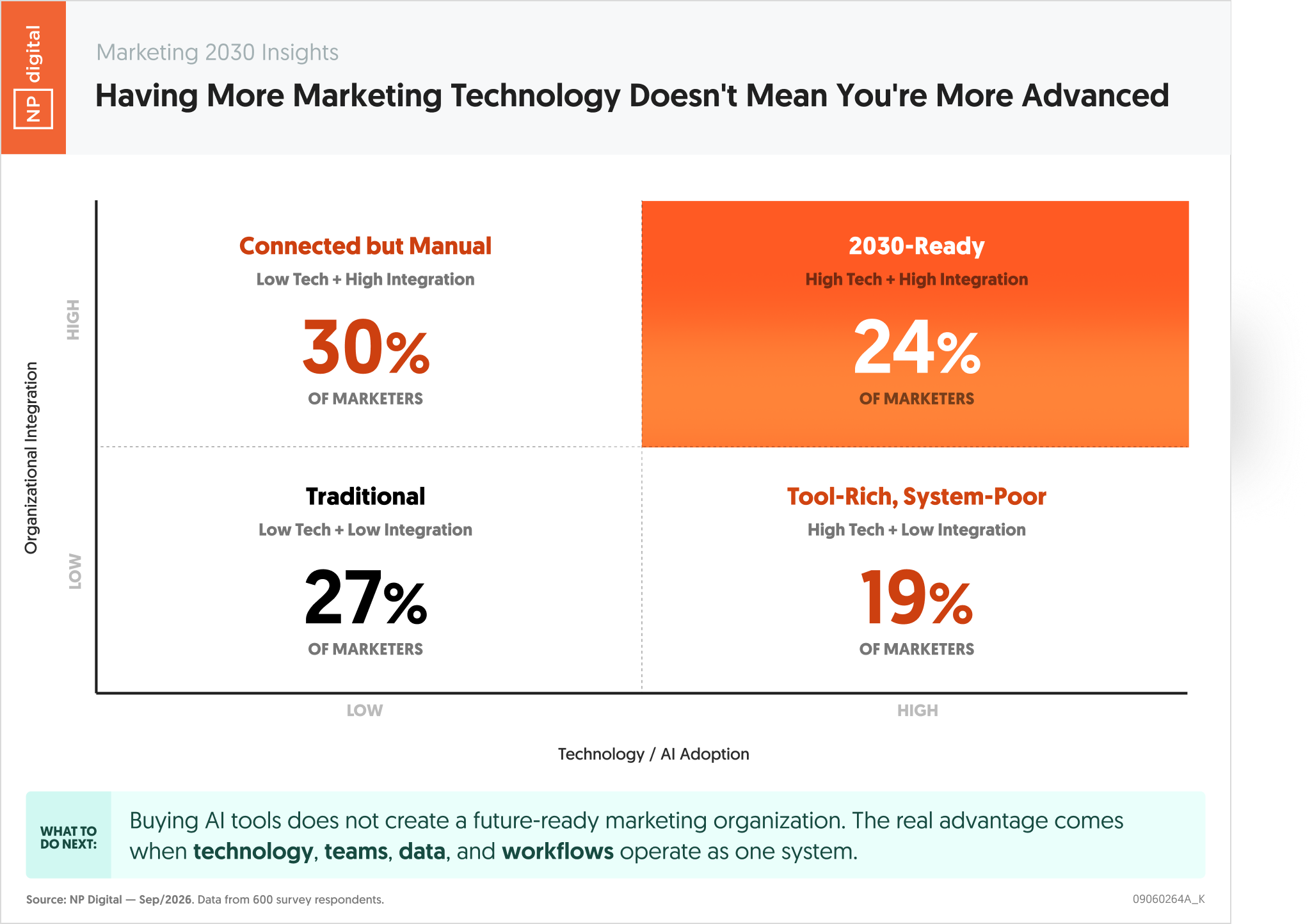
It’s easy to assume that adopting more marketing technology automatically makes an organization more advanced, but a survey of 600 marketers suggests otherwise. Respondents were mapped across two dimensions, technology and AI adoption on one axis, and organizational integration on the other. Only a quarter of marketers land in the quadrant combining both high technology and high integration, while nearly a fifth report high technology paired with low integration, a combination that leaves teams tool-rich but still operationally disconnected.
Essential Statistics
- 24% of marketers fall into the high tech, high integration quadrant, described as 2030-ready.
- 30% fall into the low tech, high integration quadrant, described as connected but manual.
- 27% fall into the low tech, low integration quadrant, described as traditional.
- 19% fall into the high tech, low integration quadrant, described as tool-rich but system-poor.
- Combined, 46% of marketers report high integration regardless of technology level, while only 43% report high technology adoption regardless of integration level.
Key Takeaways
- Only about a quarter of marketers landing in the fully ready quadrant suggests true 2030-readiness is still the exception rather than the norm, even among teams already investing in technology.
- The 19% in the tool-rich, system-poor quadrant suggests a meaningful share of marketers may be over-investing in tools relative to the organizational structure needed to use them well.
- The 30% in the connected but manual quadrant suggests strong team alignment can exist even without heavy technology investment, which is worth remembering before assuming more tools is always the answer.
- The relatively even split across all four quadrants suggests technology adoption and organizational integration are two genuinely separate variables, not two outcomes of the same investment.
- This framework suggests readiness for 2030 depends on closing the gap between tools and teams, not simply acquiring more tools.
Actionable Insights
- Map your own organization onto these four quadrants honestly before making your next martech purchase. If you already have high technology adoption but land in the low integration quadrant, the next investment should go toward process and structure, not more tools.
- If you’re in the connected but manual quadrant, prioritize automating your most repetitive, already-aligned workflows rather than adding new point solutions that could fragment the integration you’ve already built.
- Audit your current tech stack for overlap and underuse before adding anything new. Being tool-rich but system-poor is a specific, identifiable trap this data suggests nearly one in five marketers fall into.
- Treat integration, not adoption, as your primary 2030-readiness metric. This data suggests the two don’t move together automatically, so integration needs its own deliberate investment.
- Set a goal of moving from your current quadrant to the 2030-ready quadrant over a defined period, and identify specifically whether technology or integration is your bigger gap before starting.
‘Buying more software isn’t a strategy. If your tools and your teams aren’t operating as one system, you’re just tool-rich, not ready.’ – Neil Patel