 Sign In





 Ubersuggest
  AnswerThePublic
 Why Marketers Abandoned Sora
Info
-
Source: NP Digital
-
Date: August 2026
-
Category: Video Marketing
-
Study Methodology: Data from surveying 1000 people who used Sora. Numbers rounded to the closest whole number.
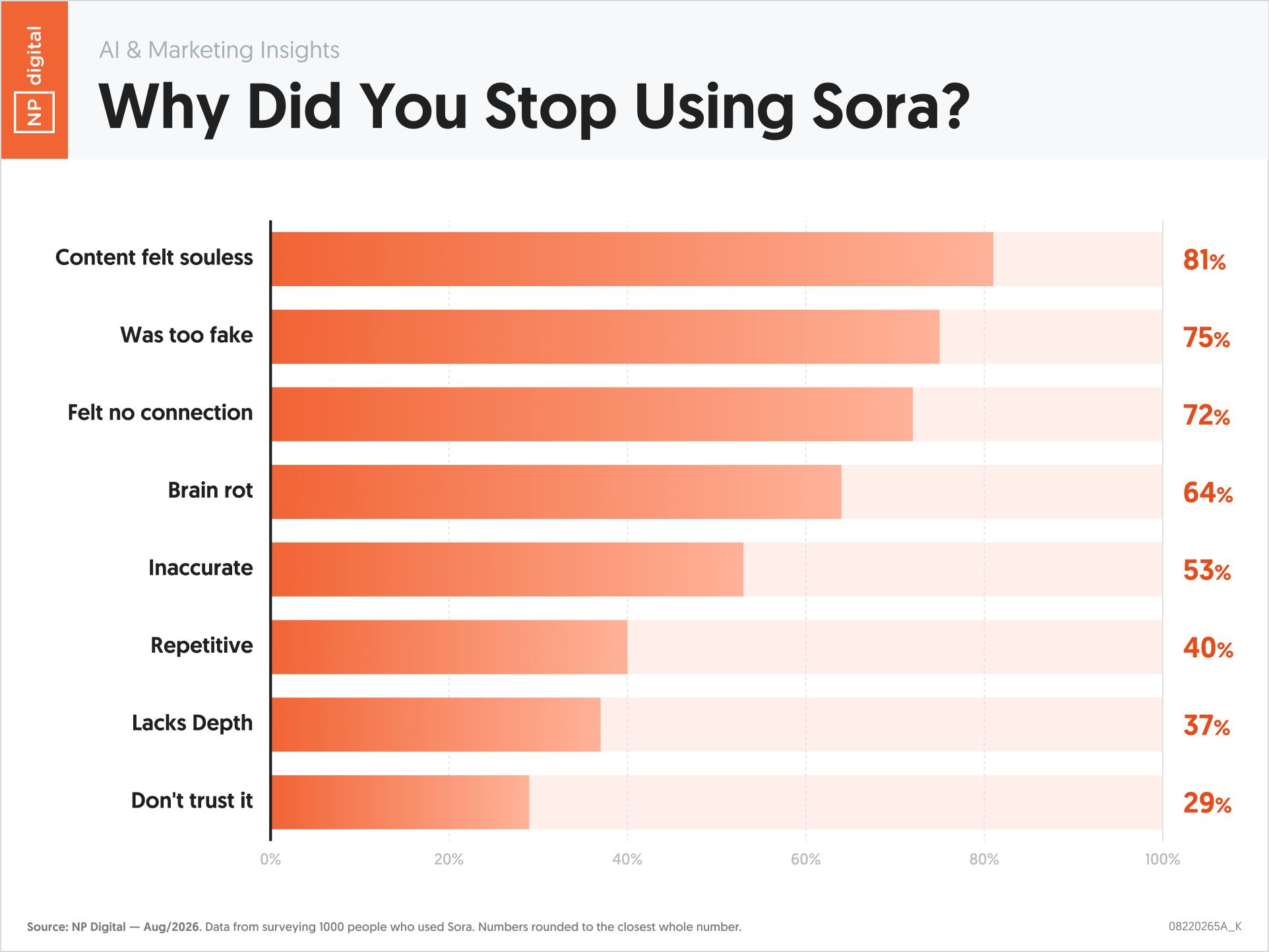
Sora generated a wave of curiosity when it launched, but curiosity and retention are two very different things. A survey of 1000 people who used the tool asked why they eventually stopped, even prior to its eventual shutdown. The answers cluster heavily around emotional and trust-based concerns rather than technical limitations. That distinction matters for anyone building an AI video strategy, since it suggests the barrier is connection versus capability
Essential Statistics
- 81% of former Sora users said the content felt soulless.
- 75% said the content felt too fake.
- 72% said they felt no connection to the content.
- 64% cited a general sense of brain rot from consuming AI video content.
- 53% pointed to inaccuracy as a reason they stopped, while 29% said they simply didn’t trust it.
Key Takeaways
- The top reasons people cite for abandoning AI video are emotional rather than technical, which suggests polish alone won’t solve the retention problem.
- A large share of users describing content as soulless or fake points toward audiences being able to sense the absence of a real creator, even when the visuals are convincing.
- The mention of brain rot alongside a lack of connection suggests fatigue sets in faster with AI video than with content that carries a genuine point of view.
- Trust and accuracy concerns ranking lower than emotional complaints suggests the bigger obstacle for brands using AI video is audience connection, not factual reliability.
- This points toward AI video working best as a supplement to a real creator’s voice rather than a full replacement for one.
Actionable Insights
- If you’re using AI video in your marketing, layer in a real voice, whether that’s a founder, employee, or customer, rather than relying on fully synthetic narration. The data suggests connection is the biggest gap AI video needs to close.
- Avoid using AI video for content meant to build trust or credibility, like testimonials or expert commentary. Use it instead for lower-stakes formats like quick explainers or background visuals where authenticity matters less.
- Test shorter AI video formats rather than long-form content, since the brain rot sentiment suggests fatigue builds quickly with synthetic content.
- Pair AI-generated visuals with human-written or human-recorded audio to reduce the sense of disconnect users described. This hybrid approach is worth testing against fully AI-generated pieces.
- Monitor engagement drop-off specifically on AI video content compared to your other formats. If you see the same disconnection pattern reflected in this data, that’s a signal to scale back rather than push further into pure AI video.
People aren’t rejecting AI video because it looks bad. They’re rejecting it because it feels empty. That’s a much harder problem to fix with better prompts.’ – Neil Patel