 Sign In







Brand Is Becoming a Performance Metric, Not Just Awareness
Info
-
Source: NP Digital
-
Date: September 2026
-
Category: Brand & Reputation
-
Study Methodology: Data from 600 survey respondents. Bubble size represents importance to marketers.
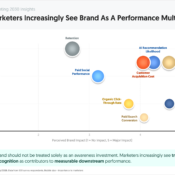
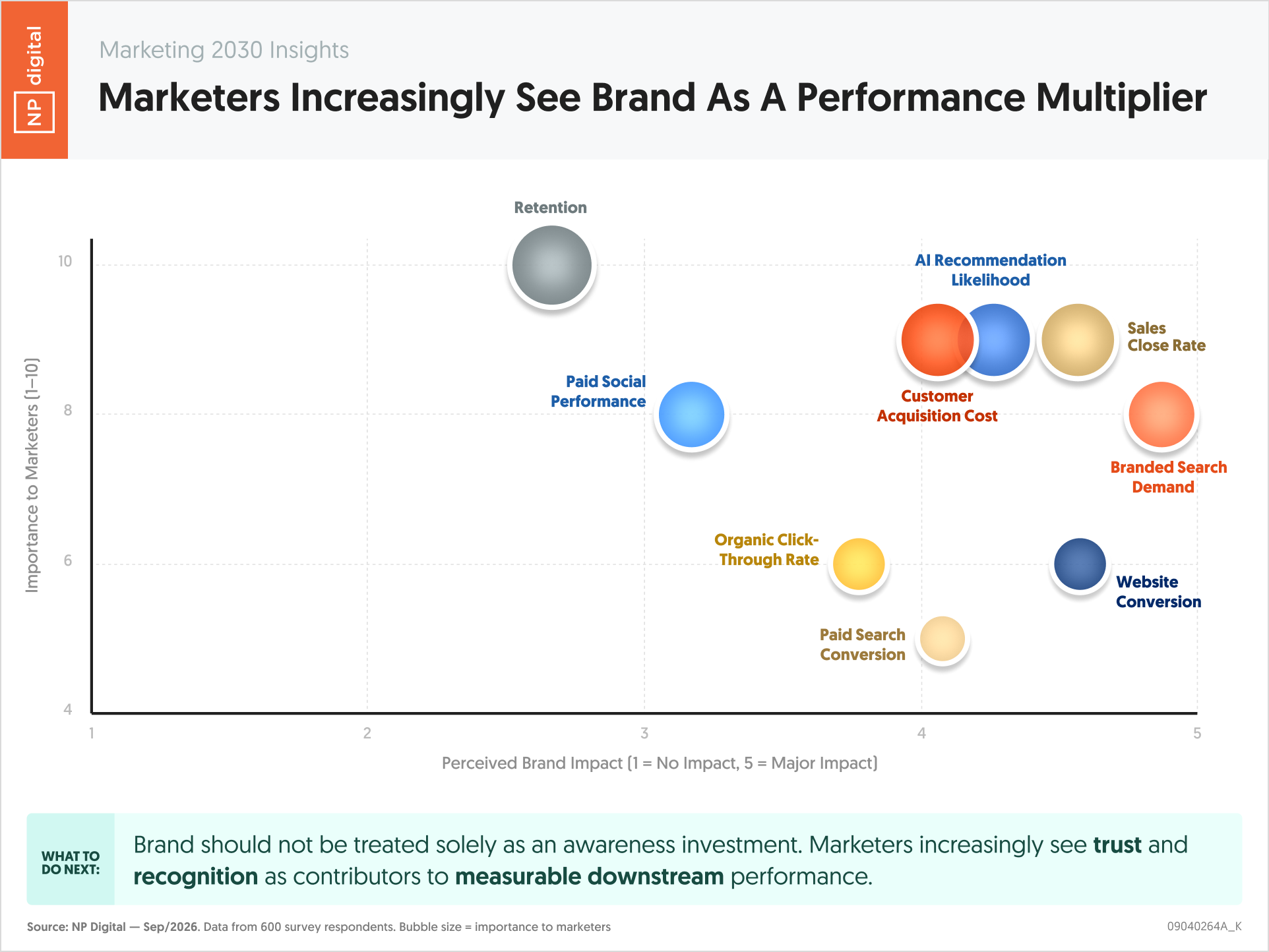
Brand and performance have lived in separate budgets and separate dashboards for years, but that separation is starting to look outdated. A survey of 600 marketers mapped how much perceived impact brand has on a range of performance metrics, from retention to branded search demand, against how important marketers consider each metric to be. Retention stands out as the metric marketers value most, even though they don’t yet see brand as having a major direct impact on it. Metrics tied to AI recommendation and sales close rate show both high importance and strong perceived brand impact, suggesting brand’s influence is showing up more clearly downstream than most budgets currently reflect.
Essential Statistics
- Retention rates were highest in importance to marketers at a 10 out of 10 score, despite a comparatively low perceived brand impact score of around 2.5 out of 5.
- AI recommendation likelihood, customer acquisition cost, and sales close rate all cluster near a 9 out of 10 importance score alongside a brand impact score above 4 out of 5.
- Branded search demand scores close to a 5 out of 5 in perceived brand impact, the highest brand impact score in the data set.
- Paid social performance scores near an 8 out of 10 importance level with a comparatively lower brand impact score of around 3 out of 5.
- Paid search conversion scores lowest in both importance and perceived brand impact among the metrics measured.
Key Takeaways
- Retention scoring highest in importance while showing lower perceived brand impact suggests marketers may be underestimating how much brand trust actually contributes to keeping customers around.
- The cluster of high-importance, high-brand-impact metrics around AI recommendation likelihood and sales close rate suggests brand is increasingly viewed as a lever for machine-driven and human sales decisions alike.
- Branded search demand scoring highest in brand impact reinforces that direct searches for a company by name remain one of the clearest signals of brand strength.
- Paid search conversion and website conversion scoring low on both dimensions suggests these bottom-of-funnel metrics are seen as more mechanical and less influenced by brand perception.
- This pattern suggests marketers are starting to treat brand as a performance multiplier that shows up across the funnel, not an isolated top-of-funnel investment.
Actionable Insights
- Track branded search demand as a leading indicator of brand health, since this data shows marketers rate it as one of the metrics most directly shaped by brand strength.
- Reexamine your retention strategy for brand-driven levers such as trust and recognition, since this data suggests marketers may be undervaluing brand’s role in keeping customers, even though they rate retention as the most important metric overall.
- Connect brand investment to AI recommendation likelihood and sales close rate in your reporting, since these metrics show both high importance and high perceived brand impact in this data.
- Avoid framing brand spend and performance spend as competing budget lines. This data suggests marketers increasingly see them as connected, not separate.
- Build a simple internal dashboard that pairs brand metrics with the performance metrics this data ties them to, such as branded search and AI recommendation likelihood, so brand’s downstream impact becomes visible rather than assumed.
‘Brand was always going to show up in the numbers eventually. Retention, close rate, AI recommendations, all of it. Marketers are just starting to draw that line now.’ – Neil Patel