 Sign In










Response Time Impact on Lead Conversion
Info
-
Source: NP Digital
-
Date: February 2026
-
Category: Lead Gen & B2B
-
Study Methodology: Sample size: 500 marketers; Method: Survey
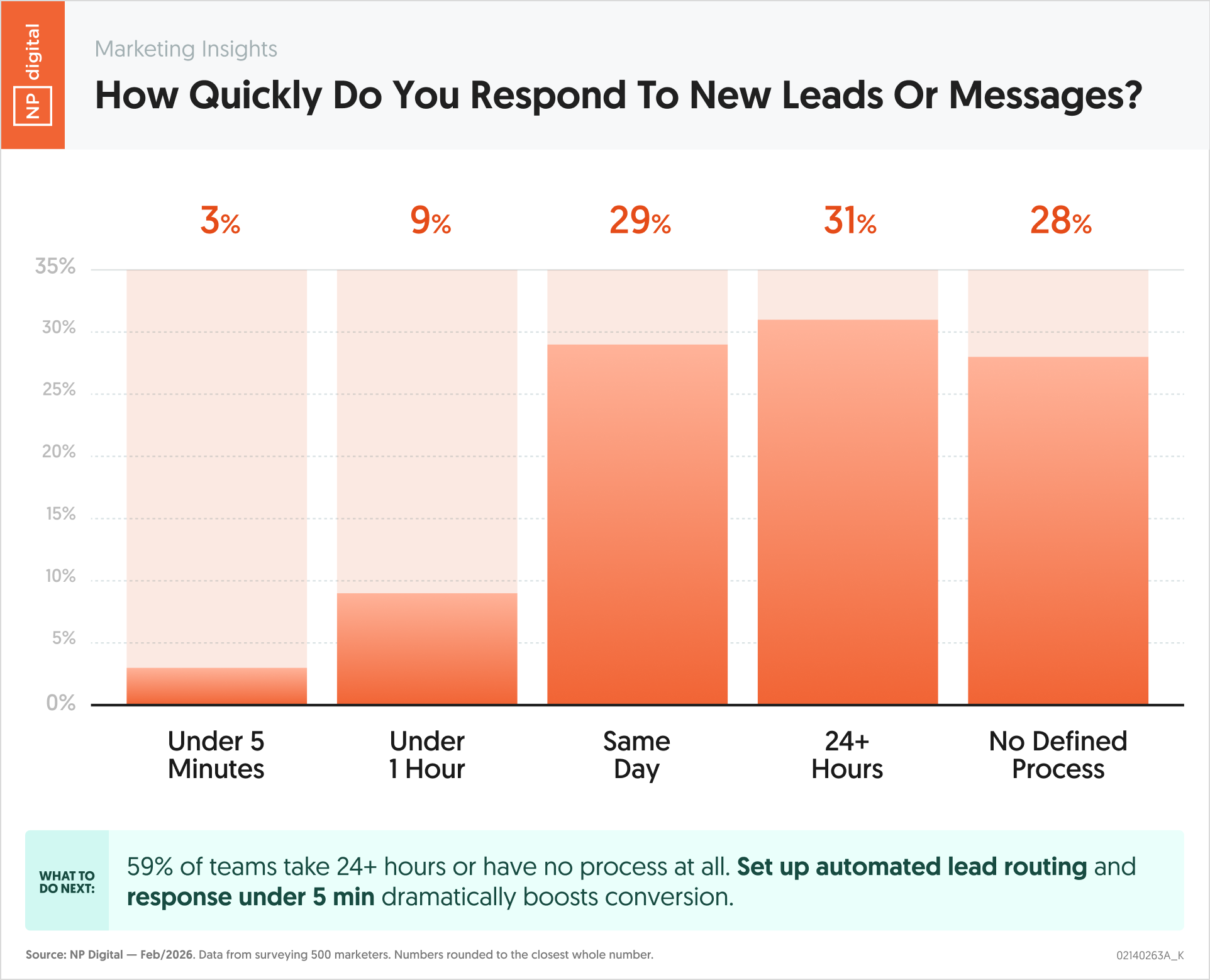
This chart shows how quickly teams respond to new leads. Very few respond within minutes. Most responses happen the same day or later. Many teams lack a defined process. Speed is a critical factor in conversion success.
Essential Statistics
- Only 3 percent respond within 5 minutes.
- 9 percent respond within 1 hour.
- 29 percent respond the same day.
- 31 percent take 24 hours or more.
- 28 percent have no defined process.
- 59 percent respond late or inconsistently.
Key Takeaways
- Most businesses respond too slowly to leads.
- Speed is a major competitive advantage.
- Delayed responses reduce conversion rates.
- Lack of process creates missed opportunities.
- Fast response times improve customer experience.
- Automation can solve response delays.
Actionable Insights
- Implement automated lead routing. Faster distribution ensures leads are handled immediately instead of waiting in queues.
- Set a response time SLA under 5 minutes. The data shows very few teams meet this, creating a clear opportunity to stand out.
- Use chatbots or instant responders. Immediate engagement increases the chances of conversion.
- Train teams to prioritize speed. Make response time a core KPI, not an afterthought.
- Monitor response time metrics. Track performance regularly to identify delays.
- Standardize follow-up processes. A clear system reduces missed leads and improves consistency.
Speed is the easiest conversion win. Respond faster than your competitors and you will close more deals. – Neil Patel