 Sign In









Where Do Global and Local Marketing Teams Disagree Most?
Info
-
Source: NP Digital
-
Date: September 2026
-
Category: Lead Gen & B2B
-
Study Methodology: Data from 600 survey respondents. Preferred decision-making authority scored 1, none, to 10, full.
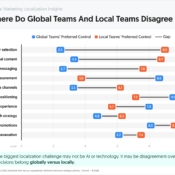
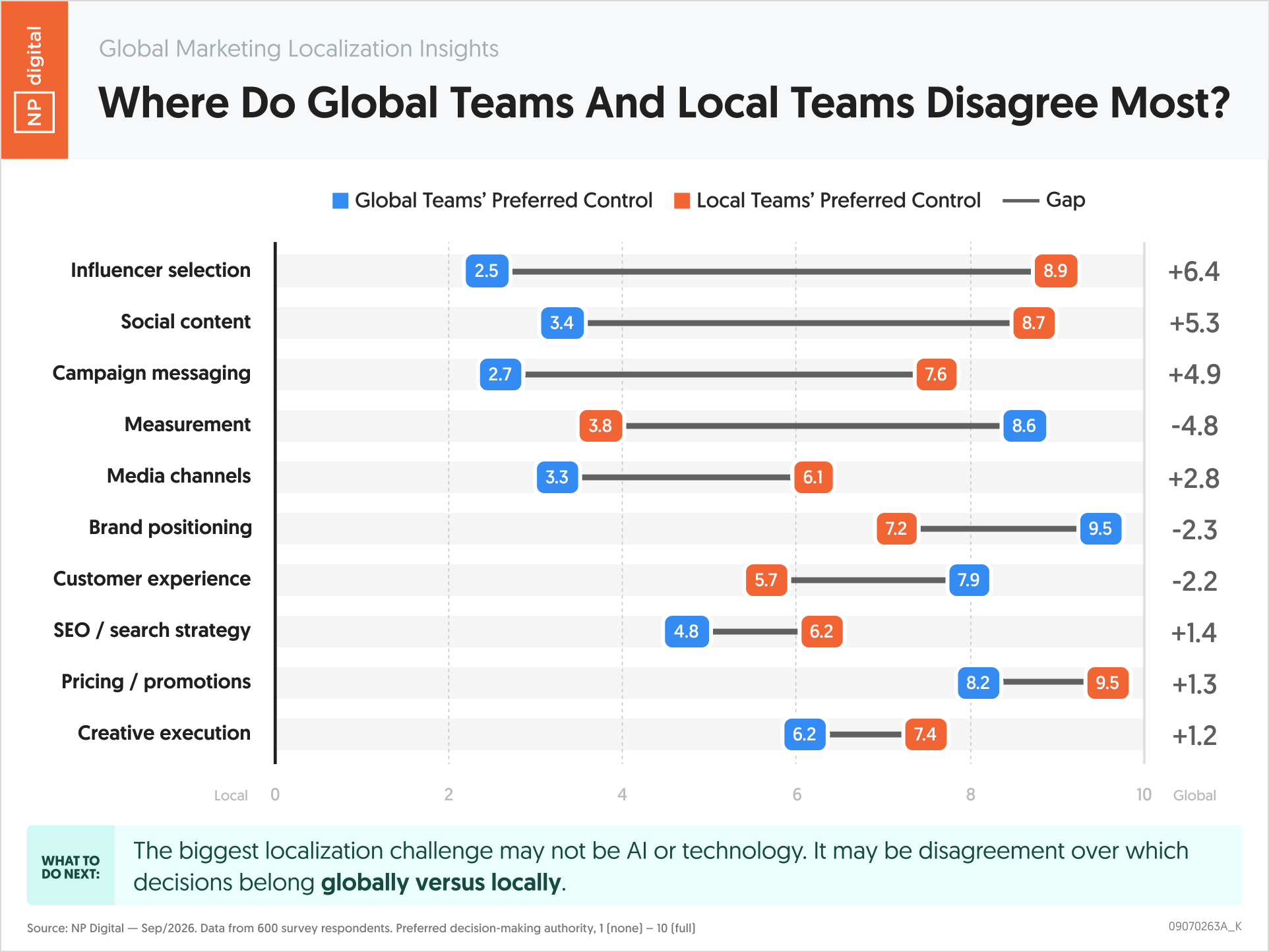
Global marketing organizations run into friction most often over who gets to decide, not over what to decide. A survey of 600 marketers compared how much decision-making control global teams prefer versus how much local teams prefer, across ten common marketing functions. Influencer selection shows the widest gap, with local teams wanting far more control than global teams are willing to give. Measurement is the one area where the pattern flips, with global teams pushing for more control than local teams want.
Essential Statistics
- Influencer selection shows the widest gap between global and local preferred control, at 6.4 points, with local teams preferring far more control.
- Social content shows the second-widest gap, at 5.3 points, also favoring local team control.
- Measurement is the only function where global teams prefer meaningfully more control than local teams, with a gap of 4.8 points in the global direction.
- Brand positioning and customer experience both show local teams already holding relatively high preferred control scores, at 7.2 and 5.7 respectively, while global teams want even more.
- Pricing and promotions shows the smallest gap among functions with a clear local preference, at 1.3 points.
Key Takeaways
- Influencer selection and social content showing the widest local-preference gaps suggests these are the functions where local market knowledge is seen as most essential, and centralizing them may create the most friction.
- Measurement being the sole function where global teams want more control than local teams suggests global headquarters values consistent, comparable data more than local teams value setting their own measurement standards.
- Brand positioning and customer experience both leaning toward global control despite local teams already wanting significant say suggests these areas may require the most deliberate negotiation to avoid ongoing tension.
- The relatively small gaps on pricing, promotions, and creative execution suggest these functions may already have reasonably well-established governance in most organizations.
- This pattern suggests localization friction is less about AI or technology and more about unresolved questions of who owns which decisions.
Actionable Insights
- Formalize local team ownership of influencer selection and social content decisions, since these show the widest disagreement and local teams are consistently pushing for more control here.
- Keep measurement standards centralized at the global level, since this is the one function where global teams’ preference for control aligns with what this data suggests works best for cross-market comparability.
- Set up a structured negotiation process for brand positioning and customer experience decisions specifically, since both functions show meaningful gaps that could create ongoing tension if left undefined.
- Use this gap data as a starting point for a governance conversation with your own global and local teams, mapping where your organization’s disagreements are likely to mirror these patterns.
- Don’t assume a one-size-fits-all governance model will work across all ten functions. This data suggests the right level of local versus global control varies significantly by function.
‘Nobody’s fighting about AI here. They’re fighting about who gets to decide. Influencer selection and social content are where that fight is sharpest, and local teams are usually right to want the control.’ – Neil Patel