 Sign In







Everyone starts at ground zero.
Years ago, my first website was a job board, AdviceMonkey (like Monster.com).
I didn’t know anybody and I had no connections. Plus, I had very little money to sink into it.
But more importantly, I didn’t know anything about online marketing, either.
So it’s no surprise that the job board website didn’t make it. But, it led me to where I am today, teaching you how to avoid that the same mistakes I made.
If you follow my tactics below, you’ll hopefully be able to learn from my mistakes and slowly but surely start getting traffic and customers to your site.
Best of all, you don’t even need money, a brand, or connections with these tips.
You just need to understand what doesn’t work (so you don’t waste your time) and where to channel your energy instead.
Let’s take a look.
Don’t worry about advertising for now
Advertising is without a doubt the fastest way to bring in new customers.
Google AdWords, for example, is like a faucet. Throw down some money, turn the faucet on, and watch the leads pour in.
If you know what you’re doing and have access to capital, ads can skyrocket growth.
Except, in your case, that’s not going to work.
New businesses require a ton of cash just to get off the ground. Any left-over profit at the end of the day is probably already getting reinvested in inventory, contractors, new team members, and more assets that can expand your company’s footprint.
Which means you probably have little to no money to plow into ads.
You know what, though? That’s OK.
No money can be a powerful constraint. It forces you to get creative and stretch those existing dollars further. And it will also force you to change your strategy for getting a website off the ground.
For example, all your traffic in the early days will come from other people. And the faster you realize that the quicker you can get to work on activities that fuel the fire.
Let’s check out some of my favorite ways to get other people to send you traffic.
Start by getting referrals from other websites
Open up Google Analytics real quick and head over to your Acquisition report.
What do you see?
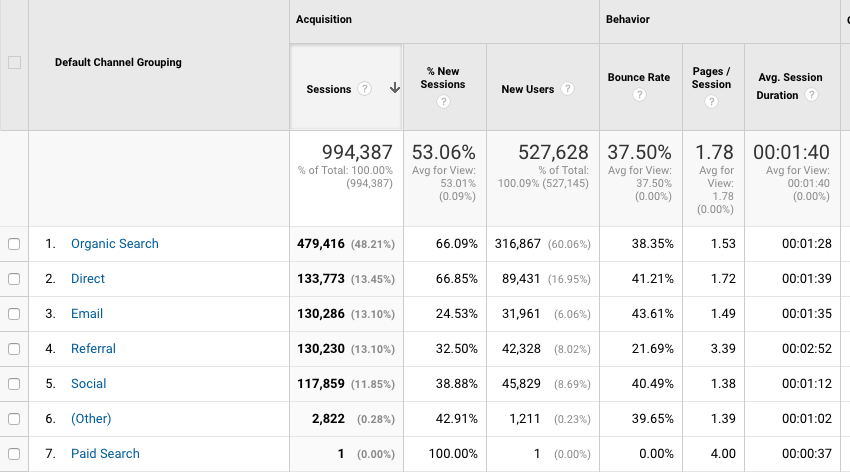
Probably that there are four primary ways people find your website right now:
- Direct: These are visitors who type in your URL directly into their address bar.
- Paid: Obviously, these are visitors from advertising campaigns.
- Organic search: These are visitors who find your pages and posts in search engines.
- Referrals: A referral is a visitor who finds you through links (like websites, blogs, social media, etc.)
Your options quickly run out when you run down that list. Direct isn’t very helpful because people don’t know you. There’s no leftover cash for paid campaigns. And you don’t even exist in the minds of search engines at this point (more on this later).
That leaves you with only one option: Referrals.
Somehow, someway, you need other people and other websites to talk about you, link to you, and send you traffic.
There are two things you need:
- Make yourself accessible in more places; and
- Give people a good reason to promote you.
You can accomplish the first by thinking through distribution.
For example, home decor store Walls Need Love saw their first steps of growth by simply listing products through other marketplaces. Do a search for them right now and here’s what you’ll see:
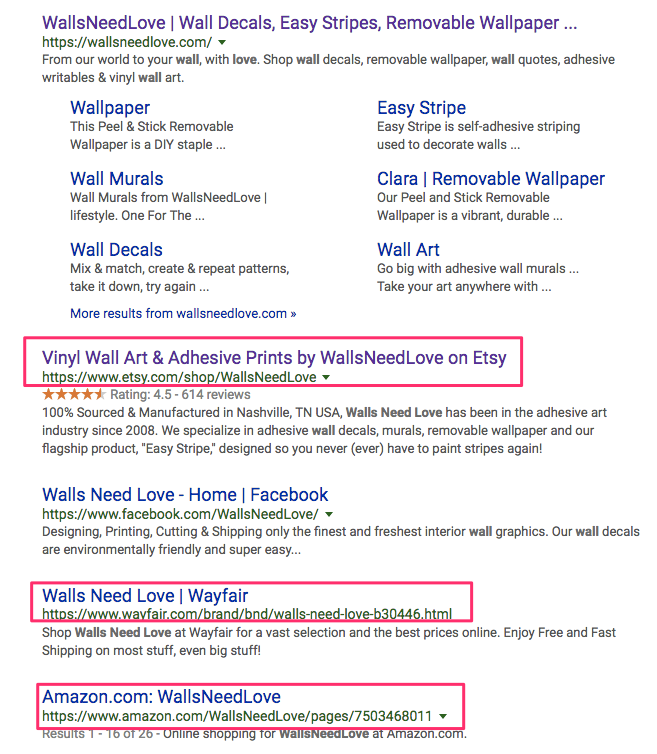
They’d prefer sales through their own website, of course. But in the early days, you need to hustle! And that often means working with other large platforms that already have the audience you so desperately need.
Case in point: 44% of all product searches start on Amazon!
They’re a massive, respected brand. And their free two-day shipping for Prime members doesn’t hurt, either. So people will naturally start there when looking for something new.
Amazon’s been incredible for my business,” said The Daily Fairy founder Emily. “I started selling on Amazon in October of 2015, and it’s doubled my sales. What that tells me is that there’s a whole slew of people who didn’t know I existed. It’s working way better than a Google search for me.
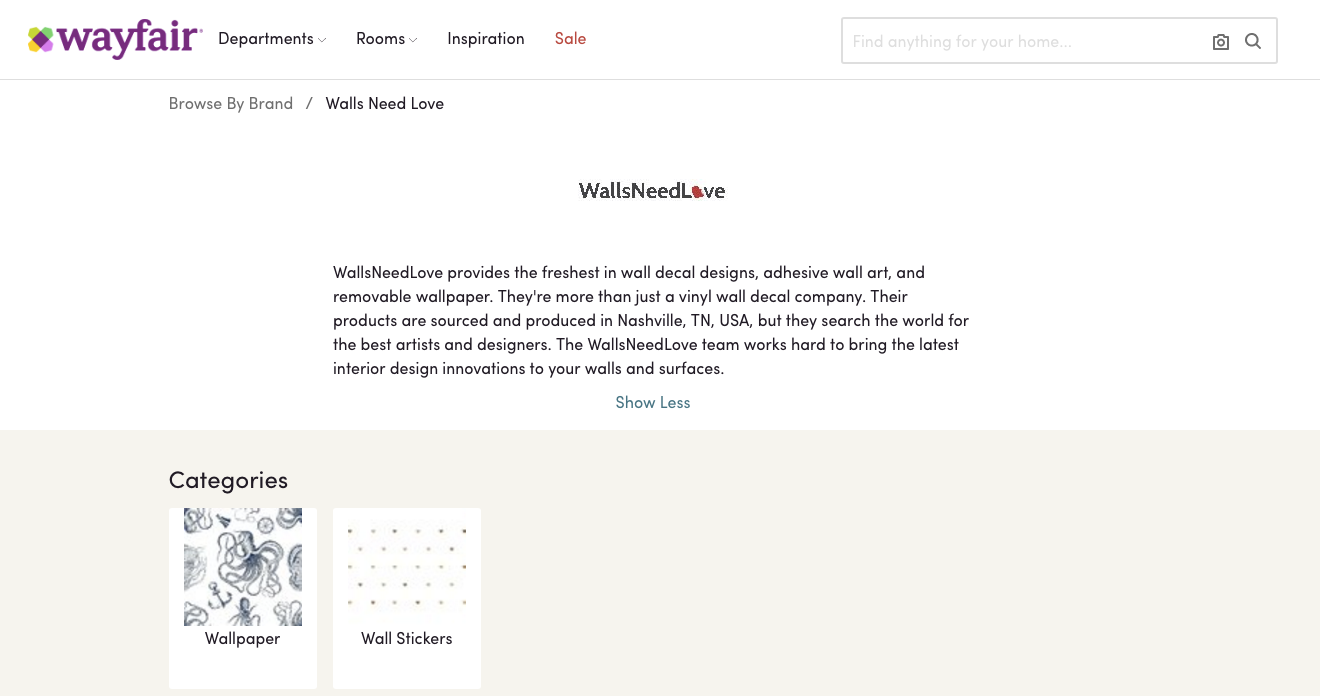
That’s why Walls Need Love will work with many of the major product marketplaces like Etsy, Wayfair, and Amazon (as long as they offer decent terms).
It gives them a new shot at getting their product out to prospective buyers and pulling in sales they would have otherwise not received on their own site (because these people are discovering them for the first time).
Many of these marketplaces can even help you advertise on their sites, too.
Wait — didn’t I say to forget about advertising?
Yes, but in this case, they might be willing to take a percentage of sales sold on their sites. That means you don’t pay a single cent upfront! Even better, you’re only paying for real sales (not just clicks or eyeballs).
So, in that case, it’s a win-win: You get the promotion (and credibility) you so desperately require, and they get a little something for promoting a new brand like you.
Revenue sharing agreements like this are common in all sorts of businesses, for both selling products and services. And it conveniently brings us to our second tip.
People need an incentive to care about your brand.
You might live and breath it, but nobody else feels that same passion (just yet). You need to give them a reason, like a cut of your revenue, or even a referral program.
For example, back in the day, PayPal blew up when it created a viral Refer-a-Friend campaign (in 2003!).
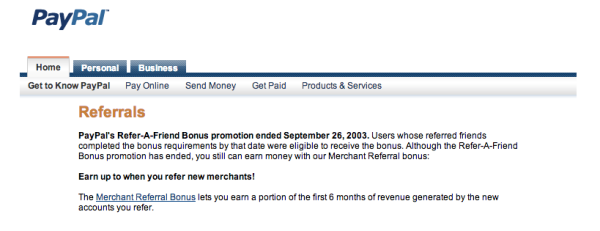
This simple yet effective tactic sent them over 100 million members with 7 to 10% daily growth.
Best of all, you don’t need fancy software or custom developers to set something like this up. For example, ReferralCandy is an ‘off the shelf’ tool that you can have up and running in less than an hour.
You can create different program terms and generate custom links with it that will track and report results back to you when people start spreading and redeeming.

These tactics are tailor-made for product companies.
Both product and service companies can use this next one. It’s one of the best tactics I’ve ever used, directly influencing the growth in all my multi-million dollar businesses.
You’re an expert on something. Make sure other people know about it
Becoming a recognized expert opens all kinds of doors.
It allows you to write for big sites, speak at conferences, and then channel all of that attention back to whatever you’re selling.
Jason Calacanis is a perfect example. As a successful entrepreneur over the past 20 years or so, Jason has been able to capitalize on his visibility and connections within the industry to get early investments in massive companies like Uber.
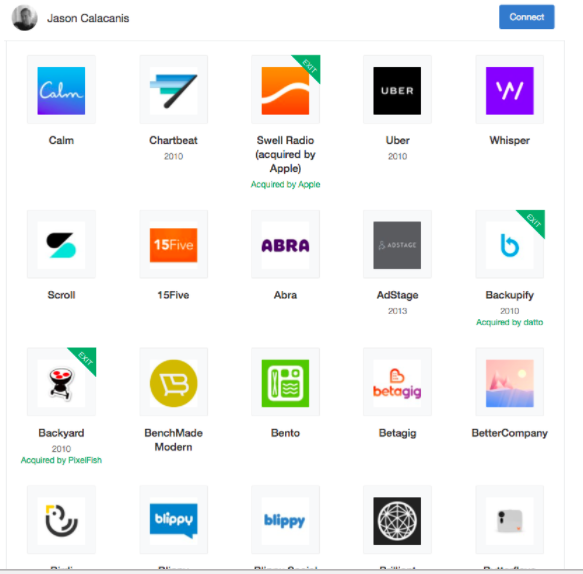
He’s been so good at it that he even wrote a book on angel investing.
Developing thought leadership creates a self-reinforcing cycle. For example:
- I write for places like Entrepreneur, Inc., and Forbes.
- People read my articles and invite me to speak at conferences, to groups, to governments, and more (while also getting paid for my time).
- Those articles and speaking gigs lead to attention, forcing people to start Googling me.
- Those Google searches lead them to this site you’re reading now.
- People read and share my blog posts, and most importantly…
- Start buying my products and services, which then gets reinvested, and allows me to…
- Write for more mainstream media places like those at the top of this list!
In reality, it takes years of dedicated work to create something like that. I know you don’t have years right now.
But you can start somewhere.
It takes awhile to publish on a big site like Entrepreneur.com. However, there are tons of other good sites looking for expert content from you.
You just need to know where to look.
Start with the footer on different blogs in your space. Ideally, you want to find something about “Guest Authorship” or “Guest Blogger” or “Contribute.”

Bingo!
Now you want to look for list posts. Not the BuzzFeed kind of lists, but lists that rank the top blogs in your space. They’ve already done all the work for you, finding good potential targets to reach out to.
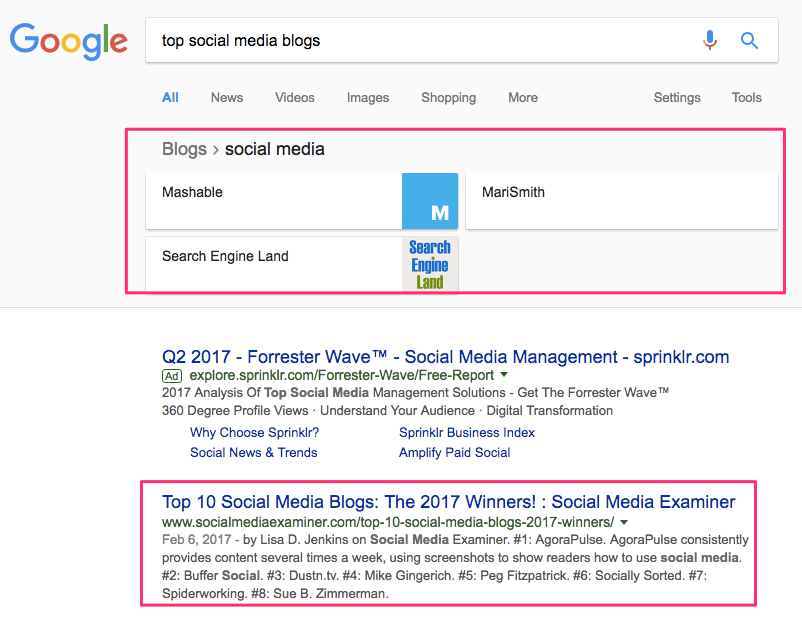
Of course, manually checking a bunch of websites can be incredibly time-consuming. So here’s another clever hack to shortcut this process.
Type a Site Search operator that looks something like this into Google:
- site:socialmediatoday.com “contribute”
With a little bit of luck, Google will instantly give you the answer you’re looking for:
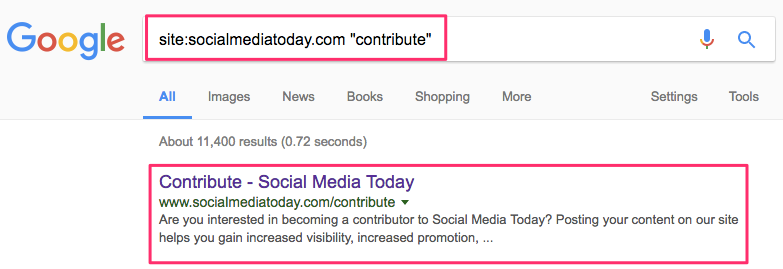
Thanks, Google!
Get out of your office (or house) and attend events
Customers are online, it’s true.
But when nobody knows who you are, it can be tough to get them to hand over a credit card online without ever meeting you.
What is the best sales hack out there?
It’s not a specific payment gateway. It’s not just listing your products on Amazon. And it’s not some clever A/B test.
It’s meeting people face-to-face.
84% of people surveyed say they prefer in-person meetings. And it’s one of the best ways to meet busy people who otherwise might ignore your LinkedIn Connect request or lose your cold email in the mountain of other stuff in their inbox.
You can even start simple here. Go to Meetup.com and look for what’s going on around you in your area. Within minutes, you’ll get a list of events, all happening over the next few days, which feature hundreds of potential partners or customers.
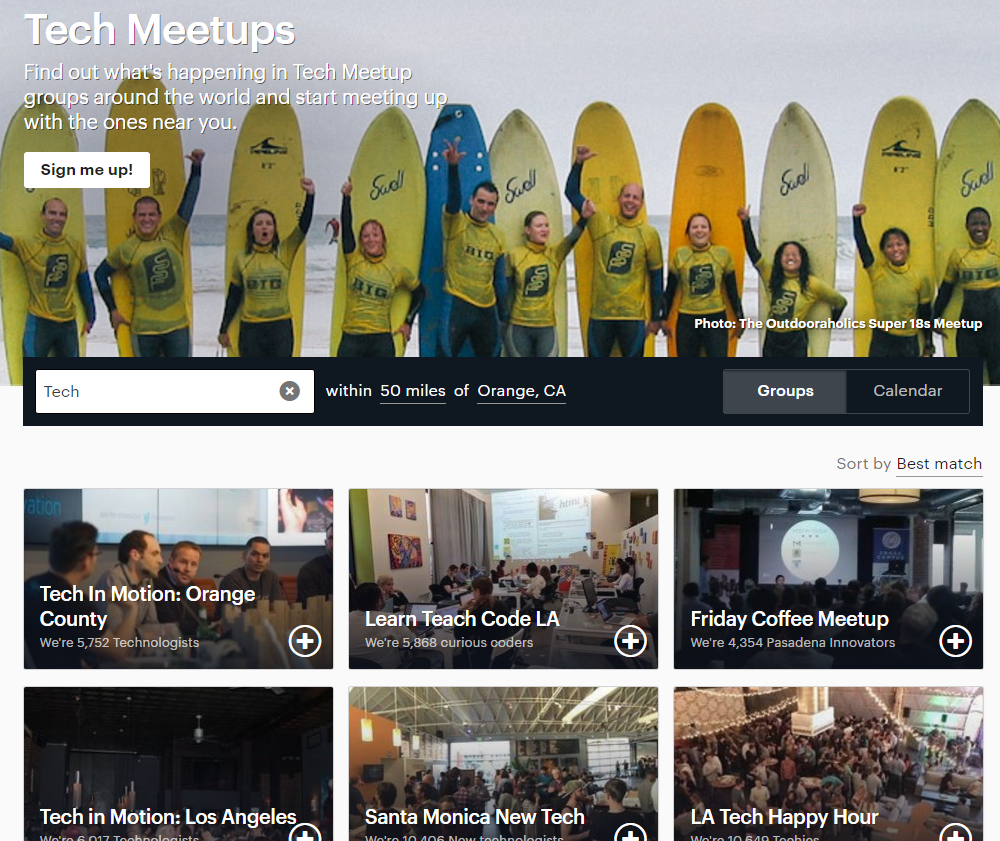
Simply attend, volunteer to help, keep showing up, and you’ll eventually start getting introductions to people who can open doors. You never know how networking will pay off.
And in the early days, it’s all about opening doors. Let’s say you’re a lawyer and you meet an accountant. So far it doesn’t sound like much, but it could be a big deal.
You probably both have high-net-worth clients who specialize in real estate. One of your clients could probably use the services of the accountant (and vice versa with theirs).
Simple. You could have an informal referral program or even pay a commission to keep new clients coming through the door.
This strategy is low tech, so there should be no hurdles to jump through and nothing else holding you back.
Then you can bring this relationship back online when it’s time. You can cross-promote each other on your websites or even send out updates periodically to your customer lists about a recent event you’re both attending.
Online marketing still comes back to people at the end of the day. And spending all day on Twitter can never replace the relationships you can solidify by meeting in person.
Start working with the press
HARO is one of the first places people think of when you talk about easy, low-cost PR tips.
It’s a good service, but often it’s not enough. Remember: You need to hustle!
So let’s find our own potential PR opportunities by connecting with important journalists, bloggers, or influencers.
For example, Danny Sullivan is one of the leading journalists on SEO and is the co-founder behind sites like Search Engine Land and Marketing Land. Despite recently announcing he’s taking a step back, he’s easily still one of the most influential people in the space.
Let’s say you’re an up-and-comer in the SEO space and you want to get on Danny’s radar.
Sounds good, but how?
The LinkedIn Sales Navigator can help you build out lists of prospects by job title and more. So you could start by going into LinkedIn and pulling up his info.
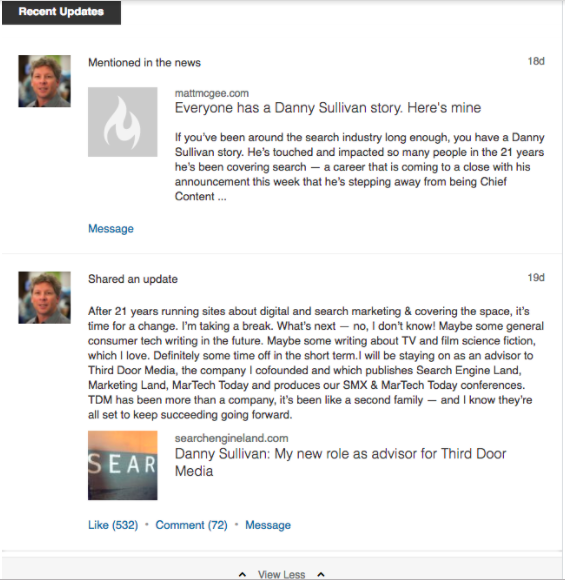
Now LinkedIn will send you updates every time Danny posts something so you can keep up with his movements and interact in real time.
For example, Danny taking a step back might make it tough to cold pitch him on the Internet. But he’s already announced he’ll be at events throughout the year where you’ll probably have a better shot tracking him down (remember that whole ‘meet in real life’ part?).

Don’t worry about SEO for now
Brand new website for a brand new company?
Forget about SEO for right now.
I bet you didn’t expect that coming from me, did you?
But it makes sense when you consider how search engines work (and have worked for the last decade).
Let me explain.
A search engine’s goal is to surface the best, most relevant results for your search query. The way they do that (after considering relevancy) is largely through evaluating authority and popularity signals.
Generally speaking, that means older websites that have been around and publishing on the same topic day in and day out for years tend to get the benefit of the doubt (over a brand new upstart).
Here’s a perfect example. Type in any search query into Google right now. Let’s do “grow a website,” because that’s generally what we’re talking about.
Now tell me what you notice…
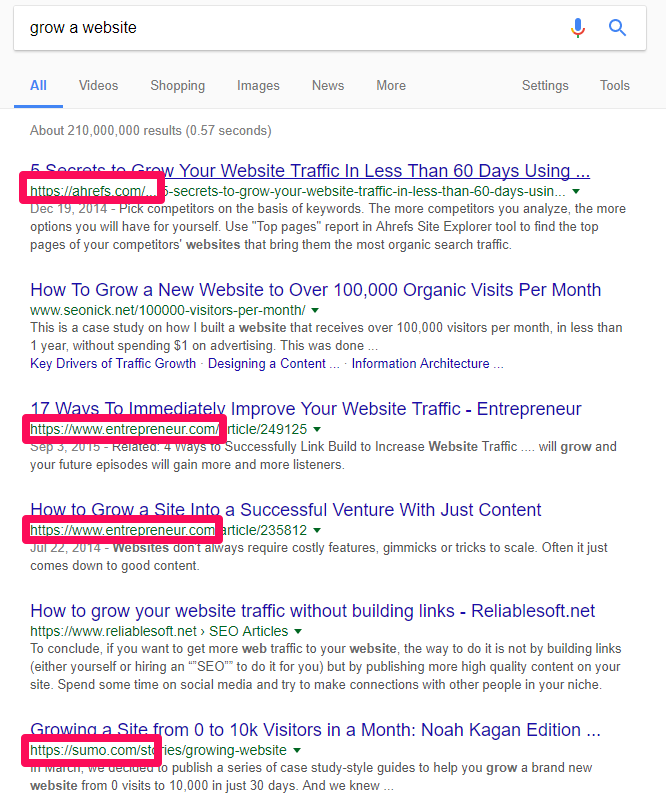
Mostly big, established websites, right?
You should still work on SEO for your site. You should still focus on long-tail SEO to make sure that you’re at least doing the basics and picking off the less competitive keyphrases within your grasp at this stage.
You should still strive for consistency in the early days so that you keep your site active with new posts going up on a regular schedule.
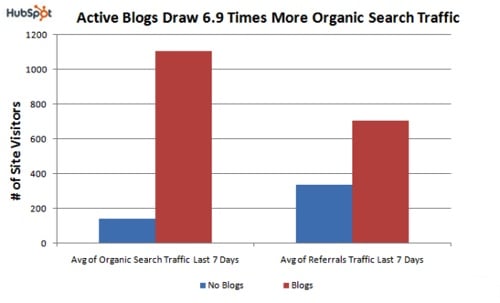
That doesn’t mean you should expect SEO to deliver new customers overnight suddenly.
One day it might, but right now, there’s going to be a tiny trickle (if any). There definitely won’t be enough to lift your business off the ground.
Instead, you need to get out there and get traffic to come back to you. That means partnering with others and doing whatever it takes to have them recommend your products, share your content, and link back to your site.
Conclusion
Getting a new website off the ground is never easy.
Nobody knows who you are, there’s no money to advertise, and you don’t have any connections to lean on to help you grow.
That means you have to take matters into your own hands.
You don’t do that by asking other people for help. You do it by helping them first. You give them something that they need to solve some issue for them (whether that’s content, money, advice, time, etc.).
Then, when you stick with it long enough, those favors should start to snowball back in your direction. It’s not impossible, but it will be tough. So you need to roll up your sleeves and get other people (and sites) to refer you in the early days.
What’s the best strategy you used to get a new website off the ground in the early days?