 Sign In








 Ubersuggest
  AnswerThePublic
 UX Changes That Reduce Cart Abandonment
Info
-
Source: NP Digital
-
Date: December 2024
-
Category: Ecomm & User Behavior
-
Study Methodology: Sample size: 292 ecommerce companies; Collection method: Analyzed cart abandonment experiments and measured abandonment reduction by UX change.
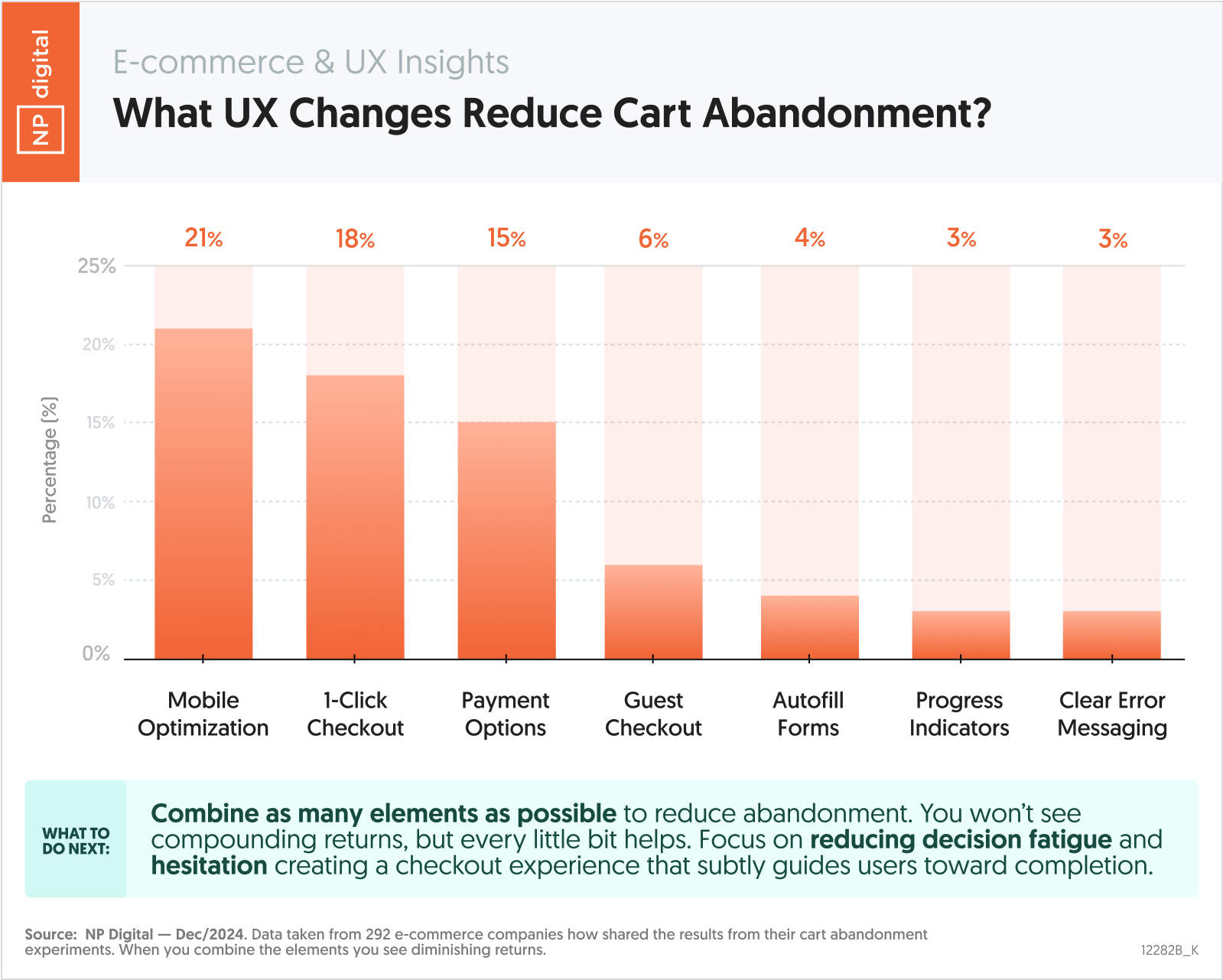
This chart shows how specific UX improvements reduce cart abandonment rates. Some changes deliver meaningful impact, while others provide only incremental gains. The data highlights where UX investment pays off the most.
Essential Statistics
- Mobile optimization reduces cart abandonment by 21%.
- One-click checkout reduces abandonment by 18%.
- Additional payment options reduce abandonment by 15%.
- Guest checkout reduces abandonment by 6%.
- Autofill forms reduce abandonment by 4%.
- Progress indicators and error messaging reduce abandonment by 3%.
Key Takeaways
- Checkout friction is the primary driver of abandonment.
- Mobile UX improvements deliver the highest impact.
- Payment flexibility significantly reduces hesitation.
- Small UX changes add up but do not compound.
- Decision fatigue increases abandonment risk.
- Simplicity outperforms feature-heavy checkouts.
Actionable Insights
- Optimize checkout for mobile first, because it delivers the largest abandonment reduction at 21%. Prioritize speed, layout, and tap-friendly design.
- Implement one-click checkout, because reducing steps cuts abandonment by 18%. Remove unnecessary confirmation screens.
- Add multiple payment options, because limited choice increases drop-off. Support wallets and buy-now-pay-later where relevant.
- Enable guest checkout, because forced account creation causes friction. Capture account creation after purchase instead.
- Improve form usability, because autofill and clear errors reduce hesitation. Focus on preventing mistakes before submission.
Every extra step gives users a reason to quit. The best checkout is the one that feels invisible. – Neil Patel