 Sign In










Which Keyword Types Drive Revenue?
Info
-
Source: NP Digital
-
Date: January 2024
-
Category: SEO & Keyword Strategy
-
Study Methodology: We analyzed 579,240 leads.
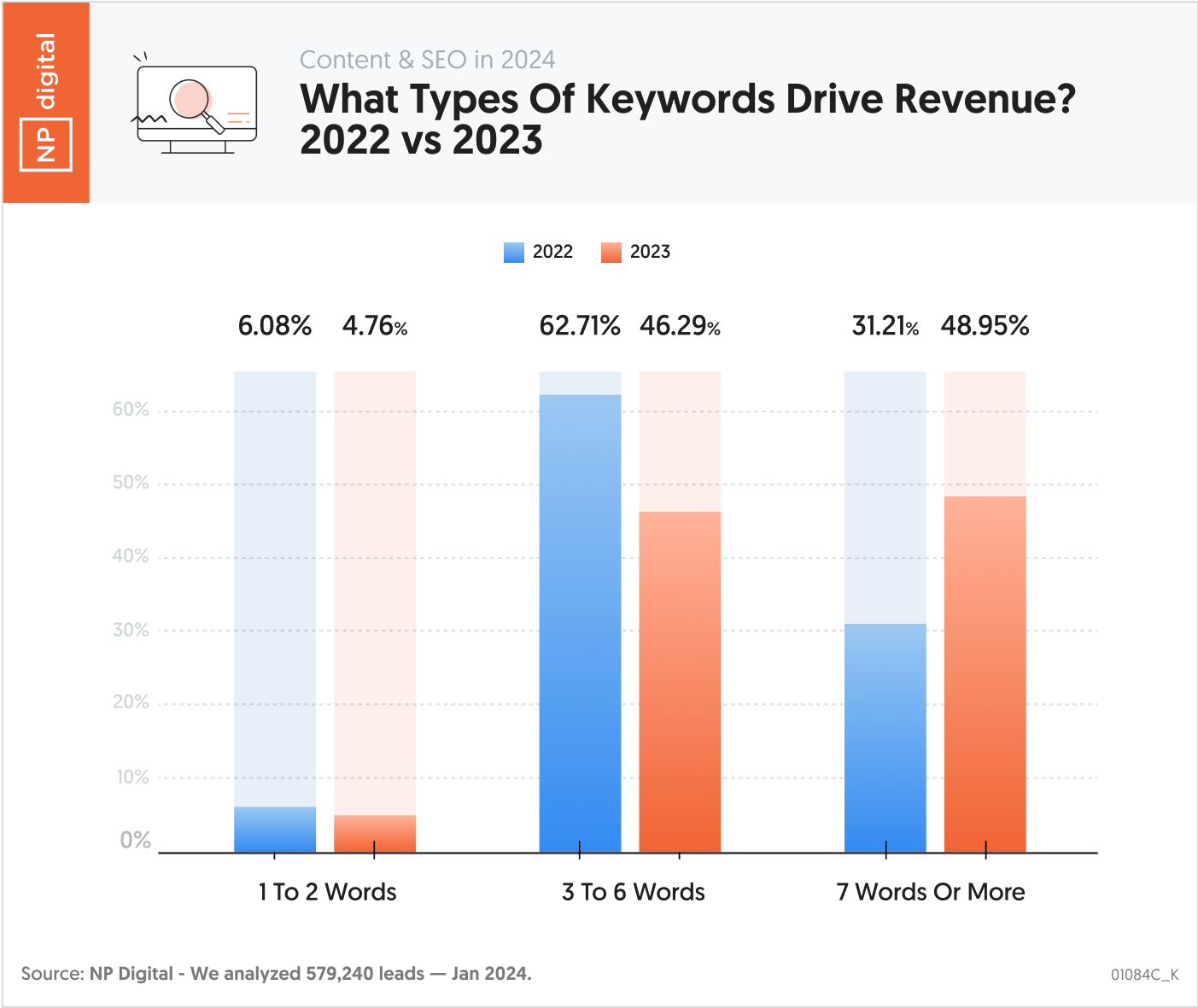
Keyword strategy directly influences revenue, not just traffic. This chart compares how different keyword lengths performed year over year. It highlights a clear shift in what converts into revenue. The data shows how search intent has evolved.
Essential Statistics
- In 2022, 3 to 6 word keywords drove 62.71% of revenue.
- In 2023, 3 to 6 word keywords dropped to 46.29% of revenue.
- 7 or more word keywords increased from 31.21% to 48.95%.
- 1 to 2 word keywords declined from 6.08% to 4.76%.
- Longer keywords gained significant revenue share year over year.
Key Takeaways
- Revenue is shifting toward longer, more specific search queries.
- Mid-length keywords are losing dominance compared to prior years.
- Short keywords contribute minimal revenue despite high competition.
- Search intent is becoming more explicit and detailed.
- High-conversion keywords reflect deeper buyer readiness.
Actionable Insights
- Expand content targeting long-tail commercial keywords. The growth in 7+ word keywords shows buyers are searching with clearer intent before converting.
- Re-evaluate keyword prioritization models. Revenue-driven SEO should favor intent depth over raw search volume.
- Build pages around problem-specific queries. Longer keywords reflect users closer to purchase, making them ideal for conversion-focused content.
- Update existing content to capture longer variations. Add sections that directly answer detailed buyer questions to align with shifting behavior.
- Align SEO and conversion teams around keyword value. This data shows that not all rankings drive revenue equally, so optimization goals should reflect revenue contribution.
Longer queries are winning because they capture intent, not curiosity. If your SEO strategy still prioritizes short keywords, you are optimizing for traffic instead of revenue. – Neil Patel