 Sign In






Google Rankings Don’t Guarantee AI Citations
Info
-
Source: NP Digital
-
Date: April 2026
-
Category: AI & GEO Optimization
-
Study Methodology: Secondary sources: SEJ/BrightEdge, Presence AI, Writesonic, 2026. Findings reflect aggregated citation pattern analysis across AI platforms.
For years, ranking on page one of Google meant your content was winning. That assumption no longer holds. As AI-generated answers become a primary way people consume information online, the rules of visibility have fundamentally changed. A page can sit at position one in Google and still never appear in an AI Overview, a ChatGPT response, or any other large language model output. This data makes that gap impossible to ignore.
Essential Statistics
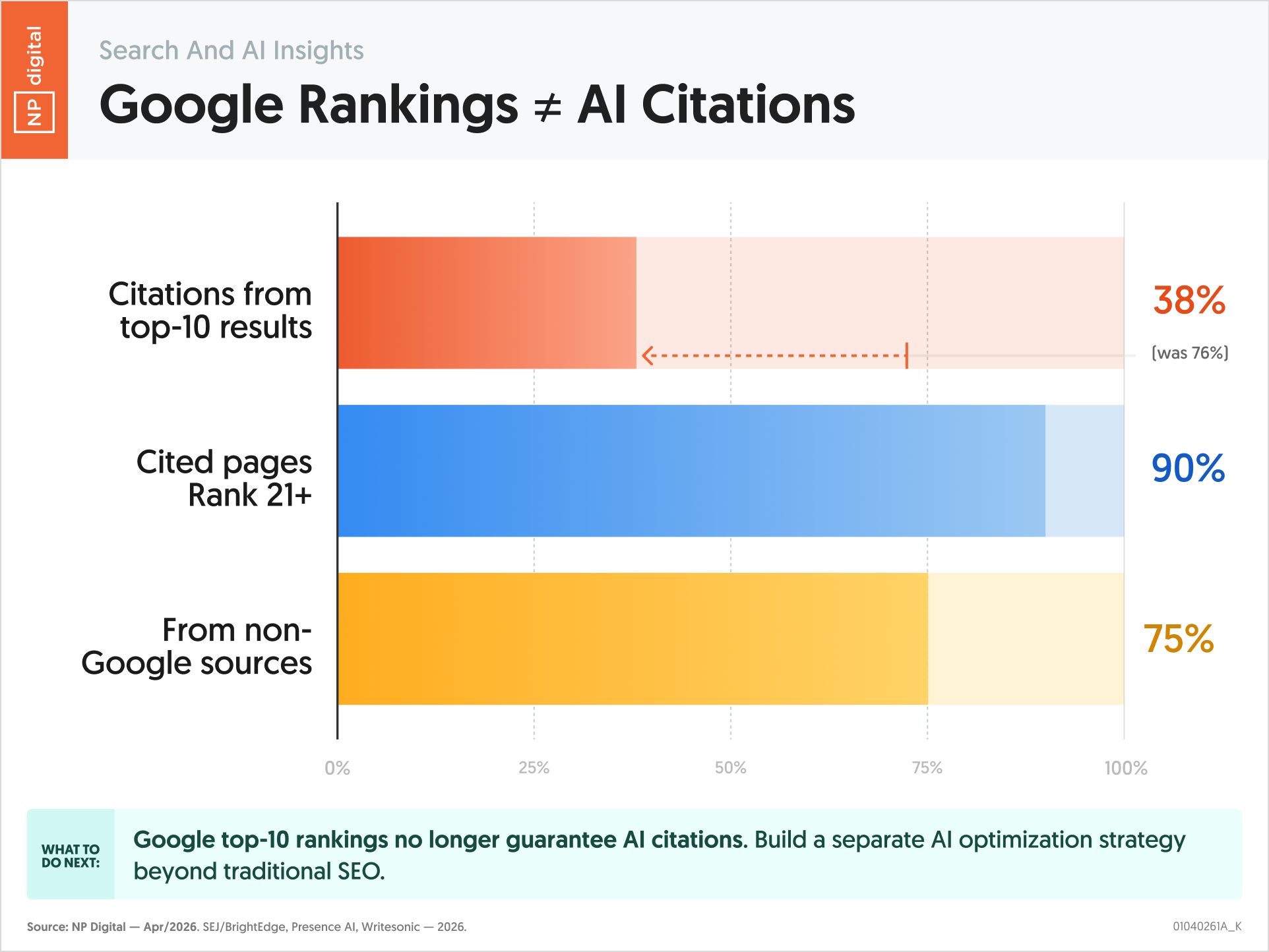
- Only 38 percent of AI citations come from Google’s top-10 results, down sharply from 76 percent previously.
- 90 percent of pages cited by AI tools rank at position 21 or lower in Google search results.
- 75 percent of AI citations pull from non-Google sources entirely.
- The share of AI citations drawn from top-10 Google results has fallen by more than half, dropping 38 percentage points from the prior benchmark.
- AI platforms show a strong preference for sources outside traditional search rankings, with the vast majority of citations originating beyond page one or beyond Google altogether.
Key Takeaways
- Google rankings and AI citation likelihood are now largely decoupled. A strong SERP position no longer signals that AI platforms consider your content authoritative or relevant enough to reference.
- The dramatic drop from 76 percent to 38 percent for top-10 citation rates signals a structural shift, not a temporary fluctuation. Brands that built visibility strategies entirely around Google rankings are now exposed.
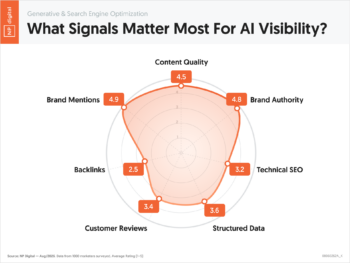
- AI tools appear to weigh factors other than search rank when selecting citations, likely favoring topical authority, source credibility, structured data, and direct data access over SERP position alone.
- Non-Google sources now account for three-quarters of AI citations, meaning platforms like Reddit, LinkedIn, industry publications, and proprietary databases may carry more AI visibility weight than a well-optimized blog post.
- The 90 percent figure for rank 21-plus citations suggests AI models are pulling from a far broader web than traditional SEO has ever needed to account for. Depth of content across a topic ecosystem matters more than concentration on a handful of high-ranking pages.
- Marketers who treat AI optimization as a subset of SEO are already behind. The data supports treating it as a parallel discipline with its own signals, channels, and performance benchmarks.
Actionable Insights
- Audit which of your pages are being cited by AI platforms, not just ranked by Google. Tools like Writesonic, Profound, and BrightEdge now track AI citation share.
- Run an audit before building any new optimization plan. Without knowing your current AI citation baseline, you cannot measure whether changes are working.
- Invest in building topical authority across your full content ecosystem rather than optimizing a handful of high-ranking pages. The data shows AI tools cite pages ranked 21 and beyond at a 90 percent rate, which means breadth and depth across a topic cluster matter more than concentrating effort on a few top-performers.
- Prioritize distribution on non-Google platforms where AI tools appear to source heavily. Publishing original research, contributing to industry forums, securing press coverage, and maintaining active LinkedIn and Reddit presences can all increase the surface area available to AI citation engines.
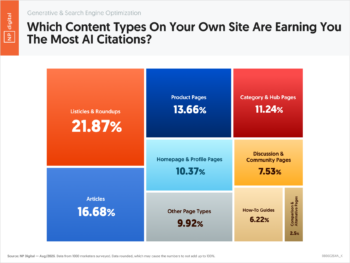
- Restructure content to match what AI models prefer to cite. That means clear factual claims with sourced data, concise definitions, structured headers, and schema markup. AI platforms need to extract and attribute information quickly. Content written for human engagement alone often lacks the structural signals that make it machine-readable at citation speed.
- Build a separate KPI framework for AI visibility alongside your existing SEO dashboard. Track AI citation share, share of voice in AI-generated answers, and mention frequency across major LLM platforms. If your reporting still stops at Google rankings, you are measuring half the picture.
- Revisit your off-page strategy with AI citation in mind. Backlinks from high-authority domains have long driven Google rankings, but AI models may weight direct source credibility differently. Earning mentions and citations from data providers, academic sources, and established industry publications could carry disproportionate weight in AI outputs.
“Google top-10 rankings used to be the finish line. Now they are barely the starting point for AI visibility. The brands that figure out what actually drives AI citation share in the next 12 months will have an enormous head start over everyone still optimizing purely for SERP position.” – Neil Patel