 Sign In










How Well Does AI-Generated Content Rank on Google?
Info
-
Source: NP Digital
-
Date: August 2026
-
Category: AI-Generated Content
-
Study Methodology: Data from a survey of 100 companies. Numbers rounded for clarity. Findings should be treated as directional.
AI has changed how much content teams can publish, but publishing more isn’t the same as ranking more. A survey of 100 companies compared the share of new content coming from AI against the share of organic traffic that content actually earns. The gap between those two numbers is where the real story lives. Content written entirely by AI now makes up more than half of new output at surveyed companies, yet it earns a fraction of the organic traffic human-generated content still commands.
Essential Statistics
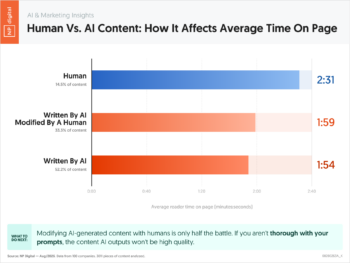
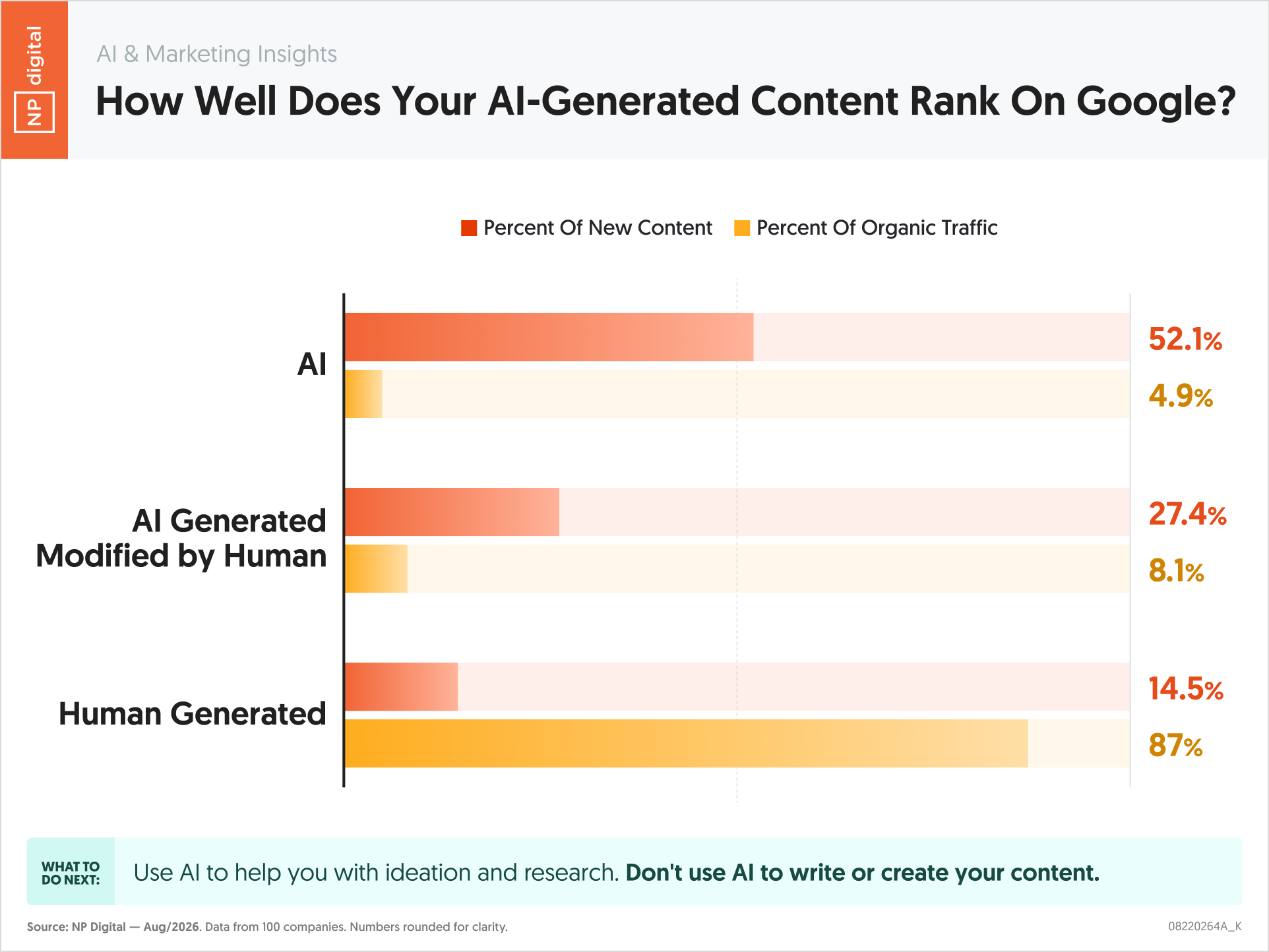
- Fully AI-generated content accounts for 52.1% of new content produced but only 4.9% of organic traffic.
- AI-generated content modified by a human makes up 27.4% of new content and drives 8.1% of organic traffic.
- Human-generated content represents just 14.5% of new content yet drives 87% of organic traffic.
- Across all three content types, human involvement correlates directly with a higher share of traffic relative to publishing volume.
- The imbalance between publishing share and traffic share is most extreme for fully AI-generated content.
Key Takeaways
- The data suggests publishing volume and search performance have become disconnected once AI enters the production process without human editing.
- Human-generated content punching well above its publishing weight points toward Google still rewarding signals that AI alone tends not to replicate.
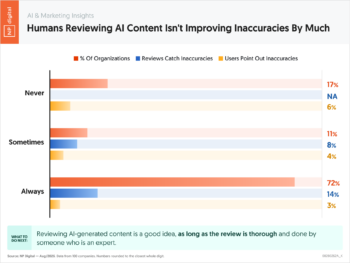
- Content modified by a human after AI drafting performs better than pure AI output, which suggests editing adds more value than it might seem on the surface.
- Teams chasing volume through unedited AI content may be optimizing for the wrong metric if organic traffic is the actual goal.
- This pattern is worth testing against your own content mix, since a shift toward human-modified AI content could meaningfully change traffic outcomes.
- The scale of the traffic gap suggests full automation, at least for now, tends to underperform relative to hybrid approaches.
Actionable Insights
- Pull your own content mix and traffic-by-source data to see if you’re seeing a similar gap between AI publishing share and organic traffic share. If the ratio looks like what’s shown here, that’s a signal to slow down pure AI output.
- Shift AI-generated drafts into a required human editing step before publishing rather than publishing directly. The data suggests this step alone correlates with a meaningfully higher share of organic traffic.
- Reallocate editorial time toward the smaller pool of human-generated content if it’s driving a disproportionate share of your traffic. Protecting and expanding that content type is worth prioritizing over expanding AI volume further.
- Track traffic per piece of content by content type over the next few months rather than just total output. This is a more useful way to spot whether AI content is actually contributing to growth or just adding volume.
- Test a specific workflow where AI handles first drafts and outlines while a subject matter expert handles substantial revisions. This hybrid model is worth piloting on a subset of pages before rolling it out broadly.
- Reconsider content KPIs that reward publishing frequency alone. Traffic per piece is a better indicator of whether your content strategy is actually working.
Publishing more content isn’t the goal. Publishing content that actually earns traffic is. Right now, the data says pure AI output isn’t doing that. – Neil Patel