 Sign In











I am not a big fan of buzzwords.
Fluff is fluff, no matter how trendy it is.
Throwing around the word ‘engaging’ has almost become a staple of the content marketing industry these days.
Heck, I’m guilty of using it as well.
And at first glance, that seems like it’d be great news.
Brands and business owners are finally starting to understand the shift in consumer culture.
They’re creating content that serves the next generation of audiences, right? Sign me up!
But there’s a big problem with the new status quo.
Forget about the fact that the definition of engagement seems to change depending on who you ask.
What really worries me is that, despite our apparent fixation on engagement, most of us struggle when it comes to consistently creating engaging content that has the potential to go viral.
And I’m not here to throw stones.
Believe me: I understand that creating legitimately engaging content isn’t exactly easy.
That’s why I’ve decided to do something about it.
By the time you’re done reading this article, you’ll have an actionable checklist that you’ll be able to apply to any piece of content you create from now on.
No more guessing.
No more crossing your fingers.
Armed with this step-by-step checklist, you’ll know once and for all if your content is truly engaging.
If you’re struggling with any specific area, feel free to jump ahead and tackle that first.
But you’re absolutely going to want to come back and check every section.
I’m not a huge fan of fluff. Which means that everything here serves a purpose and is a crucial aspect of creating engaging content.
Here’s the checklist for those of you who are interested.
- Define ‘engaging’
- Create with intent
- Make it too valuable
- Stay creative
- Lean into your strengths and passions
- Create action-oriented content
Alright, now that that’s out of the way, let’s get started!
Define ‘engaging’
To be fair, coming up with a clear definition of engagement as it relates to content marketing is not particularly easy.
That’s partly because there’s so much information out there already that it’s difficult to separate the relevant definitions from the irrelevant ones.
It’s also because the term has taken on a variety of different meanings during its time in the marketing ecosystem.
Even Facebook’s Insights section doesn’t try to give a definitive answer, and I certainly don’t blame them.
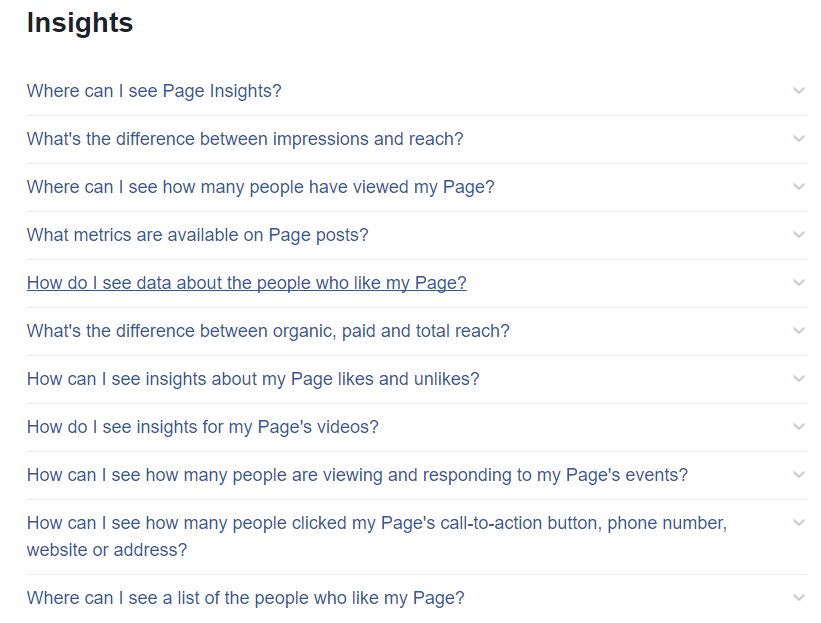
So I’m not going to unravel every definition that’s floating around the Internet. Instead, we’re going to keep things simple, accurate, and straightforward.
For our purposes today, here’s how we’re going to define engaging.
In order to qualify, the content has to trigger a measurable response in people as it relates to your content.
In other words, your content needs to be impactful in some meaningful way to be considered truly engaging.
Are you hoping to get hundreds or even thousands of shares?
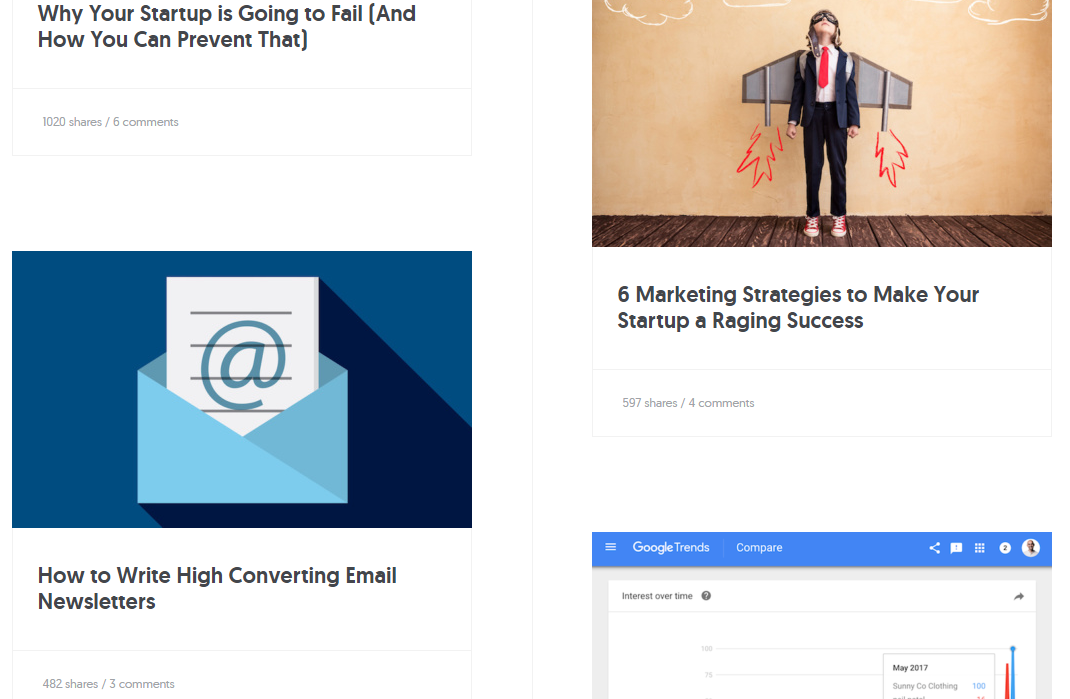
Here’s the bad news. In an ocean of content, being memorable to the average consumer is a challenge.
The good news?
With the right approach, you can regularly create content that leaves one heck of an impression.
Create with intent
Engagement is all about how you well you manage to communicate with your audience.
While you may want to jump straight into a conversation with them right away, the more effort you put into the preparation phase, the more likely you are to actually get through to them.
Before your next piece of content, take some time to consider the intent of your content.
You can’t expect to hit a target if you don’t know where it is.
What are you wanting to accomplish with this particular piece of content?
Is it designed to be for entertainment? For education?
What are you hoping to accomplish with your overall marketing strategy?
Are you focused on raising brand awareness? Increasing conversions?
Creating goals is about more than just having a way to measure whether or not your marketing strategy was successful.
Having clearly-defined, actionable goals ensures that your content marketing strategy will improve — one way or another.
Experimentation is the way we improve our marketing strategies, whether it’s with visual media, content marketing, or even SEO.
Have you published content that wasn’t very engaging? No problem. You can rework your understanding of your audience’s needs and try again.
Did you create intensely engaging content? That’s great! Now you can review your goals and determine exactly why your content was so successful.
From there, you slowly start to isolate the key components that translate into engaging content with your particular audience.
And once you’ve done that, it’s only a matter of time before you’re blowing your competition out of the water and creating nothing but impactful content.
Understand what your goals are. Understand what your audience needs from you. But most importantly, understand why you’re creating that next blog post.
To put it simply, hoping to stumble into great content is not how you end up with an impressive catalog of memorable content.
Make it too valuable
Okay, I’m sure that sounds weird. But hear me out!
I know you want to increase your traffic. It’s the reason you’re reading this article, and it’s why you’ll watch the video below.
At this point, I don’t need to tell you that the content you’re making should provide value to your audience.
You’ve heard it all before.
Except I don’t think your content should just offer value.
Why?
Because everyone’s offering value these days.
Heck, my Twitter is basically designed to keep you updated 24/7 on how I can offer you value.
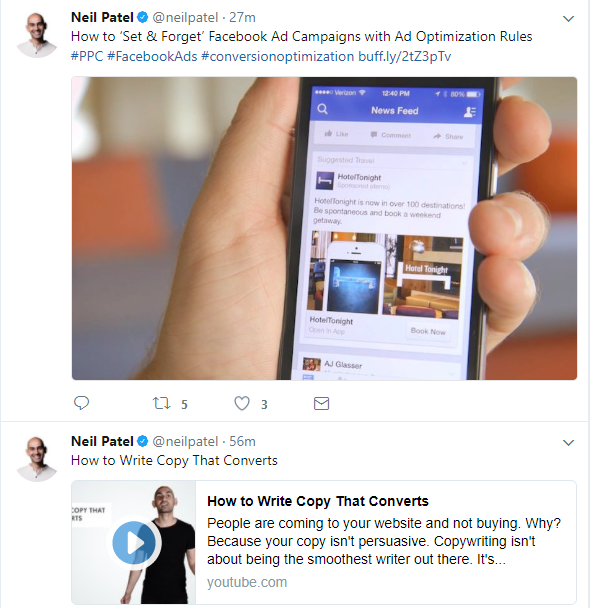
Your competition is out there right now, trying to figure out how they can provide more value for the least amount of effort.
And they’re not alone. When it comes to content marketing, you’re typically encouraged to offer as much value as you can with as little cost to you as possible.
But let’s play devil’s advocate for a second.
What would happen if, instead of trying to determine the bare minimum that you could give to your audience, you did the opposite?
What if you created a piece of content that was in-depth, heavily researched, time-intensive, and genuinely valuable to your audience and then just gave it away?
I can already hear the screams of protest.
“I’m running a business! I can’t afford to give away that kind of content!”
And I’m not asking you to. I completely understand that most business owners simply wouldn’t be comfortable doing this.
What I’m really getting at is the concept of leverage. What can you offer people that your competitors can’t or won’t?
If you’re a local business, how are you leveraging your online marketing opportunities?
The content that you’re providing for people should have so much value that your readers can’t help but turn to you whenever they’re looking for high-quality content.
Being engaging means being impactful, right?
Well, I can’t think of anything more impactful than showing your audience that your content is miles ahead of your competition’s.
Newsletters and e-books are some of the easiest tools that small businesses can leverage to offer value while still getting something for their time and energy.
Take a look at Buffer’s way of offering massive value absolutely free.
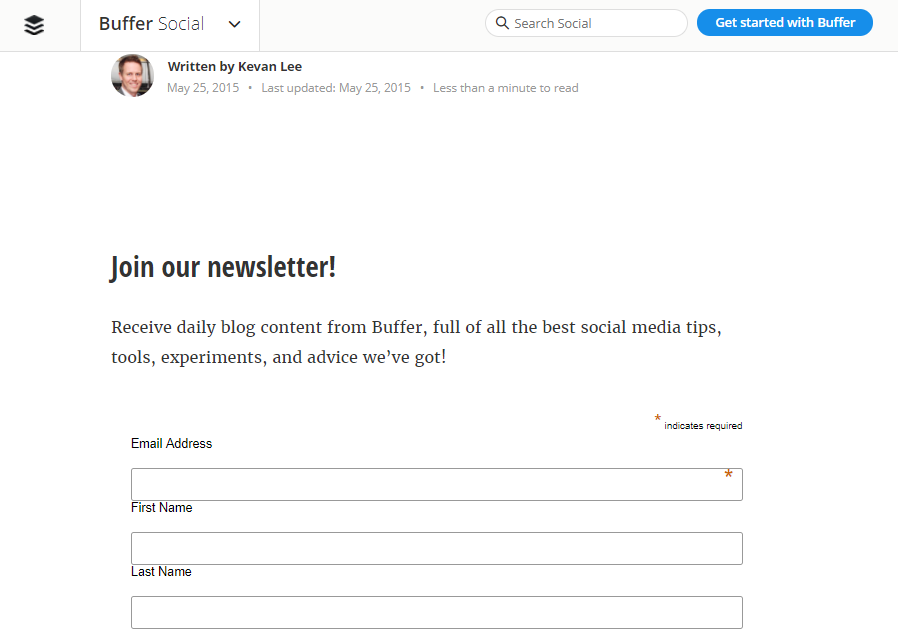
It features simple presentation and a clear value proposition. Plus, it’s easy for prospects to sign up.
If you want to ensure that people take you up on your offer, this is the way to do it.
Stay creative
When you work in content marketing, there’s usually a bit of a balancing act that needs to happen to make useful content.
On one hand, you have to be analytical. The content you create should be data-driven and written efficiently, with a methodical approach to structure.
But the flip side of that coin is that most brands want to avoid the ‘corporate’ tone in their content.
Why? Because it’s just way too boring.
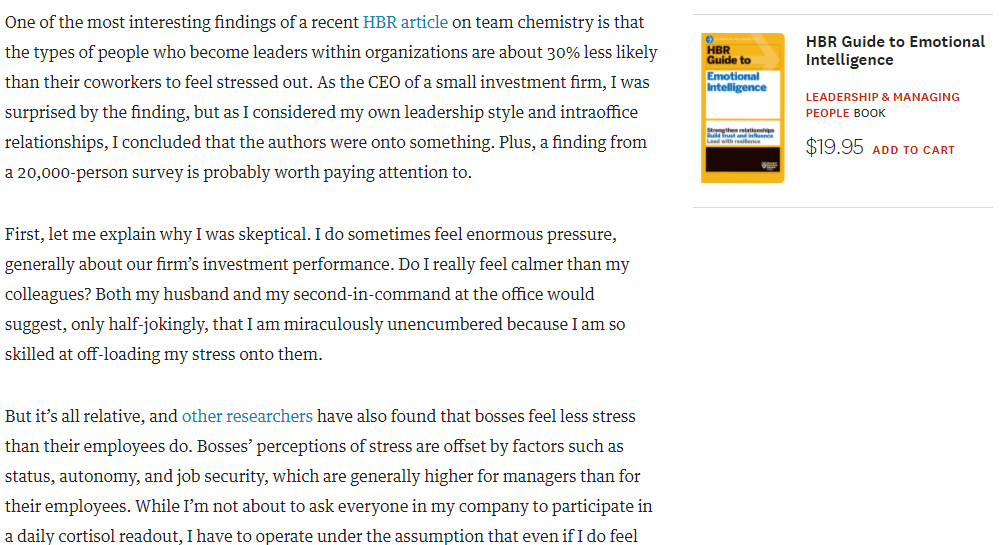
You’re not writing content for the Harvard Business Review.
Ditch the thesaurus and lighten up a little.
Stop making content that looks like this.
And start making content that looks like this.
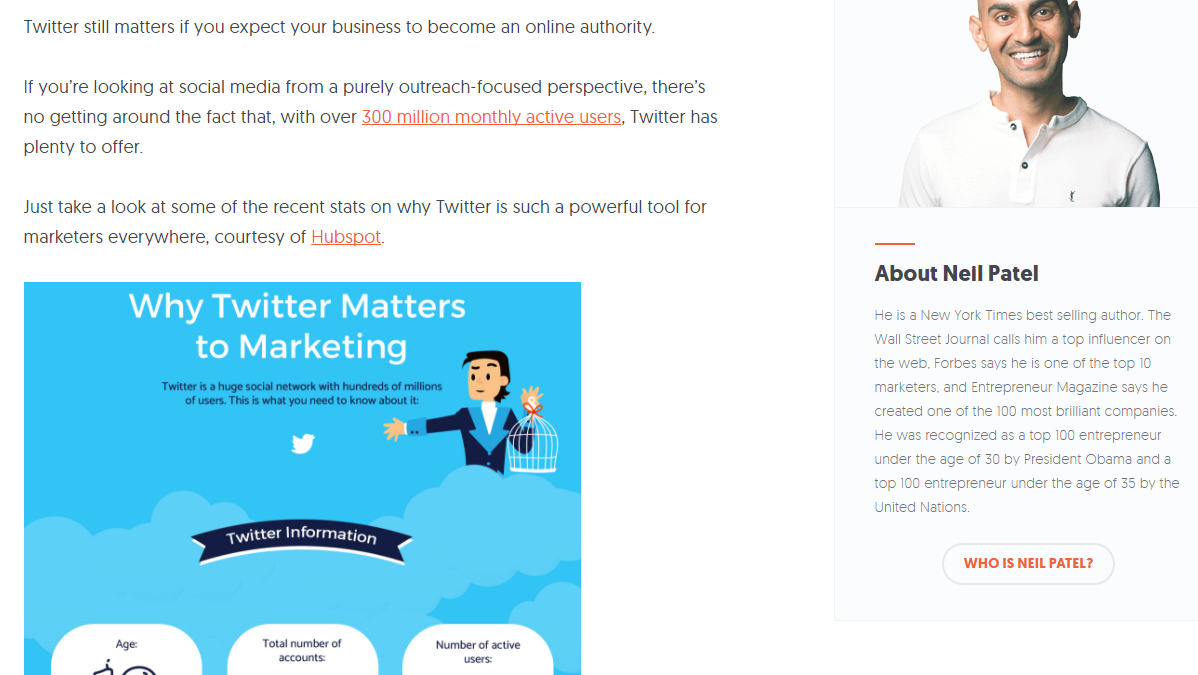
Is it possible to write great content about boring topics? Yes, of course.
But it’s not exactly ‘fun’.
Trust me: The average consumer needs dynamic storytelling to connect with what you’re saying.
As far as writing style goes, your best bet is to blend a conversational tone with professional information.
If that sounds confusing, here’s an example that should put things in perspective.
Imagine you had a friend who worked on Wall Street. If you were to ask him for advice on investments, he wouldn’t overwhelm you with data or bore you to death with the minor details.
He’d identify the key points, give you the information you needed to get started, and cut out anything overly technical that wasn’t really important.
When you’re creating content for your audience, be their industry friend.
The best part about balancing the professional with the conversational? You’re free to get pretty creative in the process.
And honestly, it’s in your best interests.
From an analytics perspective, trying new styles of content will provide you with more data and a stronger understanding of what your audience responds to.
But from a purely personal perspective, it gives you more opportunities to connect with your audience.
There’s not much you can do to keep people coming back for more if you’re constantly producing the same kind of content every day.
So, how exactly can spice things up and ensure that your content stays fresh and exciting?
Get creative.
Ask different questions at the end of all your content to constantly get new feedback from your audience.
No matter what industry you’re working in, one rule of content marketing doesn’t change. There are always multiple ways to tell a story.
Try this. The next time you’re putting a piece of content together, figure out a way to start with a story.
The story doesn’t have to be screenplay worthy, it just has to be relevant to the point your content is trying to make.
Stories are an easy way to not only ensure that your content is unique, but that your content has a basis in real life, beyond the statistics, metrics, and analysis.
Of course, that’s just one method you can use. The only limit here is your imagination.
One of my favorite types of content that most brands have trouble taking advantage of is user-generated content (UGC).
The biggest problem with UGC is that most brands look at it as a promotion tool first, and legitimate content second.
Instead of focusing on social media shares and retweets, figure out a way to solicit UGC so compelling that people want to share of their own accord.
As far as examples go, few are as memorable or successful as the Coca-Cola ‘Share a Coke’ campaign.

Promotion is certainly an important part of UGC, but promotion is tied into the actual content you’re asking people to make.
It’s not enough to simply ask for UGC.
You need to get creative and come up with ideas that compel people to actually take part in your marketing efforts.
Embracing creativity with your content creation is about more than just discovering what your audience appreciates.
Creativity helps breathe life into your content and ensures that it draws people in.
Lean into your strengths and passions
If you’re new to the world of content marketing, or otherwise struggling with content creation, this next section is for you.
I genuinely believe that the reason so many business owners struggle with the creation of engaging content is that they aren’t really that excited about what they’re talking about.
When it comes to content creation, your audience can only ever be as excited about a topic as you allow them to be.
As the storyteller, you’re doing more than just putting words on the page. You’re establishing the tone and the overall feel of the content.
It might sound like a minor detail, but it’s actually the foundation for effective communication, no matter what medium you’re using.
Don’t believe me?
Okay, think about this then.
If you’ve ever watched stand-up comedy, you’ve probably heard some pretty strong jokes.
Ever tried telling one of those to your friends?
The result is typically lackluster at best.
But why? You remembered the joke perfectly, and it’s not like your friend had heard it before.
So why didn’t you get the same reaction?
Easy. You didn’t establish the tone the same way the comedian did.
I bring this up because it’s important to recognize that creating engaging content is as much about providing a unique, memorable perspective as it is about the actual words on the page.
All of this sounds great, but it leaves us with one question.
How do you ensure that your perspective is memorable every time?
The answer is simpler than you might realize.
If you want to create content that resonates with your audience, make it personal.
And if you want to make your content personal, you need to identify what you care about in the industry today.
With people who are new to the world of content marketing, I usually offer a single piece of advice.
Go with what you know.
Are you super passionate about marketing? Write about that like Seth Godin does.
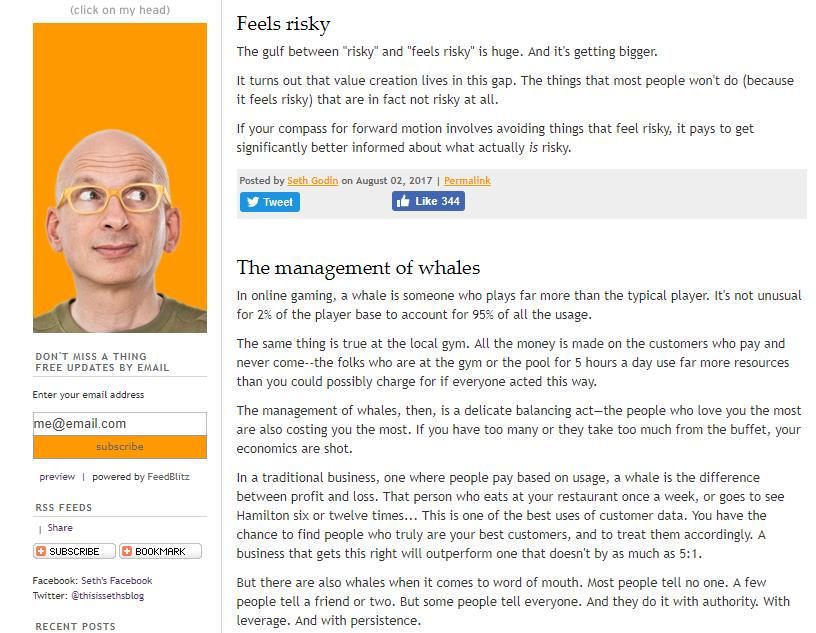
Are you frustrated with the state of the tech industry? That works too.
It doesn’t matter what industry you’re in. What matters is that the content you’re creating resonates with you on a personal level.
Those emotions will bleed into your work and give it a level of depth and authenticity that are sure to blow your competitors out of the water.
Create action-oriented content
I chose to wrap up with this section because I wanted to make something clear to everyone before they go off and revamp their content marketing campaigns.
When creating engaging content, one of the bigger issues I’ve noticed is that people tend to struggle with the actual creation process.
Especially when people aren’t writers by trade, their content tends to default to a style that isn’t particularly exciting to read.
The solution to that problem might seem complex, but it’s really just about changing the way brands think about content creation.
Start asking yourself questions like “how can I make this more valuable?” or, “does this content balance insights and accessibility?” You’ll usually find yourself on the right path.
But there’s another group of people that struggle with this topic.
Except their content is well-written, valuable, and clearly informed by a unique perspective.
So why aren’t they seeing the results they want?
It’s typically because they’ve ignored one of the most important components of engagement.
Let me be clear. If you don’t give your audience something to do, you can’t be surprised when they don’t do anything.
Should your content be motivated by offering as much value as possible to your audience? Absolutely.
But you’re still running a business, aren’t you?
There are plenty of things that you could be encouraging your audience to do.
Sign up for an email newsletter. Check out other content on your blog. Follow you on social media to get more relevant industry updates.

Frankly, I don’t care what you ask people to do with your content. I just want to make sure you’re asking.
Believe it or not, the best forms of engaging content that I’ve seen have all been win-win scenarios.
They offer something unique and valuable to their audience, while also getting something in exchange from consumers.
The actions that you choose to encourage will depend entirely on your brand’s goals with that particular piece of content and your overall marketing strategy.
But one thing is for sure. You can’t have truly engaging content unless your audience engages with you in some way by the end of it.
Conclusion
Creating content is hard enough. But creating engaging content on a regular basis? That’s what separates the fantastic marketing campaigns from the decent ones.
There are quite a few hurdles on the path to creating the kind of content that drives engagement.
Mastering the art of storytelling and connecting with readers can be difficult, but once you start to connect with your audience, the metrics will take care of the rest.
From there, follow the data, don’t get lost in the corporate lingo, and soon enough, your content is going to captivate your audience in a way you’ve never seen before.
What does engaging content look like to you? What type of content impacts your audience the most?