
 Sign In










Blogging is an interesting phenomenon.
It’s been a game-changing marketing strategy for many smaller businesses and has enabled them to compete with much larger industry titans.
In many ways, it’s one of the most revolutionary marketing strategies in history.
But it seems that by now it should have been eclipsed by newer, sleeker, and sexier techniques.
Just look at some of the top-rated digital marketing techniques in 2017.
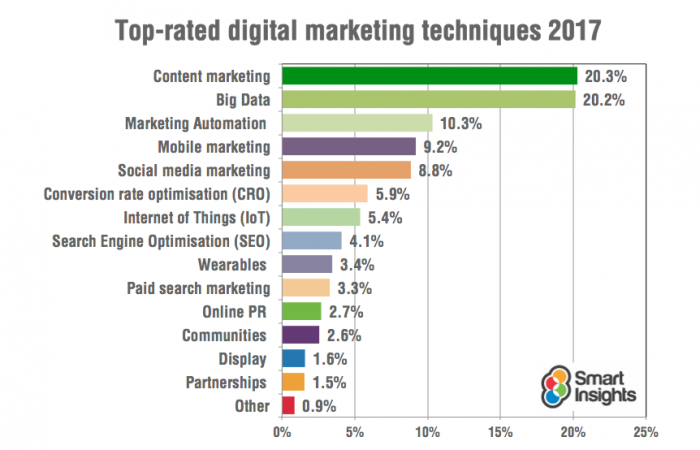
But what’s amazing is that it hasn’t.
A 2017 HubSpot survey found, “53 percent of marketers say blog content creation is their top inbound marketing priority.”
Check out where blogging ranks in terms of content marketing tactic usage in 2017.
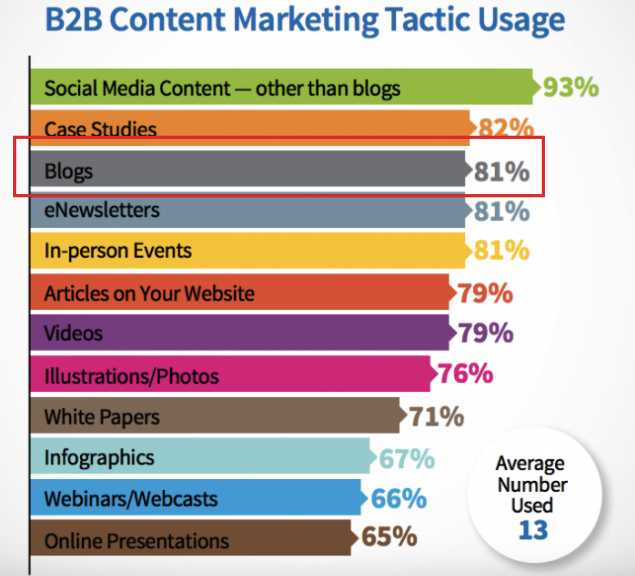
It’s tied for third place with eNewsletters and in-person events.
You could even make the point that blogging is bigger than ever before.
In fact, “89 percent of companies think blogs will be more important in the next five years.”
And that’s totally fine with me!
Blogging has been my bread and butter for ages.
It was what helped me build my audience when I didn’t have deep pockets and big money to invest in marketing.
I’ve been at it for over 10 years and have written well over 4,000 blog posts.
Not to toot my own horn, but people turn to me frequently for blogging advice.
And there’s one particular question that I get asked a lot.
“Should I create a company blog or a personal blog?”
In other words, they’re wondering which one will be better. It’s an either/or issue.
And it’s a valid question.
You can learn about creating a corporate blog in this brief video.
But maybe that’s not the way you want to go.
It’s especially important to ask in today’s day and age when the line between someone’s personal brand and the startup they are creating has become blurred beyond recognition.
For example, everyone knows about Tim Ferriss, right? He has a personal blog, but he also has a multi-million dollar business.
Does he need a company blog?

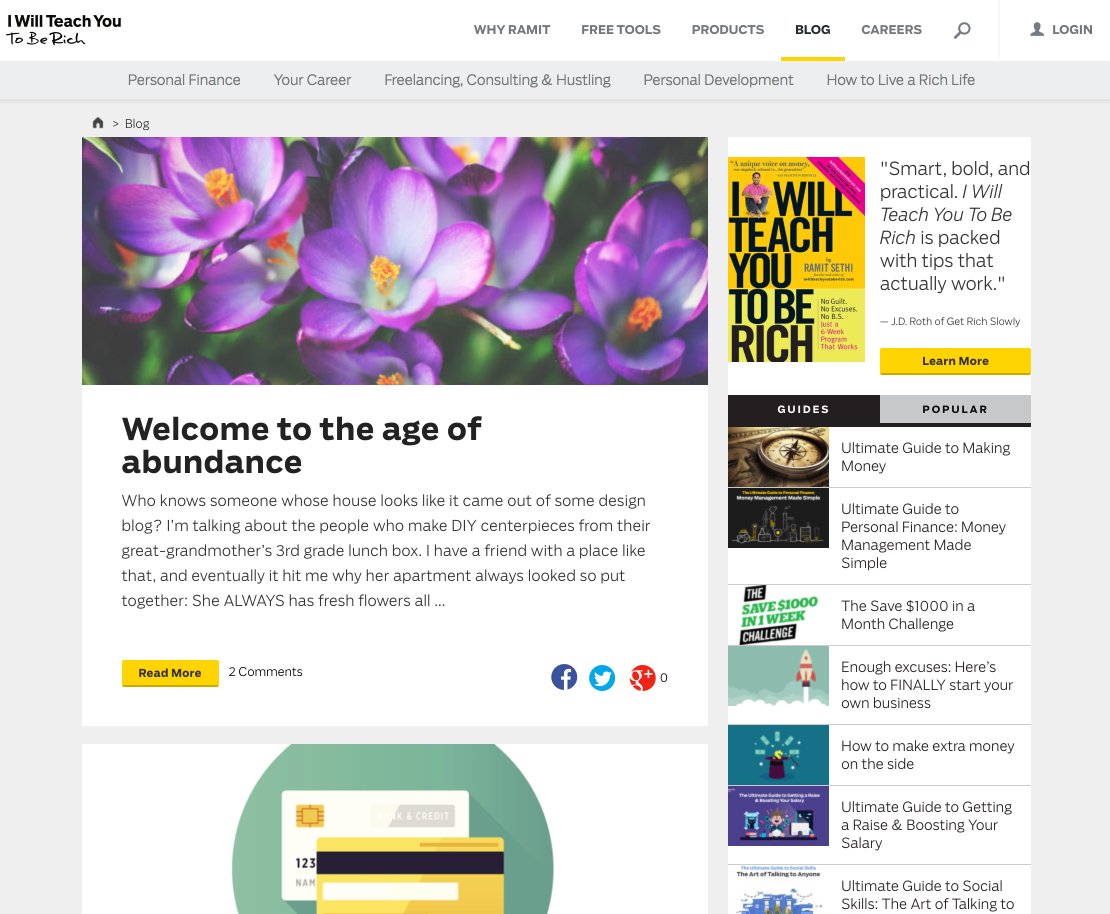
Or take Ramit Sethi as another example.
Does he have a company blog?
Not exactly, even though he sure as heck as a multi-million dollar company.
What’s going on here?
Have you ever wondered which type of blog would serve you better — a personal one or a company one?
It’s something you really want to think about carefully before committing to either format.
So for this post, I’m going to break down the differences between a company blog and a personal blog and offer my own advice to help you decide as well as succeed.
Key differences
Some of you may be wondering whether or not there are any major differences between a company and personal blog.
I mean, aren’t you basically covering the same topics?
Well in my case, I do cover very similar topics.
Here’s a recent post from Quick Sprout.
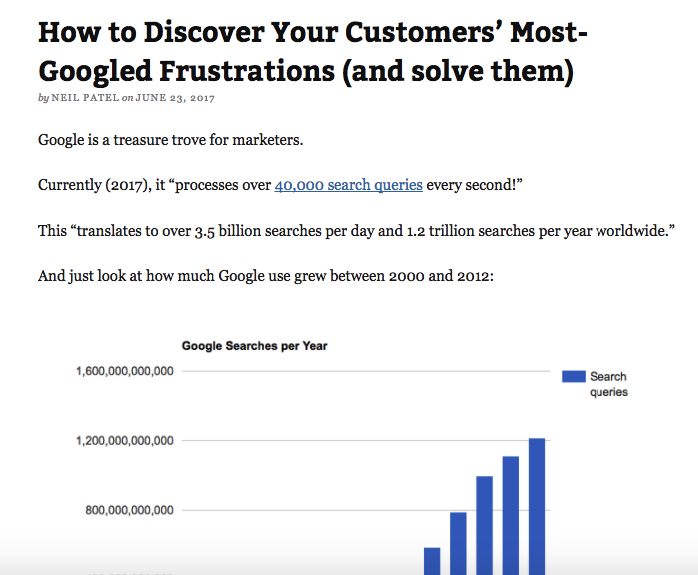
And here’s a recent post from NeilPatel.com.

As you can see, they’re pretty much interchangeable.
But I wouldn’t really say that this is the norm across the board.
See, NeilPatel.com is my consulting business, so of course, I’m going to cover digital marketing topics on how businesses can get more traffic and higher conversions.
So this isn’t a personal blog in the conventional sense.
If you’re looking for a solid description of a personal blog, here’s one from Darren Rowse of ProBlogger.

The way I see it, the main difference between a company blog and a personal blog is the subject matter and level of flexibility you have.
On a company blog, you’ll zero in on topics that are directly related to your industry.
So for The Daily Egg (the Crazy Egg blog), it’s conversion optimization.

For the Ahrefs blog, it’s link-building and SEO.
In other words, there’s not much wiggle room on a company blog.
You’re there to discuss the core concepts that relate to your business and industry.
And that’s pretty much it.
Now I’m not saying that that’s a bad thing.
Explaining the nuts and bolts of your industry and offering helpful advice is incredibly important.
But as Darren Rowse mentioned, there’s much more freedom with personal blogging.
It’s your own little corner of the web where you can write about a smorgasbord of topics.
You’ll definitely cover subjects that relate to your business, but that’s only part of it.
You may also cover topics that are completely unrelated to business and include your philosophy, values, viewpoints, hobbies, personal life, etc.
So I guess what I’m trying to say here is that a personal blog is usually your best option.
You can still blog about business content like you would on a company blog, but there’s a lot more you can do with it.
Besides the flexibility, there’s another massive benefit.
Trust building
One of the reasons why I’m such a proponent of a personal blog is the level of trust you can establish with your target demographic.
Allow me to explain.
There’s an article from HubSpot that talks about how many companies are shooting themselves in the foot when their CEO doesn’t have a social media account or personal bio.
It points out that “only one in five CEOs have a social media account, and only 50 percent of CEOs have a personal bio on their website.”
And just look at the number of Fortune 500 CEOs with 100 or fewer connections on LinkedIn.
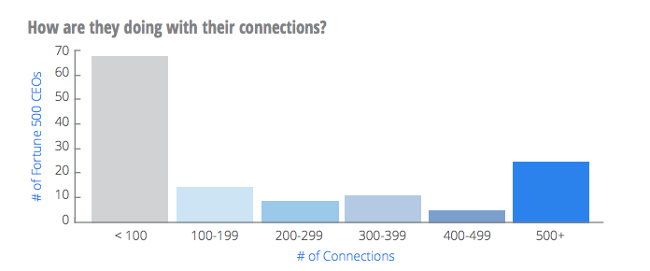
It’s meager.
This can make it seem like CEOs have something to hide.
Or at the very least, there’s a disconnect between them and the people who are actually buying their company’s products/services.
Enterprise marketer, Lindsey Gusenburg offers a great quote that speaks to the importance of company leaders being visible and accessible.
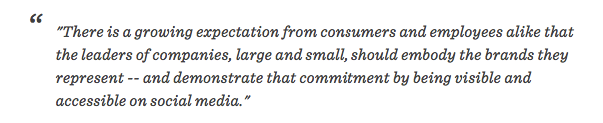
Although Gusenburg is referencing social media, there are other ways for leaders to become more visible and accessible.
And when you really think about it, what better way to accomplish this than to create a personal blog?
If you really want to give your audience an inside glimpse of what you’re really like and show that you truly embody your brand, maintaining a personal blog may be pound-for-pound the best way to do it.
It’s like removing the veil that separates you from your audience.
Sure it makes you more exposed and vulnerable, but it’s an integral part of gaining trust.
Some examples
Let me go ahead and give you some specific examples of successful CEOs and business leaders who have pulled off personal blogging brilliantly.
Example #1
My first example is Mark Cuban’s personal blog, Blog Maverick.

If you’re at all familiar with “Cubes,” you’ll know that he likes to speak his mind and stirs the pot from time to time.
He’s opinionated and isn’t necessarily politcally correct.
In fact, he can be quite polarizing.
But you can’t deny the fact that he’s super successful and has a loyal legion of followers.
On his blog, Mark talks about a variety of topics like politics, tech, business, and so on.
His views definitely overlap with his business philosophy and overall brand identity.
And when people read his blog posts, they can get to know him on a deeper level and better understand his thought process.
In other words, his blogging has allowed him to bridge the gap and connect on a deeper level.
Example #2
Marriott on the Move is the blog of Bill Marriott Jr.
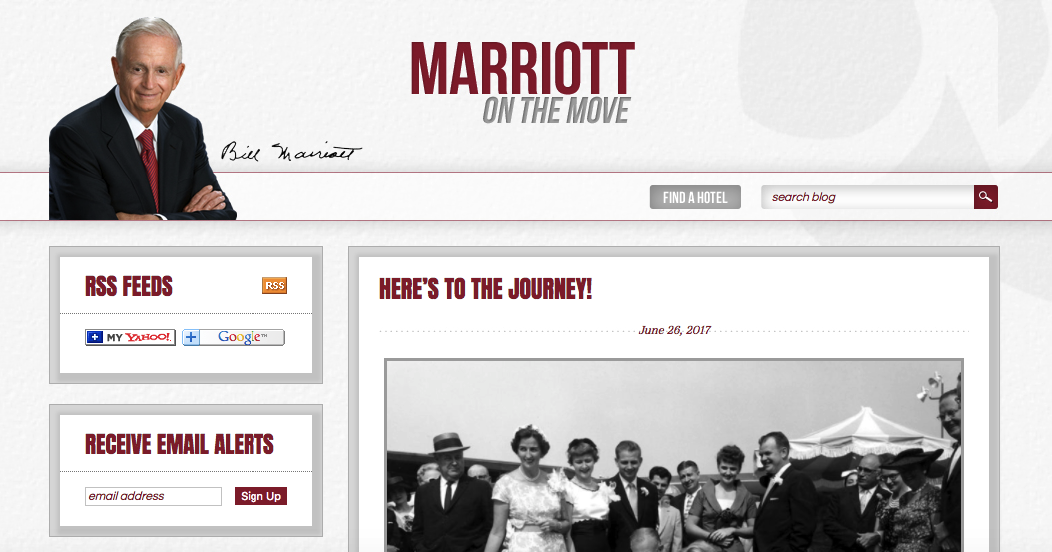
You know…that Marriott.
Of course, I’m referencing the insanely successful hotel chain that generates billions each year.
On his blog, Bill talks about the business world, his company, philanthropy, and his core values.
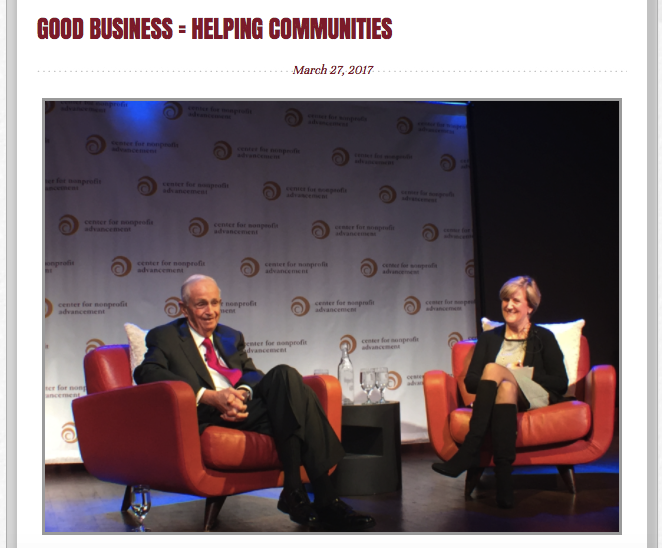
He’s an expert at finding the perfect balance of business and personal topics that his audience really responds to.
To me, this is an excellent way to approach a personal blog.
You definitely want to discuss the underpinnings of your business, while at the same time giving your personal take on things so your readers can get a sense of what you’re like as an actual person.
And at 85, Bill has proven that he’s completely in touch with things and understands how to “put the brand in branding.”
Example #3
Almost everyone in the digital marketing realm knows about Seth Godin.
He’s one of the masters.
And his blog is one of the most popular in the world.
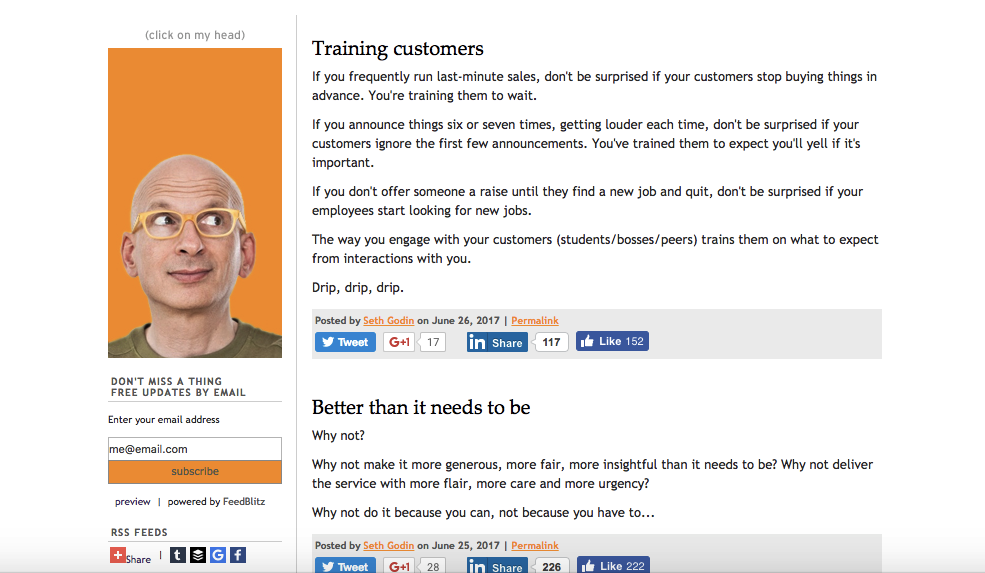
Even though most of his posts are short little snippets, he gets ridiculous engagement on a consistent basis.
What I find really amazing is that he doesn’t even have his own domain.
He simply runs it off of Typepad.

This is a testament to his lack of pretentiousness.
And in addition to soaking up a wealth of business and marketing knowledge from Seth’s blog, he’s always dropping little pearls of wisdom that I’ve been able to incorporate into my own personal life.
If you read his blog consistently, you can’t help but become a better person.
He’s truly an expert at combining business with personal to create an all-encompassing brand.
Not only does his audience respect his business and marketing acumen, they completely buy into him as a person.
He’s like a trusted friend.
This just goes to show what you can accomplish by creating a killer personal blog.
Not to say that you’re going to get to this level, but it can most definitely have a profound impact on your brand and send your trust level through the roof.
What if you have zero brand equity?
After reading about these three examples, you may be saying that of course having a personal blog works for executives and business leaders.
They’re already well-established, and people are naturally interested in what they have to say.
But what if you’re a nobody starting completely from scratch?
Wouldn’t it make more sense to opt for a company blog so you can build your reputation?
I definitely see the logic behind this point. I really do.
But the way I look at it, you can still build up your business, generate leads, boost conversions, and all that good stuff with a personal blog.
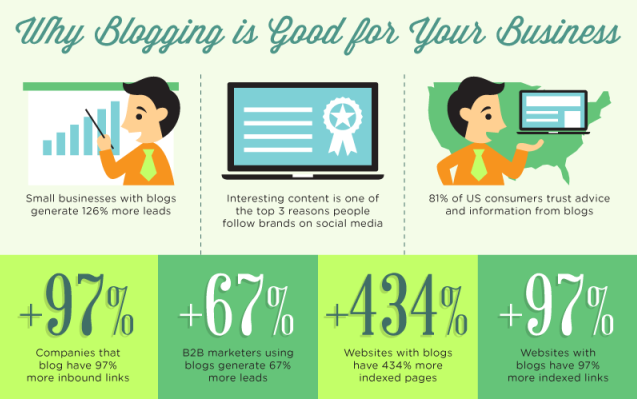
You just happen to cover additional topics that are outside of the immediate realm of your business, which translates into more robust content.
You’re also putting a face behind your business, which is incredibly important in this day and age.
Making your personal blog work
So I’ve already weighed in with my opinion that a personal blog is usually your best bet.
You can still use it to cover industry-related topics to showcase your knowledge, experience, and expertise.
But it’s more multifaceted than a company blog.
You can talk about nearly any topic that you’re interested in, and you’re never really pigeonholed.
And most important of all, it’s the ideal vessel for building trust.
By simply being yourself and proving that your business isn’t merely some faceless entity, you’re making that valuable connection that your audience is seeking.
This makes it easier for them to buy in, and you can squash any skepticism they may have.
After all, people are able to put a face to the writing.
Another plus is that a personal blog makes your brand transferable, meaning you can still retain your audience if you ever choose to launch a new company, partner with a different business, etc.
But there are a few things you’ll need to know in order to make your personal blog a success.
Here’s my advice.
Solidifying your authority
Like I said before, having a personal blog means more flexibility and freedom.
You’re free to write about your passions instead of it being business, business, business.
But let me clarify.
You still want to make sure that you’re covering industry-related topics on a consistent basis.
Proving that you legitimately know your stuff is vital for building up your brand reputation.
It’s especially important if you’re just starting out because it allows you to prove yourself and gain some initial momentum.
I would say that you’ll want at least 20 percent of your overall content to consist of industry content.
It’s totally fine to cover your passions outside of business, but demonstrating your expertise is the key to gaining credibility.
So you’ll definitely want to blog about those topics.
For more on how to discover your customers’ frustrations and solve them, check out this post from Quick Sprout.
If you’re starting a personal blog from scratch and looking for a way to quickly pinpoint what’s resonating with your audience, do the following.
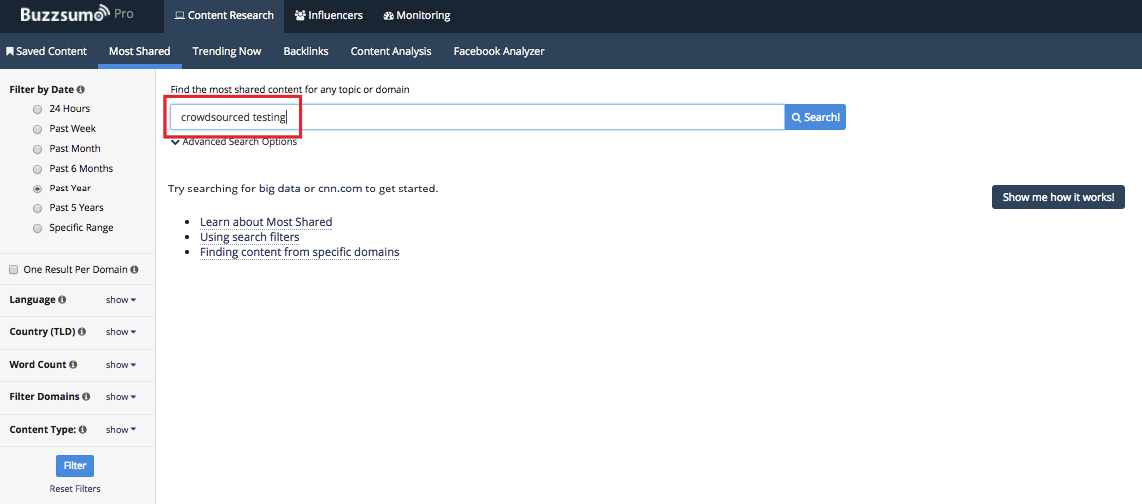
Go to BuzzSumo.
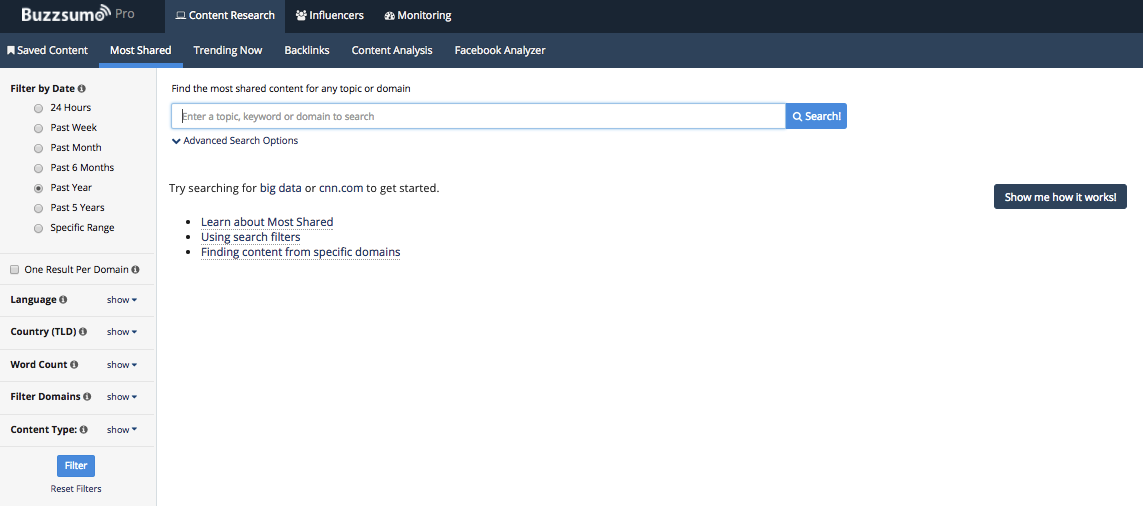
Type in a relevant, industry-related keyword.
Let’s say you were running a crowdsourced testing business.
You would just use “crowdsourced testing.”
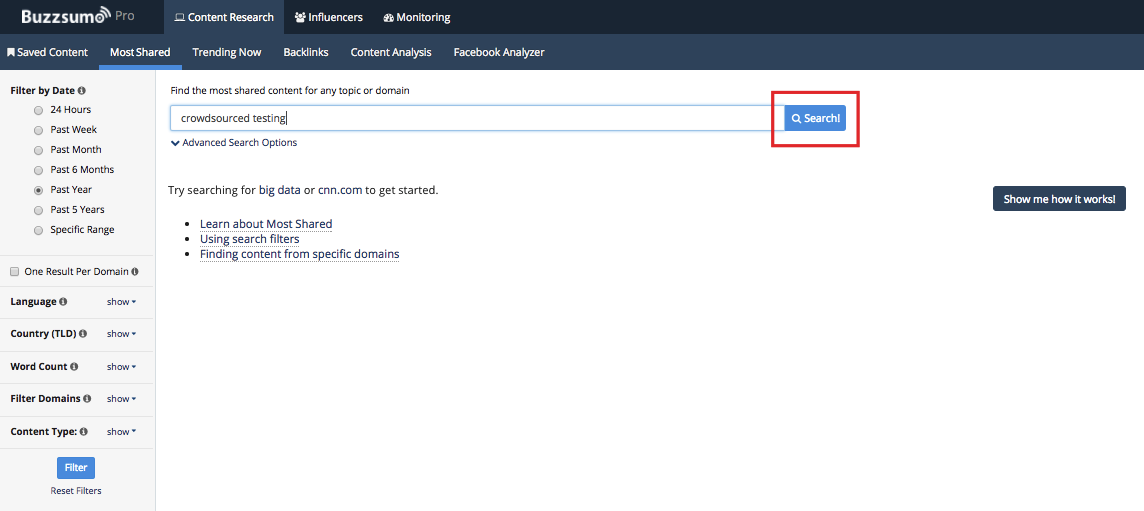
Click on “Search.”
Here are some of the results that I got.
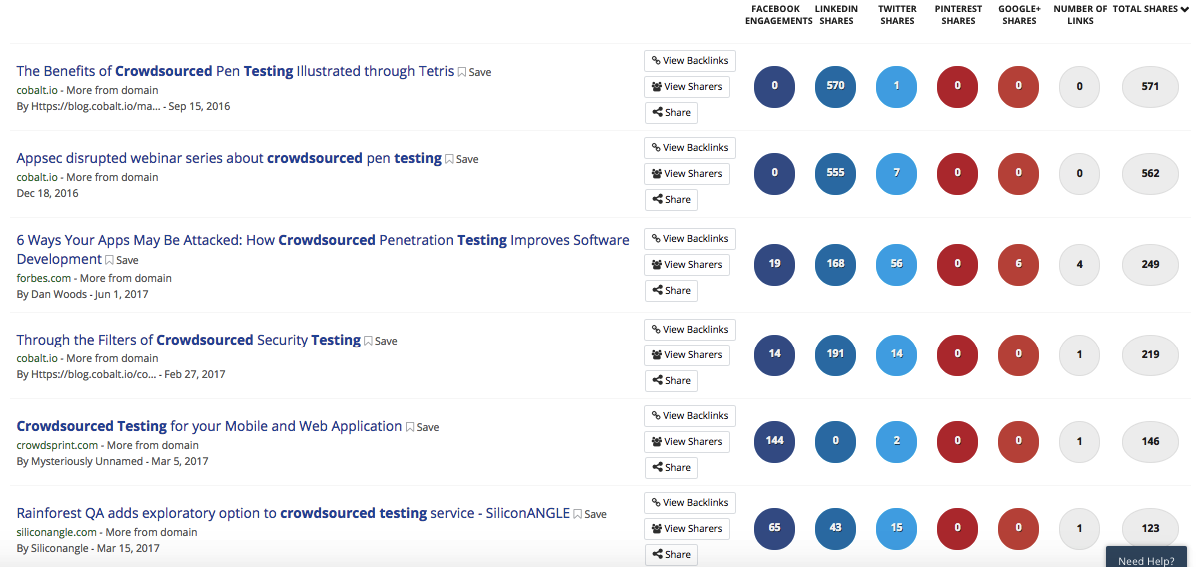
Now scroll through the results to see which content is receiving the most shares and base your strategy on that.
For more ways to generate ideas for your blog, check out this post.
Putting yourself out there
As I mentioned earlier, there are two main adjectives that are essential to building trust: visible and accessible.
So if you expect your personal blog to really work, these are two adjectives that you want to embody.
In other words, you need to put yourself out there.
The way I did this was to create a video: Who is Neil Patel?

My goal was to tell people what I did, where I came from, how I got started in marketing, how I can help companies grow and so on.
I really wanted to eliminate any barriers between me and my audience.
And this is something you should strive for as well.
People don’t relate to companies with executives that “hide in the shadows.”
Transparency is your best friend.
Protecting your brand
I will say that one downside to running a personal blog rather than a company blog is that you’re inevitably going to give your personal opinion.
And that’s fine. You should have an opinion.
But you also need to be careful.
You don’t want to sabotage the success of your business just because “you rubbed a few people the wrong way” with your viewpoint on a social issue.
I’m not saying that you should walk on eggshells, and of course, you’ll want to be as honest and authentic as possible.
Just be smart about what you’re posting, and try to stay clear of anything that could potentially hurt your brand equity.
Reinforcing your culture
There’s one last point I would like to make about running a successful personal blog.
It’s paramount that it ties in with your business in such a way that you establish a clear culture.
A good example of someone who does this well is George Colony, the CEO of Forrester Research.
His blog, The Counterintuitive CEO, tackles a lot of topics, but if I had to pick one word to describe the theme it would be “inquisitive.”
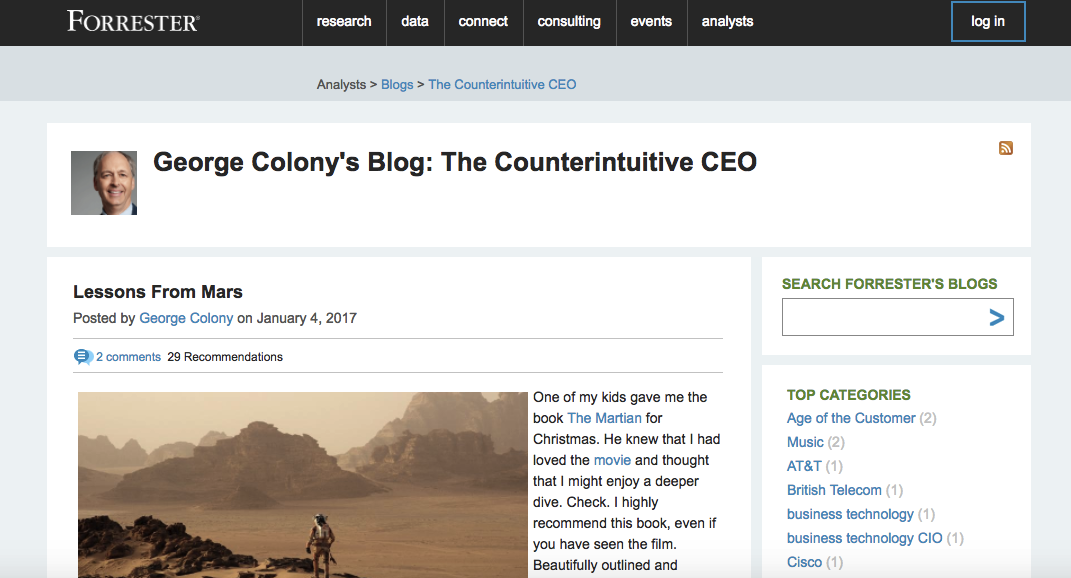
George picks apart everything from self-driving cars to coding.
His approach is basically a microcosm for the in-depth research that Forrester does on business and technology.
So in this way, he’s reinforcing the culture of his company.
When people read his blog, they can get a better feel for what the collective mindset is at Forrester Research.
This is a formula that you’ll want to follow as well.
Regardless of the specific topics you cover on your personal blog, make sure that there’s always a unifying theme that meshes with what you’re going for from a cultural standpoint.
Remaining free
There’s a final point I want to make in support of the personal blog.
You’re free.
When you build a company blog, you’re investing all of your thought capital and effort into something that’s owned by the company — that brand, that property, that arena.
When you create your own brand presence with your own blog, you build far more security and stability into your future.
If you want, you can use your personal platform to build a startup, support a different company, or grow in a different way.
You’re not locked into any one company, industry, or brand.
It’s the brand of you, and you can do with it whatever you want.
Conclusion
Deciding between a company or personal blog is one of the first questions business owners will have when beginning their blogging quest.
While a company blog isn’t without merit, it often lacks the transparency, authenticity, and intimacy of a personal blog.
It also places inherent limitations on the types of subjects that you can cover.
And as Darren Rowse points outs, “It’s more difficult to write compelling content that keeps readers coming back.”
The way I see it, creating a personal blog accomplishes multiple things at once.
It still enables you to prove that you know your stuff and even how your product/service works.
But it offers so much more.
Your audience can also get to know you up close and personal.
With such a small number of CEOs “being social,” this gives you a distinct competitive advantage.
And this is huge when you consider that the personal connection is being lost between so many of today’s brands and their consumers.
How would you decide between creating a personal blog vs. a company blog?