 Sign In










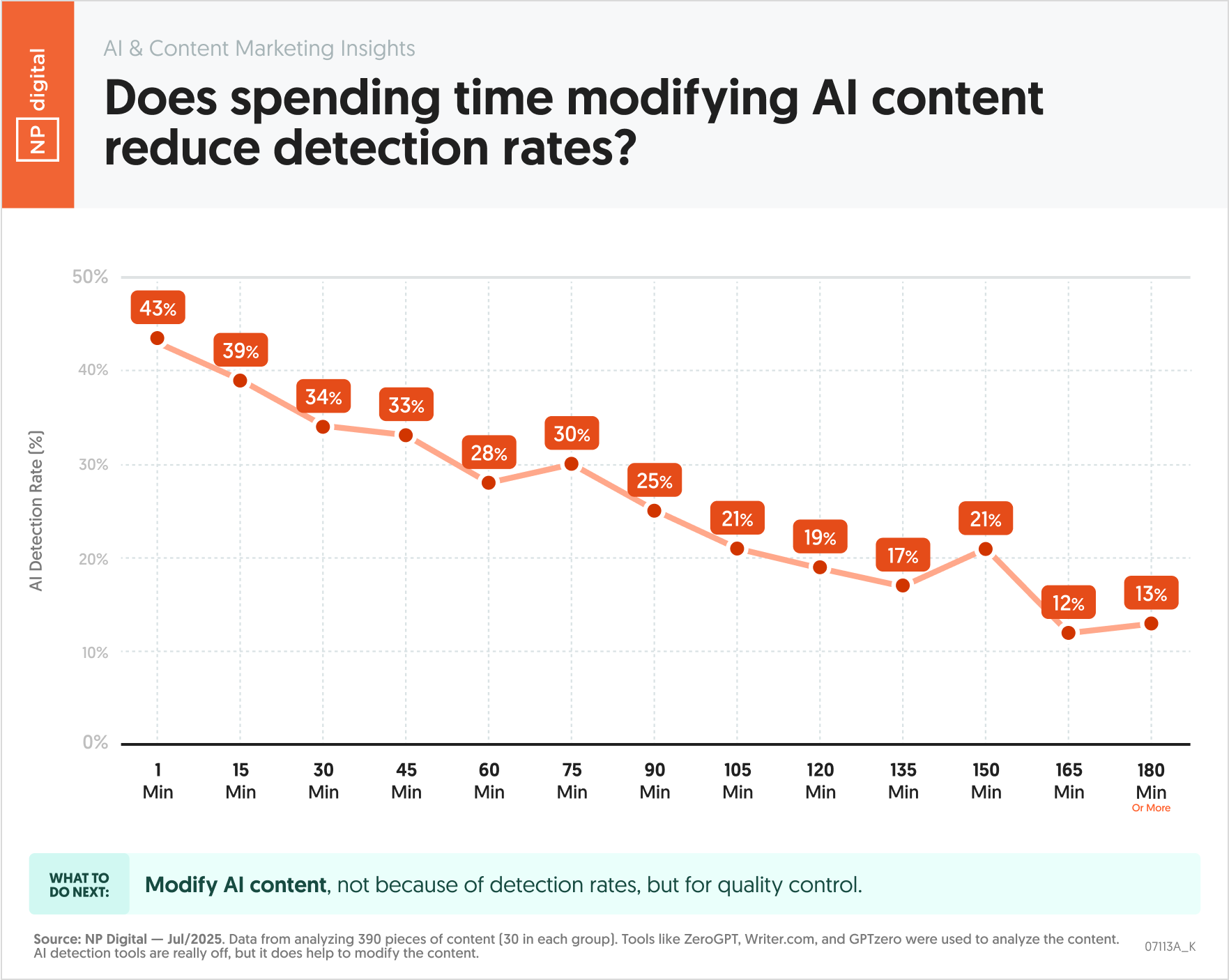
Does Editing AI Content Reduce Detection?
Info
-
Source: NP Digital
-
Date: July 2025
-
Category: AI-Generated Content
-
Study Methodology: Analysis of 390 content pieces edited at varying time intervals and tested with multiple AI detection tools.
AI detection tools are inconsistent, but editing still matters. This data shows how time spent modifying AI content affects detection rates. The biggest gains happen early, not after heavy rewrites.
Essential Statistics
- Unedited AI content was flagged over 90% of the time.
- Detection rates dropped sharply within the first 30 minutes of editing.
- Detection reductions plateaued after roughly 90 minutes.
- Additional editing delivered minimal further reduction.
- Results were consistent across multiple tools.
Key Takeaways
- Light editing delivers the biggest detection gains.
- There are diminishing returns after moderate effort.
- Detection tools are imperfect but directional.
- Quality improvements matter more than avoidance.
- Human review remains necessary.
Actionable Insights
- Make light editing a mandatory step for all AI-assisted content. Even short edits significantly reduce detection risk.
- Focus editing time on clarity, tone, and structure rather than rewriting everything. These changes have the most impact.
- Avoid chasing perfect detection scores. Tool inconsistency makes over-optimization inefficient.
- Create a standardized editing workflow so AI drafts receive consistent human polish. Use editing to improve reader value first, not just to avoid flags.
Editing AI content is about quality, not hiding the source. — Neil Patel