
 Sign In











Competition is getting tougher by the day. Customer satisfaction is what will set you apart.
But how do you earn it?
Key Takeaways
- If you’re landing new customers but not getting them to stick around, you’re probably losing money.
- People are less eager to share feedback today. You need to make listening to your customers a habit that extends past simply collecting survey responses.
- AI-driven automation is great until it’s not. Use it for routine tasks or light personalization, but don’t cross the line into creepy.
- Transparency is the foundation of customer satisfaction.
What is Customer Satisfaction?
Customer satisfaction measures how people feel about their overall experience with your product or service.
What is Customer Satisfaction Score?
Customer Satisfaction Score (CSAT) is the simplest metric that can be used to gauge how satisfied customers are with an interaction, product, or service. You can measure it by asking users to rate their experience on a scale, for example, from 1 to 5 or 1 to 10.
Why Prioritize Customer Satisfaction
Getting new customers is exciting. But don’t you overlook the importance of customer satisfaction in that race.
Retention > Acquisition
The average cost to acquire a mobile app subscriber on Android is around $45. Now, let’s say your monthly subscription is $9.
If most of your users don’t stick around beyond breaking even, you’re losing thousands of dollars — even if you’re acquiring new customers like a speeding train.
So first off, customer satisfaction is essential to keep a business profitable.
Increased Customer Spend
McKinsey found that experience-led growth strategies that raise customer satisfaction by at least 20% can deliver impressive financial gains.
Specifically, these improvements can increase cross-sell rates by 15 to 25% and grow a company’s share of wallet by 5 to 10%. That means happy customers not only stay longer but also spend more by buying additional products or services.
Word of Mouth
Happy customers are your most powerful marketing channel.
They leave positive reviews, recommend you to their network, and become the social proof your marketing can’t buy. It boosts your reputation and brings in new customers organically, lowering your customer acquisition cost (CAC) over time.
Competitive Differentiation
Customer experience can be a key differentiator when price and features alone aren’t enough.
Take this example from a real mobile telecom operator. As competitors attracted users with better coverage and cheaper deals, the company tried to respond by locking customers into contracts, and it backfired.
The turning point came when the CEO started listening in on real customer support calls. In response, the company removed restrictive contracts, extended new-customer offers to existing users, improved its network, and tackled key pain points across the customer journey.
Over time, satisfaction scores rose from the lowest in the industry to the highest. Churn dropped by 75%. And over three years, the company’s revenue nearly doubled — far outpacing its competitors.
How to Measure Customer Satisfaction
Measuring customer satisfaction starts with choosing the right metrics and knowing when and how to collect feedback.
Customer Satisfaction Metrics
- CSAT (Customer Satisfaction Score): An easy way to measure how satisfied a customer is after a specific interaction.
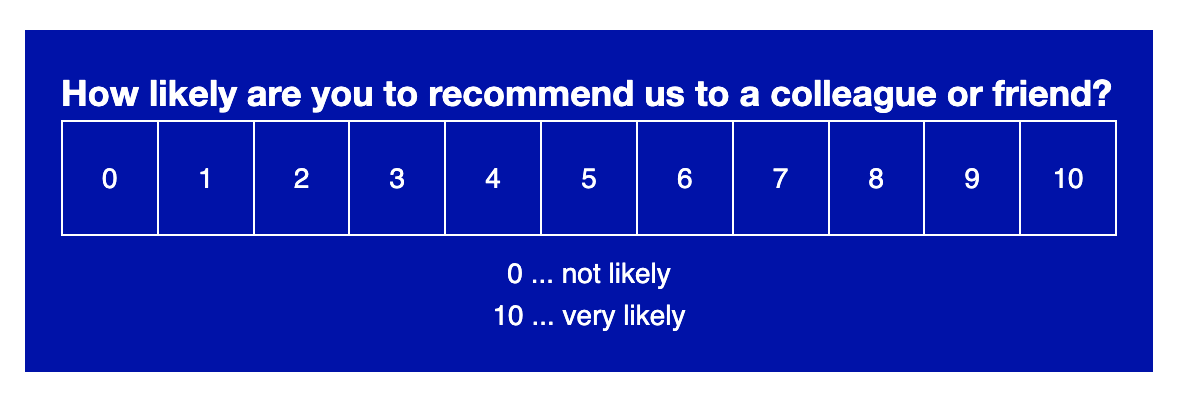
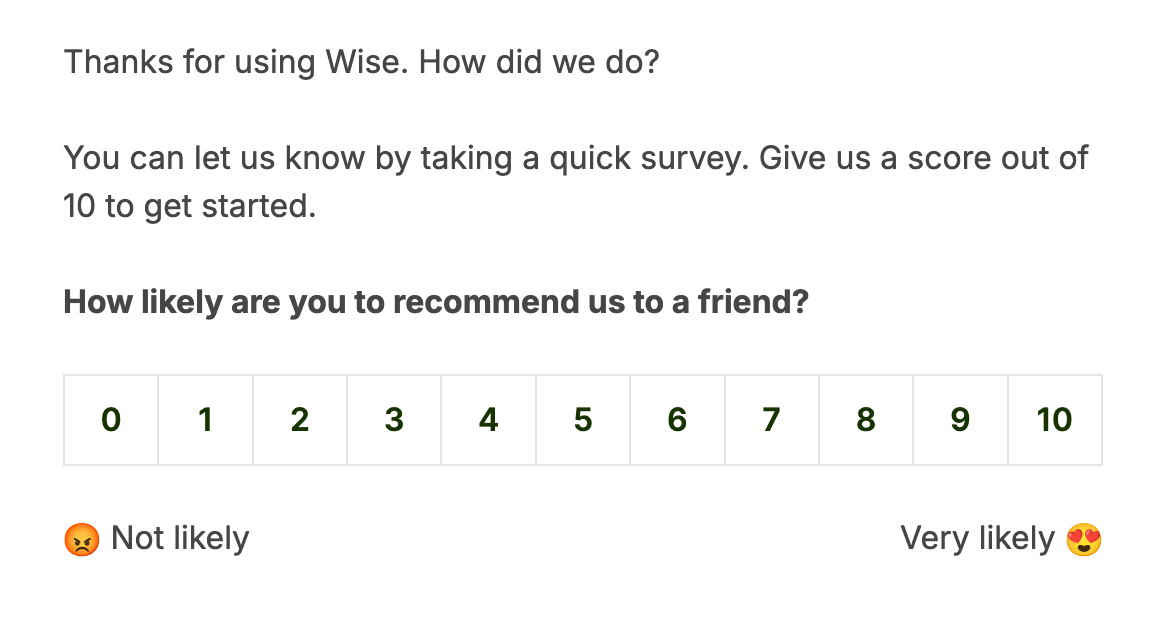
- NPS (Net Promoter Score): Measures how likely a customer is to recommend your product or service to others. First, customers are asked to rate their likelihood on a scale from 0 to 10. NPS is then calculated by subtracting the percentage of Detractors (scores 0–6) from the percentage of Promoters (scores 9–10). Passives (scores 7–8) are neutral and don’t affect the final score.
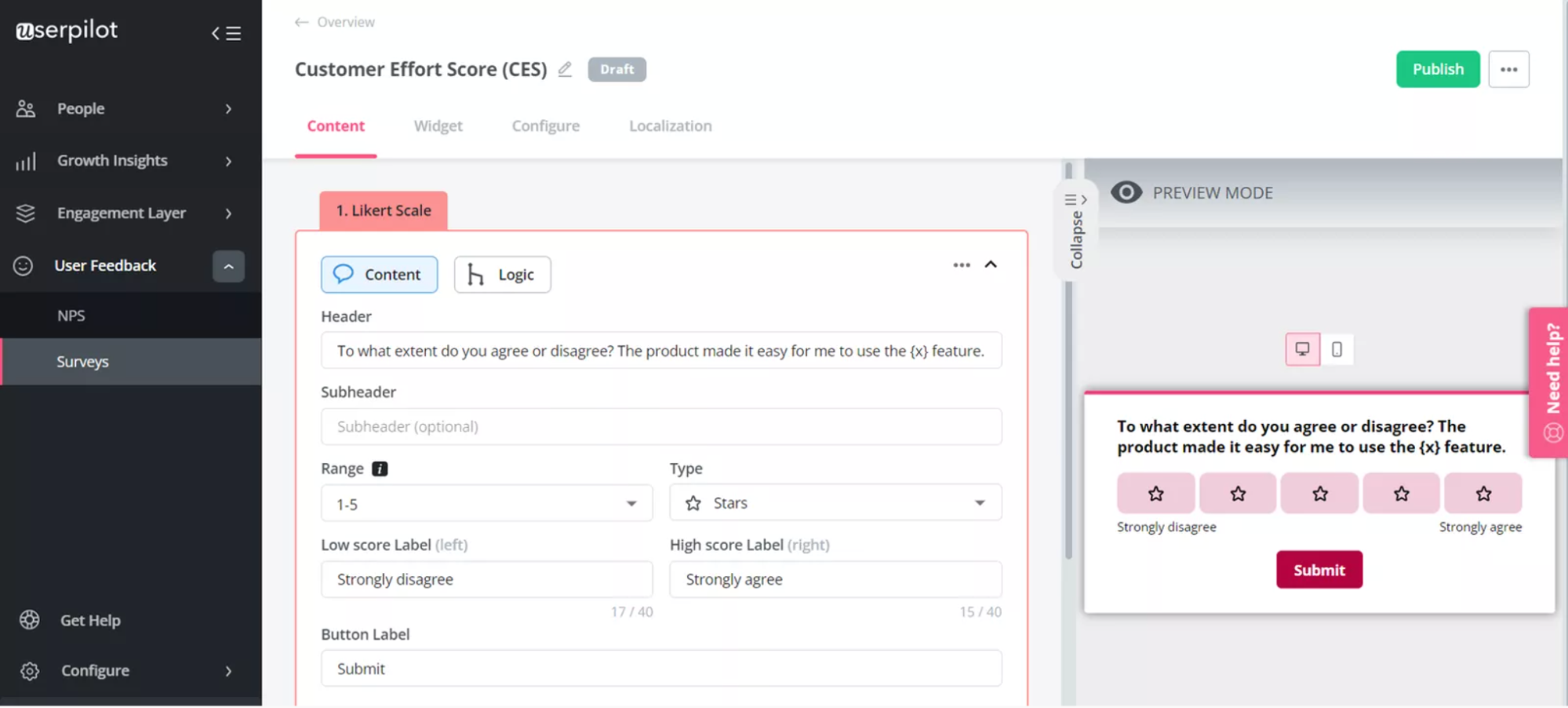
- CES (Customer Effort Score): Tracks how easy it was for customers to complete a task, like resolving an issue or making a purchase. Lower effort generally means higher satisfaction.
- Churn and Retention Rates: While not direct feedback, these metrics can point to satisfaction trends over time.
Which should you use and when?
- Use CSAT right after specific interactions, like support conversations, onboarding, or purchases.
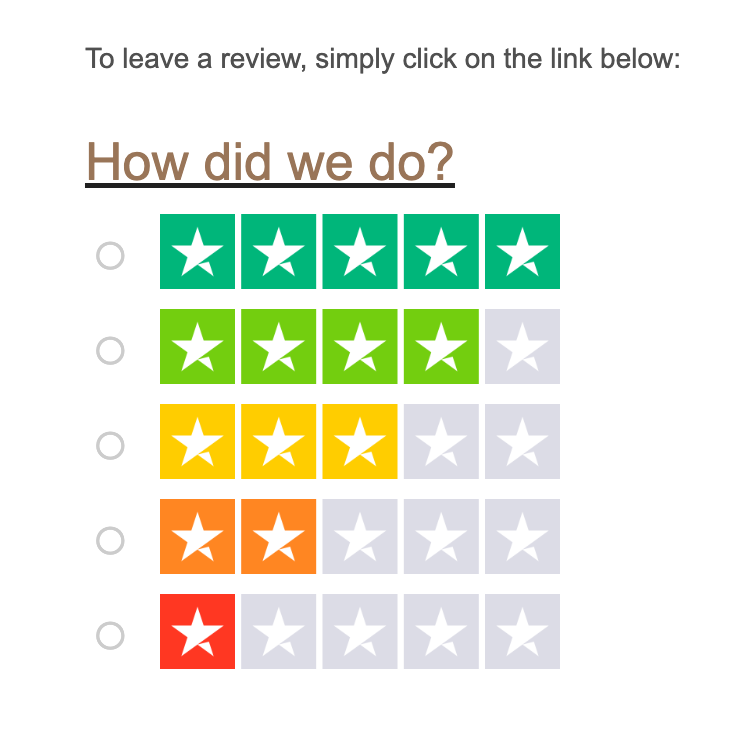
- Use NPS when you want to measure long-term loyalty and overall brand perception. It’s best sent periodically (e.g., every 3–6 months) and works well when paired with an open-ended follow-up question to understand the reasoning behind the score.
- Use CES after interactions where ease of action matters, like getting help, checking out, or navigating a key product flow.
- Use churn and retention metrics to monitor how customer satisfaction affects your bottom line. If you’re seeing lower NPS or CSAT alongside rising churn, that’s a red flag.
How and When to Collect Customer Feedback
Customer feedback is the most direct way to understand satisfaction. How you collect feedback depends on your product, communication channels, and the context in which you’re gathering it. It could be:
- Post-interaction email forms
- In-app surveys
- Chatbot prompts
- Interviews or user research sessions
- Review platforms
There’s no one perfect time to ask for it — you should collect feedback regularly throughout the customer journey.
Just a few examples of key moments to consider:
- Right after a purchase or onboarding
- After a customer support interaction
- Following product updates or new feature rollouts
- Periodically (e.g., quarterly or bi-annually)
For example, Wise sends NPS surveys by email roughly every six months:
To get the most value from your feedback data, try:
- Segmenting results by user type, like new vs. returning customers, subscription tiers, regions, individual support agents, etc.
- Adding open-ended questions to your surveys to reveal the context behind the scores.
And most importantly, don’t overwhelm customers with surveys after every interaction. Use segmentation to target different groups and space out survey requests thoughtfully.
How to Improve Customer Satisfaction
Well, the precise strategy would depend on your specific case, but there are a few things you can do no matter your niche and product.
Make Feedback Collection a Routine
While CSAT, NPS, and CES surveys give you quantitative data, some of your richest insights come from unsolicited feedback. I’m talking about things like support tickets, sales calls, product reviews, or social media mentions.
Here’s how to make it a habit:
Start by giving your frontline teams a low-friction way to share what they’re hearing. Set up a dedicated Slack channel (or Teams/Notion board) where anyone can drop in quotes or screenshots of the feedback they come across.
Encourage people to share:
- Repeated complaints or confusion
- Unexpected praise or “aha” moments
- Objections in sales calls
- Common “workarounds” customers use
Hold monthly feedback roundups with team leads to review patterns and take action.
Prioritize Feedback Based on Impact
To make your system useful, you need a way to sort and prioritize all that feedback.
Set up a basic tagging system to categorize feedback by:
- Topic (billing, onboarding, feature request, performance, etc.)
- Sentiment (positive, negative, neutral)
- Frequency or severity
In other words, how often does a specific issue get mentioned?
Tip: Don’t overlook positive sentiment. It can be just as useful for shaping what to invest in next. If customers consistently praise something (like super-fast delivery, friendly support, or your onboarding emails), that’s a cue to double down or scale it to more user segments.
Once you’ve looked at how often something comes up, ask yourself what kind of impact fixing it would actually have. Look at:
- Who’s asking (VIP users? Free-tier churn risks?)
- What the potential impact is (will it improve retention, unlock a new use case, reduce support load?)
- Whether it aligns with your strategy (is this a real issue, or is the negative feedback coming from users who aren’t your ideal customers?)
Acknowledge Negative Feedback and Respond
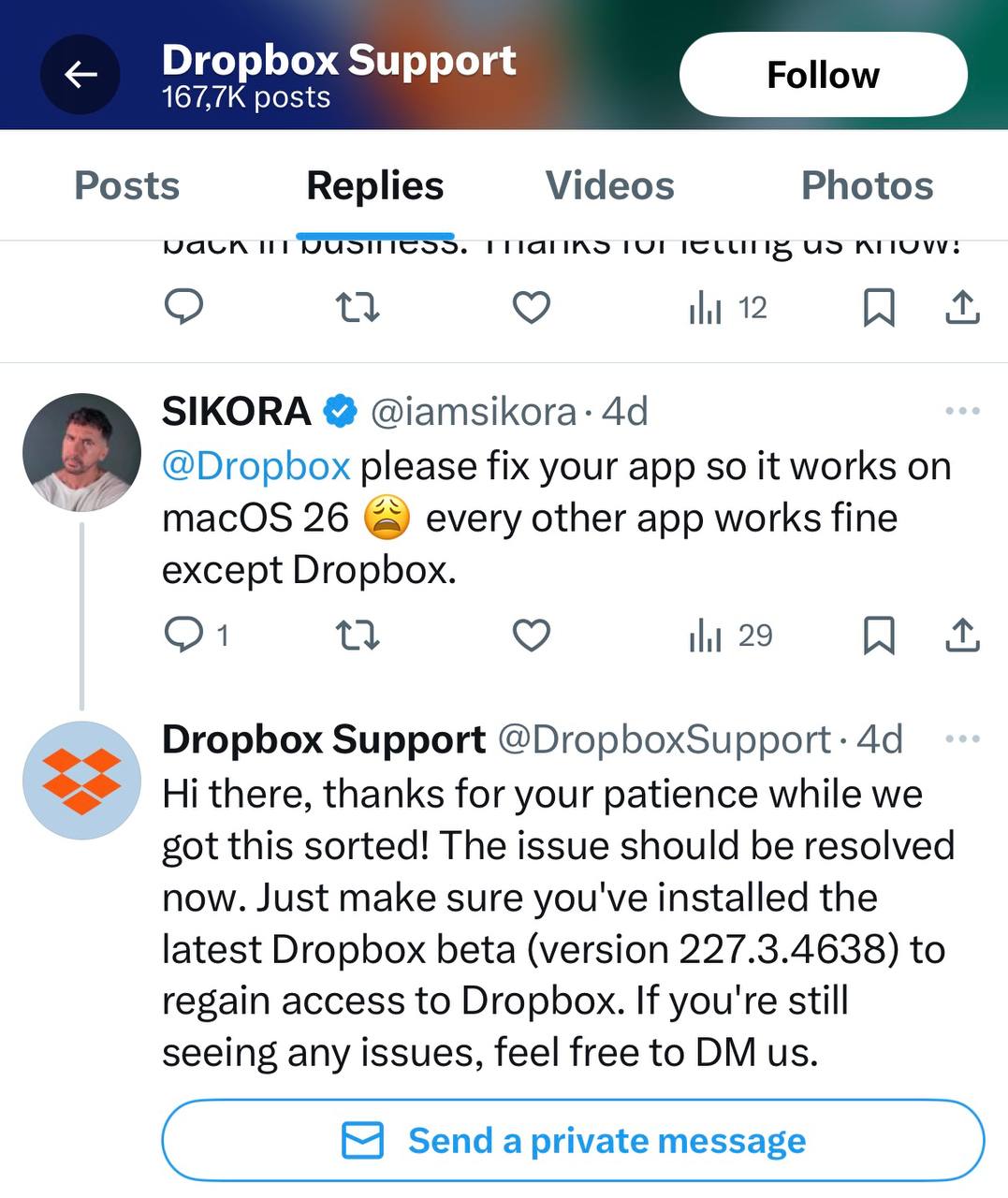
Respond publicly when appropriate (like on social media or review sites), thanking customers for their honesty and assuring them you’re working on a solution.
For example, Dropbox has a dedicated X (formerly Twitter) account specifically for support issues. This gives customers an easy way to reach out and escalate problems publicly, speeding up resolutions.
When an issue is fixed, Dropbox updates the conversation publicly, so anyone following the account can see that concerns aren’t just heard — they’re actively resolved.
For private channels like support tickets or emails, keep the customer updated along the way, especially if you need time to work on the issue.
Use Automation, But Don’t Overdo It
Automate what makes sense (e.g., collecting feedback or handling quick support questions), but don’t lean too hard on chatbots when customers clearly need a human.
For example, you can use automated tools to gather basic info from customers before a support rep even jumps in with discovery questions like “What’s the problem?” or “Can you share your order number?”
AI chatbots can also handle common questions like “How do I return this?” or “What’s your delivery window?” by linking to FAQ articles or pulling info straight from your system — that depends on how smart your setup is.
But relying on AI to resolve complex customer queries? Not so fast. Chatbots still don’t perform well enough, and customers can usually tell when they’re being deflected.
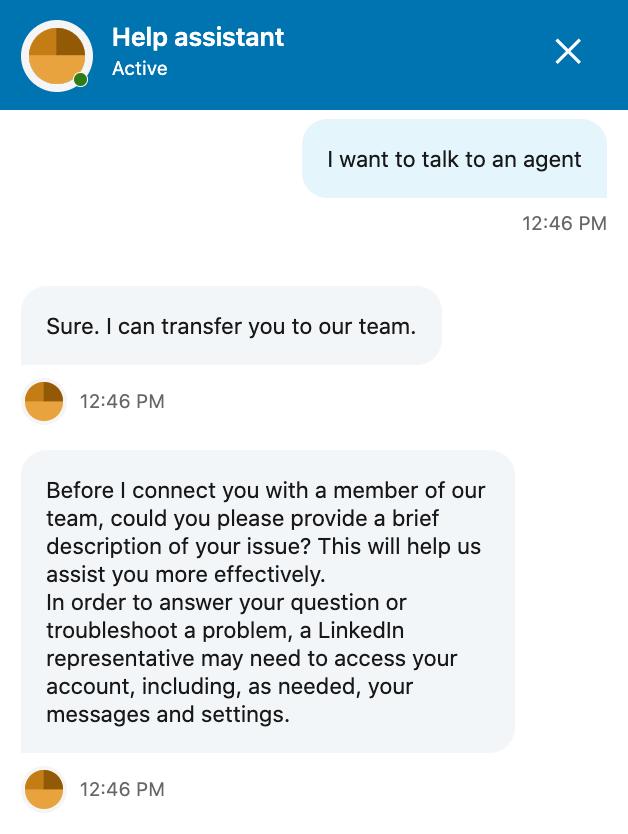
So, always make sure there’s an easy way for customers to get in touch with a live person without wading through dozens of pre-built scripts. LinkedIn’s AI chatbot picks up on your input, and if you’d rather talk to a human, just asking for one gets you forwarded quickly.
Customer Satisfaction Trends to Watch
Over the past few years, brands have been trying to strike the right balance between AI, personalization, and privacy — all in the name of delivering better customer experiences. Here’s where we’ve landed so far.
Increased Emphasis on Transparency
Sixty-one percent of consumers say trust is what matters most when they’re interacting with companies.
People are tired of being misled by vague promises, hidden fees, or overly polished PR speak. Throw in growing concerns about AI-generated content and how personal data is handled, and the bar for earning (and keeping) trust is higher than ever.
Today’s winning brands treat customers like insiders. They explain decisions clearly and own up to mistakes publicly.
It’s Harder to Collect Feedback
Customers are overwhelmed with survey requests, and feedback rates are dropping. Over four years, customer feedback after a bad experience has declined by 8 percentage points.
To really understand how customers feel, you can’t just rely on surveys anymore. You need to collect insights across multiple touchpoints — from support tickets and behavior patterns to product usage and purchase data.
Walking The Line Between Personalization and Privacy
While people enjoy the outcome of personalization, they’re often uncomfortable with how much data it requires.
That puts brands in a tricky spot. Go too far, and you risk crossing into the “creepy” zone — the uncanny valley where your messaging feels like it knows a little too much.
Instead of pulling data from every possible source, lean into zero-party data — the kind customers willingly share, like when they answer onboarding questions or set their preferences.
FAQs
How to improve customer satisfaction?
Start by listening more closely to your customers. Don’t rely solely on surveys. Monitor support tickets, social media, and sales conversations to find patterns. Next, prioritize fixes and improvements based on what has the biggest impact. Use automation to handle simple tasks and route complex questions to humans. Finally, focus on transparency. Clear communication builds trust, which is at the heart of strong customer satisfaction.
How to calculate customer satisfaction score?
Customer Satisfaction Score (CSAT) is calculated by asking customers to rate their experience, usually on a 1 to 5 or 1 to 10 scale. To calculate the score, divide the number of satisfied responses (typically 4s and 5s on a 5-point scale) by the total number of responses, then multiply by 100 to get a percentage.
CSAT = (Number of satisfied responses / Total responses) x 100
What is a good customer satisfaction score?
A good CSAT score typically falls between 75 and 85 percent. That means three out of four customers are rating their experience as satisfactory or better. The ideal score can vary by industry, so use benchmarks to guide expectations, but also focus on improving your own baseline over time.
Conclusion
The better you understand your customers, the easier it becomes to keep them happy. Make feedback a regular part of your process, act on what you learn, and keep an eye on customer experience trends to stay ahead of their needs.