 Sign In








 Ubersuggest
  AnswerThePublic

If you’re new to the world of online media marketing, it can be hard to know where you should first focus your efforts to achieve your marketing goals.
After all, by now you’ve probably read so much about content marketing strategy, business marketing, social media tactics, search engine tips, and reeling in that customer base– that you’re just left feeling overwhelmed and not sure of what needs to be done.
When you feel like this, it’s important to take a step back and create a marketing plan.
In this post, we’re going to take a look at how you can create an online marketing plan and marketing strategy for nearly any type of small business and how you can use this plan to hit your marketing goals.
We’ll examine how you can build a rock-solid marketing plan from the ground up and how you can adapt your digital marketing plan, if changes need to be made. From content marketing strategy to claiming space in the social networks and even inbound marketing – it’s time to hit those business goals.
By the end of this post, you should feel less overwhelmed and more confident about how you can take your small business and get media marketing online.
Let’s begin with a closer look at your digital marketing strategy.
The difference between Goals, Strategy and Tactics
When you’re creating a digital marketing plan, it’s important that you understand the difference between marketing goals, marketing strategy and tactics.
When you do, you’ll be better able to adapt your digital marketing approach and conduct a successful marketing strategy.
On top of that, you’ll also be able to better judge how you can implement things that you learn from various articles that you might read in the future.
So, what’s the difference between goals, strategy and tactics?

A business goal is the overarching result that you’re looking to achieve. It’s often what you focus on first, as shown above.
So… a goal of yours might be to drive $100 per day in revenue, using media marketing or social media marketing.
Strategy is high-level thinking related to how you might achieve that goal.
So…the digital marketing strategy might be to get people through a conversion sequence, where they’re then eventually sold a product.
Tactics are the specific set of actions that you take, in order to achieve the strategy.
So, your social network tactics might include spending $20 a day on Facebook Ads, using Lookalike Audience targeting.
A lot of the media marketing content that you’ve probably read by now focuses on tactics, rather than goals and strategy.
For example, a blog post discussing the social media marketing goal of how you’re going to get more Facebook Fans, doesn’t always include strategy, in terms of how you can turn those social network fans into $100 per day in revenue.
As a result, after reading such an article, you probably tried to get more fans via that social media site and quickly gave up, because you didn’t see how obtaining fans would contribute to the larger picture of generating revenue. Therefore the article wasn’t such a valuable content piece to you because it only covered one aspect of the larger social media marketing plan.
When creating future media marketing plans, based on content that you have read, it’s important that you know how to set marketing tactics apart from strategy and business marketing goals.
When you can, you can instantly work out the steps, from A-Z, about how that marketing tactic will help you achieve your business goal.
As you’ll discover in this post, you can always change your tactics to help achieve your content marketing strategy and goal.
If Facebook Ads aren’t getting enough people into your conversion sequence, so that you can generate $100 a day – change your tactic and your attention to another social network and use YouTube Ads instead.
You’re not changing your goal or your marketing strategy – just the set of actions that you’re using to achieve your strategy and goals.This makes for a great digital marketing strategy as it will also help you to reach your target audience and gain more potential customers.
Note: When you’re working on this stage of your media marketing plan, it also helps to decide on a figure that you’re willing to spend, in order to achieve your goal. Having that figure in mind will help make it easier to select the tactics that you can take advantage of.
Okay, so now that we’ve cleared that up, let’s move on to the next section – understanding your target audience and potential customer.
Understanding your end target customer
As with all digital marketing and especially online marketing, it is absolutely essential that you know who your end target customer is.
There’s so much noise on the internet and you need to find a way to break through and get your marketing strategy efforts to the right people.
And, you can only do that when you know who the right people are.
If you know who the right people are, you’ll be able to customize your tactics, so that they’re bringing you the best possible results.
The ideal way to understand who your customer is, is by creating a buyer persona. When you create a buyer persona you will also understand how to adapt your editorial calendar and content creation in a way that speaks to that person.
I’ve covered how you can create a Buyer persona here.
Here’s a good template that you can use, if you want to quickly develop a buyer persona.
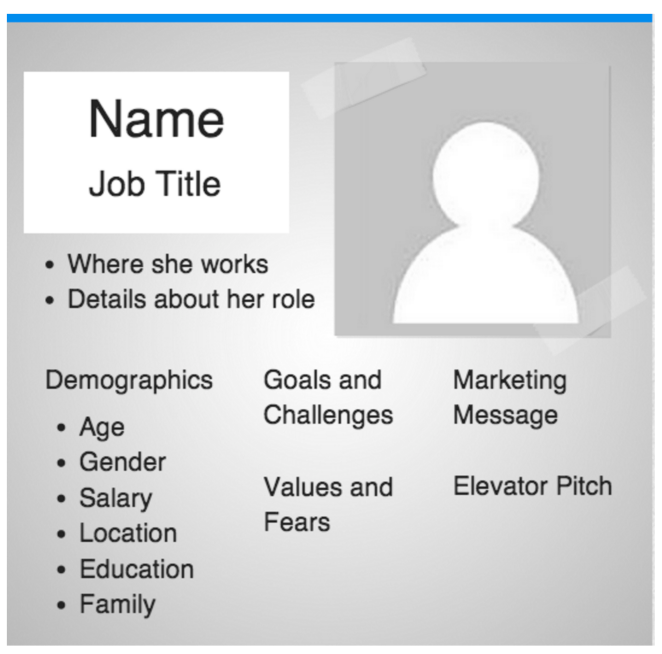
Aside from making it easier to reach your target audience, knowing who your ideal customer is will help, because your marketing strategy will also resonate better with them.
That’s because you’ll be able to customize your copy – from your social network content to your email marketing copy, so that it only speaks directly to them, making your marketing tactics more engaging and more likely to produce a positive ROI. When you know who you are writing to, it becomes easier to create content that will be valuable to them.
Plus, if you’re looking to hone your content marketing strategy, something we’ll touch on later, the creation of a customer persona can lead to content effectiveness improving by 60%
Pick one marketing channel
When you’re just starting out in the world of online marketing for your small business, it’s important that you keep things simple, for now, ensuring that you do not spread yourself too thin.
That means that it can often be a good idea to pick just one social media marketing or content marketing channel, for the moment.
In the long term, you don’t want to rely on just one media marketing channel, as this can have negative effects on your business.
That’s because if that digital marketing channel changes its rules or suspends your account, your small business could disappear overnight.
Therefore, focus on one marketing channel or one social media strategy for now. But, when you begin to see results, consider simultaneously working on another marketing channel to extend your marketing goals, as soon as possible.
Here’s an example of how the above can be achieved –
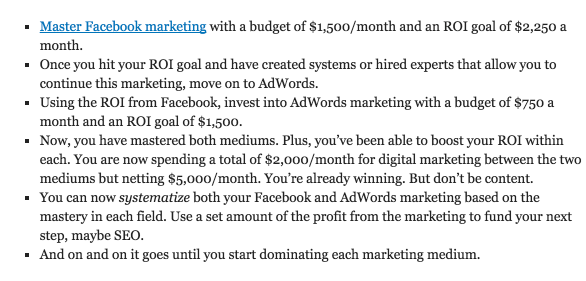
Social media marketing channels might include YouTube, Facebook, LinkedIn, Google Search and email.
Note: If you want to get really specific, you might also want to divide channels, in terms of organic and paid – so organic YouTube marketing and paid YouTube Ads would represent two content strategy channels.
The channel that you pick is going to depend on where your strengths lie and what you feel comfortable with. Sometimes, you might need to combine channels, in order to get peak effectiveness.
For example, you might want to use email marketing as a channel, especially when you consider that 31% of marketers believe email is their strongest marketing channel.
However, in order to get people onto your email list, you might have to combine the use of this channel with a form social media PPC advertising, like Facebook Ads.
Figure out how to use a marketing channel by studying your competitors
Studying competitors is important, because doing so lets you know what tactics are already working in your niche and on which marketing channels.
Note: We’re not talking about stealing anything that your competitors are doing. What we are talking about, though, is learning from those who have come before us.
Let’s take a look at how you can study various marketing channels.
If you’re looking to do some Content Marketing, it can be a good idea to study the content that is doing well in your niche so you can work out your own content marketing strategy. You can use Buzzsumo to achieve this.
Using Buzzsumo, you can find out what valuable content is achieving a lot of shares across the social networks for a given topic.
As a general rule, actionable content works well, when it comes to Content Marketing.
Therefore, make sure that you combine your ‘niche keyword’ with something actionable, like ‘tips’ or the phrase ‘how to,’ when searching the platform.
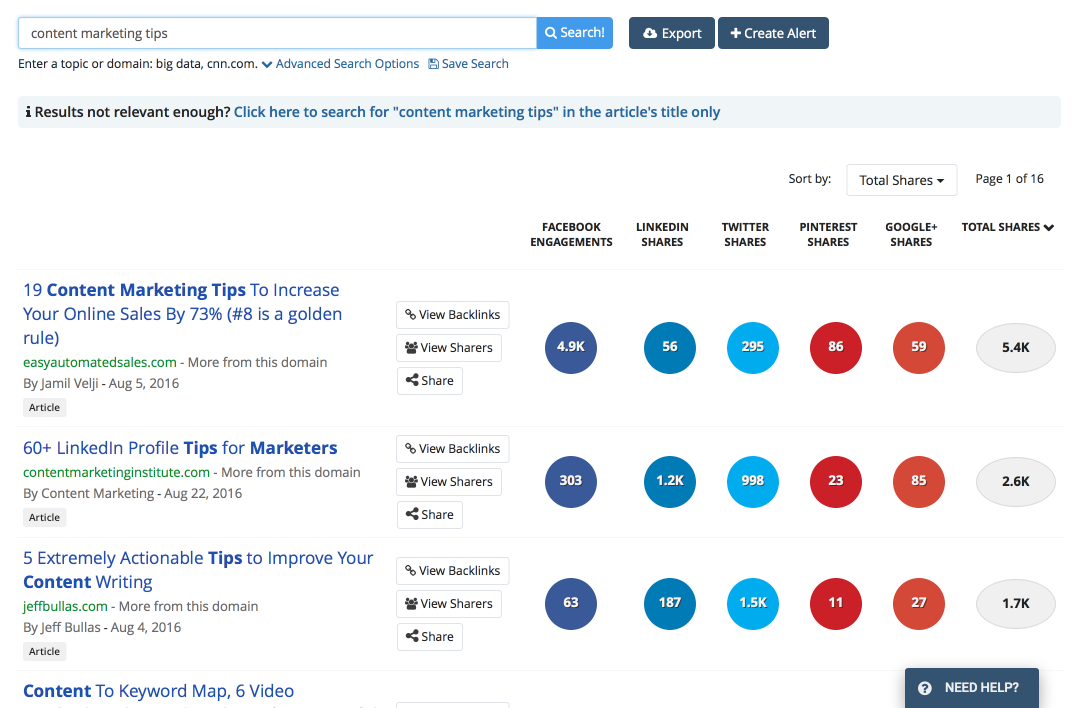
After having performed a Buzzsumo search, you’ll then see examples of content marketing that are working well within your niche.
If you want to hit the ground running and get the best results with the content marketing channel, identify the top performing pieces of content and then go about creating something better.
If you’re looking to use paid traffic as a content marketing strategy, then it can be a good idea to use PPC intelligence tools to figure out what approach you need to take to hit those marketing goals.
If you want to study PPC Search ads you can use tools, like SpyFu.
Spyfu, provides a lot of keyword research, in general – but it really stands out when it comes to competitive AdWords Search ads analysis.
Let’s suppose that I wanted to start an ecommerce platform that allows others to set up online stores. I’d find a company that’s doing well in that niche, like Shopify and I’d then enter their URL into SpyFu.
Upon doing so, I get an overview of their AdWords activities.
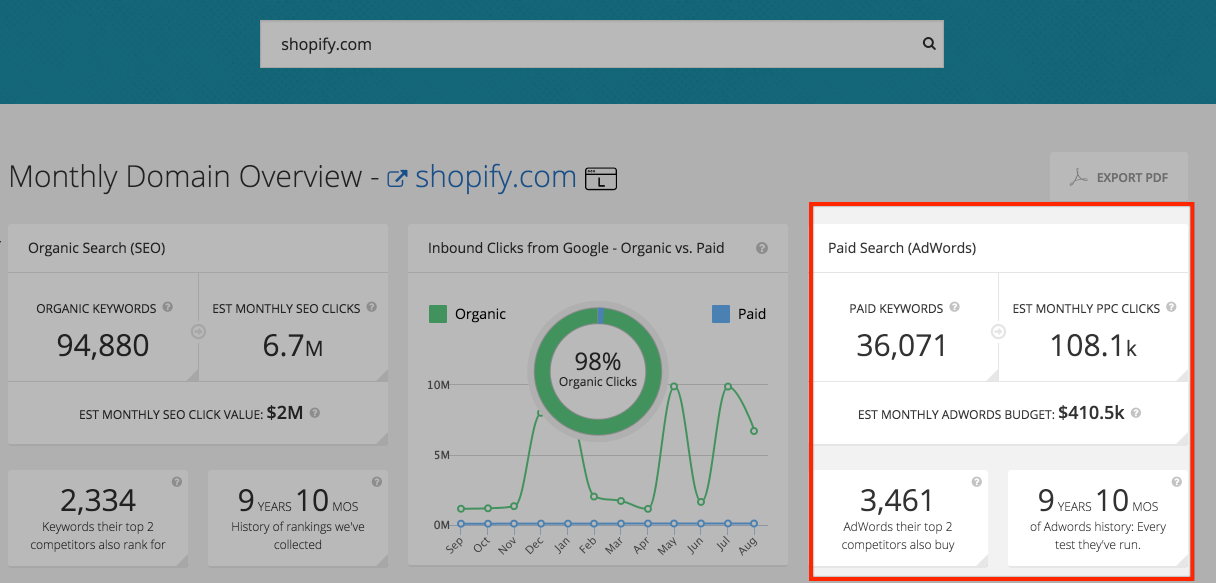
If I scroll down, I can see which keywords they’re bidding on and what their actual ads look like.
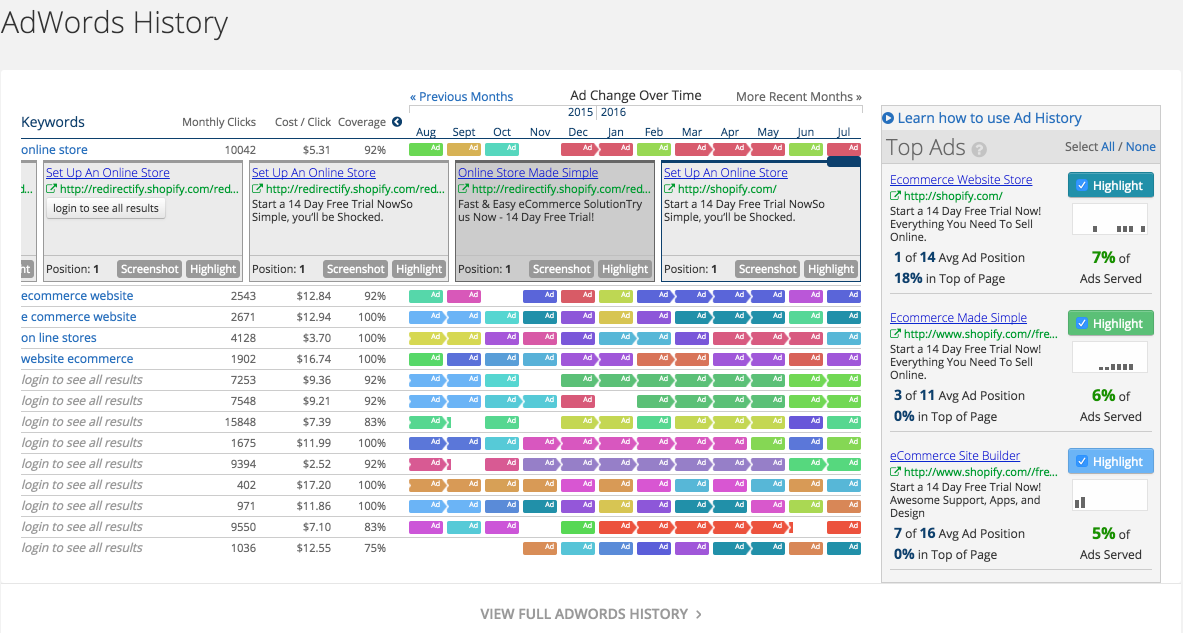
I now know what keywords are worth targeting for my ads and what my target audience cares about, when it comes to writing ad copy.
If you want to use organic search as a marketing channel, it helps to identify keywords that are bringing a lot of traffic for your competitors, but also keywords that have been ignored by them, too.
You can do competitor analysis on Google organic search keywords, using a tool, like SEMrush.
If you use the SEO Keyword Magic tool, within SEMrush, you’ll be able to identify high competition keywords and low competition keywords that will generate a return.
Note: You can also use this information to make your content marketing strategy better, as the keywords provided can be used to generate blog post ideas, fix up your editorial calendar and produce valuable content too.
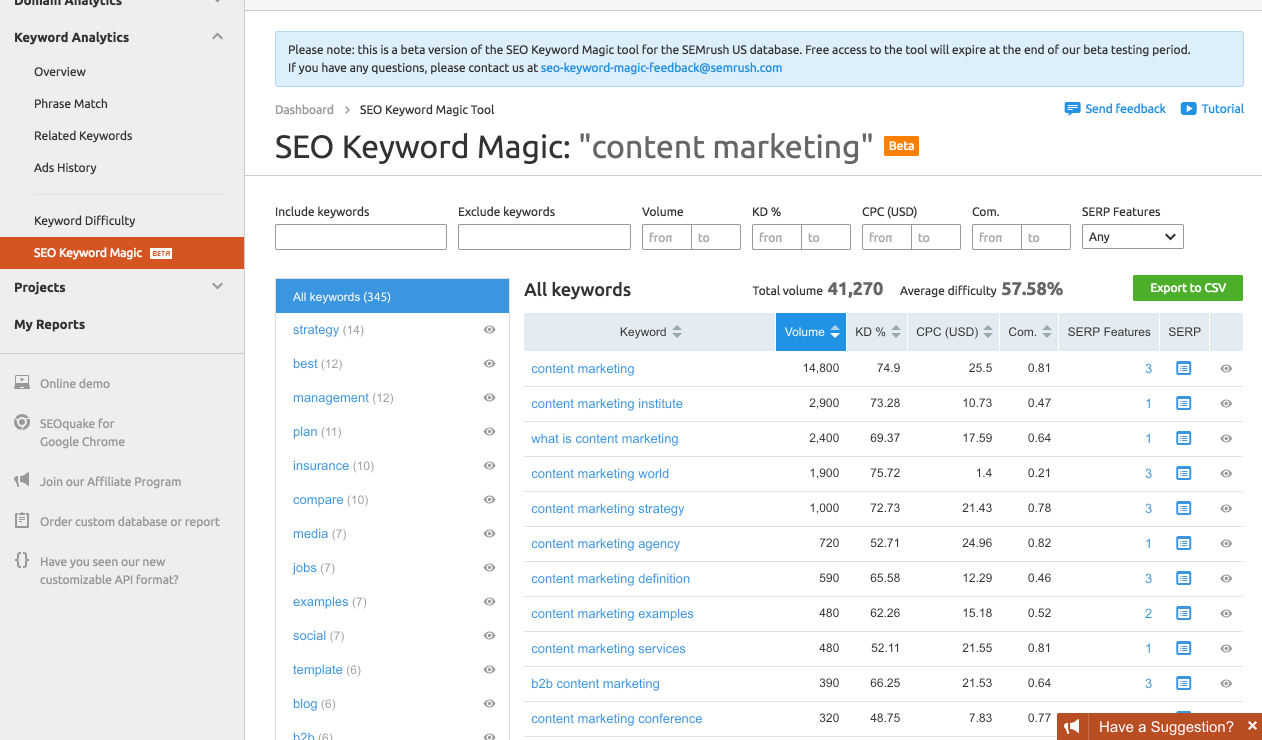
SEMrush is an incredibly powerful tool. If you poke around, you’ll find that it can provide insight into Google Display Ads, too – another marketing channel worth checking out.
Competitor analysis isn’t really available for the Facebook Ads marketing channel.
However, you can always keep tabs on competitor Facebook Pages, to see how they’re promoting themselves. You can also take a look at Facebook Advertising case studies, to get a general overview of how to utilize social media marketing, using Facebook Ads.
If you’re going to be using YouTube as a social network marketing channel, consider subscribing to the ‘Channels’ of your competitors.
Study the quality of their videos. If they have some videos that have performed exceptionally well, question what made them perform well.
If you’re using email marketing as a digital marketing channel, sign up for all of the email lists of your competitors.
Pay attention to the content that they send you, as well as what kind of offers they put in front of you. Timing is also a key factor that you may want to monitor.
Okay – so that’s how you can study marketing channels and figure out how to get the best results out of them.
Now, let’s talk about how you can combine everything.
Combining everything – Decide how your marketing is going to make money
Once you’re clear on your business and marketing goals, who your customer is, the marketing channel that you’re going to use and how you’re going to use it, you then need to decide how you’re going to make money.
That’s a blunt way of defining how you’re going to take someone stumbling around the internet, turn them into your customer and then eventually into proponents of your brand.
Here’s how marketing legend Seth Godin puts it.
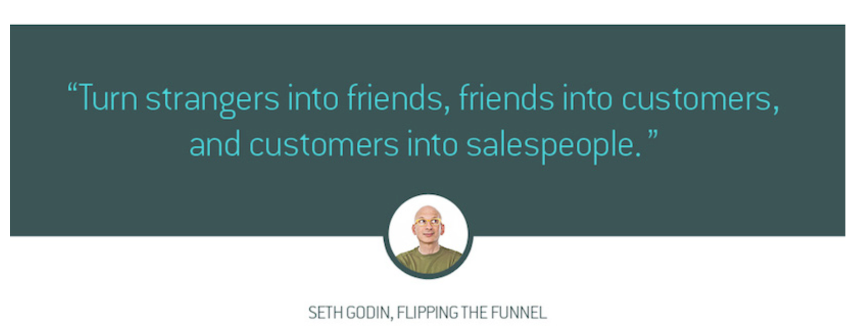
One of the best ways to achieve the above, is by bring everything together and creating a conversion funnel.
Having a conversion funnel is helpful, because it directs your inbound marketing efforts. It gives you a bird’s eye view of how your marketing machine is going to work.
It’s very easy to complicate conversion funnels.
But, essentially you’re looking to do the following.
Make people aware of you -> Build trust and authority –> Make an offer
You can make people aware of you, by using the any of the marketing channels that we’ve discussed.
You can build trust and authority by using content, an autoresponder sequence, a webinar, a phone call – these would be your tactics.
Note: Similar to what I mentioned earlier, if you want to really build trust and authority, then you may need to combine marketing channels.
Now, this might sound contradictory, but stick with me for a moment.
As I mentioned, you should start with only one marketing channel that exposes people to the stages in which you build trust and authority.
You shouldn’t try to make people aware of you in different ways. So, in the beginning, don’t run YouTube Ads and Facebook Ads, in order to promote a piece of content – just pick one.
As an example, you might use PPC advertising as the channel that builds awareness, to expose someone to your content marketing that gets them on your email list and eventually sends them to a webinar that makes an offer.
As I mentioned before, once you’re generating a decent income from using one marketing channel to build awareness, you can then move on to other channels to achieve the same goal.
If you’ve really tried hard to make a certain tactic work, but you’re not achieving anything, then you’re free to move on to another one.
That’s the whole point of tactics.
That applies to the marketing channel that you’re using or the way that you’re presenting people with an offer.
Before you make a change, however, make sure that you’ve done everything in your power to understand how to get the best results from a specific tactic.
That includes studying your competitors, but also reading case studies that document how that tactic was successfully used by others.
Conclusion
The foundation of nearly every successful media marketing campaign comes down to a well-conceived plan.
It’s important to know the difference between tactics and strategy, when you’re formulating your plan – otherwise, you might just end up going around in circles.
It also helps to see what’s already working well in an industry, so that you can learn from those who have come before you.
Get started now on your plan and using what you’ve learned in this post to grow your small business, using online marketing.
Are there any tips you have to share when it comes to creating an online marketing plan? Please let me know in the comments below!