 Sign In













Are you having a hard time gaining visitors and attracting clients with your content marketing efforts?
Don’t worry, you’re not the only one. The majority of bloggers don’t know how to attract clients through content marketing.
I’m going to show you 13 ways that you can growth hack your content marketing, so that you can increase your search traffic by 206% and attract more clients for your online business.
The truth is that you can increase your search traffic by 13.15% in about 30 days if you implement these content marketing tips. And, the best part? You will…
- Attract more clients
- Increase your email list size
- Generate more valuable comments
- Encourage repeat visitors to your blog
- Build your personal brand online
- And much more…
With a solid plan and marketing strategy, you’ll be way ahead of your competitors. So, let’s get started:
1. Brainstorm viral ideas
What makes certain ideas go viral, while others go unnoticed? Jonah Berger, Associate Professor of Marketing at the Wharton School, was correct when he said that practical, useful content that evokes high arousal emotions (anger, fear loss, pain, laughter and so on) gets shared the most. In fact, when your content makes people laugh or otherwise feel entertained, they’re more likely to share your idea on social media.
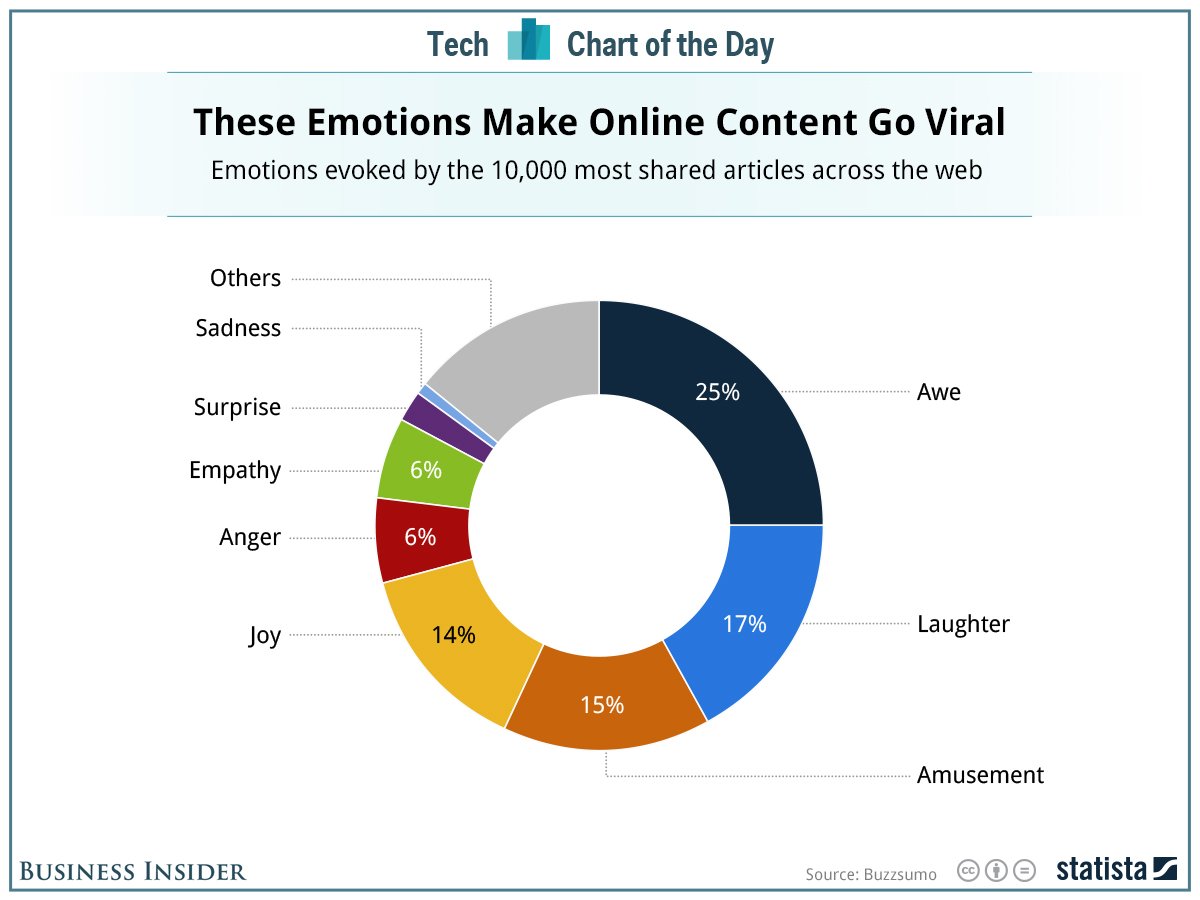
Gone are the days when we generated content that appealed to Google and other search engines. These days, your focus should be on content creation which is helpful and emotionally resonant, that your target audience will benefit from. At that point, they’ll help you spread your message.
You may not nail a viral idea every single time, but just a few viral ideas in a month will drive lots more qualified visitors and leads to your online business.
This means that you have to stand out in the crowd or your content marketing strategy will fall into the abyss.
Start a content marketing brainstorming session by answering these questions:
- Do you have a trending idea that people will want to know about?
- Is your idea funny?
- Will your idea evoke controversy in your industry?
- Will your idea provoke an emotional response in readers — e.g., pain, pleasure, anger, surprise, etc.?
- Can you add video, an infographic or attention-grabbing images?
- Of the blog posts and articles you’ve already written, which kind typically receive the most social media shares?
- Do your readers prefer short blog posts or longer pieces of content?
- How easily can you connect with industry influencers and ask them to share your content?
- What’s the best day/time to publish your content creation?
Remember that a content marketing strategy with a positive flavor will perform better online. When you consistently elicit positive emotions, people will naturally be attracted to you.
Another approach is to avoid reinventing the wheel. Identify the content writers, website owners and industry bloggers who tend to dominate with every piece of content that they create. Find their best-performing articles, then leverage their topics and headline styles to craft something more powerful and enticing.
To find viral content in your industry, follow these two steps:
Step #1: Go to Buzzsumo. Type in your keyword (e.g., “on-page SEO”) and click “Go.”
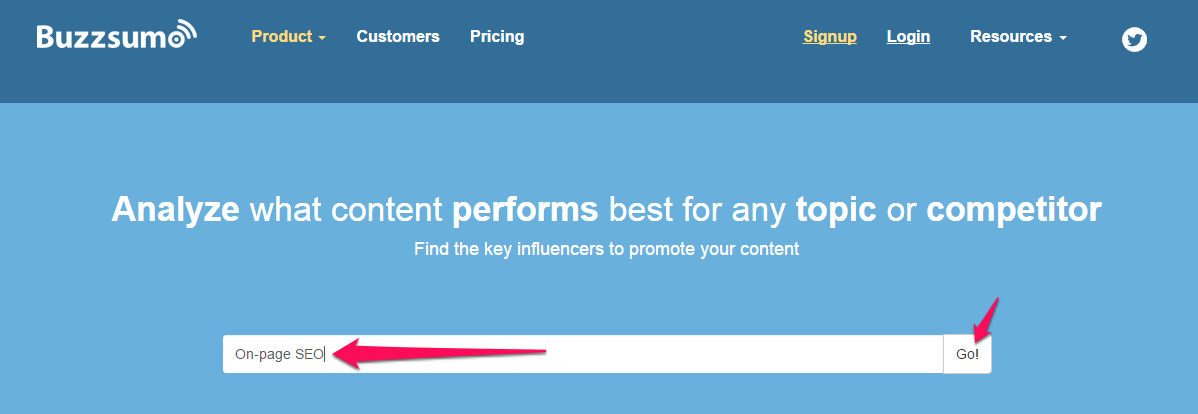
Step #2: Check your results to find the headlines that got the most social shares.

Buzzsumo shows us that in the past year, the topic “on-page SEO” was extremely popular. Over 10,000 people shared articles about it on Twitter.
Remember that most topics that went viral didn’t explode overnight. The vast majority of them take time to gain traction, which is often sustainable in the long run.
The same virility rule applies to videos and other kinds of content creation. Sustainability is far better than a viral surge that disappears overnight.

Going back to our list of headlines, the next step for an effective content marketing strategy is to model your headline after one of those viral headlines. Study it, then craft a better one:
Original viral headline #1: 5 More Brain Triggers to Drive Conversions on Your Website or Landing Page
Fresh and clickable headlines:
- 15 Powerful Brain Triggers to Drive Conversions on Your Website
- 13 Foolproof Brain Triggers That Will Increase Your Conversion Rate
Original viral headline #2: Illustrated Guide to Advanced On-page Topic Targeting SEO
Fresh and clickable headlines:
- The Definitive Guide to Advanced On-page SEO That Works
- How an Illustrated On-page SEO Guide Will Improve Your Search Rankings
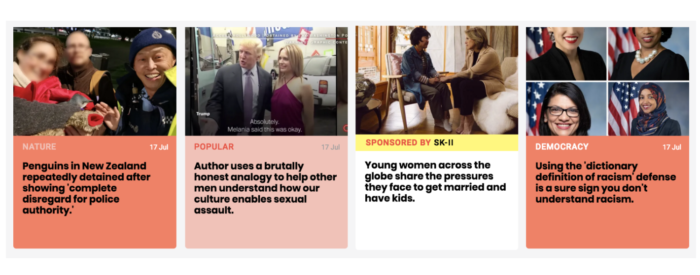
Upworthy uses emotional triggers and a sense of urgency as part of their content marketing strategy to inspire its loyal readers to share links on Facebook, Twitter, and LinkedIn.
Take a look at some recent Upworthy headlines that went viral:
2. Write in-depth articles
It’s just a plain and simple fact that Google loves in-depth articles. Your potential clients also love them.
The term “in-depth” means giving careful consideration to all details and aspects of a subject. This means that you extensively research your topic and then carefully craft a 2000+ word article.
serpIQ gives us a clearer picture of the sort of length of content creation that shows up in Google’s top 10. Articles of 2,000 words or more tend to perform very well in search results.

So, by consistently publishing in-depth articles as part of your marketing strategy, you’ll not only improve your search traffic and rankings, but you’ll also get more social shares and grow your online business.
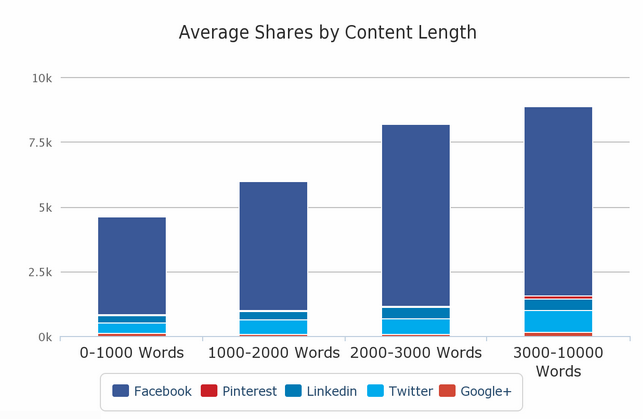
In-depth articles convert better, too. Marketing Experiments discovered that long-form content creation converted 30% higher than a shorter version on its homepage. Further, Conversion Rate Experts increased CrazyEgg’s conversion rate by 64%, just by using longer copy while retaining the same message.
Here are a few things that you should keep in mind for effective content marketing when writing in-depth articles:
- Pick a subject/topic that’s broad – e.g., web traffic, blogging – then dive deep into it.
- Target a long-tail keyword in your headline – e.g., How to Build a Successful Blog.
- Research current, accurate data to back up facts and opinions.
- Create content that is extremely interesting.
- Add relevant images, graphics, videos or slide presentations.
- Collect email leads in the body of the article
- Link out to relevant authority sites.
- Include a call-to-action (e.g., download a free report, opt-in to an email list or buy a product)
- Notify the blog authors mentioned in the article and ask them to share.
3. Craft clickable and shareable headlines
Ted Nicholas, the renowned direct-response copywriter, once said that “preparing a powerful headline is responsible for at least 73%” of his content marketing success of converting readers into buyers.
If you want to capture your audience’s attention, then you’ve got to pay serious attention to your headlines.
You have roughly 8 seconds to grab readers’ attention, before losing them to your competitors.
Remember that every piece of content creation has just one purpose – to get the reader to read the next sentence and then the next. That’s why you need magnetic headlines that compel your audience to click and read.
Here are some content marketing tips on how you can write a clickable and shareable headline:
1). Add a touch of curiosity: Upworthy regularly publishes perfect examples of clickable and shareable headlines. No wonder their posts routinely get over 500,000 Facebook shares:

If you’re a blogger or consultant, writing clickable headlines will help you make a great first impression on your potential clients.
As they read your headlines and the content that follows, they begin equating the quality of your content creation with your overall value. They start to believe that if they hire you, you’ll deliver the same results for their businesses.
Clients aren’t really after more page views or a decreased bounce rate. Clients want results that will generate more money.
Thanks in part to those headlines, Upworthy gets more than 88 million unique visitors a month.

4. Test call-to-action buttons
What’s a call-to-action?
Here’s a concise definition:
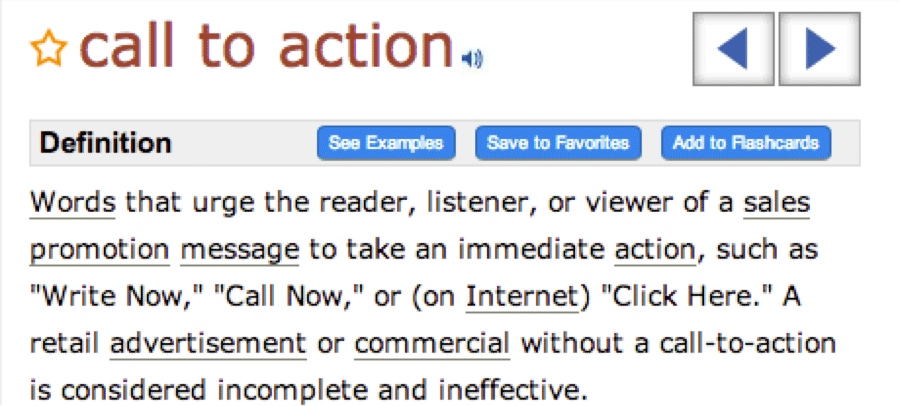
That last line – “a retail advertisement or commercial without a call-to-action is considered incomplete and ineffective” – means that a call-to-action is a necessary element in every stage of content marketing. That means that a call-to-action is necessary for every article, blog post, video and ebook that you publish.
You can easily boost your conversion rate by 13% or more, just by testing your call-to-action buttons. That alone can make a whole lot of difference to your overall client acquisition rate.
According to Unbounce, “the-call to-action represents a tipping point, between bounce and conversion.” In other words, if you don’t want your readers to exit your landing page, then pay attention to the shape, size and color of your call-to-action button.
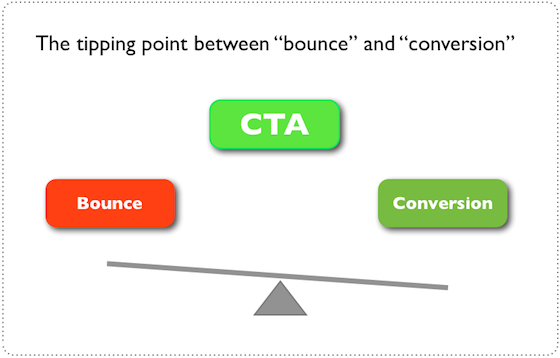
There are different ways to create an A/B test for call-to-action buttons, but the objective is to determine the best color, size, shape, and copy that will inspire more people to take the desired action.
Here are some examples of effective call-to-action buttons:
Square Register: Square is a point-of-sale payment solution used by many U.S. retailers. Their call-to-action button is white with a cyan background. The color of the text is blue.
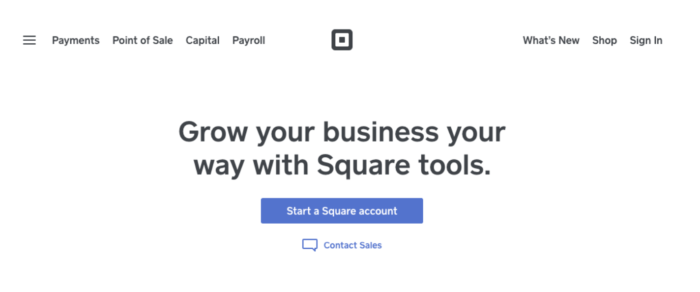
Takeaway: Test different button colors, but don’t use lots of different colors that will seem garish to readers. Split test, in order to determine the optimum size/color combination for your prospects and overall marketing strategy.
GiftRocket: GiftRocket is an online gift merchant that uses a call-to-action strategy to engage users and inspire them to click.
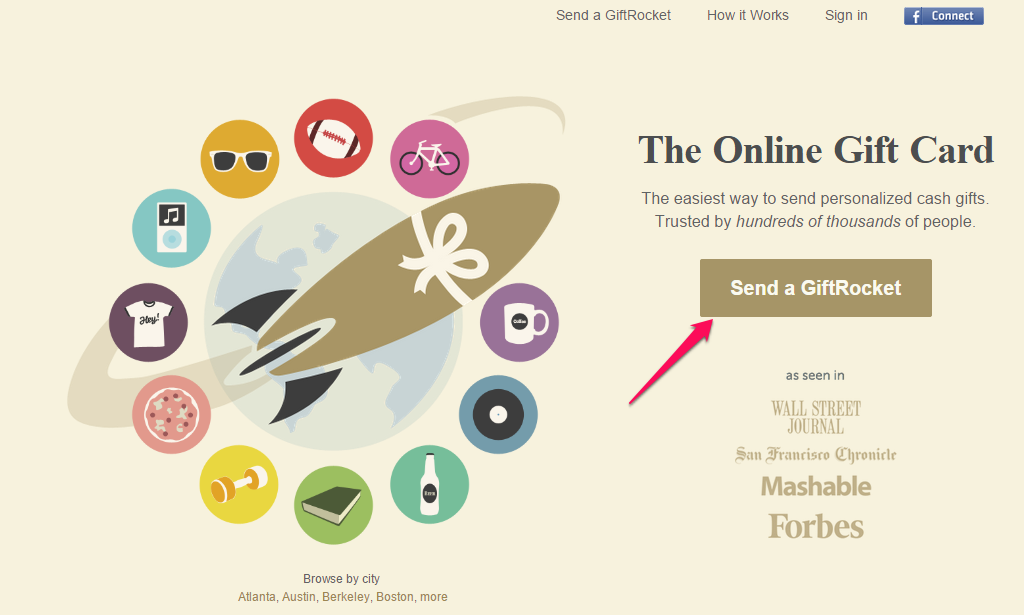
Takeaway: The call-to-action button doesn’t urge customers to “buy” or “subscribe” — instead, it nudges them to “Send a GiftRocket” to their loved ones.
The landing page copy also has a handful of strong verbs (action words) and is written in the active voice. And, the image on the left side further explains the “gifts.”
You can take a page from the GiftRocket “book” and appeal to customers and prospects (most of whom detest feeling “sold to”), by creating call-to-action copy that isn’t pushy
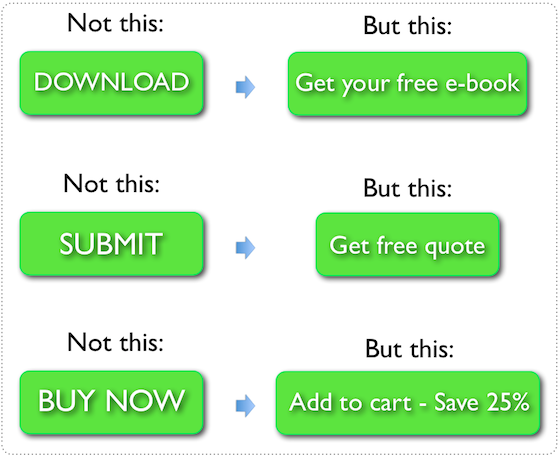
Here are some generic call-to-action buttons that you should avoid, as well as some great ideas for alternative copy:
5. Leverage your “above-the-fold” area
Above-the-fold is that area in your site that’s visible when the page first loads, before the user scrolls down. Recent studies show that people will scroll down a web page, but they’ll spend 80% of their time above-the-fold and only a measly 20% below-the-fold.
Always place important elements that will attract potential clients above-the-fold.
I always place the most important elements on my blog, such as the menu bar, my opt-in form, content headlines, excerpts and call-to-action-buttons, above-the-fold.
Try to avoid using sliders above-the-fold, except when there’s a good reason for it. Sliders disrupt your readers and potential clients and they don’t perform very well.
Potential clients don’t want to waste their time looking for important information on your blog. If you’re a freelancer or SEO consultant, make it easy for your prospects to find your services page quickly.
If you place important information above-the-fold, you’ll definitely get more views for that info and convert more visitors into paying clients as well – it’s a tremendously effective content marketing strategy to stick to.

6. Use advanced guest blogging
There are basically two ways to build an exceptional blog audience through content marketing:
- Writing in-depth articles on your blog and telling the right people about them.
- Delivering content creation written for the relevant blogs of other people.
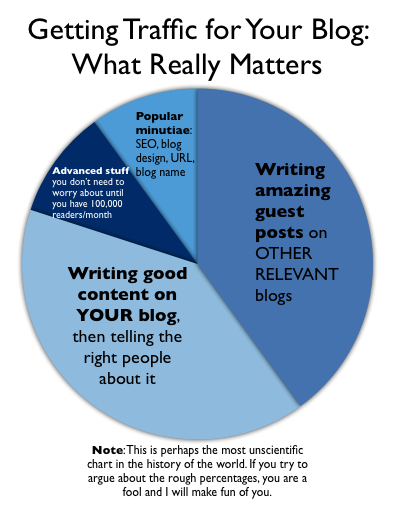
While you can build authority links through guest blogging, don’t make link-building your focus. Bloggers can add a no-follow tag to your link, thus keeping Google from passing SEO value to your site.
When it comes to guest blogging, my best advice is to do it to build your audience, not to get links or improve your rankings. Of course, in the process of guest blogging, you’ll benefit from natural organic rankings and increased brand mentions. In fact, your marketing strategy could well be to guest blog your way to success.

The most important benefit of guest posting is the opportunity to give value to a fresh audience and inspire them to pay your site a visit.
If you’re ready to improve your guest blogging game, there is an advanced content marketing strategy that can help you acquire more clients. Here’s how it works:
Step #1: Research relevant blogs. A relevant blog could simply be any blog that attracts the ideal people you want.
Go to Google and type in “online marketing tips for beginners.”
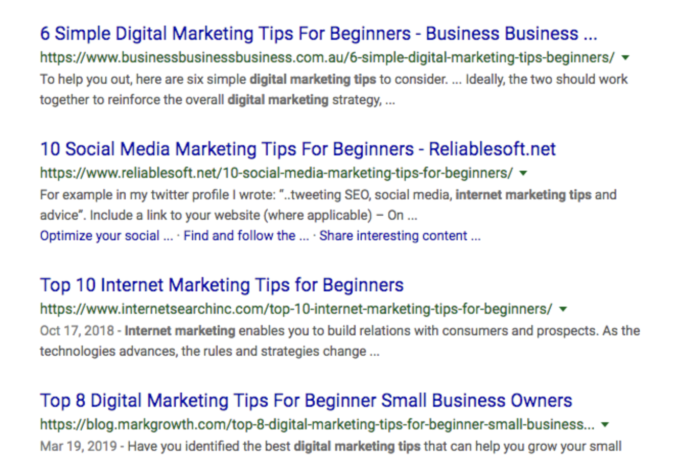
If you’re a freelance website designer, for example, a relevant blog to you is a small business or startup blog, not a fellow designer’s blog. People reading small business and startup blogs will probably need a website designed for them at some point. Your fellow designer doesn’t have that same need.
Step #2: Gauge the site’s social influence – The fact that a web page is ranking well in Google doesn’t necessarily mean that it will drive a lot of search traffic to your site.
You also want to know how many people are likely going to share your guest post on Twitter, Facebook, LinkedIn, etc. To find this out, plug the blog URL (e.g. SearchEngineJournal.com) into Buzzsumo and check out how many social shares each of their recent blog posts generated.
This means that when you submit your guest post on this blog, you should expect a decent amount of instant traffic, social shares, authority links, and long-term search traffic.
Step #3: Look through the target site’s archives for older posts covering your topic.
If you find a blog post that was well received, you’ve found a goldmine. Hack it. Craft a better headline. Improve on the existing idea and write a more in-depth blog post, taking advantage of the content upgrade strategy.
Below is an example of an original headline, as well as some that are benefit-oriented.
Original headline: Contrast in Web Visuals: Why You Looked at This Title First
Freshly crafted headline for your guest posts:
- How Web Visuals Influence Your Blog Readers to Click (Backed By Science)
- 15 Scientific Studies Showing Why Web Visuals Attract Blog Readers
Now that you’ve found an idea that will make for a great guest post, write outreach emails to connect with influencers who will promote your guest posts.
This advanced guest blogging marketing strategy can help you generate lots of qualified traffic, attract new clients and achieve improved and sustained search rankings.
7. Use A.I.D.A. to get more comments
A while ago, I shared a case study of how I generated $25,000 with 249 comments. That story surprised many, but it’s true. High-value comments can drive traffic to your blog, as well as help you establish a relationship with a blogger.

The 249 comments I left on other blogs sent me 3,973 visitors and six consulting leads. I was able to turn one of those leads into a $25,000 corporate speaking gig. In a nutshell, comments helped me acquire a new client.
You can create the same kind of results by turning the marketing strategy around. Instead of leaving comments on other blogs, allow other people to comment on your blog posts. A quick growth hack that you can implement today relies on the AIDA strategy.
AIDA stands for:
- A – Capture Attention
- I – Build Interest
- D- Create a strong Desire
- A – Call to Action
When you use the AIDA strategy, you’ll not only get valuable comments that can help motivate your ideal clients to contact you, but you’ll also get improved search rankings from the added text.
Here’s how to use the AIDA. marketing strategy to write content that readers will enjoy and that will prompt them to leave valuable comments:
Capture Attention: There are two places to capture attention on your blog. The first is the overall design, but the most crucial is your headline.
If your site design is weak, but your headline is strong, you may not attract tons of people. But, a design that’s user-friendly, professional and well-branded, coupled with a catchy headline, will inspire people to click the headline and read further.
Note: Use these headlines as a model to help you craft a better one. For example, let’s make the second headline even more clickable:
- The Psychology of Your Customers That You Didn’t Know
- How to Tap Into The Psychology of Your Customers and Earn More
Build Interest: You build interest in your blog post by starting off with a strong and persuasive introduction.
For example, Steve Kamb, founder of NerdFitness, usually starts his blog posts with an emotional question that tends to challenge the status quo:

Asking the right questions will prompt people to react in the comment box and share their own worldview. Open-ended questions create a space for people to respond fully to any question that they’ve been asked.
Starting your introduction with a question will get more people interested in your content. Then, once the interest is there, the desire to work with you or remain loyal fans increases.
Your introduction should also be brief and to the point. Remember, you can’t get readers to opt-in, buy or do extra work on the intro. But, you can use the intro to draw them inside the body, where you can convert them.
Create Desire: Good copywriters understand how to create desire for a particular product. One content marketing strategy for doing this uses subheadings, bullet points and quotes.
You can do the same. These elements will make your content easily digestible so that your ideal client will fall in love with it.
Use bullet points to format your content and your readers will find difficult topics easier to understand and implement.
Call-to-Action: A simple way to attract more clients is a gentle nudge that tells people what to do at the end of every blog post. Better calls-to-action are sometimes all you need to convert blog visitors into readers and readers into paying clients.

For example, if your blog post is about conversion rate optimization, you could use this conclusion:
Have you been trying to improve your sales conversion rates? I can help you out. Contact me today for a free strategy call.
Spencer Haws, the founder of Niche Pursuits, uses the same marketing strategy to generate comments on his blog posts. At the end of a recent blog post, here’s what he wrote:
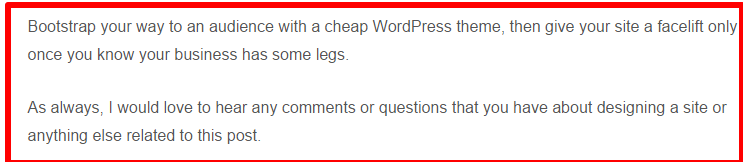
You can use the AIDA marketing strategy when writing your blog posts and articles, creating videos, recording podcasts or giving a presentation. It works equally well for any kind of content.
8. Hack audience through multimedia sources
Here, “multimedia” refers to the use of all marketing media to reach your target audience. In other words, don’t just rely on content creation like written articles or blog posts. Video content is dominating the web these days.

Here are some of the leading multimedia channels that you should take advantage of for content marketing:
Mobile marketing: Who isn’t aware of the impact of mobile technology in today’s marketing world? Tons of marketing and online transactions take place either on a smartphone or on a tablet.
Remember that many of your prospective clients have mobile devices. But, not all of them have PCs that are connected to the internet.

How do you create mobile-friendly content? You need a responsive design for your website.

Podcasts, videos, etc.: Pat Flynn uses different kinds of multimedia content within his marketing strategy to reach his target audience, including blog posts, videos, podcasts, books, speaking gigs and more.

Slide presentations: Ana Hoffman creates slide presentations that generated 243,000 views for her blog.

9. Give away valuable materials on your resources page
A resource page is a special page where you list the tools and materials that you use to build and run your online business. In most cases, it generates money for the site owner.
Steve Chou prefers to call his resources page “Tools.” No matter what you call it, it’s important that you set one up. Just add a new page to your WordPress blog or site and list your favorite tools.
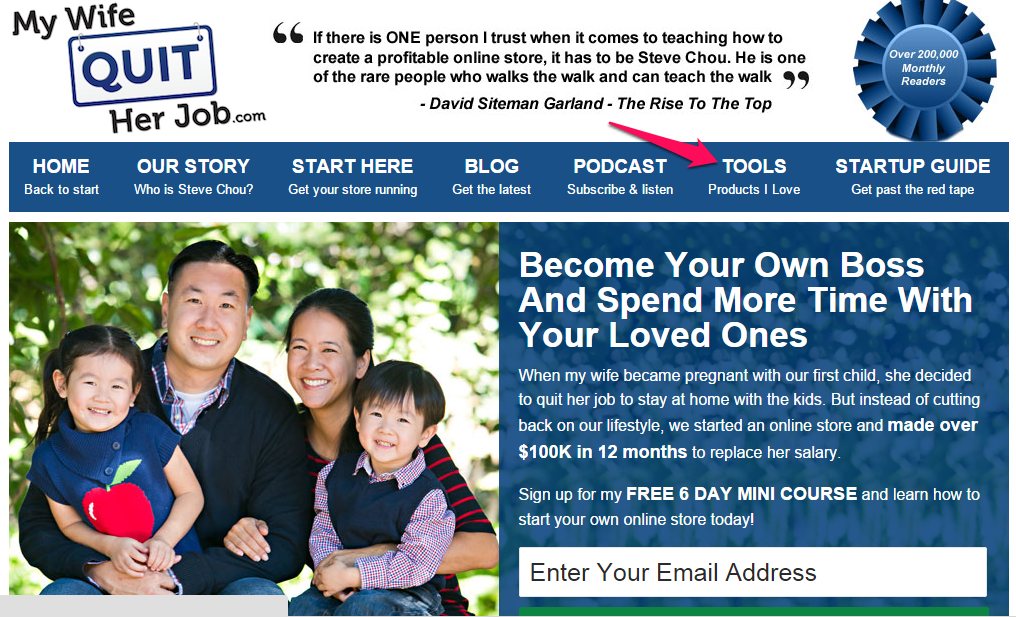
However, instead of trying to sell an affiliate offer, why not use your resource page to capture leads? Better yet, give away valuable e-books and short reports that would benefit your ideal customers.
They’ll come back to pay for your premium services if you impress them with your free, valuable content.
Unbounce takes a slightly different approach with its particular content marketing strategy. Instead of only giving away e-books and whitepapers, they also give free access to anyone who wants to watch their high-end webinars. Even their Page Fights Videos are all up for grabs:
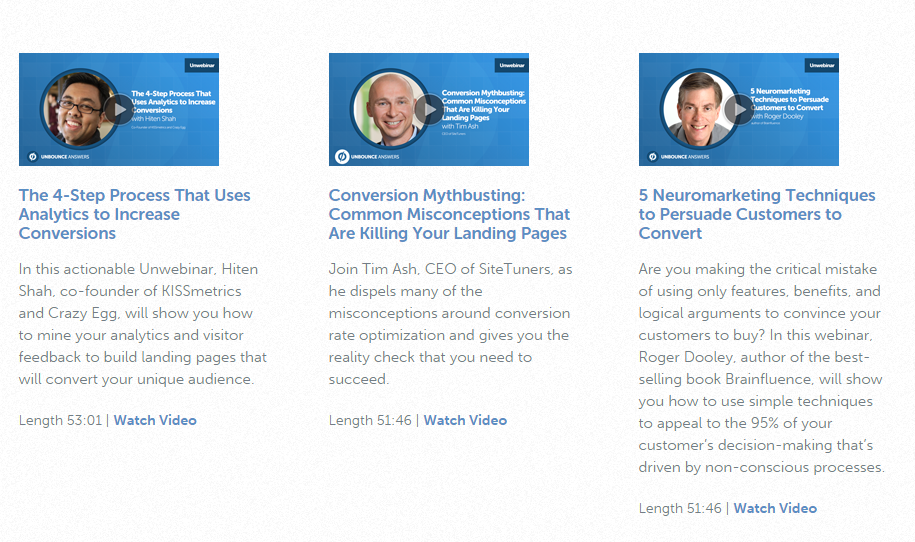
Note that it may take some time before you reap the benefits of giving away valuable information in the form of webinars, ebooks, and videos. But, don’t give up. As long as you’re making the world a better place for your prospects, they’ll eventually come back around and feel obligated to work with you.
10. Upgrade a top 10 list post
Top 10 list posts or articles are an extremely popular content marketing strategy idea. In fact, if you search online for several keywords, you will find a “top 10” article somewhere on the first page. For example, let’s say we do a search for “business startup tips.” Here’s the result from Google:
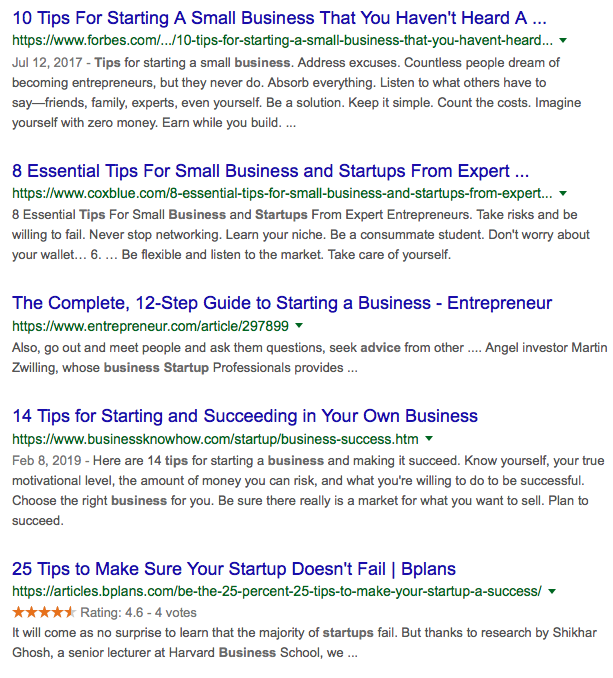
Implement this growth hack, if you want to create in-depth content that will be evergreen, highly useful and packed with actionable tips.
I’ve created top 10 (or similar) list posts, each of which has helped build over 100,000 monthly blog visitors. I usually generate more than 100 comments on this type of blog post.
Follow these simple content marketing steps, to upgrade a “top 10” list post:
Step #1: Type your keyword + “top 10” (e.g., “top 10 + SEO tips”) into Google’s search box.
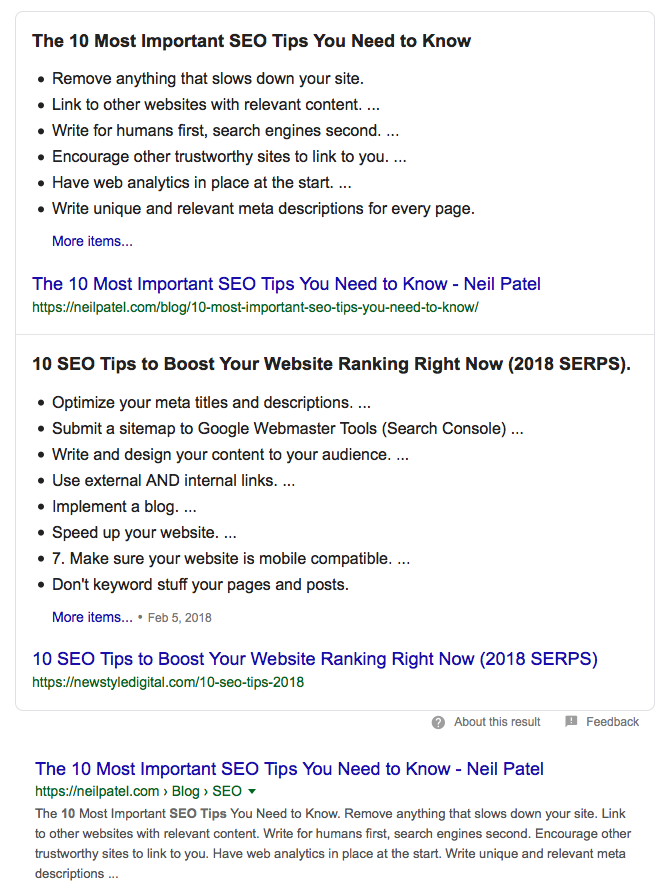
Step #2: Analyze your results. Click the first result to carefully study the content and determine how valuable it is. Do you think that you can create a better piece on this topic?
Once you review the content, you can take steps for outranking it.
To get started, upgrade the headline by following these simple content marketing steps:
- Write a headline that exceeds the original “count” – e.g., “Top 15 Most Vital SEO Tips for URL Optimization.”
- Research accurate data to back up your points.
- Extend your content creation into a longer post. Since the original blog post is less than 1,000 words, you could write a 2,500+ word article.
- Capture screenshots to show exactly what you’re talking about in the content.
- Find sharp, relevant images and include them in your post.
- Link out to authority content pages to support your points.
- Use lots of subheads and bullet points to increase readability.
- Utilize content upgrade to collect email leads.
- Include a call-to-action.
Your potential clients are looking for that defining factor that makes you stand out from the competition. If everyone is writing a “top 10” list article (probably because it’s easy to do), then your job is to dazzle your clients and prospects by doing more — say, by crafting a “top 30” or “top 50” list article on a hot topic.
Examples of “top list” posts that generated 100+ valuable comments along with several thousand social shares are:
- SEO 101: 11 tips you need to know when you optimize your site
- 15 Types of Content That Will Drive You More Traffic
- 21 SEO Techniques You Can Use Today to Get More Search Engine Traffic
11. Follow the 7-rule email marketing tactic
The rule of 7 may seem outdated, but it’s very effective when applied to your email marketing campaigns.
The rule of 7 simply states that before you introduce your paid product or service to a potential client, you have to give plenty of value to them over the next seven days. In other words, if potential clients sign up for your email list today, don’t make the mistake of pitching them tomorrow. Be patient. Effective marketing is never done in haste. The rule of 7 will not fail you if you put other people first and your product second.

The only reason why people ever opt into your email list is that they believe you’ll educate, inform and/or entertain them and that you’ll help them reach a personal or professional goal.
Your content marketing strategy doesn’t have to involve something that you offer for sale. It could be a collection of your best blog posts.
If you’ve been on my email list, you know I only send blog posts, instead of promotional emails. Yet, I get decent open rates; in fact, my email list accounts for 28% of my traffic. This is exactly how my autoresponder emails arrive in my list members’ inbox:
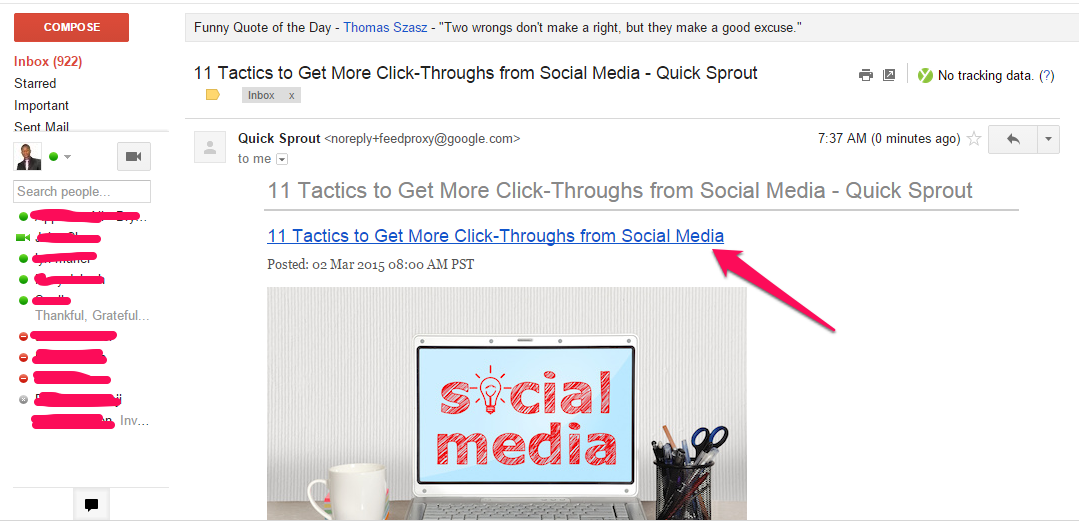
Use an autoresponder solution (e.g. Getresponse) to set up follow-up emails that will be sent to your new subscribers daily or every two days, for the first week. Those emails should be short, but full of helpful information.
12. Curate viral content, don’t create it
For our purposes, “curate” means to organize, compile and make content easily accessible in a single web page or blog post. Positioning is the secret of successful content curation.
Brian Clark agrees that content curation can help you create a recurring stream of revenue. After all, if you let your prospects browse the entire web, looking for the right information, they’ll probably switch to the competitor site that makes it easier for them.
It’s time-consuming to find the best content that meets a particular need. But, if you do it, potential clients who regularly benefit from your content curation will come to trust you.
A perfect example of curated content is this post written by Jeff Walker on CrazyEgg. In the screenshot below, you’ll see how he links out to the right blogs while adding a style that makes the content uniquely valuable.
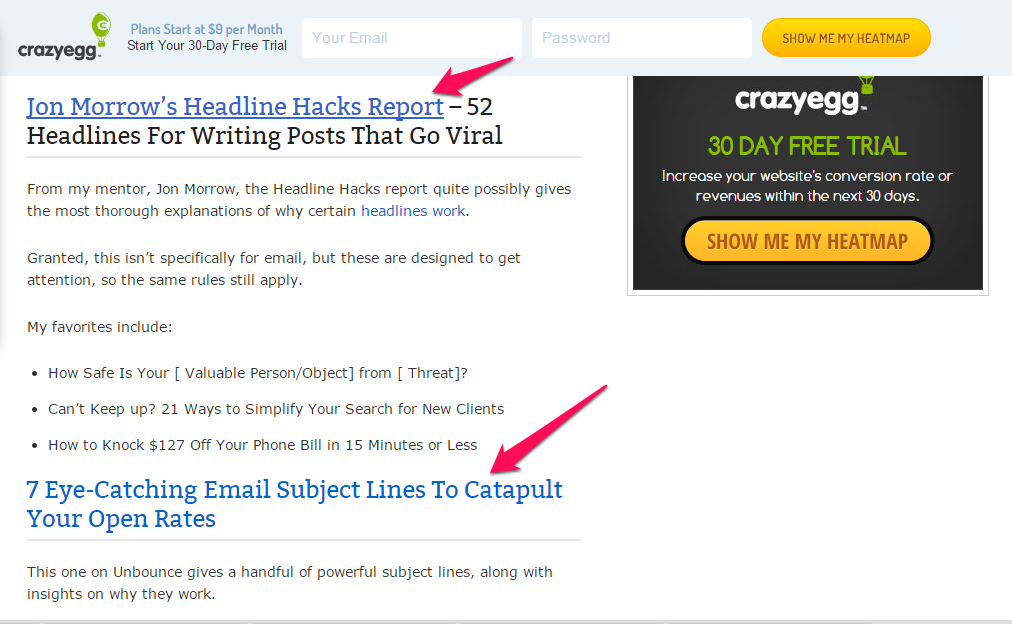
Where to find amazing content to curate (compile): Go to Google and type in the keyword or headline that you want to write about. Every search result that appears is a potentially viable URL to link to when you curate.
Alternatively, you could use a content sharing network to find relevant pieces.
Personally, I discovered that creating content from scratch is much easier than curating content. It’s time-consuming to read and digest that much material on a regular basis. It’s not a good strategy for lazy bloggers or for content marketing, in general.
But, for those who want to truly make a mark and save enormous time for their clients and blog readers, curation works.
13. Capitalize on current trends
Every other day, a new product is launched. Or, some terrible thing happens. Or, Google goes haywire with a new algorithm update.
Instead of whining over these changes and current trends, take advantage of them and concentrate your content creations on rich and valuable posts that your prospective clients will benefit from. You could get instant traffic if you’re among the first few to write about a new development.

One vital thing to note is that if your content marketing ideas capitalize on current trends, your traffic will grow – but if your idea is outdated, it could tank your traffic.

In the internet marketing and business industry, several sites are always ahead of others. The reason is that the authors attend dozens of conferences and seminars where industry experts announce new trends or developments.
You can keep on top of the latest happenings in the tech and entertainment industries by frequently visiting Mashable and Techcrunch.

If you’re a blogger, content marketer or SEO consultant, like me, you want to visit Search Engine Land to stay informed.

Remember that current trends by themselves will not drive visitors to your blog, but some solid content marketing ideas will. It’s your responsibility to ensure that your content creation attempts are of high quality and to promote them to the right audience, using guest blogging, blogger outreach and, of course, social media marketing.
Conclusion
Most content marketers struggle to generate search traffic and acquire new clients. One of the best content marketing methods that you can use to attract high paying clients is through word-of-mouth referrals.
But word-of-mouth referrals are only possible when you offer great service, deliver on time and make the client’s goal your #1 objective.
No matter what SEO tactics you decide to implement to improve your blog’s search rankings and traffic, at the end of the day, “word of mouth” is what matters to your brand.
And, you can create word-of-mouth by generating content that users love.
What other strategies have you used to attract paying clients to your online business?