 Sign In







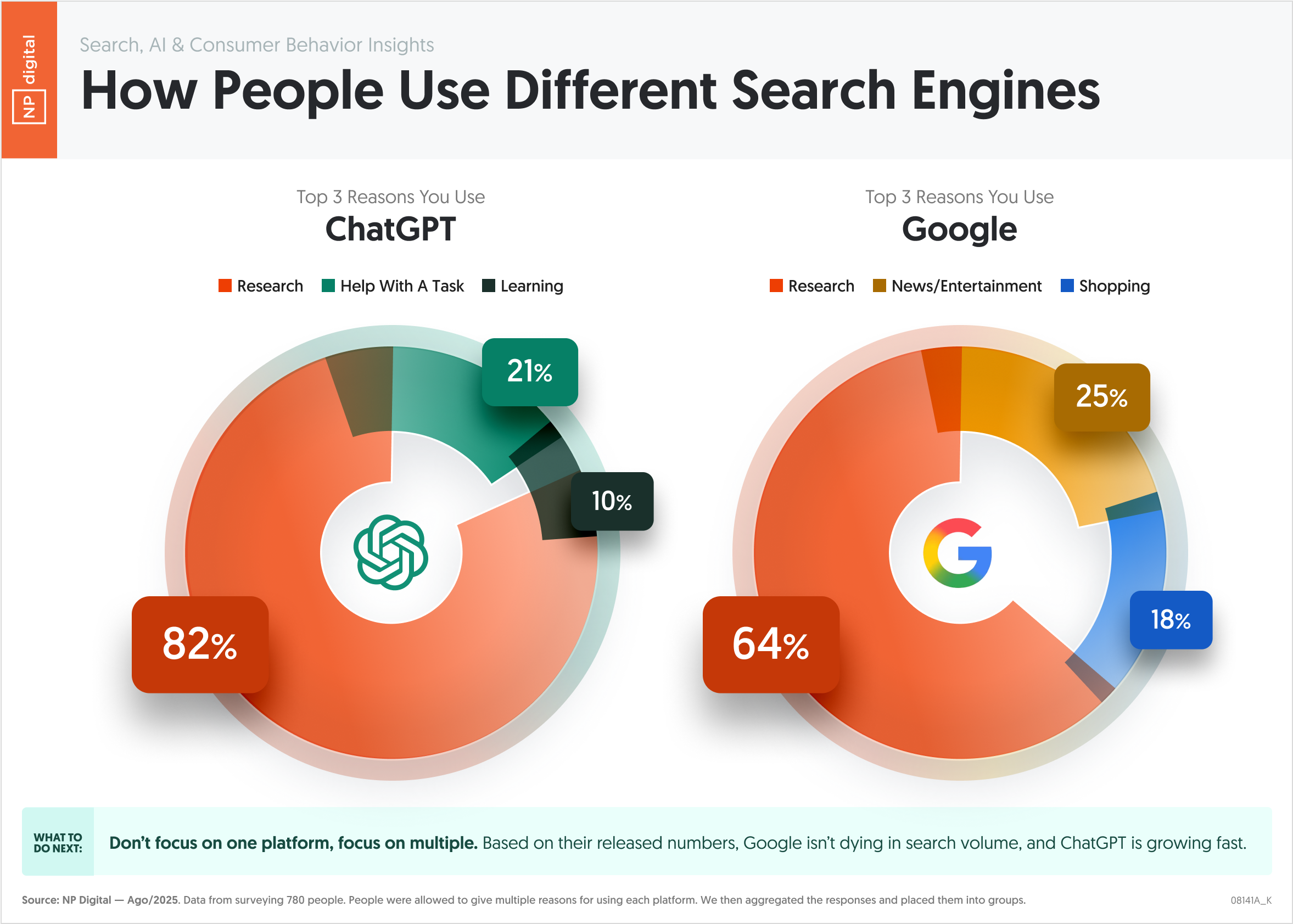
How People Use Different Search Engines
Info
-
Source: NP Digital
-
Date: July 2025
-
Category: Search Trends
-
Study Methodology: Survey of 1,100 users comparing behavior across traditional and AI-powered search engines.
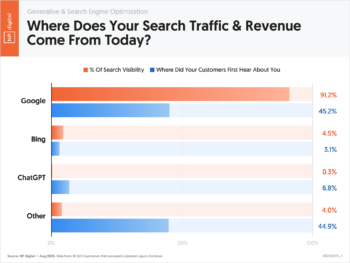
Search behavior changes based on the engine people use. This data highlights how intent, depth, and follow-up actions differ across platforms. Understanding this helps marketers align content with expectations.
Essential Statistics
- Google was primarily used for quick fact-finding.
- AI search tools were used for deeper explanations.
- Bing usage skewed toward transactional queries.
- AI searches resulted in fewer follow-up queries.
- Search intent varied significantly by engine.
Key Takeaways
- Search engines shape user intent.
- AI search favors depth over speed.
- Traditional search supports fast validation.
- Follow-up behavior differs by platform.
- Content must match engine context.
Actionable Insights
- Create concise, scannable content for traditional search where users want quick answers. Speed and clarity matter most there.
- Develop deeper explanatory content for AI-driven search experiences. Users expect reasoning, not just facts.
- Align calls to action with search intent by engine. Transactional cues work better outside AI contexts.
- Audit content performance by search source, not just by keyword. Behavior shifts by platform.
- Optimize content differently for validation searches versus exploratory searches.
Search engines don’t just return answers, they shape expectations. — Neil Patel