
 Sign In












I know what you are going through.
You were excited to launch your brand-new site until you realized no one is coming to it.
So, you head to all of the marketing blogs to learn how to fix this, but for the life of you, your traffic won’t go up no matter which tactic you leverage.
What you’re feeling right now is very common. Not only have I experienced it, but when I was starting out, I even took the small life savings that I made from cleaning restrooms and sweeping up trash to pay a marketing firm to help me out.
And can you guess what happened?
They took my money and provided no results.
See, what most marketers aren’t telling you is that there are two main reasons why you aren’t getting traffic to your brand-new site (other than the fact that you don’t have much money to spend on ads):
- Marketing is a long-term game – almost all of the tactics marketers, including me, talk about are long-term tactics. They take 6 months or even longer to see any results.
- Your execution needs to be flawless – if you don’t implement the tactics correctly, you won’t see results.
Now, this doesn’t mean you can’t see short-term results or sales. More so you have to change up your strategy.
So, I thought I would do something a bit different today. I am going to break down what you should be doing during the first 12 weeks after launching your site.
I’ll be sharing a tactic for you to follow each week and, if you follow it, you’ll notice that your traffic will start going up right away. From there, you’ll start to see sales coming in.
Before I dive into the 12 tactics, note that you won’t have to spend much money, if any at all. I am also not going to give you advice that is extremely time-consuming, like writing blog posts, as you’ll also be running your business at the same time.
And of course, the tactics work for both B2B and B2C sites. It doesn’t matter if you are an ecommerce site or a SaaS company. Follow the steps below exactly.
Week #1: Respond to comments on other people’s blog without spamming
Have you heard of a popular site called Mashable? It was founded by Pete Cashmore.
When he launched his competing site to TechCrunch, no one knew about him and no one cared to listen to him as he was based in Scotland instead of Silicon Valley.
But do you think that stopped him? Of course not!
So, what did he do? He went out there and commented on every competing tech blog. And not only did he comment, but he always tried to be the first commenter.
See, when you leave a comment on a blog, most ask you to put in your name, URL, and comment.
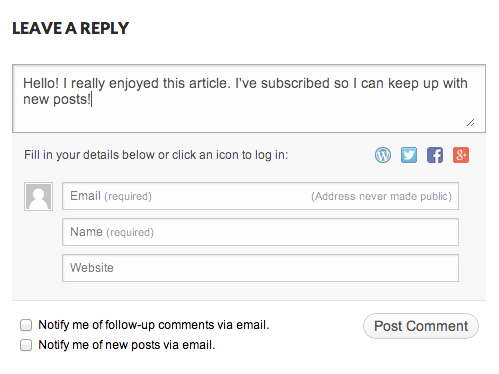
Assuming you are leaving valuable comments and nothing spammy, you’ll notice that you’ll get referral traffic in your Google Analytics.
This will be because a very small percentage of people are clicking on your name when you leave a comment.
And considering some of the most popular blogs on the web receive millions of visitors each week, it’s not that hard to drive a fraction of a percent of their traffic back to your site.
The key with this strategy is to be one of the first commenters as that ensures your comment is at the top. The other key, of course, is that your comment must add value.
For example, if you own a marketing related product or service, marketing blogs would be a great place to comment. But what do you think will happen if you leave this kind of standard comment:
Nice post! Keep up the good work!
Nothing. On the flip side, if you put in some effort to write something that benefited the reader, you’ll have a chance at getting some traffic.
An example could be something like this…
Neil, I love the actionable tips on generating traffic for a brand-new site within the first 3 months of launching it. But I know you didn’t discuss much if any about SEO.
I know SEO is a long-term strategy, but people should get a head start right away or else it will take that much longer to get loved by Google.
One thing that I recommend every site to start off with is simple keyword research. You can use any free keyword research tool like Google Keyword Planner and type in your competitor URL. Google Keyword Planner will then suggest keywords and even show you the cost per click.
By going after keywords that aren’t competitive and have a higher cost per click, you’ll find that you can generate search traffic at a much faster pace and these keywords will drive sales. As keywords with a high cost per click tend to mean that they convert.
Do you see what I mean by writing thoughtful comments that help people?
This tactic works!
Jared, who runs Skincare by Alana, still leverages this tactic today. When he and his wife launched their ecommerce store they commented on other popular blogs and social sites when it came to all things skin related.
This helped them generate 931 visitors during their first week and 12 sales.
I know it’s not a lot, but you have to start somewhere and grow from there.
I also have leveraged this tactic for years. Instead of focusing just on blogs, I commented on relevant social sites too.
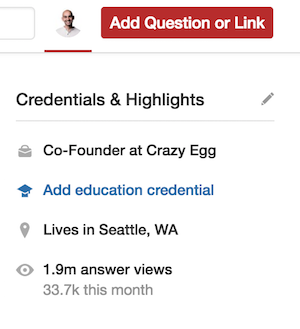
As you can see from the screenshot above, I’ve generated over 1.9 million views on my Quora responses.
Here’s an example of one of my responses:
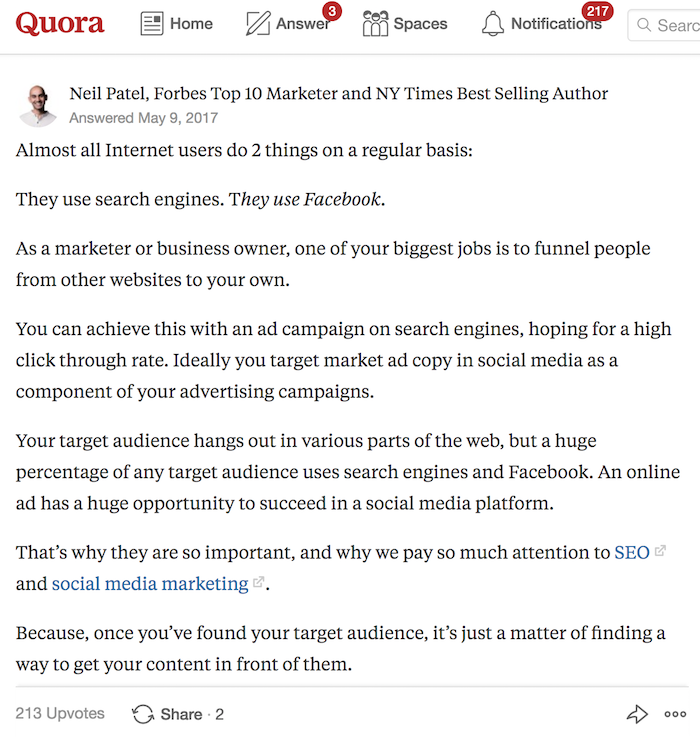
You’ll notice that in my response I also link out to my own site which drives traffic back to me.
Yes, the response looks very long, and you may think I put in tons of work, but I literally copied and pasted a blog post I had already written and added it to Quora.
Google doesn’t penalize for duplicate content. 😉
If you are going to use this strategy during week one, try to leave at least 10 solid comments per day. I would try to leave 20 as it shouldn’t take you more than two hours per day… assuming you haven’t done this before.
I can typically leave 15 comments in less than 50 minutes. So, throughout the first week try to speed things up and spend no more than an hour on this tactic per day.
Week #2: Be helpful on Twitter and you’ll get tweets
Before I go into week 2, keep in mind you’ll still want to maintain the tactics I share in the previous week.
By week 12, you’ll want to be following all 12 tactics each week.
Of course, you won’t be able to put in the same number of hours into each tactic and that’s fine, but you can still do them a bit. For example, you can still leave 5 comments a day instead of leaving 20.
So, let’s dive into week 2, which is all about Twitter.
This tactic I learned from my brother-in-law Hiten Shah. He used to leverage this tactic for every one of our startups… Crazy Egg, KISSmetrics, and he now leverages it for his newest company FYI.
If you look at Hiten, he built up his personal brand and influence in the tech space because of Twitter. Sure, people like me may have a bigger brand or more Twitter followers, but he has much, much, much more authority on Twitter than I do.
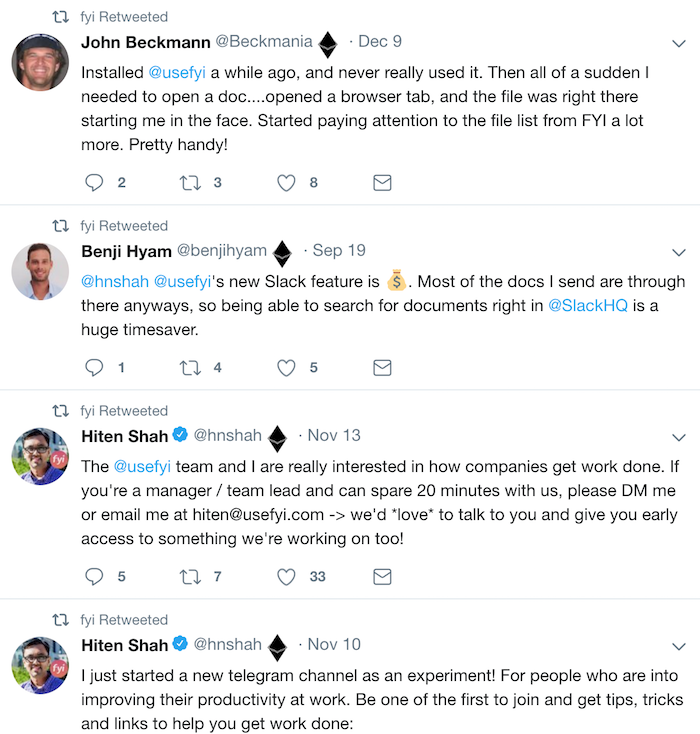
As you can see influential people on Twitter are tweeting about Hiten’s latest company.
He even tweets and connects with well-known entrepreneurs like the founder of HubSpot and Drift because of Twitter.
So how is Hiten getting all of these people to show him some Twitter love? Well, he has a 3-step formula…
- Help people
- Help people
- Help people
And no, I am not joking, that is his formula. He doesn’t care to promote his business, he just helps people.
Let’s look at his Twitter profile to dive deeper into his strategy.

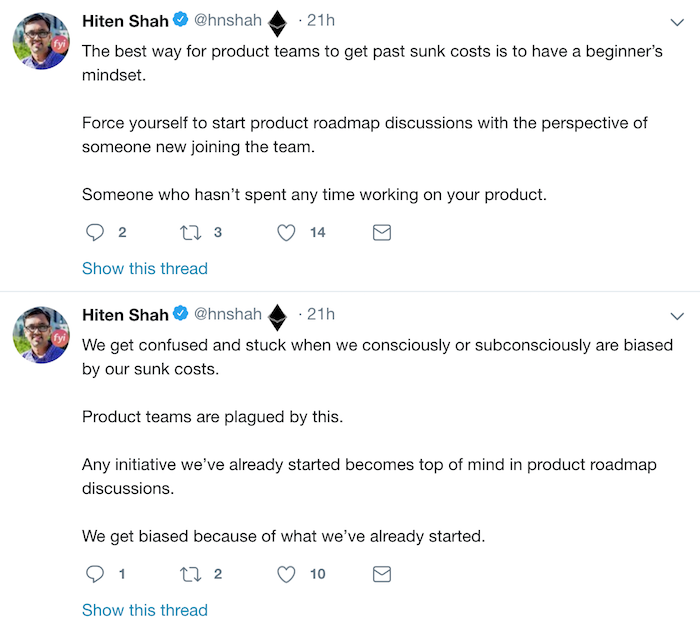
If you look at the tweets above, you’ll notice that Hiten continually pushes out advice on his Twitter profile. He rarely mentions his own company, but instead just tries to help people.
And when people ask questions or need help, he constantly responds to people’s tweets.
Not everyone takes his advice, but his mentality is to just be helpful no matter what. Just look at how he responds to people’s tweets.
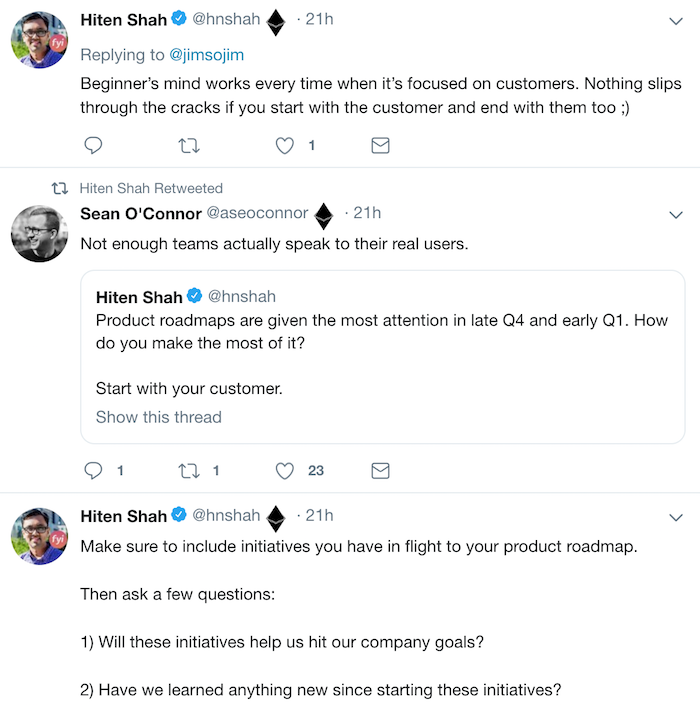
Lastly, he retweets stuff that he likes. Whether you are an influencer or an average joe, he doesn’t care. He just wants to share the best information out there.
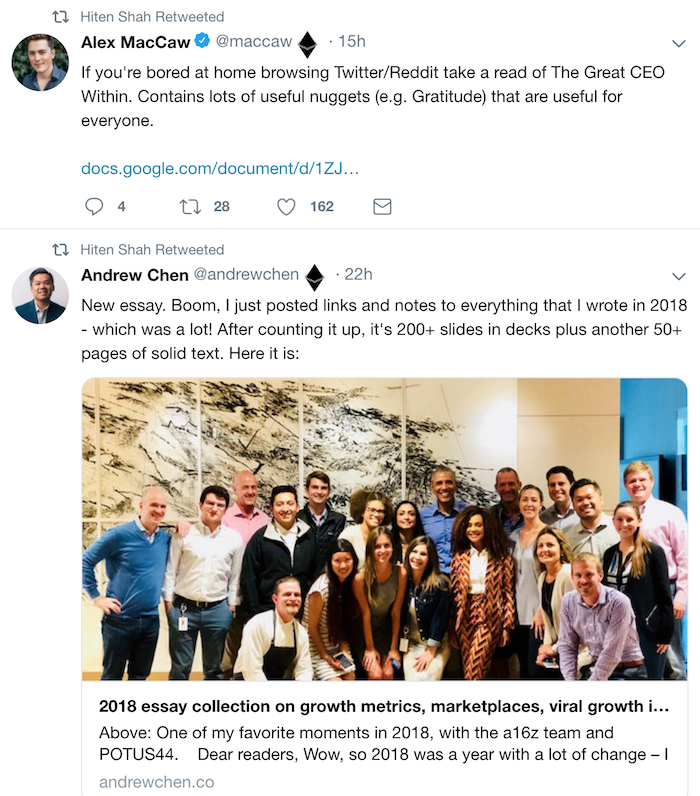
This is why so many people tweet about his product FYI. It’s because he is super helpful, so people naturally want to help him out without him even asking them to.
Now I know this strategy that Hiten uses seems like it is going to take forever to get results, and it does. But there is a hack that he uses to get immediate results.
Every day you should search Twitter for people talking about your competitor. When people have questions about your competitors’ products or services (or they have complaints), try and help them.
Don’t pitch them on your company, just try and help them.
What you’ll find is people will be shocked that you are helping a competitor. And if you are this kind and helpful, then what kind of service would they get if they took their business to you…
In other words, being helpful wins you goodwill and it will cause people to switch from your competitor over to you.
And if you go above and beyond like Hiten, people who haven’t even used your product or service will help promote you. Just like how one of his followers tweeted about FYI and he hasn’t even used it yet.
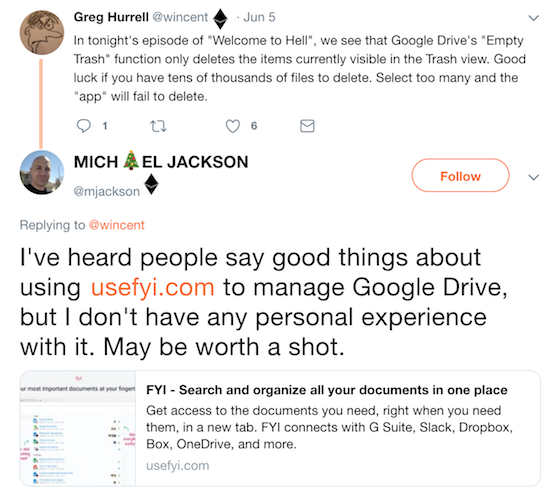
His strategy to help, help, and help some more has made Twitter one of FYI’s biggest traffic source. It accounts for roughly 25% of their weekly traffic.
Week #3: Go after small affiliates
No matter what industry you are in, there are affiliates. If you aren’t familiar with affiliate marketing, check out this post.
When you are starting out you probably haven’t created an affiliate program yet in which pay other marketers every time they drive you a sale or a lead.
You can always use software like Hasoffers to set one up or go through a network. There are literally hundreds of options and with a few quick Google searches, you can find one which is the right fit for you.
Now, what most people will tell you is that no one is going to promote your affiliate offer because it is unproven and new.
Although it’s true that your offer is unproven, it doesn’t mean all hope is lost.
During your third week, I want you to copy the strategy ConvertKit used when they first launched.
The strategy I am about to break down helped them grow from a few thousand dollars a month in revenue to over a million a month.
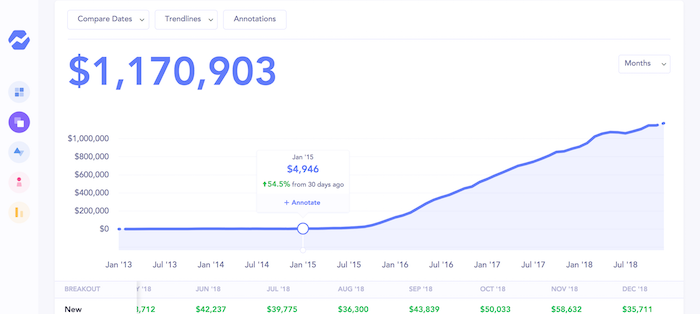
What ConvertKit did was they went to all of their competitors’ sites and looked to see which ones had an affiliate program. One of those competitors happens to be Aweber.
Then once they had a list of competitors with affiliate programs, they performed a Google search for “competitor name vs.” An example would be “Aweber vs”…
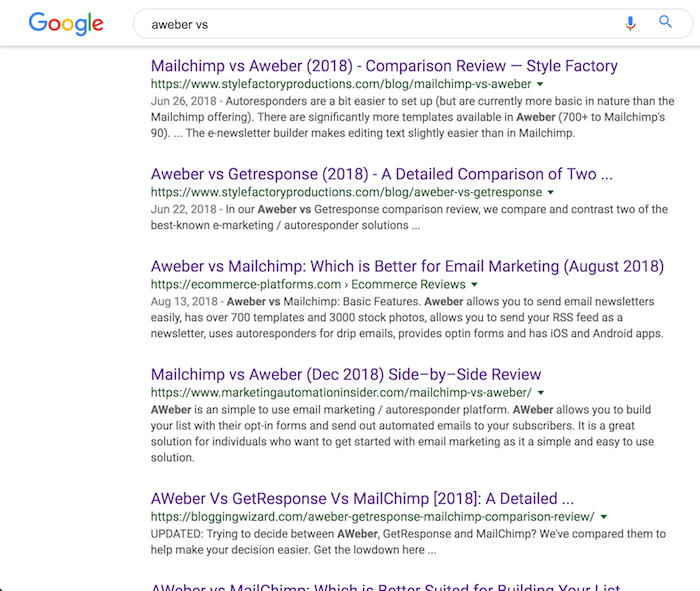
From there they would email each of those site owners asking them to include ConvertKit in the article or even write a unique article about ConvertKit. Just like this one.
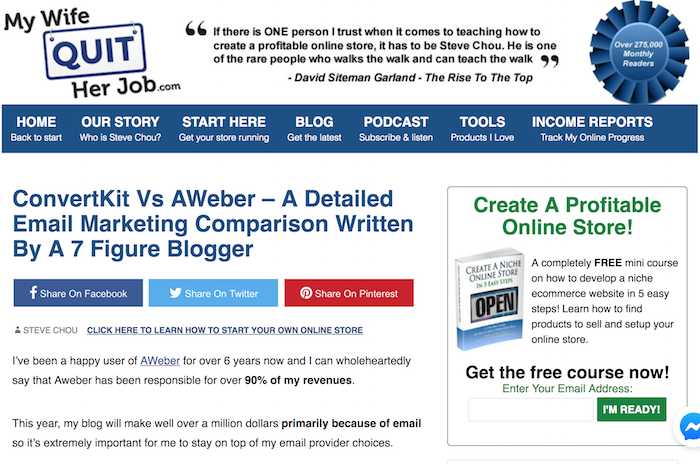
Just think of it this way, if someone is willing to be an affiliate for one company, they won’t mind throwing in a few extra competitors. All it does is give them the potential to make more money.
When leveraging this tactic, consider sending out 10 emails a day. It shouldn’t take long and people typically don’t mind adjusting their web pages to add in another link that could potentially earn them extra money.
Now compared to most tactics, this one will drive the least amount of visitors.
But the traffic will be very qualified and more likely to convert as you are going after “versus” articles. When someone types in “Company X VS Company Y” into Google, they are researching which solution is ideal for them. These posts rank well and they tend to drive sales.
Week #4: Hire guest writers
Now the strategy I am about to break down for you in week 4 is my favorite strategy.
This is what I used in my last startup KISSmetrics to grow our blog traffic to over a million visitors a month.
If you head to the KISSmetrics site you’ll notice that it now redirects to NeilPatel.com as I bought the site.
So how much traffic did the KISSmetrics blog get from this strategy?
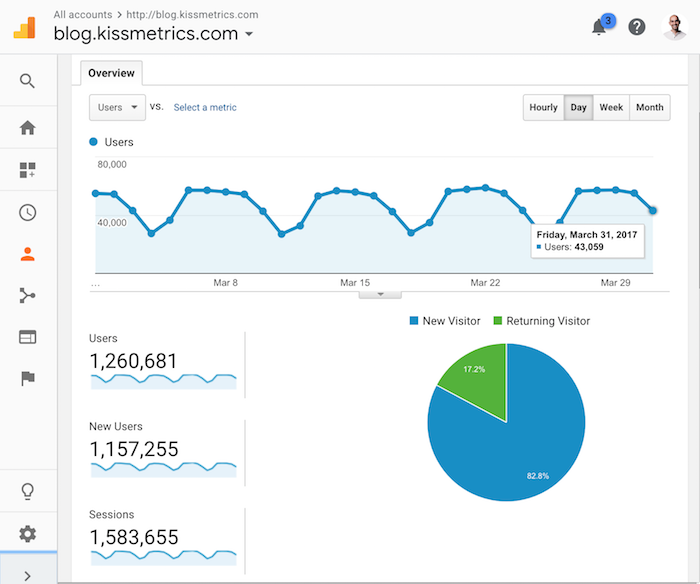
As you can see from the image above, we peaked at 1,260,681 unique visitors a month.
Our strategy was simple… hire writers who had a social following.
We went to the Problogger Job Board and posted a job looking for writers.
The job description looked something like this…
Are you a marketing expert? Do you know marketing like the back of your hand?
That’s great because I have an opportunity for you.
KISSmetrics is a leader in the web analytics space and we are looking to work with expert writers who know marketing and analytics.
We’re currently looking to expand our team of writers with passionate enthusiasts for digital marketing and with expertise and passion for writing. We are hiring individuals for each of the following categories:
- SEO
- Content marketing
- Social media
- Web analytics
- Conversion optimization
- Paid advertising
- Web design
- Branding
- Email marketing
Please go to our blog for examples of content we’re looking to create. [insert URL of your blog]
We would like to build a long-term relationship with you that is on a project basis. Initially, we will have you submit a list of topic ideas you would love to blog on, then we will pick one, have you outline it… and of course, you’ll then be off to the races.
The articles will be anywhere from 1,000 words to 3,000. Our goal isn’t to enforce a word count, we are more interested in high-quality content.
We’re looking for someone who is:
- Looking for a long-term working relationship
- Has 1 year of working experience as a writer
- Has a good level of knowledge of digital marketing
- Is willing to research and learn more about marketing
- Has great grammar and spelling skills as well as proficiency in English
- Likes working with deadlines and structure
- Has a social following and doesn’t mind promoting the content you are writing as it will be published under your name
How to apply
Send an email to [insert your email] with – Applying For Writer Position in the subject line. Your email should include:
- A bit about you as well as links to your social profiles
- Why you’re a good fit for this position
- Links to 2 -3 articles you have written
- Your rate per 500 words.
The way we scaled up to over a million visitors a month was by publishing 5 blog posts a week. And every time a writer wrote a blog post for us, they didn’t mind promoting it to their social following as their name was on the article.
Once we got over 50,000 visitors a month, we noticed that we started to get inbound inquires of people willing to write for us for free. So eventually we slowly transitioned to a model where people wrote for us for free and we didn’t need to hire or pay writers.
You’ll notice that this will happen with your blog as it gets more popular.
What’s great about this strategy is the more writers you get, the more people that will find out about your company as each writer has different people following them on the social web.
Week #5: Create a podcast and interview guests
Have you listened to my podcast Marketing School? If you haven’t listened to it yet, check it out.
My co-host Eric Siu and I give marketing advice each day in under 5 minutes.
But don’t worry, the strategy I want you to implement isn’t to copy Marketing School or even listen to it (although I would be honored if you did listen to it).
Instead, it’s to copy my co-host, Eric Siu. He has another popular podcast called Growth Everywhere where he interviews someone new each and every single week.
You don’t have to do a weekly podcast, but I want you to interview someone in your space at least once a month.
And instead of making a separate site for your podcast, just pop it onto your main site.
Now when you publish each of these interviews, ask the guest to share it with their audience. From their social profiles to posting it on their own blog to even emailing their own list.
Although Eric has built a brand in the marketing space, he wasn’t well known when he started Growth Everywhere.
Just look at his stats from leveraging this tactic:
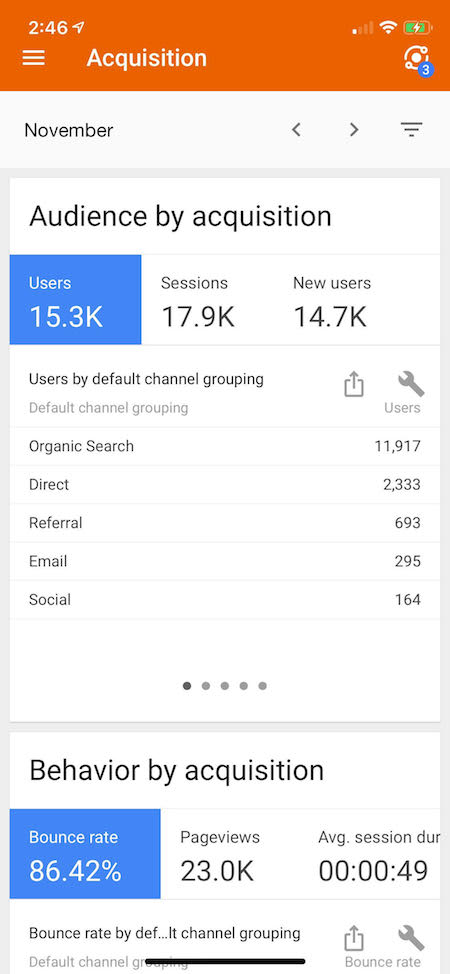
Eric’s generating over 15,300 unique visitors a month. That’s a lot of traffic considering Eric hasn’t even tried to grow the traffic to Growth Everywhere.
Best of all, you can generate similar results to Eric. But the key to doing this is interviewing people within your space so that way the traffic that comes to your site is relevant and over time those visitors will convert into customers.
If you don’t know how to start a podcast, watch this:
You could buy fancy equipment, but I would just use whatever’s built into your computer until you start seeing results from this tactic.
And if you really want to make your podcast popular, check this out.
Week #6: Become a rising star
Do you want to be a rising star? Well of course you do… who doesn’t?
Now you probably wondering, what the heck is a “rising star?”
Well, let me first start off with, Facebook groups.
Whatever industry you are in, whoever your ideal customers are… you can find them in a Facebook group.
Look for niche groups on Facebook related to the product or service you are selling. You want to join these groups as long as they have over 1,000 members.
You may also find groups that have over a million members. You’ll want to avoid these groups.
Focus on groups that are between 1,000 members and 17,000 members. Those groups are big enough to where you can generate traffic and small enough where you’ll be noticed.
What you’ll want to do is join a handful of groups and post 4 to 5 times in the group during your first month.
Assuming you are creating posts that are engaging in which people are responding and interacting with you, then you’ll get a rising star badge.
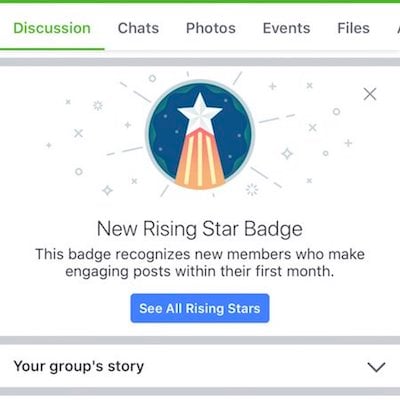
That means people are interacting with your posts. So then when you mention your product or service, you’ll find that not only will people see it, but they are going to head on over to your site.
The key with posting to Facebook groups is to create a high amount of comments and replies. If you just link out to your site you’ll get very few clicks and you will look like a spammer. Posting links and nothing more will get you banned from the group.
But if you link out within context or answer someone’s question with a link to your site or share something from your site that will help group members, you are much more likely to get clicks.
But if the content isn’t engaging and people don’t care to leave comments, you won’t see much traffic from your Facebook group.
I have a private Facebook group with 2,616 members.
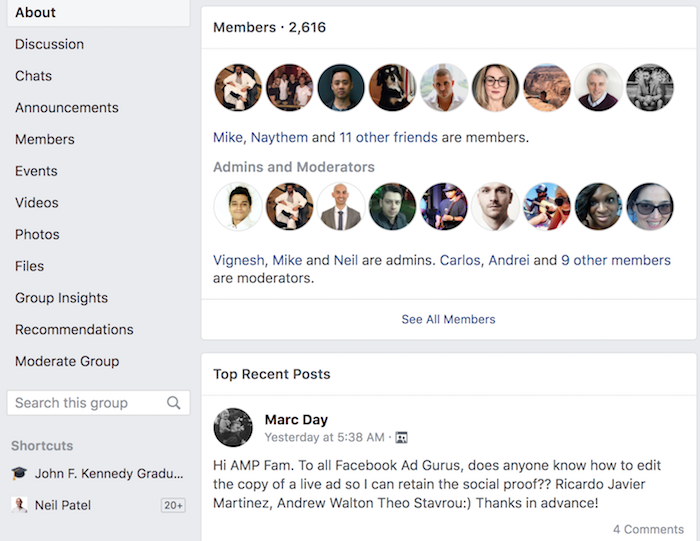
When you post something that is engaging, you’ll get featured as a “top recent post” and I’ve found with my 2,616 members I can generate 119 to 184 visitors when I post something that is super engaging that links to my site.
But instead of creating a group as I did, just join other popular groups. You’ll save a ton of time.
Week #7: Co-publish content
Have you ever thought about co-publishing content with other site owners? Even if you don’t have a huge audience, people will still love co-publishing content with you.
Why you may ask?
Well, they may have the audience, but they may be too busy to continually create new content.
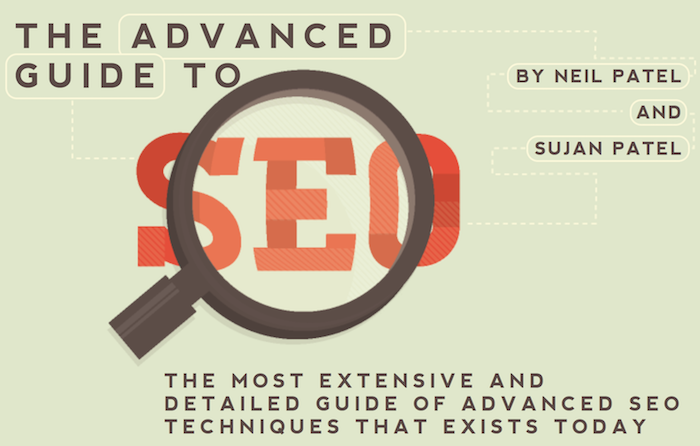
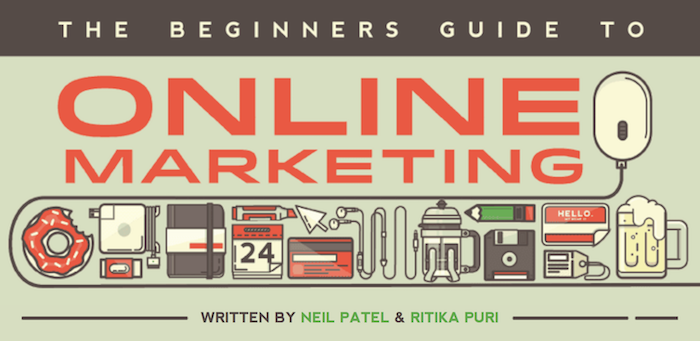
Just look at me… I co-published so many guides with other writers.
And…
And…
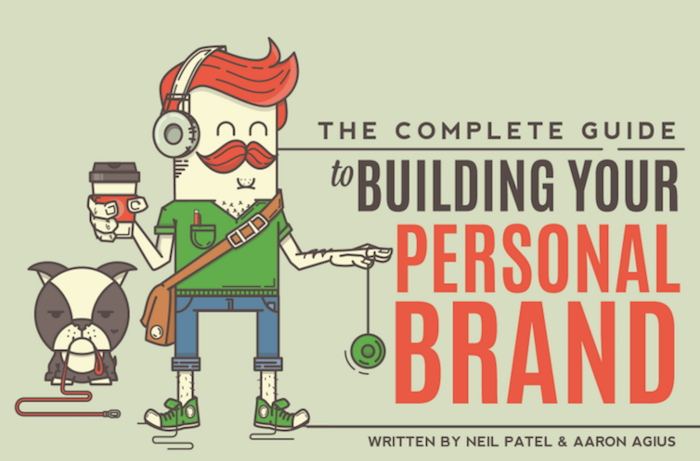
These writers got tons of exposure and did the majority of the work.
Over time, these guides have generated well over a million visitors. But I know they are time-consuming to create, and I’m not asking you to create guides.
Instead, you can co-publish blog posts together, record a webinar together, create a white paper, or anything else that you feel could be a good fit.
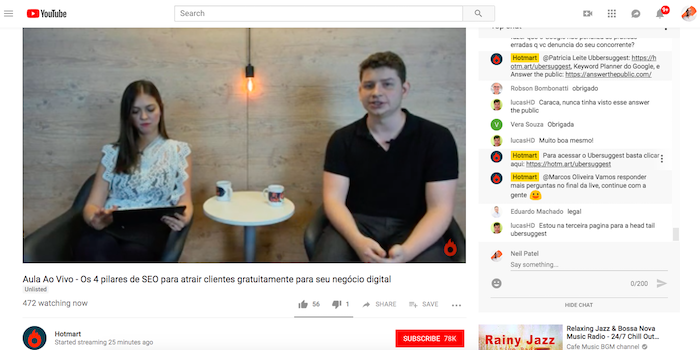
A good example of this is how my team co-published content together with a company called Hotmart in Brazil.
They wrote about Ubersuggest. They even co-published a video about SEO and, of course, my team mentioned Ubersuggest.
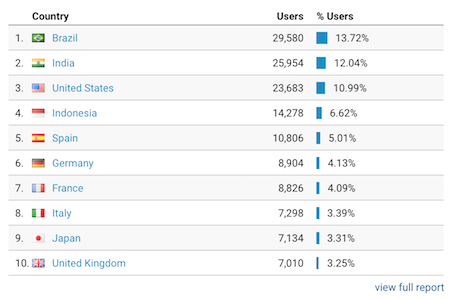
That helped make Brazil the most popular country when it comes to usage for Ubersuggest.
If you are going to try and co-publish content with others, make sure you are willing to do the majority of the work.
Hit up other sites within your space and make your offer. Let them know how they won’t have to do much work and, of course, mention what they’ll get out of it.
When you co-publish content, you can’t just talk about your company, you also have to talk about theirs.
Week #8: Product launches
Have you heard of Drift?
It’s a chatbot tool that a lot of people in sales and marketing use.
What I love about Drift is their Product Hunt strategy. Every time they release a new feature, they push it hard on Product Hunt.
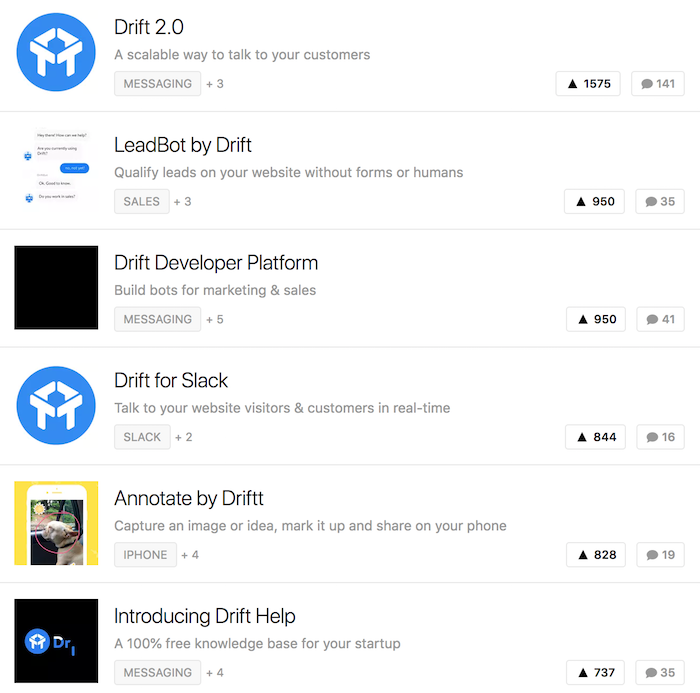
You probably don’t have a ton of new feature releases as you have a brand new site but every time you have one you should consider pushing it out on Product Hunt or even a Sub-Reddit.
But for now, why can’t you launch your site on Product Hunt or on a Sub-Reddit?
Sure you site maybe live for a few weeks, but you haven’t announced it to the world yet. 🙂
Product Hunt is super effective when it comes to traffic generation. When FYI launched via Product Hunt they got over 1,000 votes. It was so successful, the HubSpot co-founder even offered them funding.
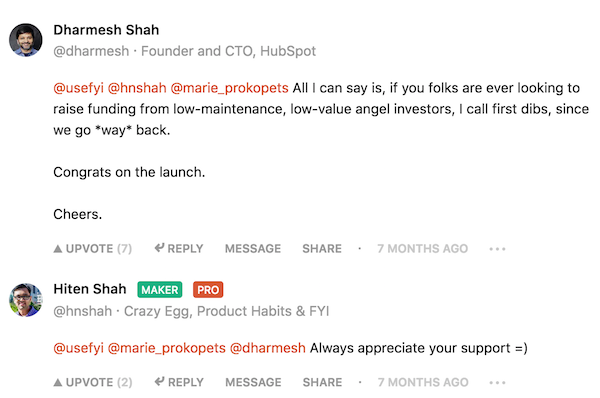
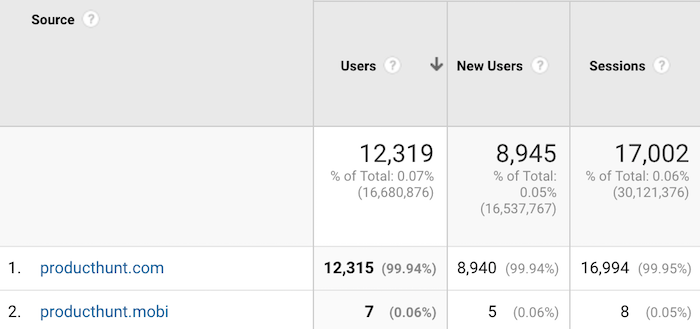
I did something similar with Ubersuggest. Every time I release a new feature, I announce it on Product Hunt. So far it has driven me 12,319 visitors.
The key with doing well on Product Hunt is:
- Get as many votes right when you release it… ideally within the first hour (so ask your friends and co-workers to vote)
- Participate in the community before you submit your own site. Ideally, you want someone else to submit, but if you don’t know any active Product Hunt users, participate for a bit before you submit your own site.
- Make sure you respond to every single comment as this helps with engagement.
- Submit your site very early in the morning Pacific Standard Time. Product Hunt resets every night, so consider submitting it around 4 am Pacific Standard Time.
I know self-promotion might be a bit difficult for you when you are starting off but you need to embrace it. There is nothing wrong with pushing your own company… if you don’t, no one else will.
Week #9: The gram
Honestly, what do you think of Instagram?
Well, whether you like it or hate it, it is one of the most popular social networks out there. And influencer marketing is becoming one of the most effective promotion channels.
Anytime a Kardashian talks about a product, it flies right off the shelves.

That’s how companies like FitTea came out of nowhere and grew to 7 figures in revenue overnight.
I know what you are thinking: It’s going to be too expensive to pay Kim Kardashian to talk about your business. And you are right, it will be too expensive.
Heck, anyone who has over a million followers will try and charge you too much. Anyone with over 100,000 will also probably charge you too much.
Instead, I want you to look for micro-influencers who have at least 10,000 followers. Find people within your vertical who aren’t too popular but whose followers would be your ideal customer.
Now I want you to reach out to these influencers and offer them a bit of money to promote your product or service.
When it comes to making your offer, don’t pay them money for a post because it will be too expensive, pay them to create an Instagram story.
See, the moment someone hits 10,000 followers, Instagram enables the “swipe up” feature. This means they can tell their followers to swipe up to head over to any website. And in this case, they will be telling their followers to swipe up and head over to your website.
You’ll find that influencers will create a story for pennies on the dollar as it expires within 24 hours.
Typically, if someone has 10,000 to 20,000 followers, I am able to pay them a few hundred bucks for 3 stories over a 2 week period.
I prefer this over a post because this drives traffic to your site and you can track the number of sales you are generating from each campaign.
You can also leverage sites like Influence to find influencers.
A friend of mine, Timothy Sykes, does this often. He goes crazy and pays influencers with over a million followers to do this because he has been able to make each campaign profitable.
Typically, you find that 1% to 2% of the person’s followers will swipe up and head to your site, assuming the story is good. With this strategy, you won’t get a ton of visitors, but the visitors you do get are more likely to convert into customers as they’ve already been pitched during the story.
Week #10: Wikipedia
Have you ever thought about Wikipedia as a traffic source? I know I didn’t until I attended a marketing conference years ago and heard someone from Comedy Central speak.
This marketer was breaking down how Comedy Central gets millions of visitors a month, which isn’t shocking because it’s a popular television channel.
But what was shocking is how they broke down how they generate over 100,000 visitors a month from Wikipedia.
You heard me right, they get well over 100,000 visitors a month just from Wikipedia.
How’s that possible?
Well, they go in and modify Wikipedia articles and mention Comedy Central whenever it is relevant.
But before you go off and modify hundreds of Wikipedia articles, know that you won’t get the same result as Comedy Central.
It’s more realistic for you to generate a few hundred visitors a month… and maybe even work your way up to a few thousand visitors a month over time.
The key with editing Wikipedia articles is to first adjust tons of pages that aren’t about your website. It’s not just about linking to your site, it’s more so about providing value to the community.
So, during this week, I want you to adjust 12 to 15 articles. Once you do that you can then adjust any relevant ones to your business and include your own company when it makes sense.
Again you won’t get a ton of traffic from this, but you can easily get a few hundred visitors.
Here are the steps you need to follow if you want to edit articles on Wikipedia.
Week #11: Speak at a virtual summit
By now you should have some traffic coming to your site. It may not be a lot, but if you followed all of the steps above, your visitors should be highly qualified.
And now I want you to leverage those visitors to get you a speaking spot at a virtual summit.
Search Google for a virtual summit in your industry. You should be able to easily find one.
It doesn’t matter if they are charging people to attend the virtual summit or if they are giving tickets away for free. Offer yourself to speak and promote the event.
You’ll be shocked at how many people will say yes if you are willing to promote their event.
Remember, unlike a physical conference it doesn’t cost them much to add hundreds of speakers and keep the summit going for an extra day or two.
When speaking, be sure you can promote your company during your speech and you’ll notice that you’ll be able to generate some visitors and sales. But that’s not why I want you to speak at the virtual summit.
Instead, I want you to ask the host of the summit to share the attendee list with you. Assuming they have the right terms of service and privacy policies this shouldn’t be too much of an issue.
You’ll also have to make sure they aren’t breaking any GDPR rules.
What you’ll find is this is a common practice with most virtual events in which the speakers will promote the event and the virtual summit will share the attendee list with the speakers.
This will give you a list of super qualified people that you can promote your blog posts to or even your product and services.
Week #12: Scripts and tools
You know I love SEO and it’s an amazing long-term strategy. But to do well with SEO you need backlinks.
The more relevant sites linking to you, the better off you are going to be.
And as you get more backlinks, in the short run it will provide referral traffic. In the long run, it will cause your search traffic to skyrocket.
Just to show you how powerful referral traffic is, just look at my referral traffic:
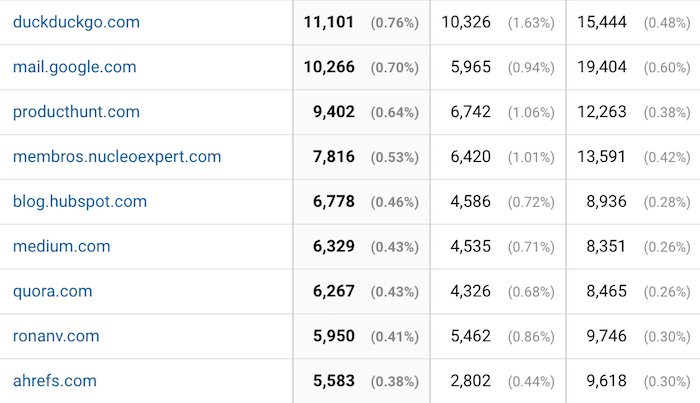
Over time, all of those sites linking to you will start driving thousands of visitors.
So, what’s the best way to get more backlinks?
Well, you don’t want to buy them. And manual link building takes a long time and isn’t as effective as it used to be.
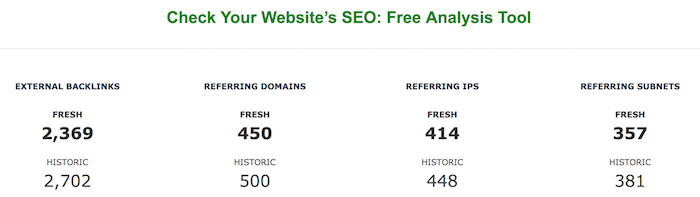
Instead, what you should do is release free tools, like how I released the SEO Analyzer years ago. And over time, it’s naturally produced 2,369 backlinks from 450 referring domains.
Now, I know what you are thinking: building a free tool is expensive and time-consuming. But it doesn’t have to be. You can buy existing tools and put them on your website for pennies on the dollar. And over time, they will naturally get backlinks without you needing to do anything more.
For example, if you have a real estate website, you can always add a mortgage calculator to your website. And can you guess how much it would cost for you to add one to your site?
$13. That’s right, it only costs 13 bucks! How crazy is that!?
There’s a site called Code Canyon where you can buy tools for almost any industry.
You can use these tools as your own and put them on your site with a few clicks of a button.
Just head over to Code Canyon and perform some searches. You’ll quickly find some tools that can work for you.
Keep in mind that these tools won’t be 100% perfect compared to building your own tool. But that’s ok, you have to start somewhere. Plus, people will still link to your tool even if it isn’t perfect.
Conclusion
I know some of the tactics I mentioned above won’t drive you thousands of visitors right away but they can drive you hundreds. And hundreds of visitors is a great place to start!
And when you combine them over time, it will help you get thousands of visitors. You just have to be willing to perform all of the steps in each week… no matter how silly the tactic may appear.
More importantly, the tactics I broke down above will drive you visitors that convert into customers and leads. All you have to do is take the next 12 weeks and follow them.
It may seem like a lot of work at first, but you’ll get faster at them as time goes on.
So, what do you think about the tactics above? Are you already using them?