 Sign In









Perplexity vs ChatGPT: Traffic and Engagement
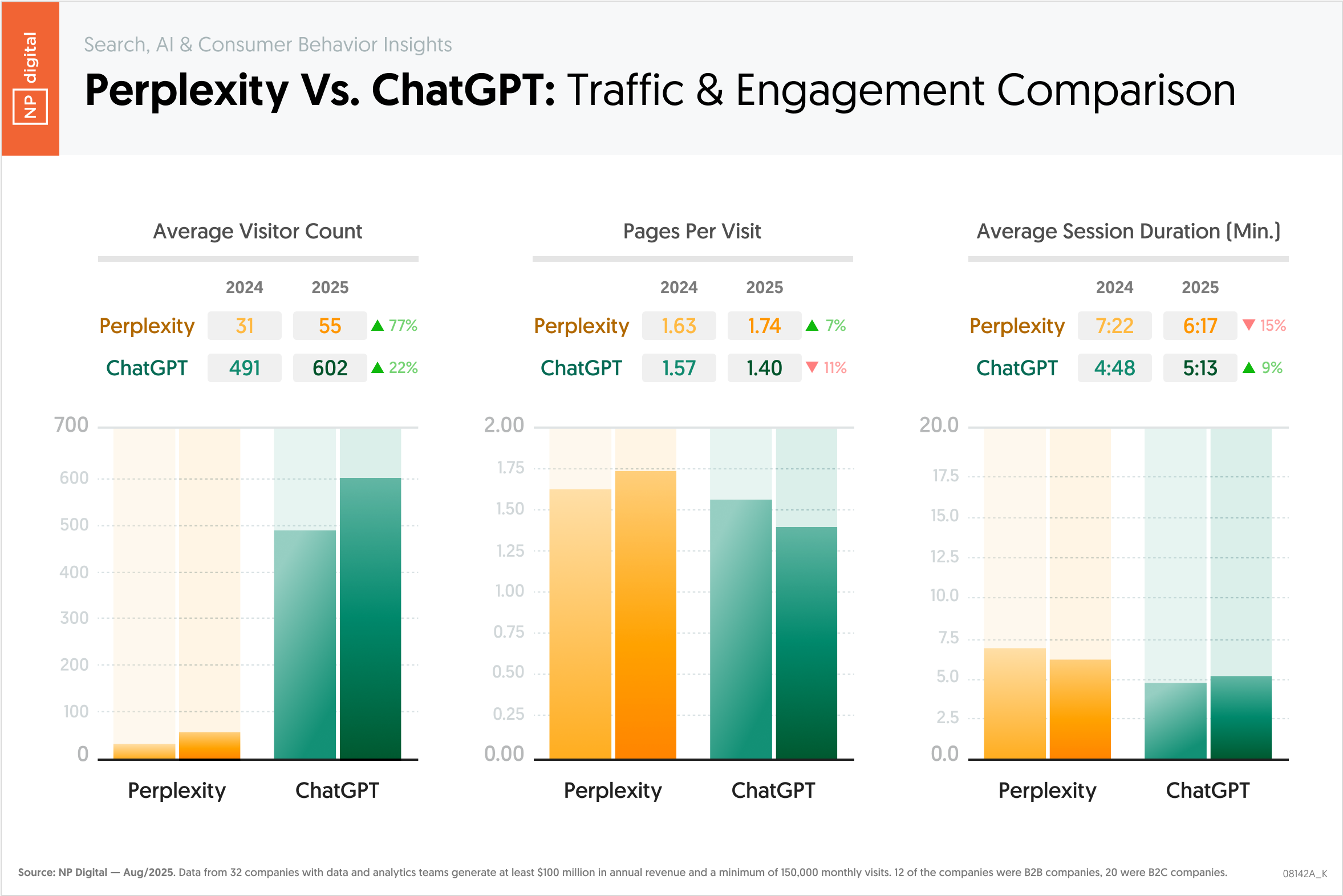
Info
-
Source: NP Digital
-
Date: July 2025
-
Category: AI & GEO Optimization
-
Study Methodology: Analysis of 850 AI-assisted search sessions comparing engagement and follow-up behavior across Perplexity and ChatGPT.
Not all AI search tools drive the same outcomes. This comparison shows how Perplexity and ChatGPT differ in traffic generation and engagement depth.
Essential Statistics
- Perplexity generated more outbound clicks than ChatGPT.
- ChatGPT sessions lasted longer on average.
- Perplexity users explored more external sources.
- ChatGPT users relied more on in-session answers.
- Engagement patterns varied by intent.
Key Takeaways
- Perplexity behaves more like traditional search.
- ChatGPT acts more like a destination.
- Click behavior differs by platform design.
- Engagement depth varies by user goal.
- Traffic expectations must be adjusted.
Actionable Insights
- Optimize for outbound clicks when targeting Perplexity visibility. Users expect to explore sources.
- Focus on clarity and completeness for ChatGPT-facing content. Many users do not leave the session.
- Adjust attribution models to reflect platform behavior differences. Clicks alone understate impact.
- Design content that can stand alone when surfaced inside AI responses.
- Track engagement quality, not just referral traffic.
Perplexity sends traffic, ChatGPT shapes decisions. — Neil Patel