 Sign In





 Ubersuggest
  AnswerThePublic
 What Sources Does Google Gemini Cite?
Info
-
Source: NP Digital
-
Date: July 2025
-
Category: AI & GEO Optimization
-
Study Methodology: Analysis of 12,000 Google Gemini SGE responses across six categories to determine most-cited domains.
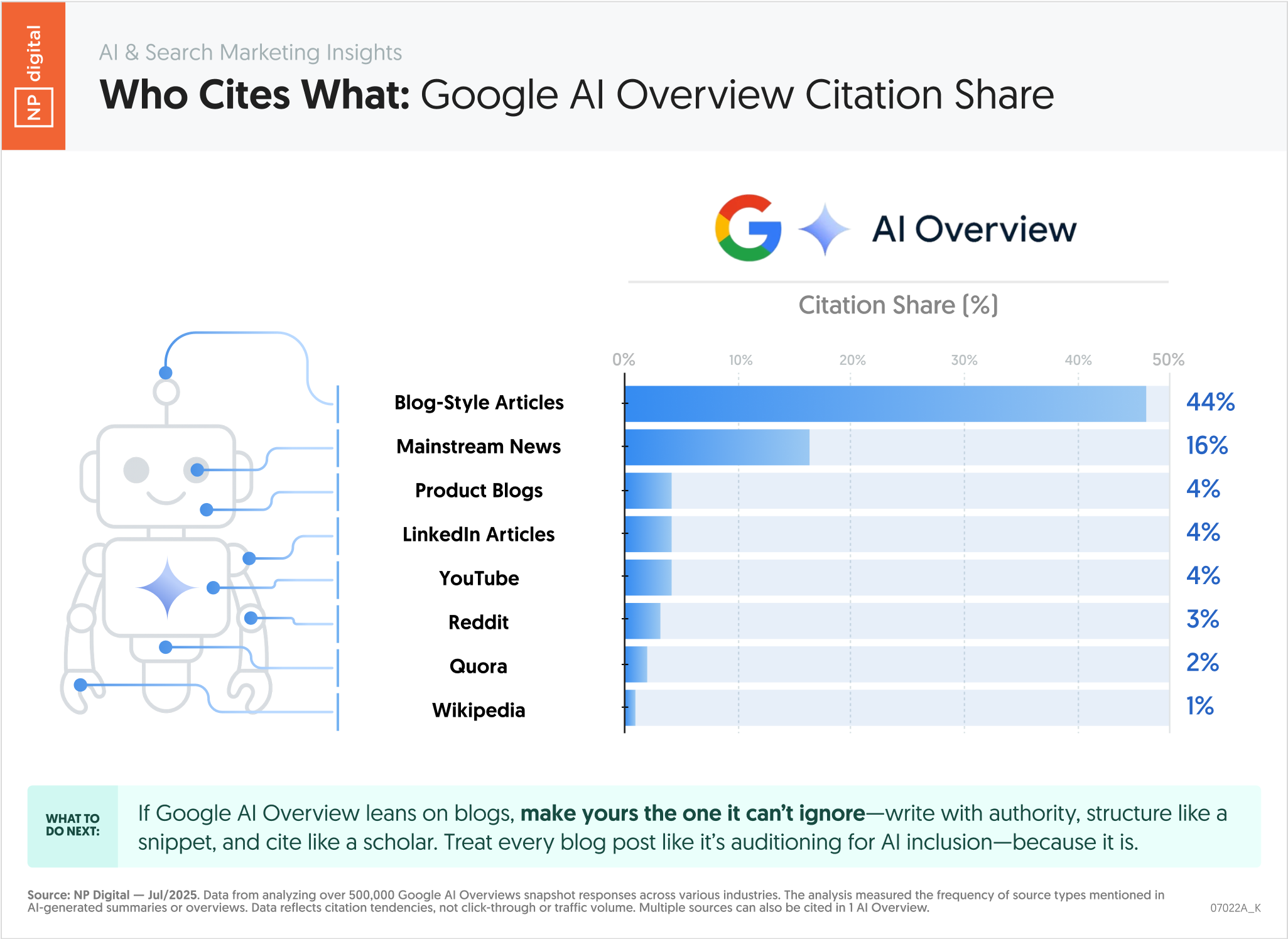
Google Gemini doesn’t cite randomly. This chart reveals which websites show up most often in Gemini’s AI-generated answers, giving us a look at trusted content sources.
Essential Statistics
- Wikipedia is the top-cited source in Gemini responses.
- Major publishers like Forbes, Healthline, and Investopedia also rank high.
- E-commerce sites such as Amazon appear less frequently.
- Independent blogs make up less than 8% of total citations.
Key Takeaways
- Gemini favors well-established, high-domain-authority sites.
- General reference and informational sites dominate the citation list.
- Commercial content gets cited less frequently.
- Publisher trust and structure play a role in visibility.
- Citations reveal what Gemini deems trustworthy and source-worthy.
Actionable Insights
- Benchmark your domain against the top-cited Gemini sources. If you’re not in the mix, analyze their structure, tone, and depth.
- Focus on creating highly structured, evergreen content with internal links. Gemini prefers formats it can easily summarize.
- Avoid overly commercial tones. Informational value trumps product-pushing in Gemini’s index.
- Strengthen your brand’s E-E-A-T (experience, expertise, authority, trustworthiness). High citation sites consistently signal all four.
- Add structured data and clear source attribution. Gemini rewards clarity and reliability.
- Submit your most evergreen pages for indexing and monitor how they surface. This helps calibrate your Gemini visibility.
- Repurpose cited formats like definitions, listicles, and explainers. These consistently rank in Gemini responses.
If Gemini isn’t citing you, it’s probably not seeing you. Treat citations as a visibility signal-and optimize accordingly. – Neil Patel