 Sign In



Brand Hijacking in ChatGPT Ads: 86% Are Unrelated Brands
Info
-
Source: Adthena
-
Date: May 2026
-
Category: AI & GEO Optimization
-
Study Methodology: Sample: 177 comparison prompts. Analysis of ad placements appearing on brand comparison queries in ChatGPT, categorized by whether the advertiser was named in the query or unrelated.
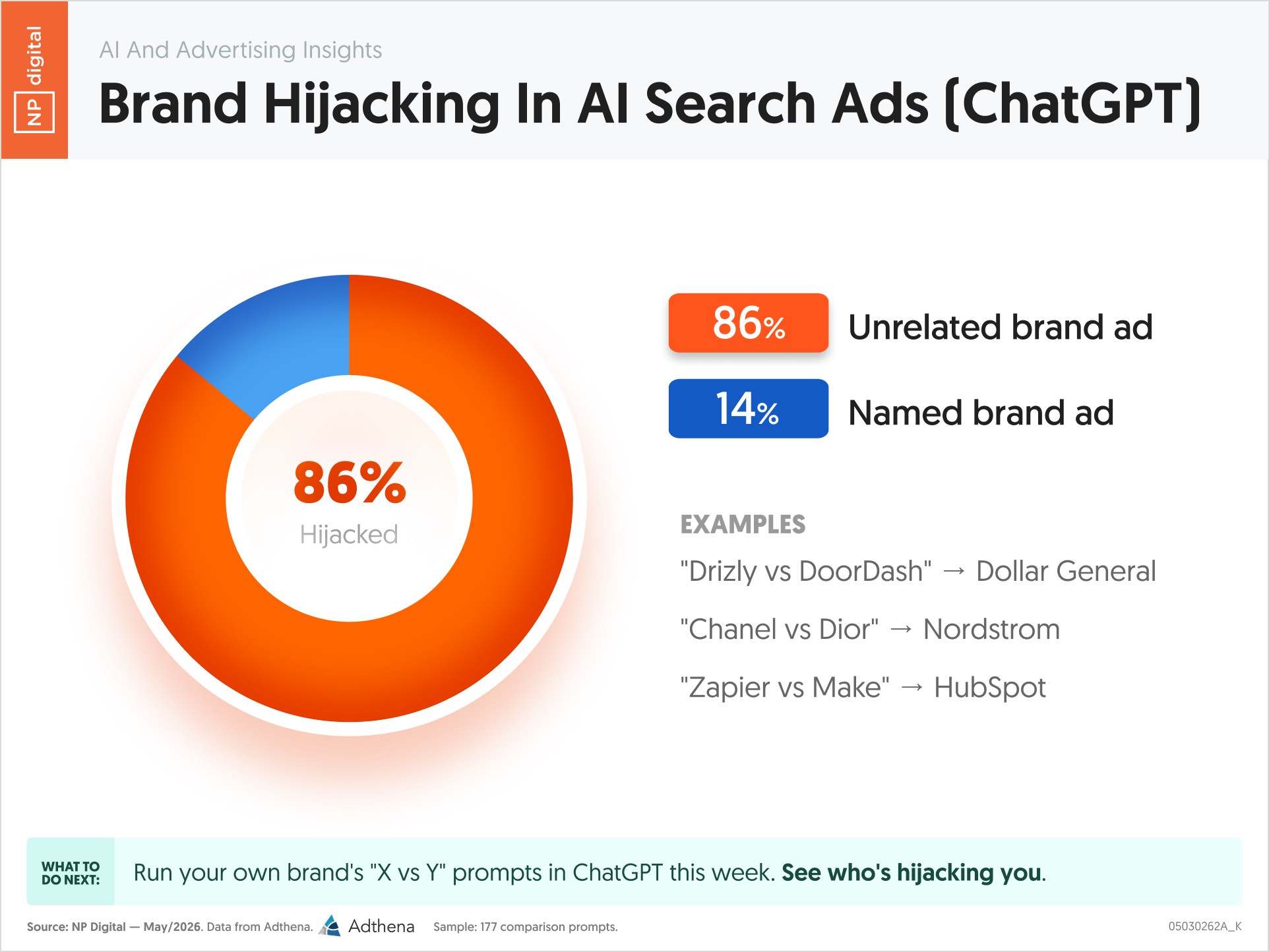
Brand comparison queries on ChatGPT are producing an unexpected result: the ads appearing on them almost never belong to the brands being compared. This analysis of 177 comparison prompts from Adthena shows that 86 percent of ads served on X vs Y queries come from brands with no connection to either brand in the query. That is a systematic opportunity that competitors are already exploiting while the brands being compared are absent from the conversation.
Essential Statistics
- 86 percent of ads appearing on brand comparison queries in ChatGPT come from unrelated brands not named in the query.
- Only 14 percent of ads on comparison queries are placed by a brand actually named in the query.
- Examples from the dataset include Dollar General ads appearing on Drizly vs DoorDash queries, Nordstrom ads on Chanel vs Dior queries, and HubSpot ads on Zapier vs Make queries.
- The analysis covered 177 comparison prompts, providing a meaningful sample of competitive query ad behavior on the platform.
- The 86 percent unrelated ad rate confirms that third-party brands are actively bidding on competitor comparison queries while the named brands themselves are largely absent.
Key Takeaways
- Brand comparison queries are an undefended advertising surface for most companies. With 86 percent of ads coming from unrelated brands, the named brands are effectively ceding the most commercially valuable moment in their competitive landscape to third parties.
- The examples are not random. Dollar General targeting Drizly vs DoorDash, Nordstrom targeting Chanel vs Dior, and HubSpot targeting Zapier vs Make are deliberate strategic choices by brands identifying competitor comparison intent and capturing it for themselves. This is a playbook, not a coincidence.
- The 14 percent named-brand ad rate suggests very few companies have implemented a ChatGPT competitive defense strategy. The brands that have are early movers protecting a high-intent query type that most competitors have not noticed yet.
- Comparison query hijacking is highest-stakes in categories where switching costs are low and the buying decision happens quickly. Software, retail, and delivery services all share that profile.
- The inverse opportunity is also real: bidding on competitor comparison queries as the unrelated third party is currently wide open and low competition. The window to be the brand doing the hijacking rather than the one being hijacked is still early.
Actionable Insights
- Run your brand’s top five competitive comparison queries in ChatGPT this week and document which ads appear. Searching your brand vs competitor and competitor vs your brand for your main rivals will show you exactly who is hijacking those queries right now. That audit is free, takes 30 minutes, and produces the clearest possible picture of your current competitive exposure.
- Set up ChatGPT ad campaigns targeting your own comparison queries to claim the 14 percent named-brand placement share before competitors lock it in. If you are not advertising on your brand vs [competitor] queries, someone else likely is. Owning those placements ensures buyers researching your brand encounter your message rather than a competitor’s.
- Build a separate offensive campaign targeting the top comparison queries in your category where your brand is not named. The HubSpot on Zapier vs Make example is the template. Identify which competitor pairs in your space attract high evaluation-stage traffic, then enter those conversations as the alternative solution those buyers have not yet considered.
- Create comparison-specific landing pages for your highest-priority offensive targets. Generic product pages do not convert users who arrived from a competitor comparison query. A page that directly addresses why your solution is a better alternative to the two brands they were comparing will outperform any other landing page format for this traffic type.
- Monitor your brand’s comparison query ad exposure monthly rather than quarterly. The ChatGPT ad market is moving fast and the players bidding on your comparison queries will change. A monthly audit of who is running ads on your brand’s comparison terms gives you the earliest possible signal of new competitive threats entering the ChatGPT ad space.
“Eighty-six percent of ads on brand comparison queries in ChatGPT are from brands not even in the comparison. That is both a threat and a playbook. Run your own comparison queries in ChatGPT today and find out who is showing up in your place.” – Neil Patel