 Sign In





 Ubersuggest
  AnswerThePublic
 ASO Ranking Factors Differ by Platform
Info
-
Source: NP Digital
-
Date: May 2025
-
Category: App Marketing & ASO
-
Study Methodology: NP Digital's ASO analysis of 100 top-ranking apps across both platforms. Factor scoring from AppTweak and Storemaven.
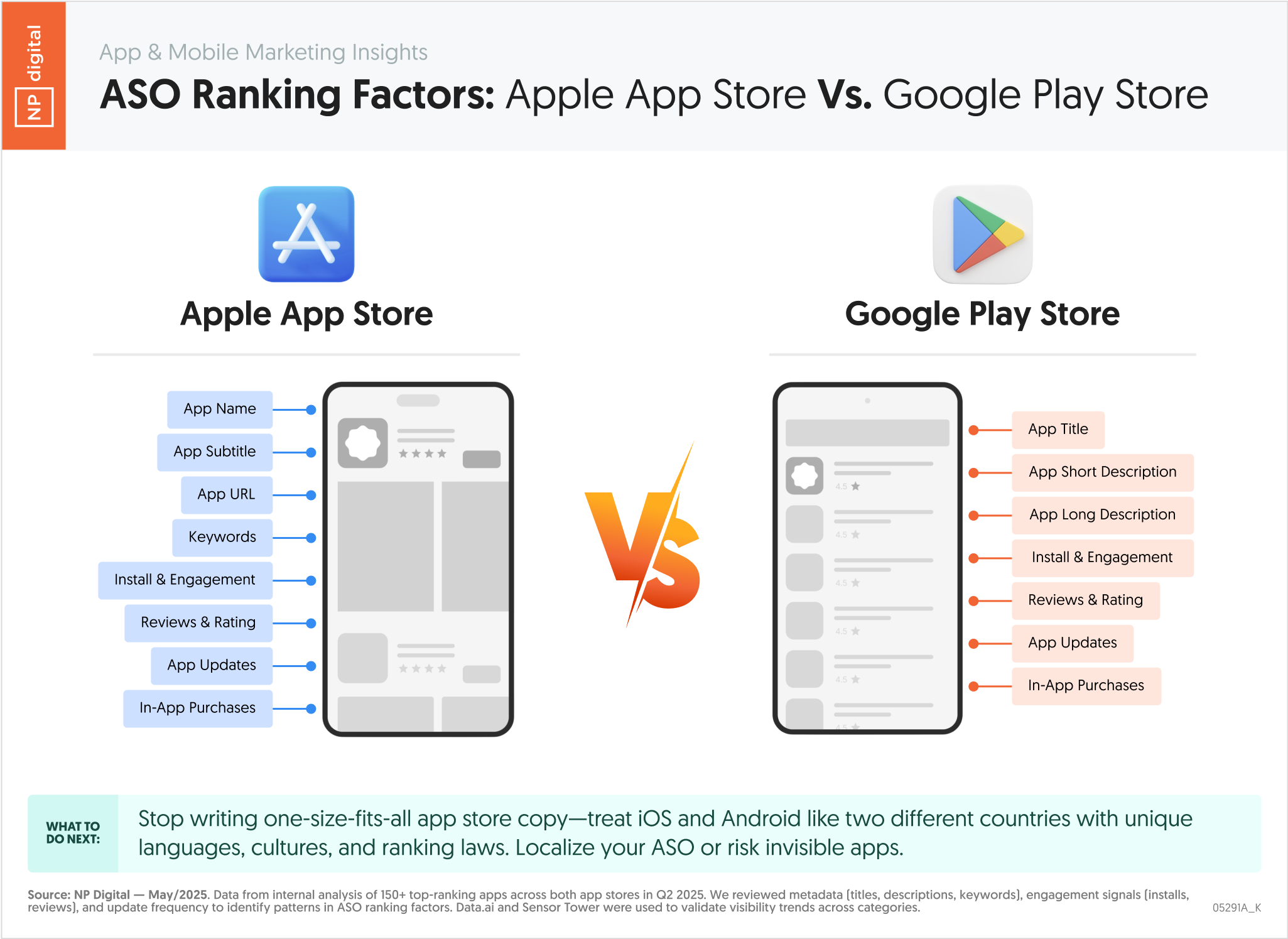
What works in the Apple App Store doesn’t always apply in Google Play. This chart breaks down what matters most on each platform so you can optimize accordingly.
Essential Statistics
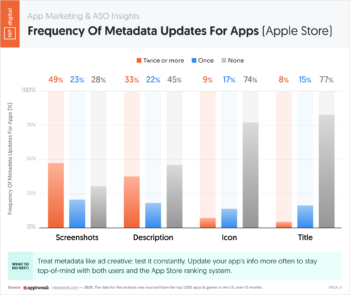
- Apple ranks apps based heavily on title, subtitle, and keyword field.
- Google relies more on short description and long description.
- Both platforms weigh installs, engagement, and reviews.
- Apple’s keyword field has no visible output—but strong ranking power. Google indexes all visible text and on-page engagement.
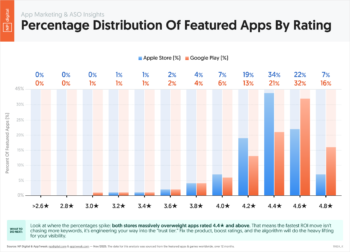
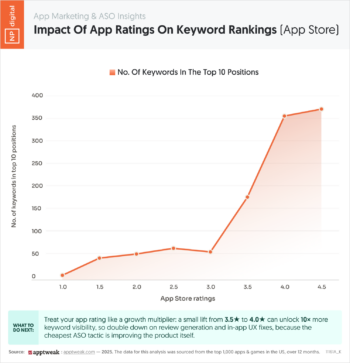
- Ratings and reviews impact ranking more in Google Play.
- Text placement priority differs drastically between stores.
Key Takeaways
- ASO strategies must be platform-specific. Apple rewards metadata optimization more than Google. Google emphasizes user engagement and keyword context.
- Keywords must be placed where they’re indexed on each platform.
- Reviews and installs matter across both—but are weighted differently.
- App titles need to be concise and intentional for both.
- App Store’s hidden keyword field is underused but powerful.
Actionable Insights
- Craft separate ASO plans for Apple and Google Play to match their unique ranking signals.
- Use Apple’s keyword field to target terms you can’t fit into titles or subtitles.
- A/B test long vs. short descriptions in Google Play to improve keyword coverage.
- Encourage ratings from satisfied users with in-app prompts at the right time.
- Map install sources to optimize for channels that drive ranking signals.
The App Store and Google Play speak different ASO languages. You need to be fluent in both. – Neil Patel