 Sign In






 Ubersuggest
  AnswerThePublic
 Word-of-Mouth by Generation and Demographics
Info
-
Source: NP Digital
-
Date: September 2025
-
Category: Content Strategy
-
Study Methodology: Data based on a survey of 2,100 consumers across the U.S., segmented by gender, parental status, and generation. Total is based on the full weighted sample, not a simple average of subgroups.
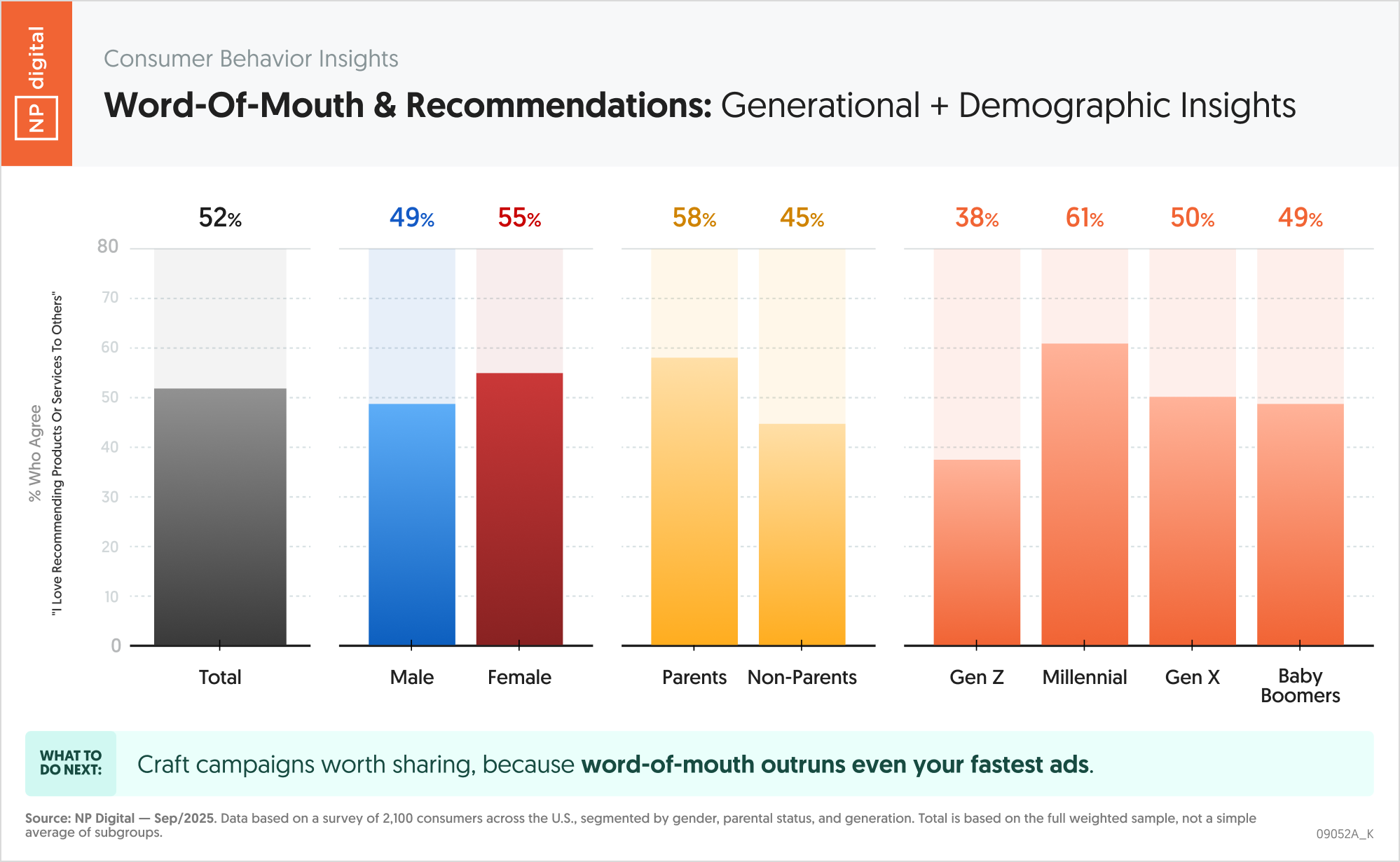
Word-of-mouth is still one of the strongest growth levers because it comes with trust baked in. But not everyone shares at the same rate, and that changes how referral and community strategies should be built. This chart shows who is most likely to recommend and where enthusiasm is highest. If you treat referrals as one-size-fits-all, you will leave growth on the table.
Essential Statistics
- Total who agree they love recommending: 52 percent.
- Male: 49 percent.
- Female: 55 percent.
- Parents: 58 percent.
- Non-parents: 45 percent.
- Gen Z: 38 percent.
- Millennial: 61 percent.
- Gen X: 50 percent.
- Baby Boomers: 49 percent.
Key Takeaways
- Millennials are the most likely group to recommend, which makes them prime for referral loops.
- Parents recommend more than non-parents, likely driven by sharing solutions and savings.
- Gen Z is the least likely to recommend, which signals higher skepticism or lower brand attachment.
- Women report higher recommendation behavior than men in this sample.
- Referral strategy should be segmented because advocacy is not evenly distributed.
Actionable Insights
- Design referral programs with Millennials as the primary growth engine. Make it easy to share and give them a reason that feels generous, not salesy.
- For parents, lean into practical incentives and shareable proof like how-to content and product comparisons. They recommend when it helps someone else make a better decision.
- If Gen Z is low on recommendation, focus on community and identity before referrals. Earn belonging first, then ask for sharing later.
- Use post-purchase moments to trigger sharing for the segments most likely to do it. Timing matters more than discount size for advocacy behavior.
- Measure referrals by segment, not blended totals. The fastest gains come from doubling down where sharing is already natural.
Referral growth is not just about incentives. It is about understanding who is already willing to vouch for you and building the loop around them. – Neil Patel