 Sign In






What Makes Consumers More Likely To Consider A Brand?
Info
-
Source: NP Digital
-
Date: October 2026
-
Category: Brand & Reputation
-
Study Methodology: Data from 983 survey respondents. 'No impact' centered on zero. Net equals more likely minus less likely.
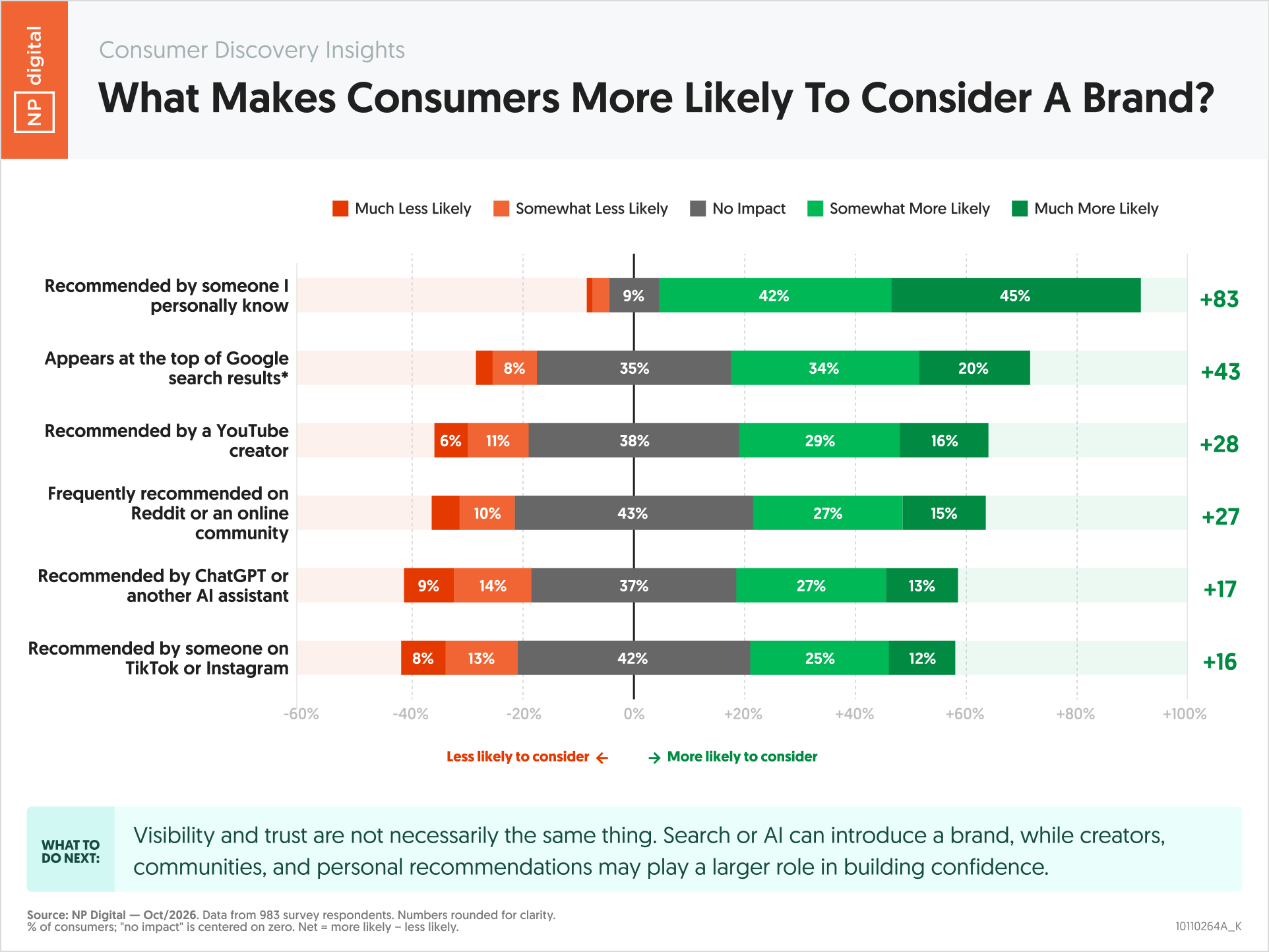
Visibility and trust aren’t the same thing, and the gap between them shows up clearly when you ask consumers what actually pushes them to consider a brand. A survey of 983 consumers found personal recommendations carrying by far the strongest net influence, while appearing at the top of Google search results, though still positive, lags well behind. Recommendations from AI assistants and social creators land near the bottom of the list, suggesting algorithmic visibility doesn’t yet carry the weight of a trusted human source.
Essential Statistics
- Being recommended by someone personally known posts the highest net influence score at +83, with 45% saying it makes them much more likely to consider a brand.
- Appearing at the top of Google search results posts a net score of +43.
- Being recommended by a YouTube creator posts a net score of +28.
- Being recommended by ChatGPT or another AI assistant posts the lowest net score among positive factors at +17.
- Being recommended by someone on TikTok or Instagram posts a net score of +16, close to the lowest measured.
Key Takeaways
- Personal recommendations posting a far higher score than every other factor suggests trust from people a consumer actually knows remains the single strongest lever for brand consideration.
- Google search ranking posting a solid but much lower score suggests visibility still matters, but doesn’t carry the same persuasive weight as personal trust.
- AI assistant and social creator recommendations posting the lowest positive scores suggests these newer forms of influence haven’t yet built the same credibility as more established sources.
- The consistent gap between visibility-based factors and trust-based factors suggests brands focused only on search rankings or AI visibility may be missing the bigger lever.
- This pattern suggests earning genuine advocacy from real customers may do more for consideration than any single visibility channel on its own.
Actionable Insights
- Invest in customer advocacy and referral programs as a primary growth lever, since personal recommendations post by far the strongest influence score in this data.
- Continue investing in search visibility, but don’t expect it to carry the same weight as word of mouth. This data shows it posts a meaningful but noticeably smaller net influence score.
- Treat AI assistant recommendations and social creator endorsements as emerging, supplementary channels rather than primary consideration drivers for now, given their comparatively low scores here.
- Build mechanisms that make it easy for satisfied customers to recommend your brand directly to people they know, since this is the single highest-leverage factor in this data.
- Track consideration-stage attribution beyond just search and AI visibility to include referral and word-of-mouth sources, since this data suggests these are being undercounted relative to their actual influence.
‘A friend’s recommendation still beats a top Google ranking by a wide margin. If you’re only chasing visibility, you’re chasing the wrong lever.’ – Neil Patel