 Sign In









 Ubersuggest
  AnswerThePublic
 How Emojis Impact Content Performance
Info
-
Source: NP Digital
-
Date: December 2024
-
Category: Brand & Reputation
-
Study Methodology: Sample size: 3,503 content pieces; Companies analyzed: 82; Collection method: Tested emoji usage across multiple content types and measured performance lift or decline.
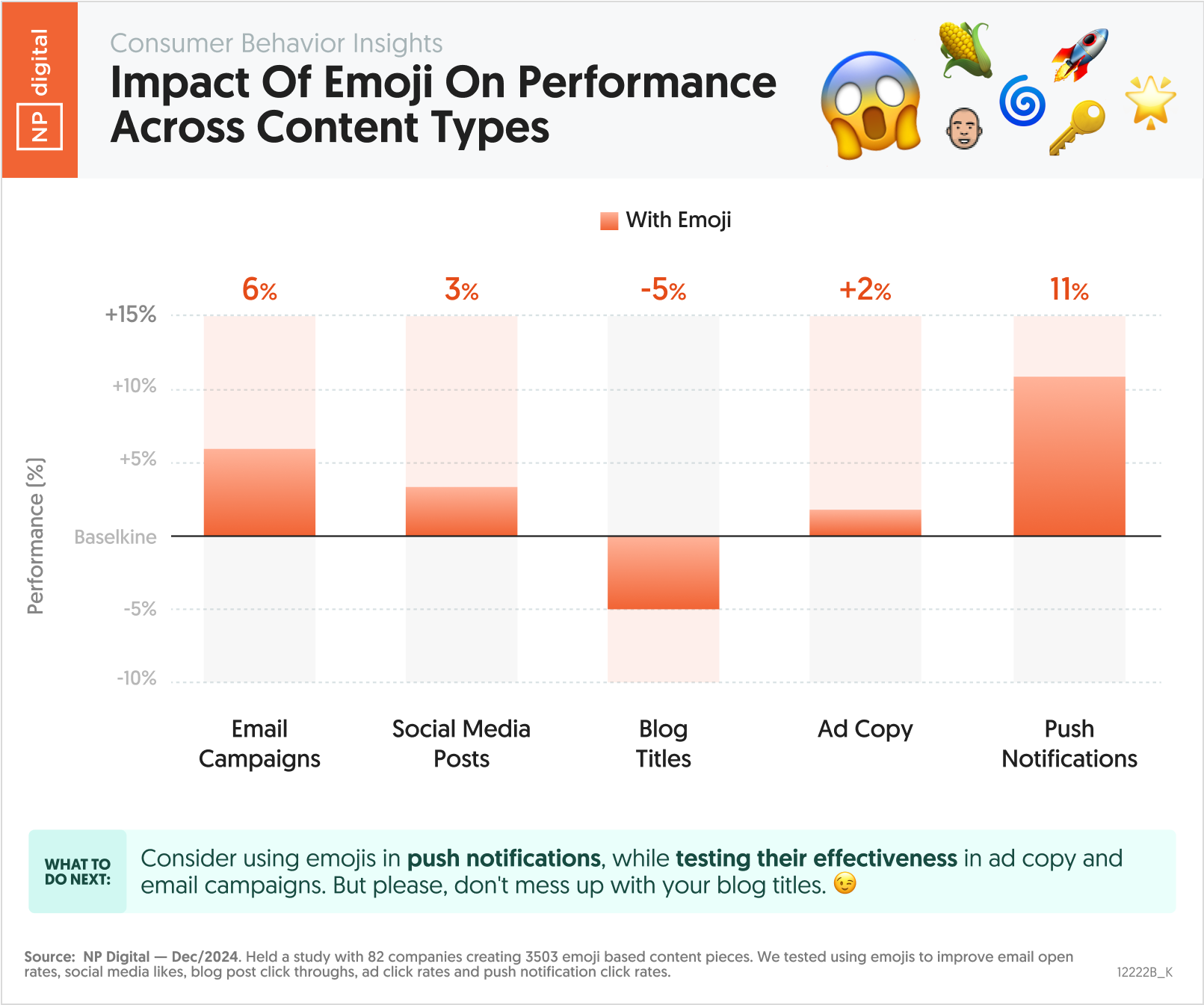
This chart compares how emojis impact performance depending on where they are used. While emojis can improve engagement in some channels, they actively hurt performance in others. The data shows why emojis should be tested selectively, not applied universally.
Essential Statistics
- Push notifications see an 11% performance lift with emojis.
- Email campaigns improve by 6% when emojis are used.
- Social media posts gain a 3% lift with emojis.
- Ad copy performance increases by 2% with emojis.
- Blog titles decline by 5% when emojis are used.
- Emoji impact varies widely by channel.
Key Takeaways
- Emojis perform best in short, interruptive formats.
- Overusing emojis can reduce perceived credibility.
- Context matters more than creativity with emojis.
- Long-form content suffers from emoji usage.
- Testing is required before scaling emoji use.
- Channel norms dictate emoji effectiveness.
Actionable Insights
- Use emojis in push notifications, because they drive the highest performance lift at 11%. Treat them as attention triggers, not decoration.
- Test emojis in email subject lines, because modest gains can compound at scale. Roll out only after A/B validation.
- Limit emoji use in social posts, because the performance lift is small and can flatten with overuse. Rotate formats carefully.
- Avoid emojis in blog titles, because they reduce performance by 5%. Preserve clarity and credibility in SEO-driven content.
- Apply emojis selectively in ads, because gains are incremental and audience-dependent. Test per campaign before scaling.
- Create emoji guidelines by channel, because performance impact is inconsistent. Document where emojis help and where they hurt.
Emojis are a tool, not a shortcut. Used in the wrong place, they do more harm than good. – Neil Patel