
 Sign In












Back in 2005, the Internet exploded with concerns about duplicate content.
And then, in 2013, one of Google’s employees told us that anywhere from 25%-30% of content on the Internet was duplicate content, and that fact is completely okay.
But that doesn’t mean that you should outright ignore the effects of duplicate content on your SEO.
You especially don’t want to do that if you’re an e-commerce business.
Google has changed through the years and so has our understanding of digital marketing.
While you used to be able to rank all of your product pages with some strategic keyword stuffing, that method is no longer viable.
That was never good for your end user, anyway.
These days, you need a more nuanced approach to let Google rank your product pages that contain duplicate content.
In this post, I will show you some ways to roadmap your site so that Google can rank your product pages higher.
But before that, I want to look closer at what duplicate content is and why you should be aware of it.
What is duplicate content, and why bother?
Before you can begin to unwind any SEO issues with duplicate content, you have to know what you’re dealing with.
And even though it may sound straightforward, there’s actually quite a bit of nuance to this topic.
To get you started, look at this quote from Google that explains what duplicate content is:
Duplicate content generally refers to substantive blocks of content within or across domains that either completely match other content or are appreciably similar. Mostly, this is not deceptive in origin. Examples of non-malicious duplicate content could include:
- Discussion forums that can generate both regular and stripped-down pages targeted at mobile devices
- Store items shown or linked via multiple distinct URLs
- Printer-only versions of web pages
That’s pretty straightforward, right?
You’re looking for content that is exactly the same or “appreciably similar” that isn’t deceptive or malicious in intent.
Later in that post, Google goes on to explain that unless the intent of your duplicate content is somehow malicious, you won’t receive any direct penalty for it.
That’s right: Duplicate content by itself doesn’t directly hurt your SEO.
And Google has gone on the record numerous times to declare that they absolutely do not have a direct duplicate content penalty.
One particularly notable example of their efforts is this hour-long Q&A video they dedicated to the topic:
If you want an exhaustive look at this subject, I highly recommend taking a listen.
But the key here is that the issues that duplicate content creates are not direct.
They are indirect.
That means that you’ll need to put a little more work into optimizing duplicate content pieces.
And this makes sense when you think about it.
E-commerce stores often build their content pages from a boilerplate or product description that businesses throughout the web use.
If Google looks at this content and classifies it as “thin,” “manipulative,” or “duplicate spun” content, then you’re off on the wrong foot.
And it likely points to deeper issues that will continuously plague your SEO anyway.
From all of this, Google gives us two takeaways:
- Duplicate content that is not manipulative or “spun” doesn’t receive a penalty.
- The rest of your SEO still matters.
Essentially, Google just has a unique way of dealing with duplicates, which we’ll get to in a moment.
But first, I want to show you what good duplicate content looks like.
For example, just Google “Thermos” and look at the results that pop up.
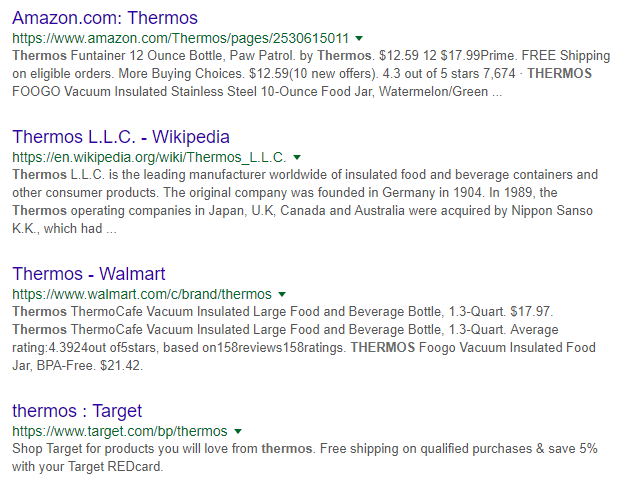
Here, we have a list of three e-commerce sites and one article.
All three of the e-commerce sites are selling a similar product (or possibly even the same product).
And while the titles, meta descriptions, and retailers are all different, there’s still a good chance that much of the copy and imagery on these and other pages will be quite similar.
Do you see how this circumstance could make it incredibly difficult to rank a product page like this?
In fact, so far as most SEO experts can tell, duplicate content really only presents three main issues for search engines.
First, it makes it challenging for Google to know which version of a page to index.
Second, it muddies the metrics and strength of backlinks.
And third, the natural result of this is that Google doesn’t know which page to rank in search results.
And that’s an issue for most e-commerce sites because your product pages are where you make money.
But let’s look at what duplicate content looks like on an actual page.
Going back to our thermos search, let’s say that we click on two listings.
Here’s a clip from an Amazon listing:
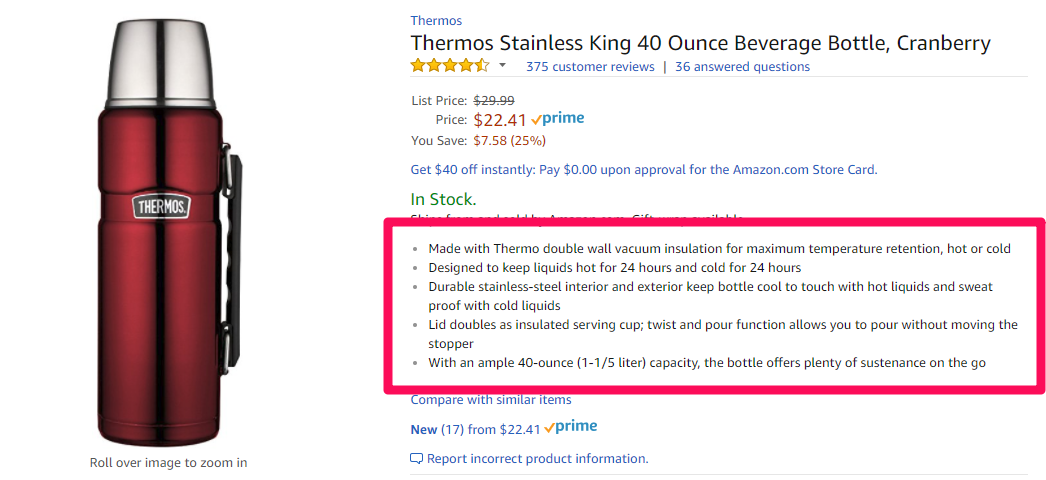
And then here’s a screenshot of an eBay listing:
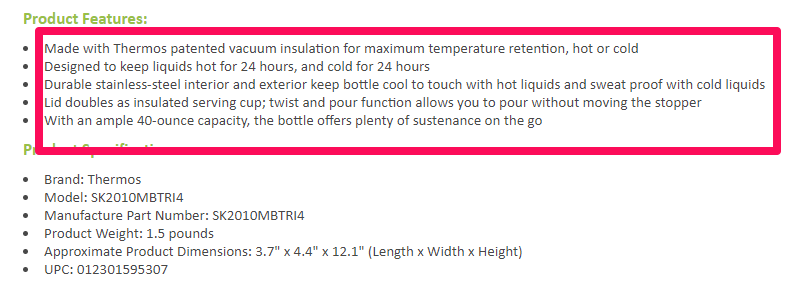
As you can see in the highlighted boxes, these product descriptions are identical across two reputable selling sites.
How can it be that two sites rank highly with what is essentially a copy-paste job?
Part of the answer is that duplicate content is not necessarily spam to Google.
But the truth is that, when duplicate content is present, site owners can suffer rankings and traffic losses.
And these losses often stem from one primary issue:
Search engines will rarely show multiple versions of the same content.
That means that they will choose the “best” page version. The result is fewer duplicates on the top page.
If you have similar products that target different customers, you’ll find yourself especially prone to this issue.
With the thermos example, here’s what that could look like. Here’s a clip from Thermos’s website:
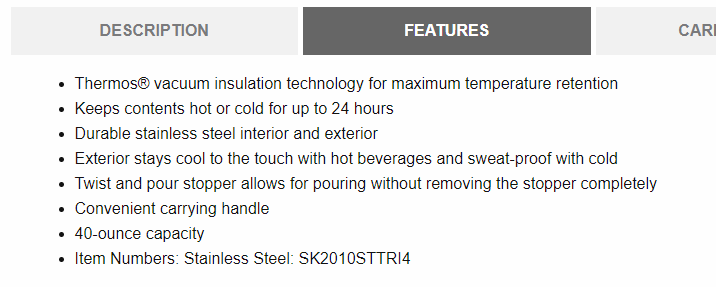
As you can see, this is a fairly standard, clean, bulleted list of product features for a product.
But what happens when you click over to a different product?
Say you want to find a smaller thermos:
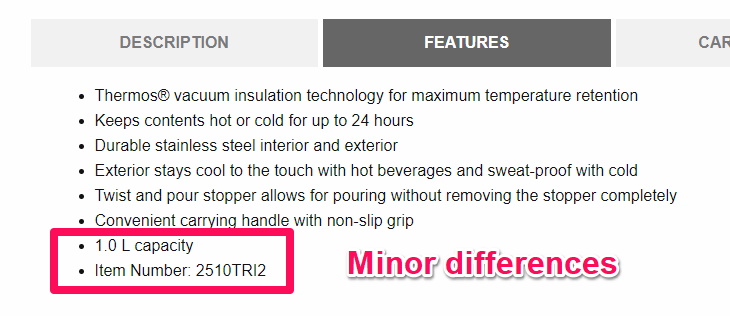
But except for the minor differences, these descriptions are exactly the same.
Since roughly 80% of the copy is identical, only one of these products is likely to rank.
And, as Moz humorously illustrates, Google will try to decide to rank one of the duplicate content posts instead of all of them.
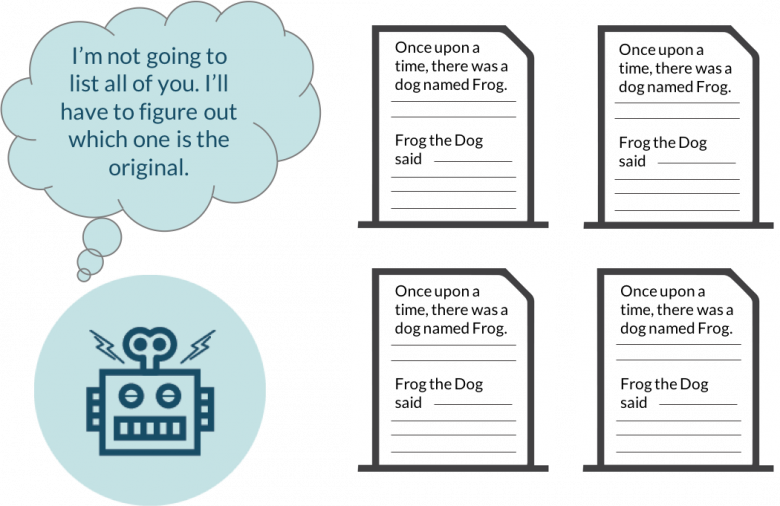
To sum it up, the reality that you need to be aware of is that Google attempts to filter duplicate content.
Thus, the necessity of using duplicate content in some instances poses an issue.
How do you rank individual product pages for different products that have similar attributes?
According to Hobo, SEO mainly suffers because most e-commerce sites lack positive signals that there is unique content or added value from their duplicate content.
The solution, then, is to create these positive signals.
Google rewards uniqueness and added value in any form.
And how do you do that?
That’s what I want to look at in the rest of this post.
Let’s start with ways to make “duplicate” content unique in Google’s eyes.
Focus on creating unique pages where possible
This first point may seem a little counterintuitive because it stands in direct opposition to the concept of duplicate content.
But really, that’s the point I’m trying to make.
When someone copies large portions of content verbatim, it usually means that Google is going to assume that the whole page is just a copy of something else.
And according to Google’s John Mueller, in instances of copy-pasted content, Google will “try to help you by just picking one and showing that.”
That’s not what we want.
So, if you don’t want that to happen to you, the only solution is to make the pages truly unique.
You have to make sure that every page can stand alone.
But don’t just take my word for it.
Look at this example from ConversionXL. They performed a case study on a mobile page that contained duplicate content.
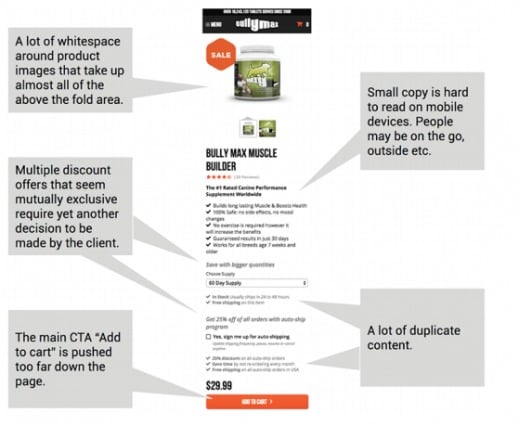
Aside from some design elements, the standout issue was the amount of duplicate content on the page.
They tested extensively, modified the page, and cut out duplicate and less important content areas:
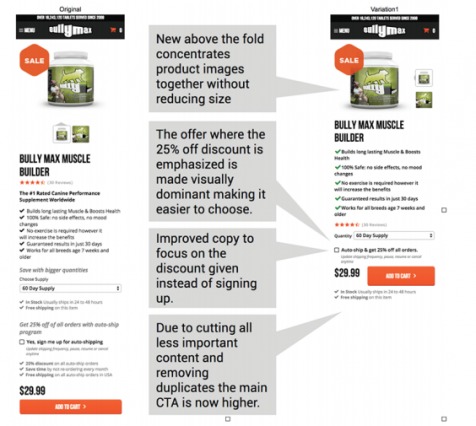
Do you see how much of a difference that makes in the readability of this page?
While you might think that more information is better, it’s entirely possible to give information that creates a pointless overlap.
In that case, all that Google sees in the original is “thin” copy that’s potentially guilty of keyword stuffing.
After all of ConversionXL’s work, these changes saw a 24.5% increase in conversions and a 68% growth in revenue from that product page.

So, just like in your other content, original copy will perform better on your product pages.
While it may take a little extra time, one valid solution is to create individualized copy for each unique product page instead of relying on a boilerplate.
You’ll be able to get better rankings and more overall traffic to your site.
All you have to do is be a little more creative while reusing and recycling any content.
Take the product pages from the Rocky Mountain Soap Company, for example. Here’s one of them:
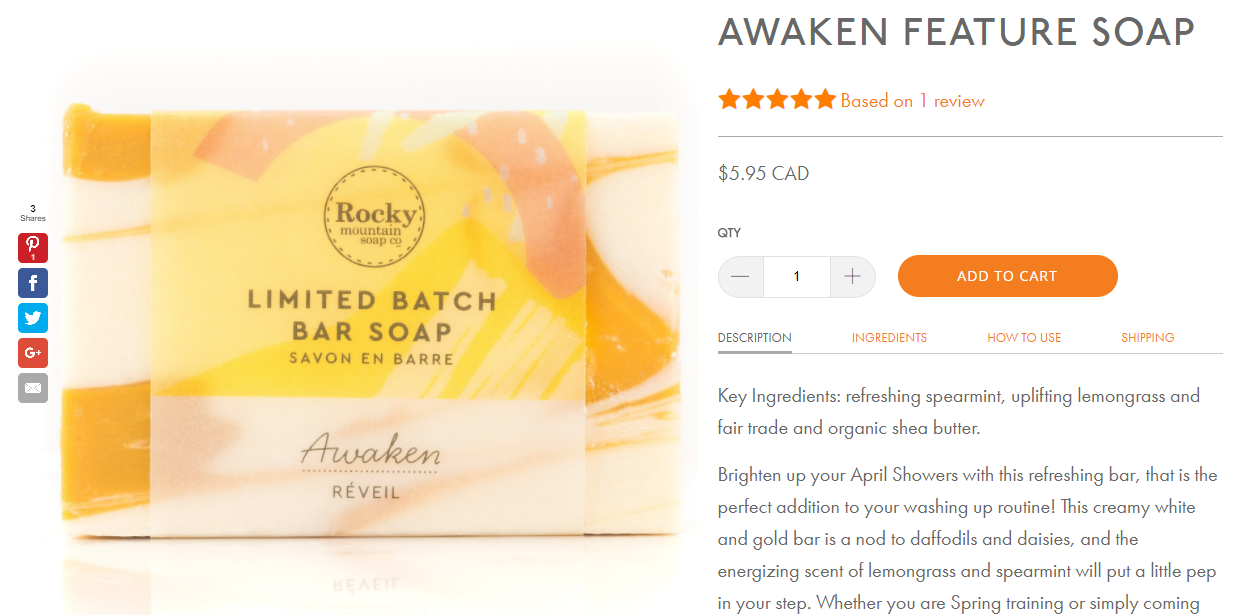
At first glance, this looks like a normal product page.
And it really is normal. It has all the typical attributes you would expect like an image, copy, and social proof.
But this page really stands out when you put it up against a different bar of soap from the same company:
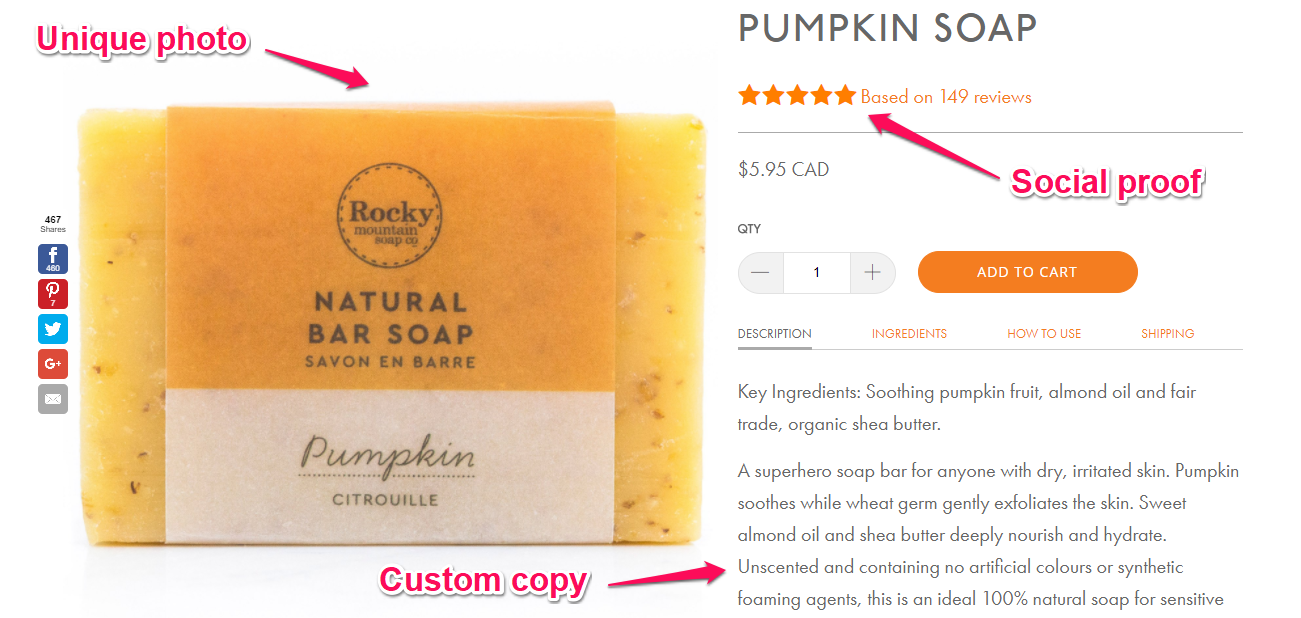
It uses the exact same format, but take a close look at the copy.
While it’s promoting roughly the same product, it has a completely different story.
And that means that they took the time to weave a story around this product in a way that lets it stand out to a search engine.
They’ve still optimized it for keywords and designed it for e-commerce, but the SEO value increases dramatically because it’s not from a boilerplate.
While it might take some extra effort, I recommend this approach first because I believe it’s the best.
You have to remember with e-commerce that your goal is not only to prove that your product is good but also to show that your company is the right choice.
If you can prove that your company is relatable and that your product is good, then there’s no reason for visitors not to buy from you.
And that increased traffic only signals good things to Google.
So take time to create unique content for your product pages if you can.
You’ll not only rank highly on Google. You’ll also sell more products.
Then, you can work on tackling your duplicated URLs.
Tidy up your URLs
Once you’ve cleaned up your content, it’s still possible to have duplicate content that will muddle your SEO if you don’t deal with it.
A search engine will also look at session IDs, tracking URLs, printer-friendly pages, or paginated comments as potential areas of duplicate content on your site.
And since you can’t always get rid of those elements, you have to make sure Google knows what’s duplicate and what’s original by tidying up your URLs.
Just to show you what I mean, examine the following URLs:
- www.mywebsite.com/product
- mywebsite.com/product
- https://mywebsite.com/product
- https://www.mywebsite.com/product
- https://mywebsite.com/product
Do you notice something eerily familiar about all of them?
A developer will look at this list and say it’s all one page.
But a search engine will see five duplicate pieces of content.
Even if they’re all just different ways for a user to reach into your site’s database and draw the same page, a search engine will see duplicate content.
The solution here is to establish a preferred domain with Google Webmaster Tools.
Follow the link above, then select “site settings” under the gear icon.
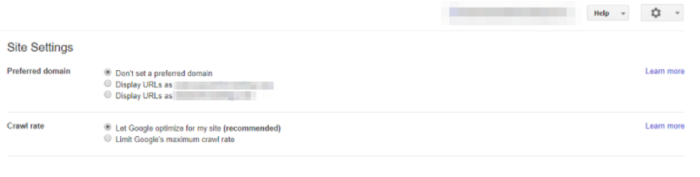
You can then select to display your URLs with or without the “www.”
This will tell Google to prioritize a certain URL, thus helping minimize your duplicate content issues.
The added bonus is that you’ll still keep any link authority from domains that aren’t your preferred domains. Visitors will just end up on your preferred site instead.
Once you do this, you’ll also need to make sure that any internal links on your site maintain this consistency.
Here’s what that looks like on my website:
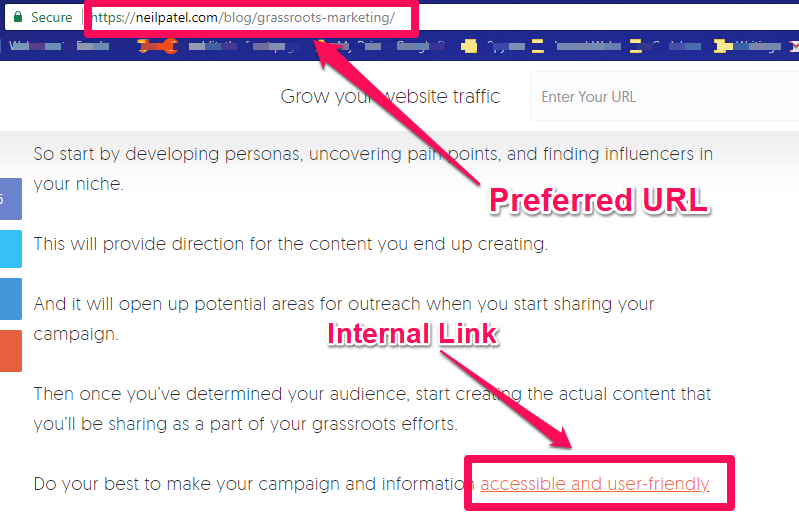
I’ve set my site to appear without the “www.”
So I need to make sure that my internal links keep that consistent.
When I click on the internal link, here’s what I find:
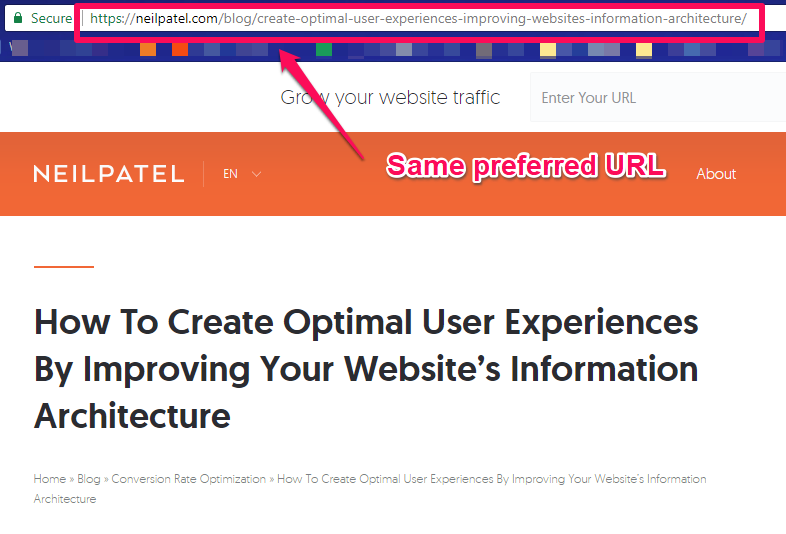
It has the same URL settings.
But for product pages, this gets a little more difficult.
Many times, the way that developers set up e-commerce sites makes this inherently tricky.
For example, you may have “shop.mywebsite.com” for a product page when the rest of your site is “www.mywebsite.com.”
Do you see how that could cause an SEO issue?
If you’ve established a preferred domain, that will be where all of your links will go to, especially for product pages.
So finding a way to make your URLs uniform across your site for product pages, blog posts, and landing pages can help prevent confusion and minimize duplicate content issues.
But there’s one other option that will help you fix this issue.
While it’s a little tedious, establishing canonical URLs will tell Google which product page is the original.
You can establish this with the rel=canonical command.
This helps ensure that you rank for your preferred page instead of an alternate page.
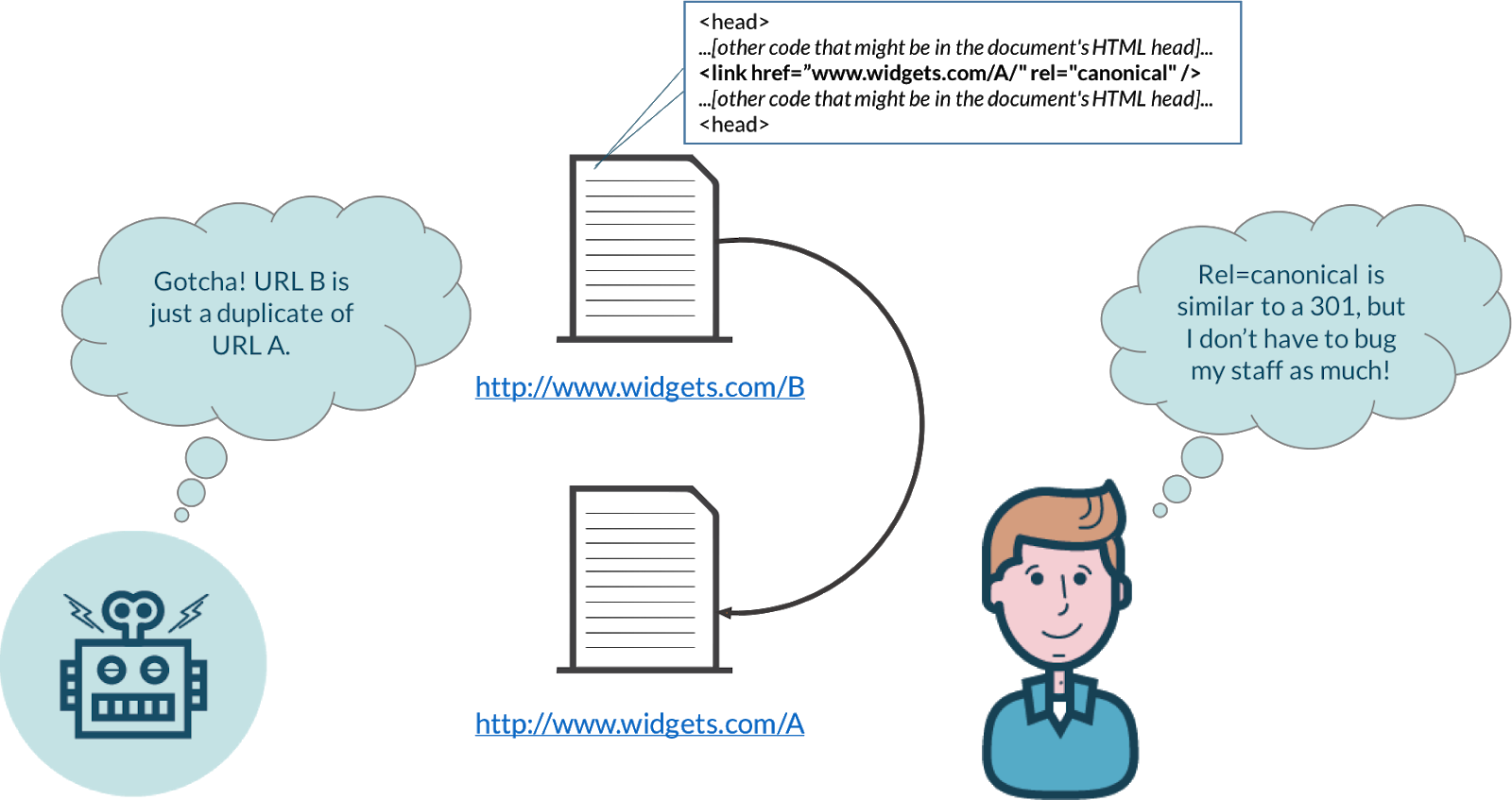
In sum, canonicalization allows you to indicate which page is your preferred page using a certain formula in your HTML.
Think of it in terms of having two pages: URL A and URL B.
In this instance, URL B is a duplicate of URL A.
In the <head></head> section of URL B, you can include the following command:
<link rel=”canonical” href=”https://www.mywebsite.com/productA
This tells the search engine that you’re using duplicate content and that it should reapply all SEO attributes of URL B to URL A.
That means that you now have two pages providing SEO attributes to one page.
As you can see, I use this tag for my own site:

With this tag, Google no longer has to randomly decide between two duplicate pages.
That gives you the power to tell Google which product you want it to rank.
Essentially, consolidating your URLs puts product pages into a format that’s easier for a search engine to understand.
That makes cleaning up this aspect of your product a powerful tool in your SEO strategy.
But there’s one more aspect to consider for duplicate content pages.
Nail down your high-value search terms
According to the e-commerce experts at Shopify, pinning down your keywords and optimizing duplicate pages for the variations is a simple and straightforward way to boost your SEO.
You need to identify what types of terms you should pursue.
Then, aggressively expand your list to meet a variety of potential searches.
Once you flesh out your list, you’ll want to narrow it down to what’s most relevant to your product.
Then, niche out your keywords for best results.
I’ve seen from my own experience that finding keywords for specific products will help you rank them.
And using a research tool like Ubersuggest is the perfect place to start.

All you need to do at the beginning is insert words or phrases that relate to your product.
You’ll get an extensive list of keyword ideas that you can add to your initial list.
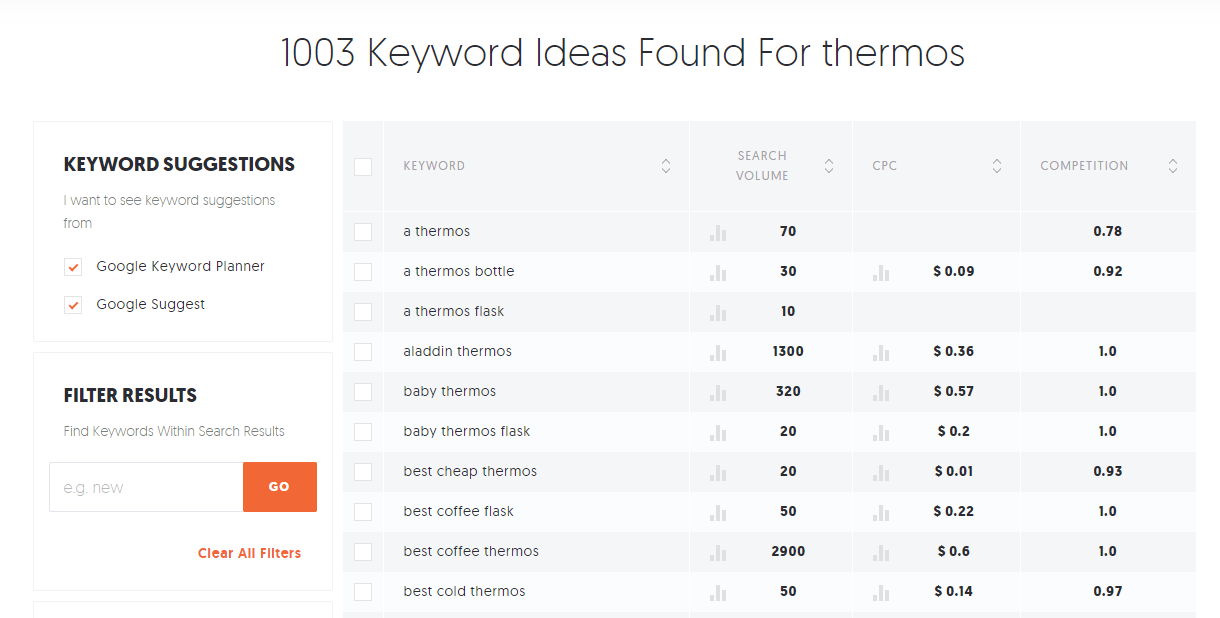
Take time to use different words and phrases to make sure you have a good base to start from.
I also recommend searching by location if your e-commerce efforts have a localized approach.
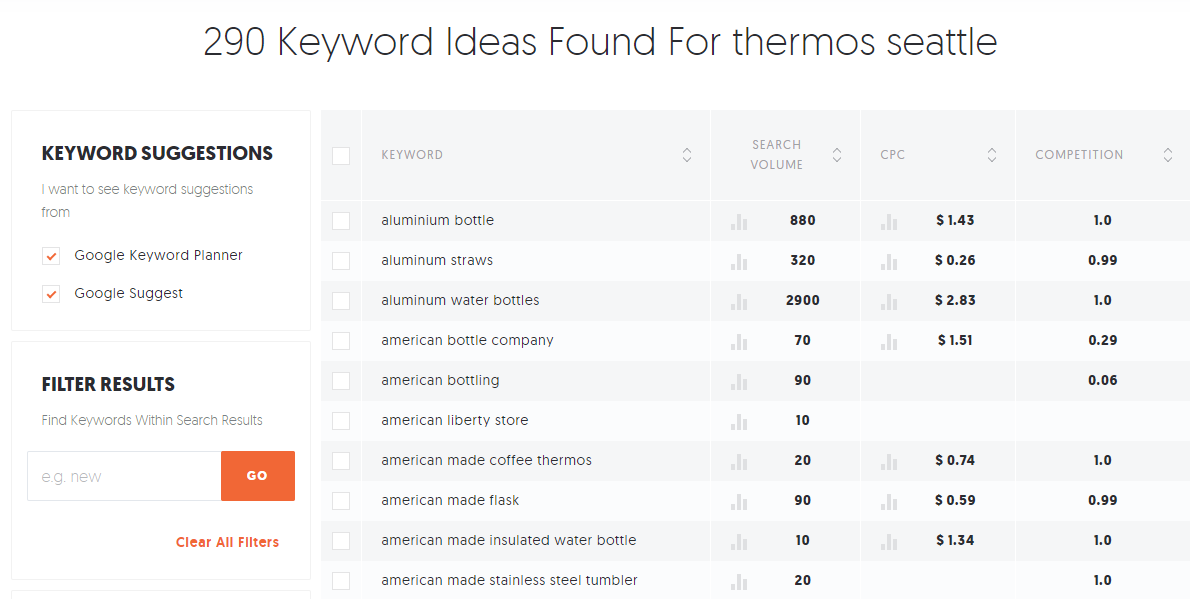
Do you see how this gives you a completely different list of keywords?
The keyword “aluminum bottle” wasn’t even on our first search result.
As you can see, searching by location gives you even more ideas to draw from.
I would also recommend using the search bar from e-commerce giants like Amazon for keyword suggestions:
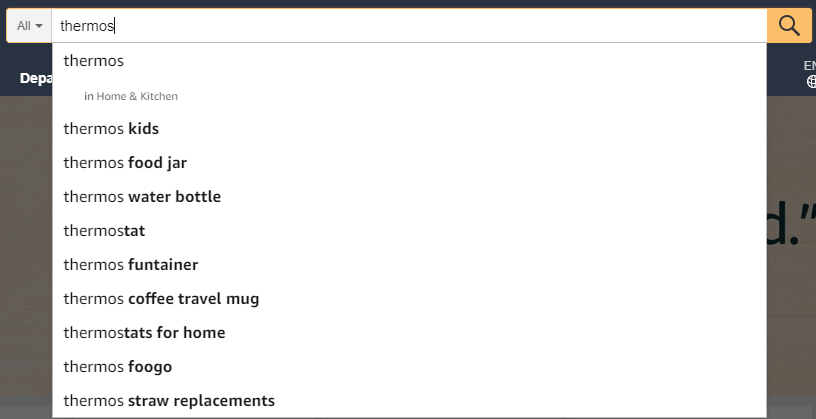
Optimizing for these keywords will help you create unique variations of product pages that will help your SEO and increase your page ranks, conversions, and revenue.
Now, let’s look at a good example of what your keyword research can do for you.
The brand Perfect Keto sells a variety of different protein powders that they’ve geared toward individuals on a ketogenic diet.
Here’s one of their product pages:
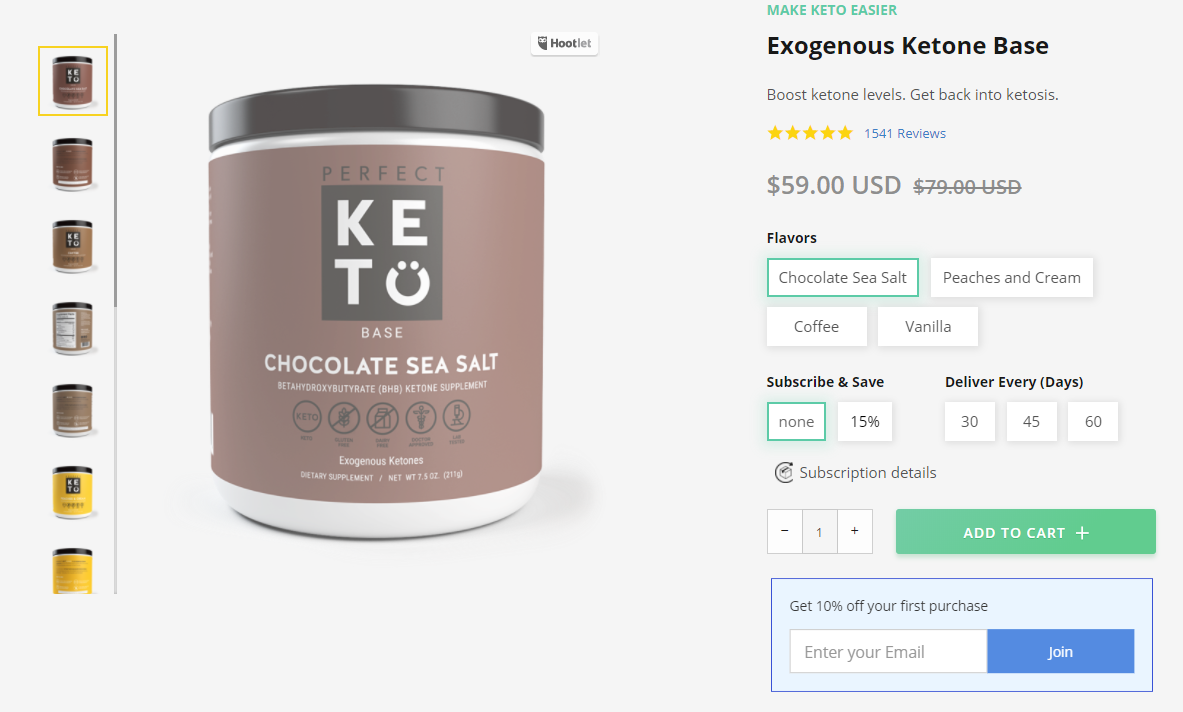
As we’ve seen before, this is a pretty typical product page.
But it’s actually quite special when you start scrolling through, mainly because of the way they’ve implemented different keywords.
Look at the product description on this page:
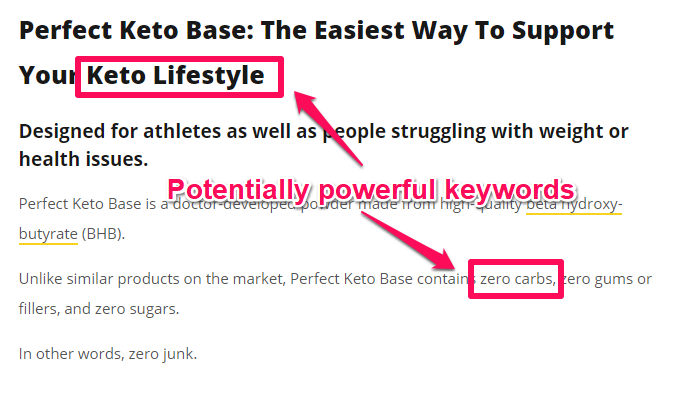
As we saw earlier, this isn’t your normal boilerplate duplicate content.
It implements storytelling and strategically places high-level and industry-specific keywords in the copy.
If someone were to search for “zero carb keto powder,” here’s what they would see:
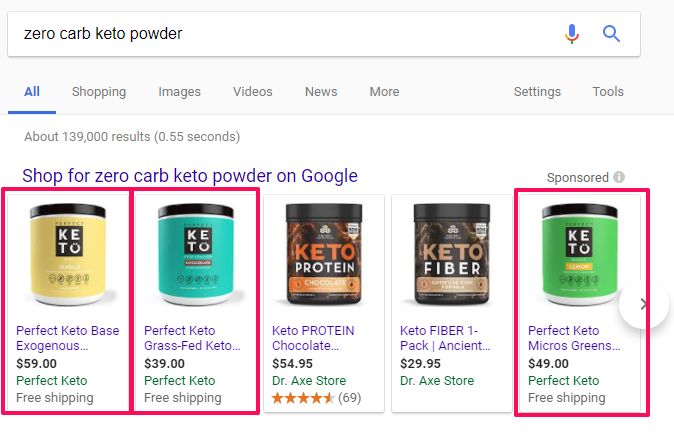
Three of the top five results are for this particular brand.
And that’s because of the clever way they’ve implemented their keywords.
Here’s another example from the top result in the image above:
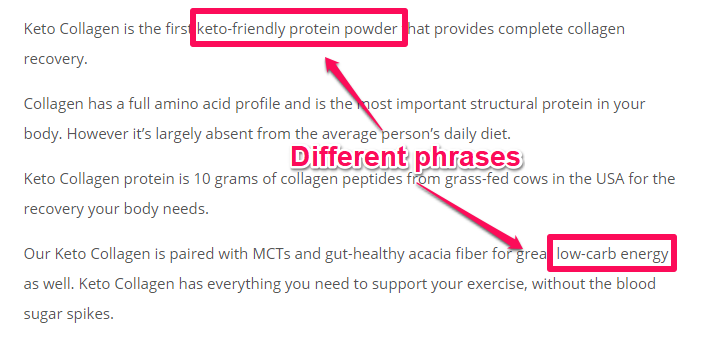
It uses the same and familiar storytelling, but it relies on a different set of keywords to tell Google what the page is about.
The result is that both of these pages rank high for a related search without jeopardizing the other’s position.
And better yet, they don’t cannibalize each other by relying on the same keyword:
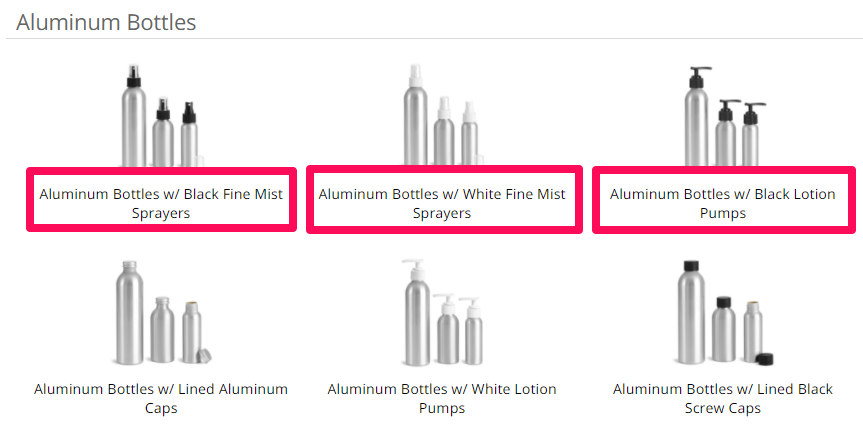
If you were to do an internal search for “Aluminum bottle” on the site above, it would be difficult to pin down the exact result you want.
That means that pages like this are needlessly competing against each other.
So, pinning down and using unique keywords is a great way to improve your SEO.
If you vary duplicate content by using unique keywords, you can potentially rank your pages without competing against yourself.
And that means more clicks, sales, and revenue.
Conclusion
A lot of hubbub surrounds duplicate content. But that shouldn’t frighten you away from handling any potential issues that might arise from it.
And, while the potential pitfalls are only indirect, you can still suffer needlessly from mishandling any duplicates on your site.
Your best bet is to start by creating unique variations of your product pages. That can eliminate the problem altogether.
If that’s not always possible, create pathways for Google’s crawlers by tidying up your URLs and optimizing your site’s structure.
Finally, make sure you’re varying your keyword usage so that a larger number of searches can land you sales.
If you follow these simple steps, you’ll be able to rank numerous pages with similar products and duplicate content.
And that means growth for your business in the long run.
How have you dealt with duplicate content issues on your site?