 Sign In










Browsing through Google Analytics or any PPC platform can be overwhelming.
There are more metrics than you can count.
There are clicks, impressions, views, unique visitors, conversions, and of course, cost per conversions.
I could go on and on.
The fact is there are too many metrics.
And that’s a problem because a lot of them are pointless.
You can easily get hung up on all the wrong metrics. The “bad” ones don’t actually show you how successfully, or unsuccessfully, your campaign is running.
You need to be able to focus on the metrics that do matter if you want to track ROI properly.
Traffic is great, but what happened when that traffic hit your site?
Did they bounce immediately?
Even generating 100,000 visitors per month is useless if they aren’t converting and buying your products or services.
Here are six pointless marketing metrics to avoid at all costs. And then I’ll show you the ones I like to use instead.
1. Facebook fans and likes
It seems like every day I see another marketer or celebrity boasting about their follower and fan counts.
“I have 5,000 Twitter followers!”
Well, that’s wonderful. But do any of them engage with your content?
Do they give you valuable traffic?
Most people are enamored with the idea of having a large following.
But on places like Facebook, where organic reach is declining, it’s a vanity metric.
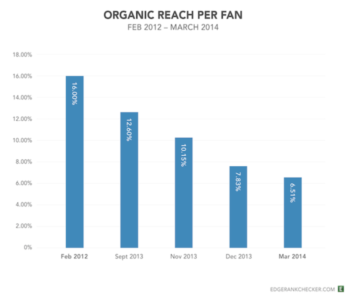
Organic reach on Facebook has been declining for a while now.
It’s gotten so bad that it might even be close to zero soon.
And if you keep racking up followers, it gets even worse for you.
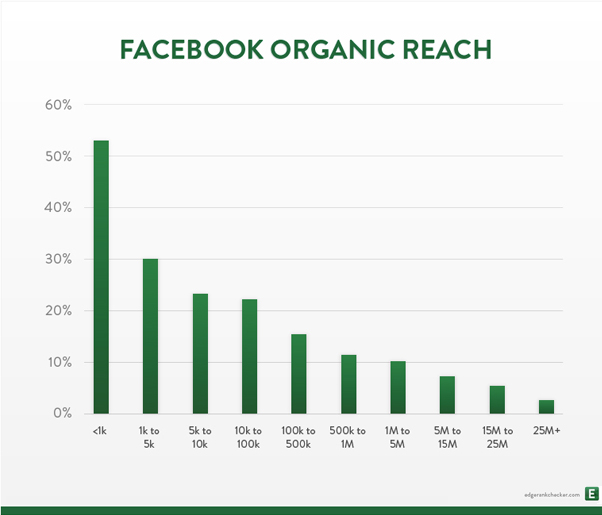
Why? Facebook wants you to advertise on their platform!
There’s a correlation between the number of fans you have and what your reach is.
The short story? The bigger your fan base, the fewer fans you can reach as a percentage.
It’s almost like Facebook doesn’t want you to accumulate millions of fans and simply reach every one of them for free.
Here’s an example of this straight from my own Facebook page.
Currently, I have over 900,000 fans on my Facebook page.
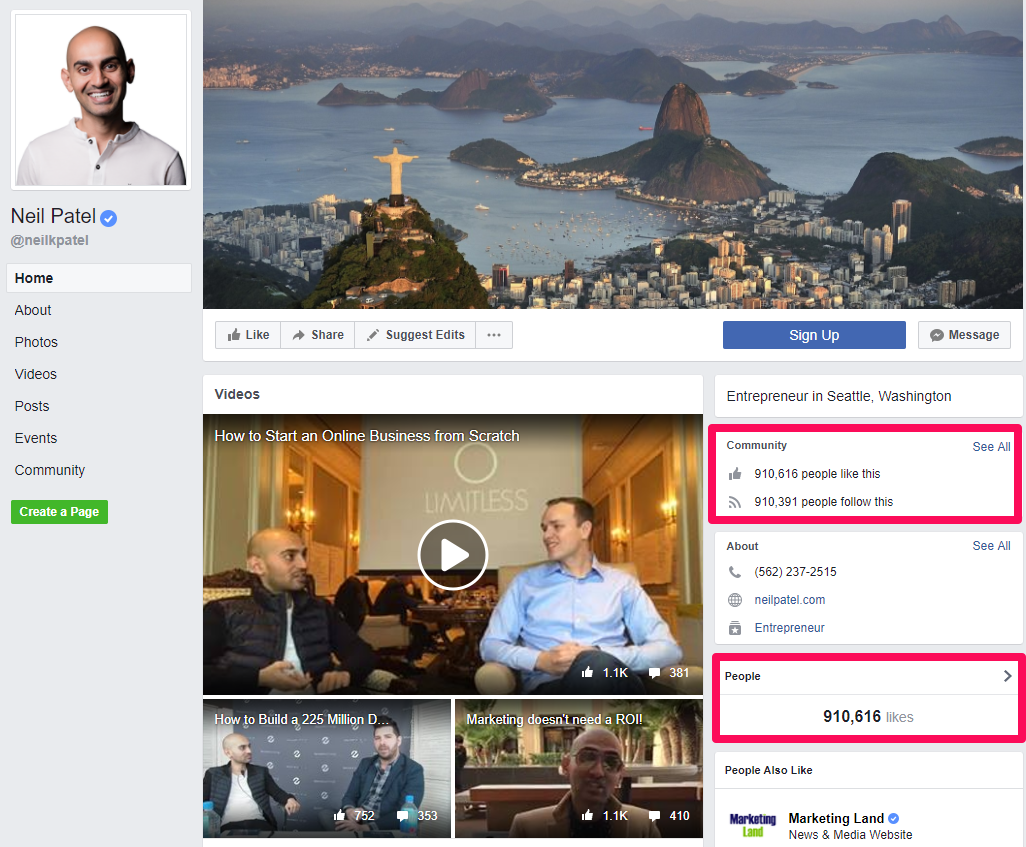
How on earth did I get that many?
Well, here’s the truth: I advertised like crazy on Facebook.
I boosted countless posts and advertised my page with the goal of driving more fans and likes.
In fact, I spent over $400,000 in the process.
I spent that money on everything from fan page boosting, to post boosting, and general advertising to accumulate 900,000 fans.
And when I first started, it was paying off in a big way. I was driving over 240,000 visits to my site every month through free Facebook posts on my page.

Looks pretty great, right?
Getting 240,000+ visitors each month using free Facebook posts is an excellent return.
However, it seemed too good to be true because it eventually was.
That number quickly began to decline with Facebook’s new algorithm changes over the past few years.
That meant the value in having 900,000 fans was almost reduced to nothing.
Here’s what my Facebook referral traffic looks like now:

Yikes. Now, I’m happy if it even gets me 60,000 visitors in a given month.
Facebook fans and likes are almost meaningless with the new changes to Facebook’s organic reach.
Don’t waste your time accumulating Facebook fans and page likes anymore. You can barely reach your audience!
This once useful strategy of boosting your page and bringing in new fans doesn’t work anymore.
Instead, try boosting your current posts to drive traffic to your site, rather than boosting your page.
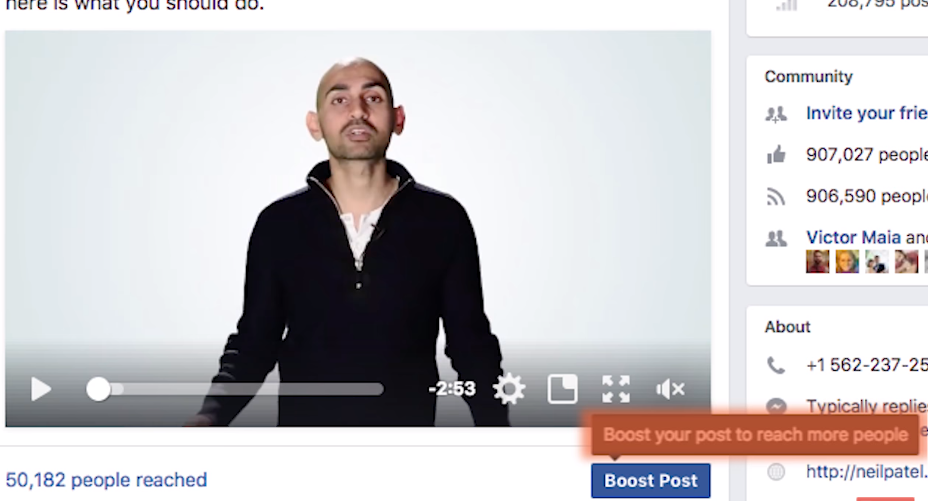
Keep using Facebook to sell your products and services, though, because we know that converts!
Just stay away from running page promotions to build up your fans and likes.
You’re better off spending that money in other places.
2. Total links
I’m sure this is going to come as a shock to a few of you.
Most people think that accumulating as many backlinks as possible will help them rank higher, faster.
That’s somewhat true. But it’s also somewhat risky and generally a waste of time.
It’s no secret that backlinks are crucial in ranking higher on Google.
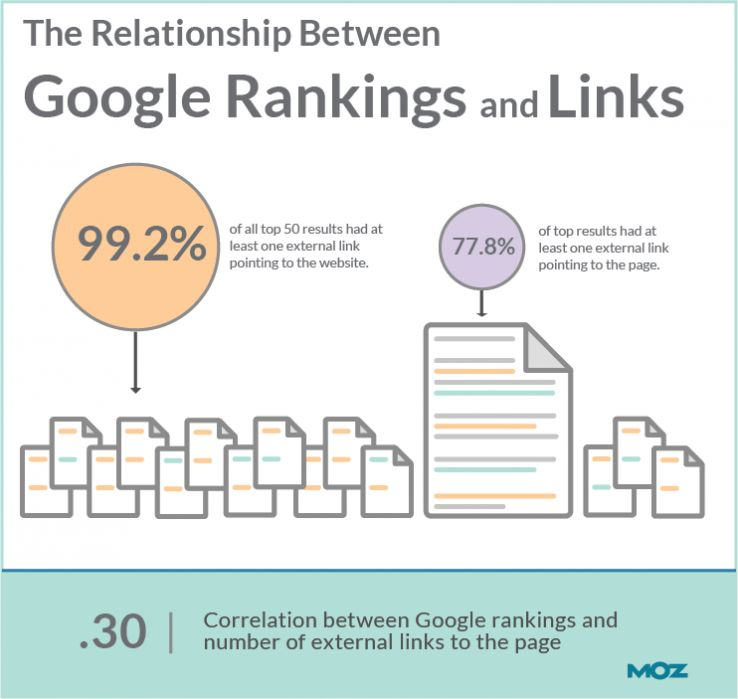
You need backlinks in order to rank on the first page.
If you don’t have them, there’s a slim chance your post will show up in the top 10.
But that doesn’t mean you should go out and build links on every random site that you can find.
For example, most people will buy or place links on directory sites.
Like this one:
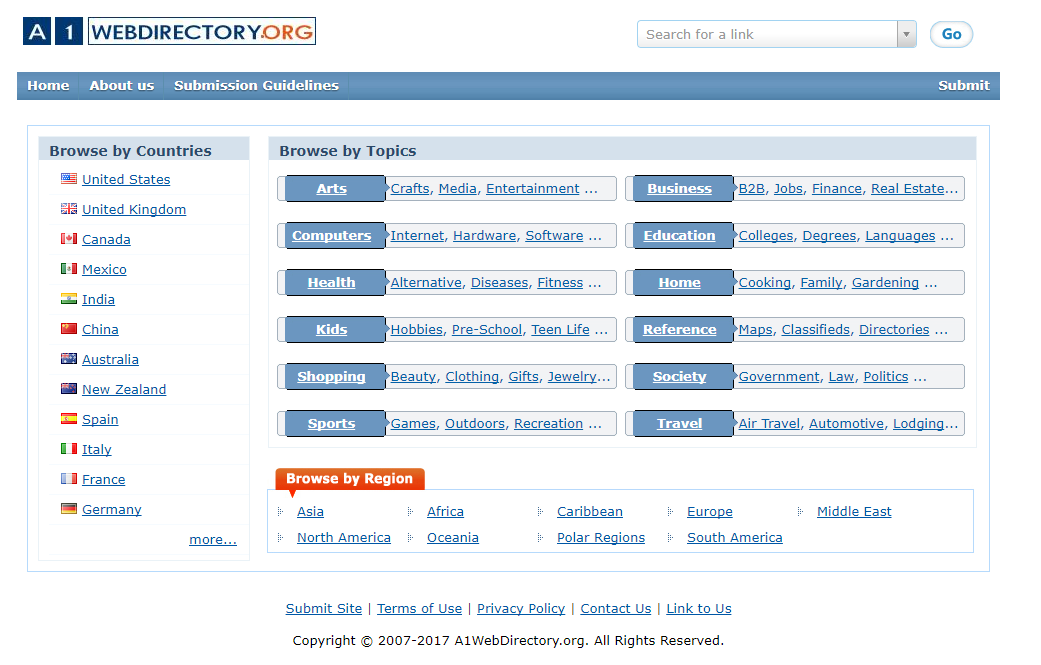
It’s a “.org” and has a relatively strong domain authority. So most people will see that as a huge win.
Easy links!
But that’s also part of the problem.
Google knows that the links on this site are extremely easy to get.
They’re like the popular house in your neighborhood on Halloween. Just handing out goodies like there’s no tomorrow.
Google is obviously pretty smart. They know that when a site gives out backlinks like candy, there’s little to no value in those links.
So all those links you accumulated from directories won’t help you.
Let’s take a quick look at my current root domain metrics profile:
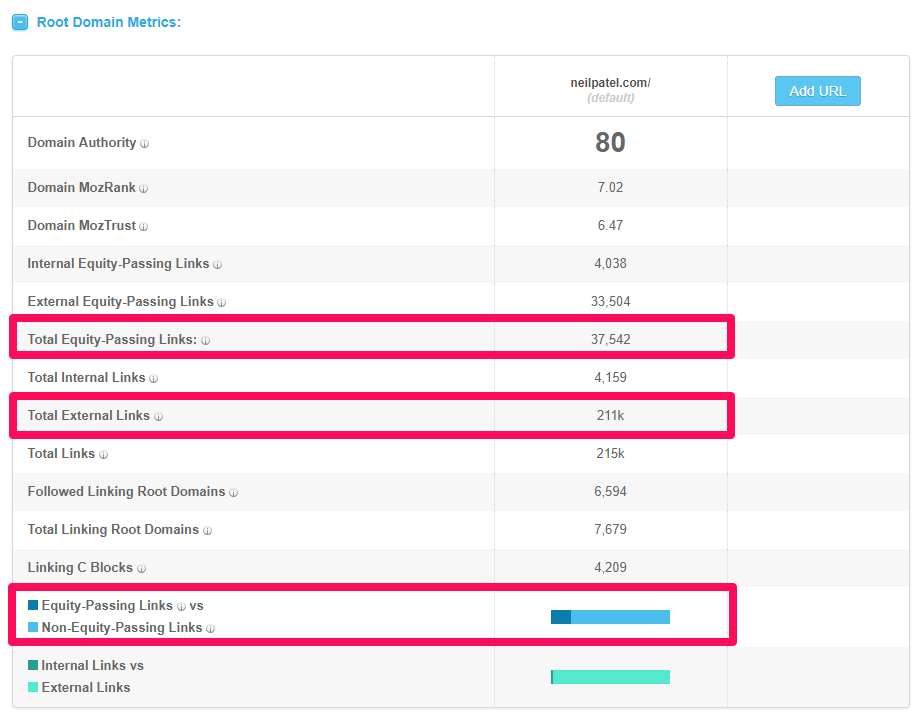
Now, you may notice that “Total External Links” is at 211k.
And you might say, “Wow, Neil! You’re a backlink machine!”
But when you dive a little deeper, it’s not the total links that matter.
It’s the “Total Equity-Passing Links” and the quality of those links.
“Equity-Passing Links” are links that search engines see as passing ranking value to your site or page.
Instead of focusing so much on generating thousands of backlinks, you should focus on getting high-quality links.
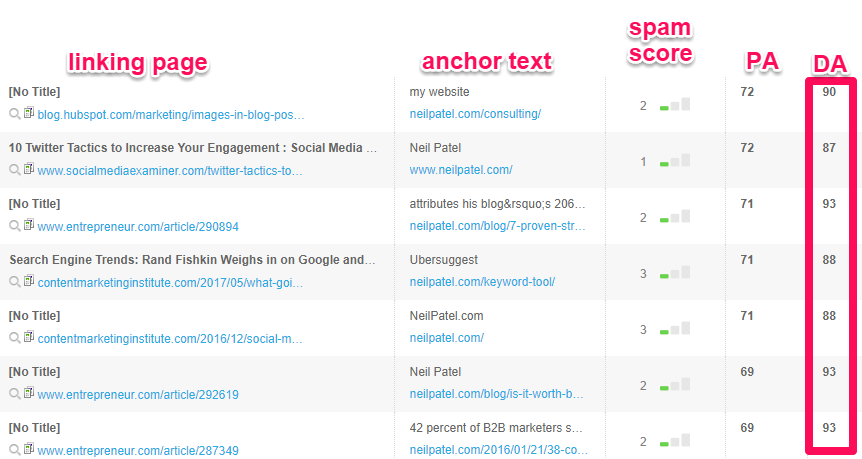
Getting high-quality links will have a much greater impact on your rankings than spamming your links across forums and directories.
Instead of focusing on the metric of total links, focus on your total high-quality links.
3. Traffic and pageviews
Unless you run ads on your site via AdSense, then traffic and pageviews are pretty much meaningless.
Don’t get me wrong, getting tons of traffic is great.
Online sales are a numbers game.
You get X number of visits, multiply your conversion rate of Y, and you get a bunch of customers.
If you want to increase sales, you can increase traffic numbers on the frontend or conversion rates on the backend.
The tricky part about driving new traffic comes back to quality.
New visits aren’t worth the expense if that traffic doesn’t do anything on your site.
What if they bounce immediately, or what if they don’t convert?
Then you’ve got an issue with irrelevant traffic.
Typical online conversion rates aren’t very high to begin with.

So why is it that we always focus on traffic and pageviews rather than improving our conversion rates?
If you had to tell me one reason why you still run your business today, what would it be?
Your answer probably revolves around making money. You want to turn a profit.
There needs to be a positive ROI at the end of the day.
It can be exciting to see your Analytics dashboard lighting up with traffic:

But where is that traffic going? Do you have ways to capture those leads?
Or are they coming to your site only to leave without giving you their precious digits?
If you get all that traffic, but your conversions are low then what’s the point?
Remember, unless you’re running AdSense ads on your site, traffic shouldn’t always be your top priority.
Instead, focus on trying to increase your conversion rates so that you don’t need to drive 100,000 visitors to meet your conversion quota.
4. Email open rates
Email is one of the most effective marketing channels today.
In fact, for every $1 spent, email marketing generates $40 in return.
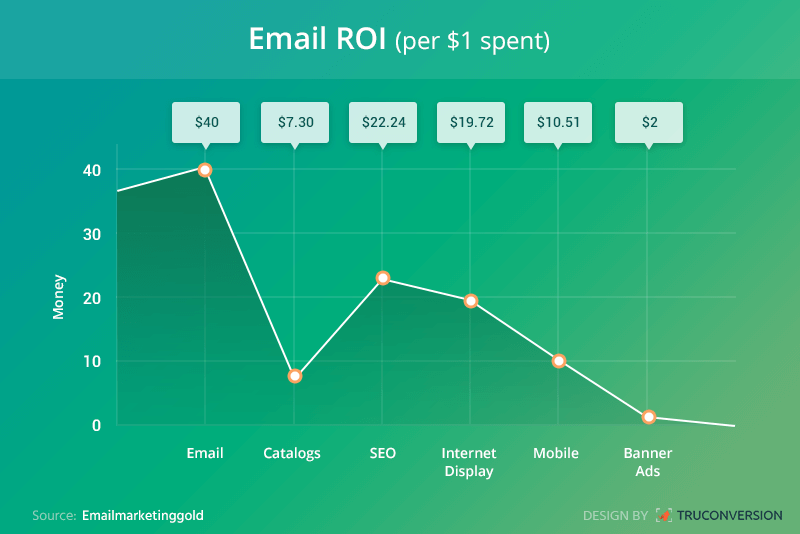
That means email is the most effective marketing medium at generating a positive ROI.
It can even be double SEO if you play your cards right.
What could possibly go wrong?
For starters, there are billions of emails sent every single day. And that number continues to climb.
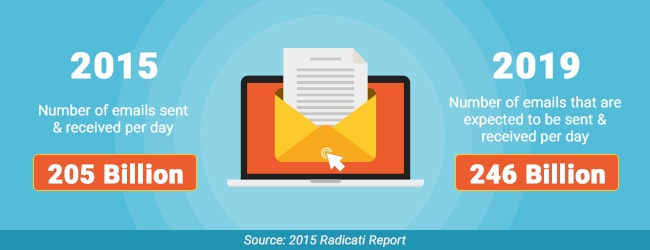
Email is still a popular form of communication. It’s still a marketing powerhouse.
With such a positive average ROI, it’s no wonder that people still use email as a major marketing platform.
Typical email open rates are still actually pretty good, too. They usually hover around the 20% mark.
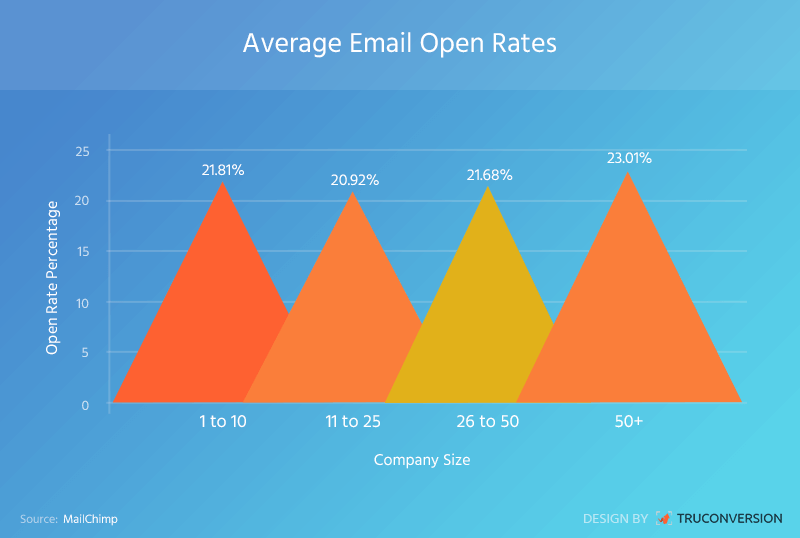
That’s pretty great if you think about it.
Typical website conversion rates are only a few percent. So it feels good when you get 20%+ of your email list to open your email.
But when you peel back the layers and look at the steps it takes to go from opening an email to conversion, those joyous thoughts go straight down the drain.
Let me explain what I mean.
The average click-through rate for emails is less than 4%.
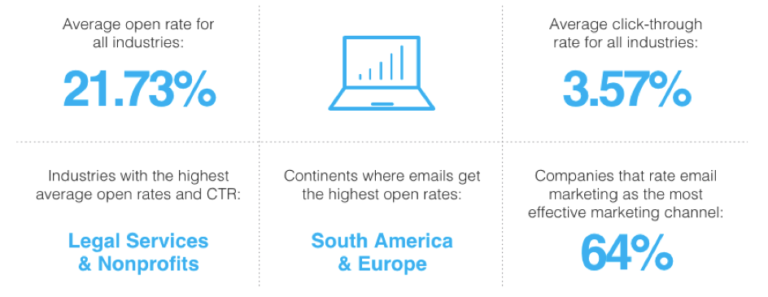
That means only 4% of 21.73% are actually clicking through to any links or offers you give in your emails.
But just because 4% clicked through to your post, it doesn’t mean all 4% will convert on your offer.
People often put too much emphasis on metrics like email open rate because they look great on paper.
It’s a vanity metric.
It looks awesome on the surface. But when you break it down, it’s not really what it seems.
Instead, try focusing on improving your offers to drive more conversions.
5. Bounce rates
Your bounce rate is one of those metrics that people “sort of” understand. It can be hard to explain.
But the bounce rate is pretty simple when you get right down to it.
Let’s say that someone searches for “SEO Tips for 2017” and clicks on your blog post.
They browse around for 30 seconds, and then they click back to the Google SERPs.
That would be a bounce. They didn’t visit any other pages on your site, and they left.
Some people tend to think that this is devastating.
They think the bounce rate is the most important of all success metrics.
For example, if people aren’t bouncing you must be a genius, right?
And if there’s a bounce rate of over 80%, you might need to close the company!
Okay, that was a slight exaggeration.
But here’s what I really mean.
Bounce rates aren’t cut and dry. Just look at the average range of typical bounce rates:

That means if your bounce rate is anywhere between 20% or 70%, you’re in the average range.
And that’s not very helpful, at all.
That’s a huge range!
Your bounce rate isn’t set in stone. That means there are tons of reasons why your bounce rate might be high or low.
For example, do you get a ton of mobile traffic?
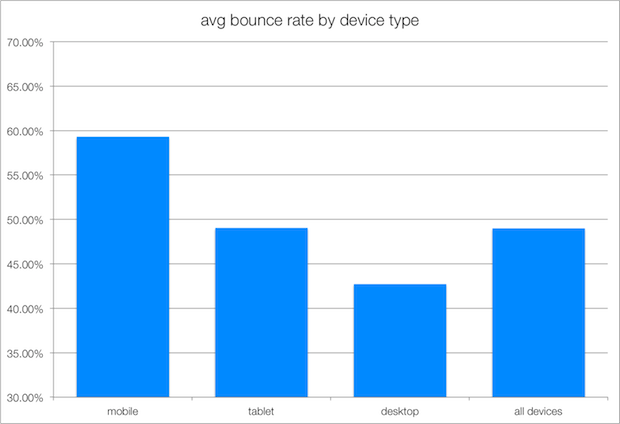
Then you can easily justify a high bounce rate without worrying about having bad content or ineffective landing pages.
Mobile traffic bounces at a much higher rate than desktop traffic. So if your business has mostly mobile traffic, you shouldn’t stress about your bounce rates.
Plus, bounce rates differ heavily based on your industry.
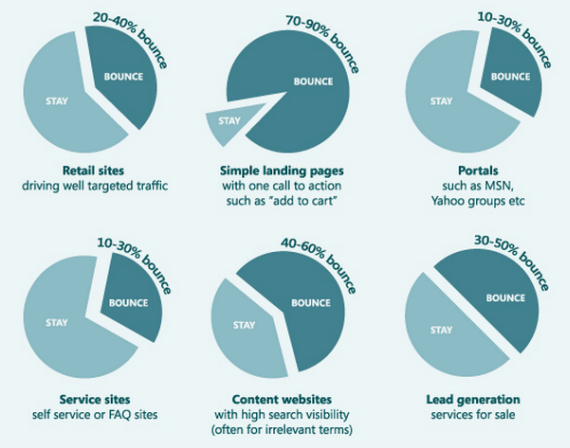
If someone tells you that a 90% bounce rate is terrible, they might be wrong.
It all depends on the context of the bounce.
For example, simple goal-based landing pages are much more likely to have higher bounce rates.
Why? Your entire goal is to keep them on that page! So it would be bad to have a low bounce rate on your simple landing page.
That would mean you’re driving people away from the intended goal of converting on that page!
So stop worrying about your bounce rate.
Any single raw number can be good or bad. It all comes back to the context around each of them at the end of the day.
6. Time on Site
Time on site is another metric that marketers love to brag about.
And it’s another metric that can quickly become pretty pointless.
Why? Because it doesn’t mean that people are converting. It doesn’t mean people are buying your products or services.
When you sign in to your Google Analytics and see your average time on site, it makes you feel good:
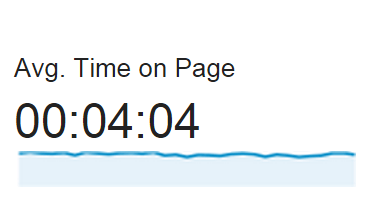
But just like bounce rates, it can vary heavily by industry, content, and page type.
So simply saying that “you have a low time on site/page” doesn’t make any sense.
Let me give you an example. Just check out the Slack home page.
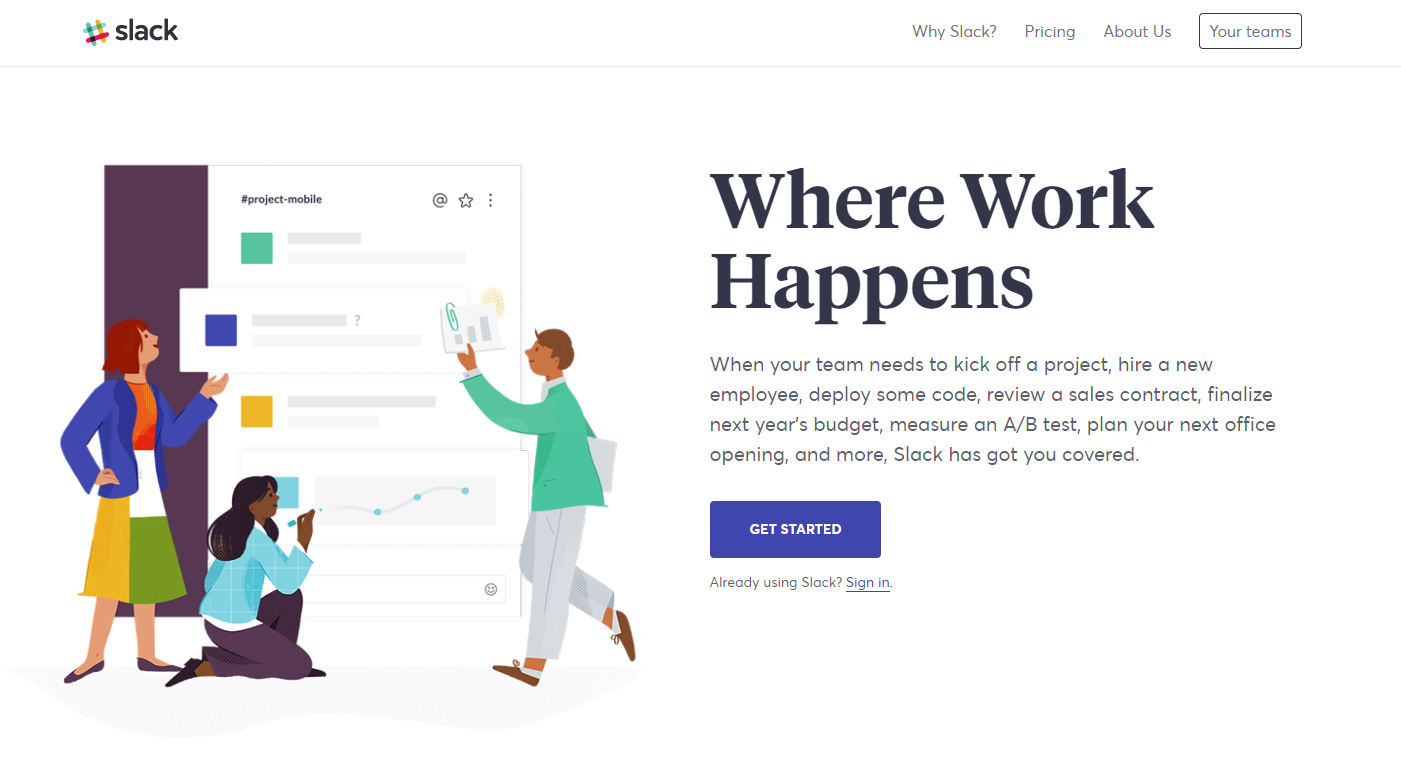
Browse around the homepage for just 10 seconds, and you’ll see that it’s a short homepage.
It might only take you a few seconds to explore.
The goal here isn’t to get you to spend a lot of time on the page. Instead, they want you signing up ASAP!
So their average time on site is going to be much lower than a long-form homepage like HubSpot.
Again, you have to put this data into context!
If you have a super-short landing page like Crazy Egg:
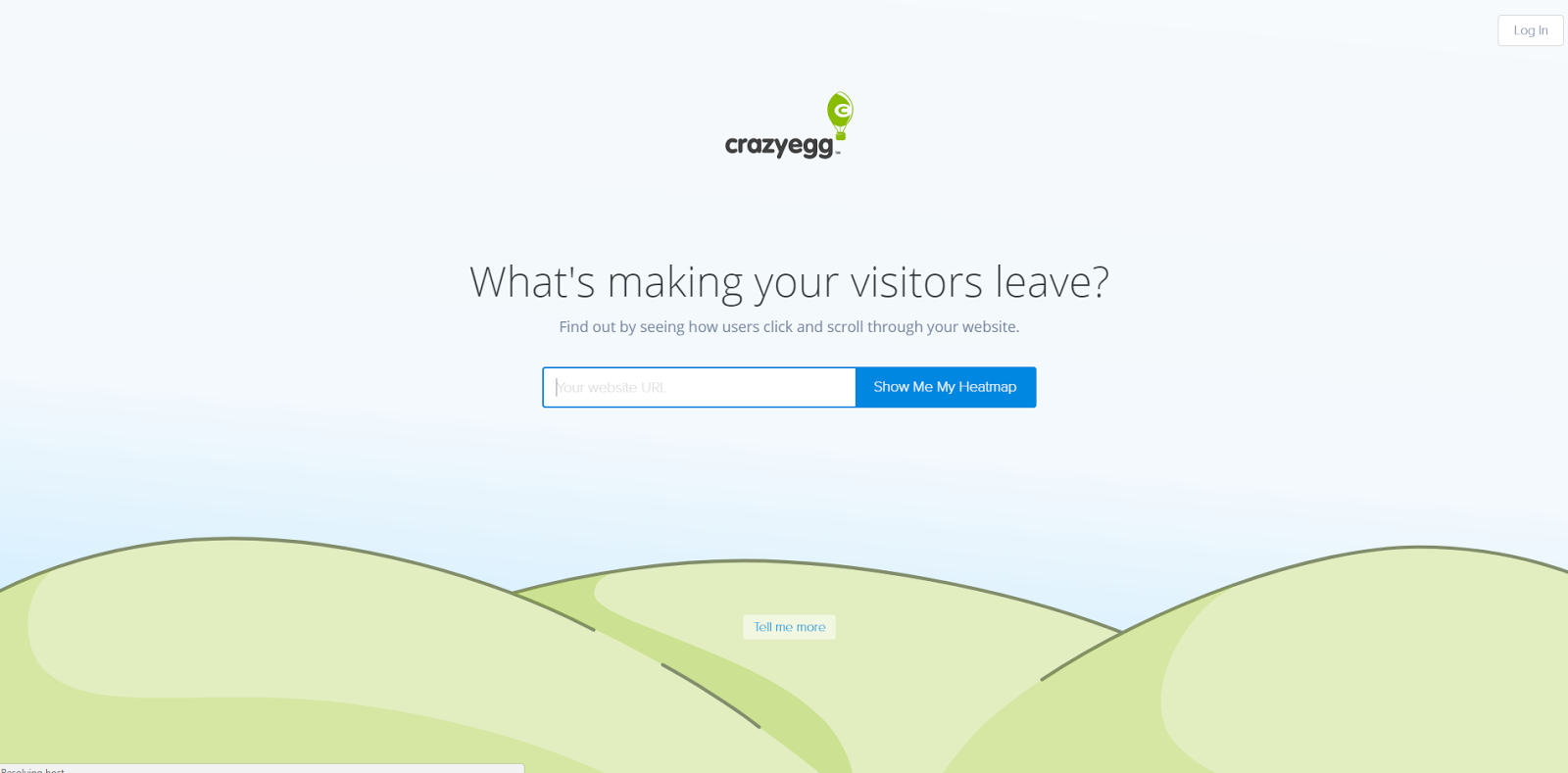
You can obviously expect the time on site to be drastically lower than a blog post on Kissmetrics.
Each blog post might be a few thousand words. People might take five or ten minutes to read each one.
Time on site doesn’t tie back to the number one metric you should be focusing on: ROI.
It doesn’t matter if your time on site is 45 minutes or 5 minutes or even less.
As long as you’re converting customers, you shouldn’t be focusing on pointless metrics like time on site!
Conclusion
When you fire up Google Analytics or your favorite marketing analysis tool, you get bombarded with vanity metrics.
Things like pageviews, email open rates, time on site, and more look fun on the surface.
You can’t help but feel extreme joy at your perceived success.
25% email open rate? Let’s have a party!
But in reality, their beauty is only skin deep.
These metrics are pointless, and you should be avoiding them at all costs.
They aren’t always an accurate measure of your success. They aren’t a leading indicator like conversions and cost per acquisition.
They don’t tell you the end goal.
Did you make money on that sale? Was the cost per lead too high or was it low?
These are the metrics you need to focus on instead. Tweaking your cost per lead can grow your profits massively if you do it right.
Most of these other metrics are misleading in comparison.
You’ll often read a blog post that says the industry bounce rate is lower than yours.
But that number has no context.
Is it a landing page? If so, you should want your bounce rate to be high to keep people on that page.
And in that case, the time on site should be equally low.
You know what? Your bounce rate and time on site might be well below the “industry average.”
All that matters at the end of the day is whether you’re producing higher-than-average conversions and revenue.
Don’t fall for these other misleading marketing metrics. They’ll only knock you off course.
Instead, keep your eye on the most important prize. Stay focused on what truly matters.
What are your favorite marketing metrics to measure over time?