 Sign In









Have you been racking your brain trying to gain better visibility on Google? Then maybe you should focus more on search intent to stand out in the SERPs,
It’s also known as keyword intent or user intent, but they all have the same meaning: the purpose behind someone’s online search.
Here’s an example: If you search for ‘pizza in Atlanta, Georgia,’ you’re looking to buy a pizza nearby, so Google produces a list of local stores. If I were to pick a specific neighborhood in the city, I would get an even more specific set of stores.
Then it goes a step further.
Google already knows I’m hungry for pizza and in a buying mood, and it auto-generates alternative terms for me, like this:
In other words, it understands my search intent and offers suggestions to meet my needs. And that’s what you should be doing with your content. Today, I’ll share how to do that.
Key Takeaways
- Search intent is vital to SEO because Google puts the emphasis on providing relevant content to users that meets their needs.
- Understanding search intent delivers a better customer experience and enables you to target ideal customers more effectively.
- There are four types of search intent: navigational, informational, commercial, and transactional.
- By figuring out our user intent, your content strategy becomes more effective overall as you can target more specific long-tail keywords that match what your ideal customers are looking for.
- Refreshing content, targeting more keywords (but no keyword stuffing), and ensuring your CTAs meet the buyer’s needs all help to optimize your content for search intent.
Why Is Search Intent Important for SEO?
Getting seen online isn’t just about using the right keywords. SEO involves many components, and search intent is a critical one. Why? Well, Google prioritizes delivering relevant content to users. It even has a section discussing user intent in its evaluator guidelines, so there’s no doubt of the value of intent. And that means it should matter to you, too.
Other benefits of understanding how search intent and SEO go together are:
- When you can create content that better meets people’s wants and needs, it’s likely to rank higher in the search results.
- Creating relevant content can help you better target your audience. This will help you attract and convert leads into customers and develop more effective marketing strategies.
- Search intent gives a better user experience: Offer your prospect what they want, and they’re more likely to view you as an authority and keep coming back.
Types of Search Intent
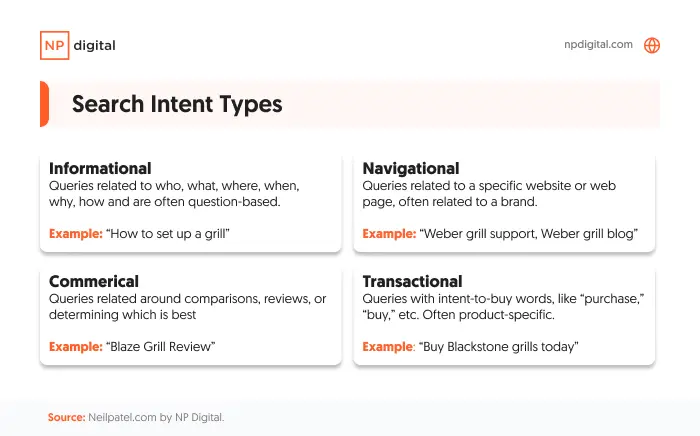
You can break search intent down into four main categories:
- Navigational: People search for a specific website or page, and it is usually brand-related, like “Etsy support”
- Informational: Queries related to who, what, where, when, how, and why, like “How do I change a flat tire?”
- Transactional: Searches with an intent-to-buy words, such as “purchase” or “buy”, like “Buy tickets for The Statue of Liberty.”
- Commercial: Queries related to comparisons, reviews, or determining which is best. For instance,“Best laptop for gaming”
Let’s take a deeper look at the different types.
1. Navigational Intent
This is when search intent involves something specific, and the user already knows the brand or website name and is looking for a particular page or website.
To satisfy this intent, users typically enter relevant keywords into a search engine, like ‘Facebook login,’ or ‘Adobe tutorial.’
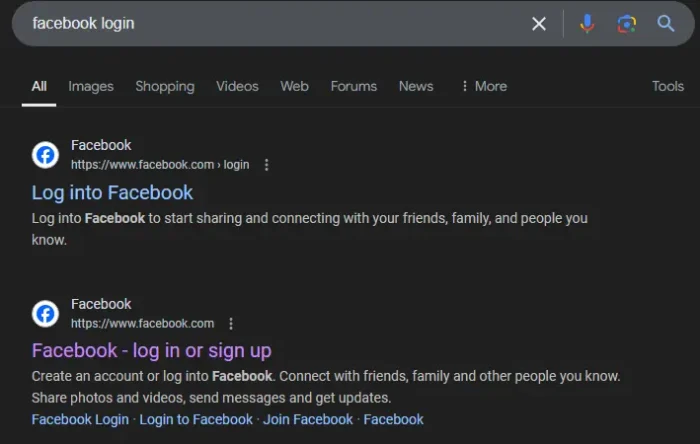
Relevant keywords help searchers find the most accurate and useful results.
2. Informational Intent
Informational intent is when someone is looking for information on a specific topic. They might not know what exactly they’re looking for, but they use keywords to guide their search; for example, they’d type something like ‘How to insulate a loft.’
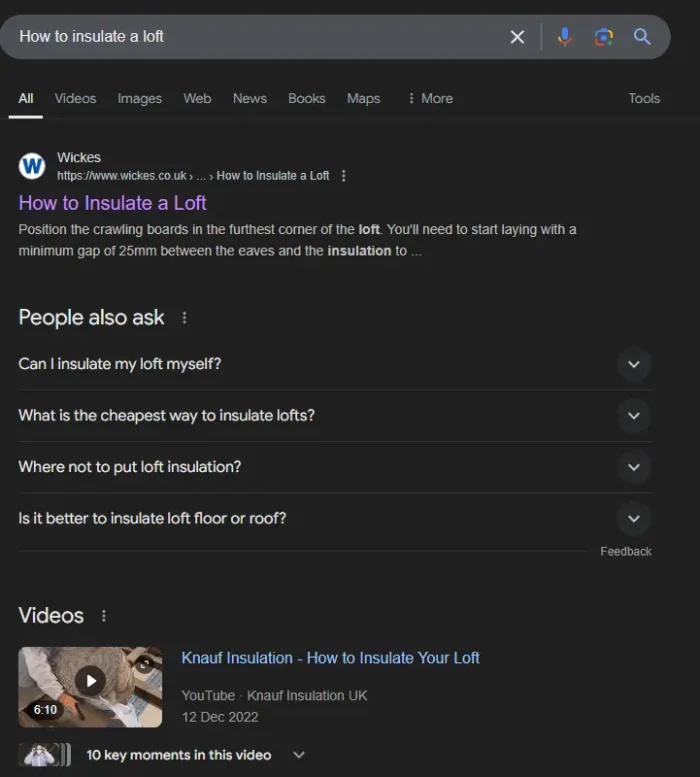
People use this kind of search intent when they’re at the beginning stage of the buying journey. For example, they may be starting a new home improvement project or researching a potential purchase.
3. Transactional Intent
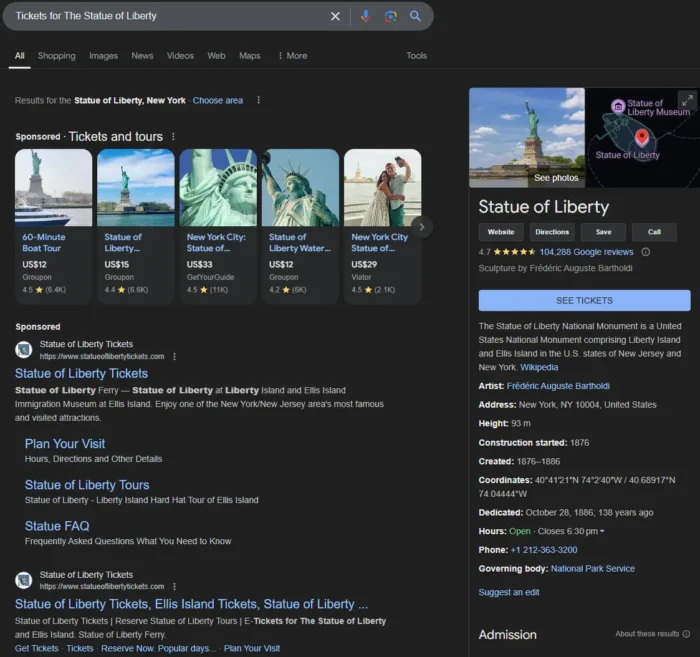
Transactional intent means a person is online looking to actively buy a product or service.
Typically, they have a specific item in mind and use phrases like ‘subscribe to Netflix,’ ‘Buy iPhone 16 Pro,’ or ‘Buy tickets for the Statue of Liberty.’
They might also use words like ‘buy,’ ‘purchase,’ ‘deal,’ and ‘discount.’ in their searches.
4. Commercial Intent
Commercial intent is when someone is looking to learn more about a company or product before making a purchasing decision. They may use terms like ‘best laptop deals’ or ‘best camera for travel photographers.’
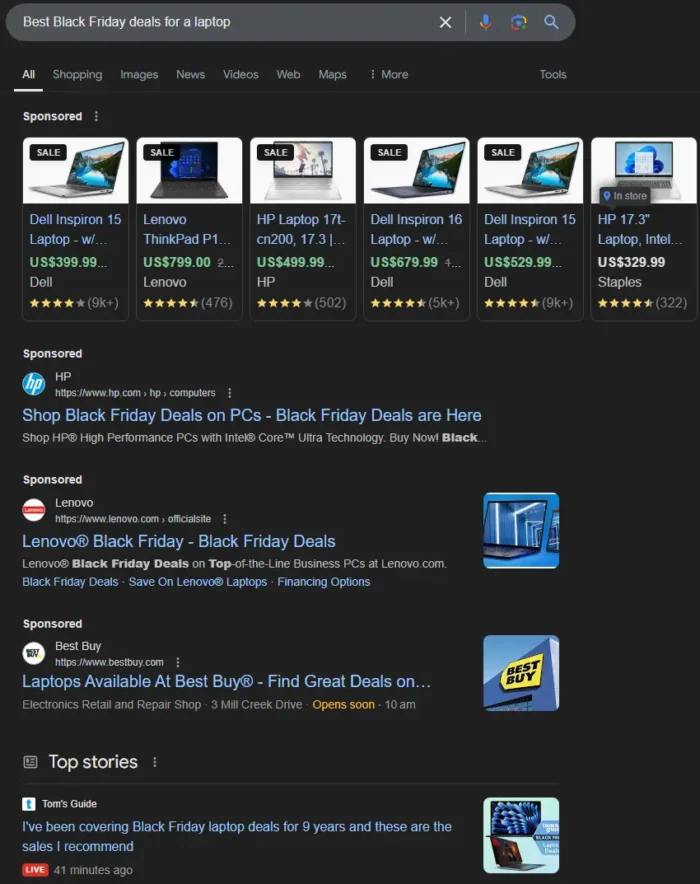
Of course, there are also hybrid search intent queries that contain a combination of intentions, such as commercial and informational.
How to Learn Your Audience’s Search Intent
Determining your audience’s search intent may be challenging, but it’s entirely possible.
The first thing to consider is that user intent often reflects the marketing funnel. For example, if a user is asking questions, the search is informational, and they’re at the ‘awareness’ stage. If they’re searching for the best products, their intent is commercial, so they’re evaluating different products at the ‘desire’ stage of the funnel.
I’ve got a piece about marketing funnels if you want to learn more, but below are some more tips in the meantime.
You can learn audience search intent by:
1. Researching what keywords and phrases your target audience uses to find information online. SEO tools like Ubersuggest can help you identify popular keywords, long-tail keywords related to your topic, and do a competitor analysis.
2. Looking at the SERPs and see what’s ranking high in Google for the keywords and phrases you’re targeting. Use the results to determine the keywords they’re using in their search engines. Ensure you understand:
- The type of content they’re looking for (informational, etc.)
- The intent behind their search
- Their location and demographics
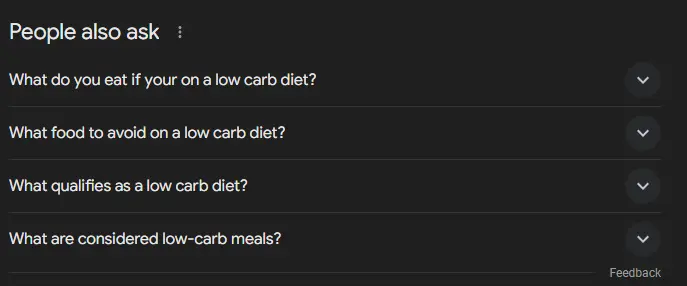
3. Using Google’s People Also Ask feature. For example, if I type in ‘low carb diet,’ I get this:
4. Using Google’s related searches or autosuggest options. For instance, if I start to enter ‘new car,’ I get:
- ‘New car deals’
- ‘New cars 2025’
- ‘New car low price’
Optimizing Content for Search Intent
As you can see from the examples in the above section, it’s pretty easy to generate ideas and develop a content strategy around people’s search intent. Here’s how you can start putting it into action:
1. Keyword Research
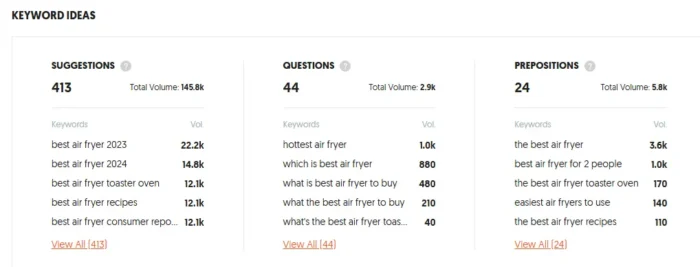
Use keyword research to determine which keywords and modifiers your target audience uses to find information related to your topic. Once you know which keywords and phrases to target, you can add them throughout your content, in the title, the body, and the keywords section of your website.
Use Ubersuggest for this part:
2. Write Content Around Search Intent
Create your website copy and content around your ideal customer’s search intent. For example, consider commercial intent searches like “Best value laptop,” you could write articles like:
- How to Choose the Best Value Laptop: 7 Features to Look For.
- Best Value Laptops for Students: Budget-Friendly Picks for Productivity.
For an informational search like “What Can I Eat on a Low Carb Diet”, you might write come like:
- Low-Carb Diets Made Easy: 10 Essential Pantry Staples to Keep on Hand.
- How to Eat Low-Carb at Popular Fast-Food Chains.
Then, add keywords and long-tail keywords throughout your content for SEO and (hopefully) increased online rankings.
3. Ensure your CTA’s Match your Prospect’s Search Intent and Their Customer Journey Stage
Following the example above, let’s say you’re targeting searchers seeking information about a low-carb diet. You could write a series of articles around the topic and then invite people to sign up for a cheat sheet or e-book, keeping your CTAs in line with your prospect’s search intent, for example:
‘Get your free starter guide to low-carb diets.’
When a lead signs up for the cheat sheet, you can start nurturing them through informational emails about your low-carb products.
If a user is at the sales funnel’s consideration stage, i.e., actively researching and comparing products, be sure to use CTA like ‘Watch this short demo’ or ‘Compare us to’ and then link to a checklist or comparison page:
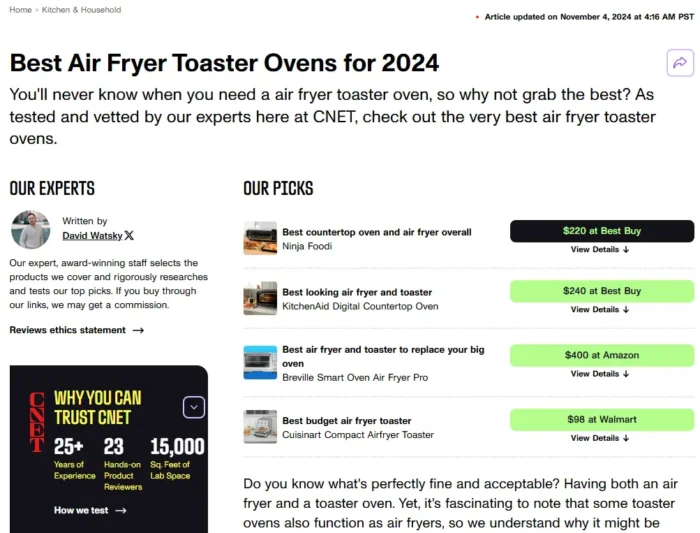
Source: Cnet
If a searcher is ready to buy, a CTA like ‘buy now and unlock a 10 percent discount’ or ‘try this product risk-free for 30 days usually works well.
Interactive CTAs can also drive engagement and sales. To get your lead more involved, try savings calculators or quizzes like the example below.
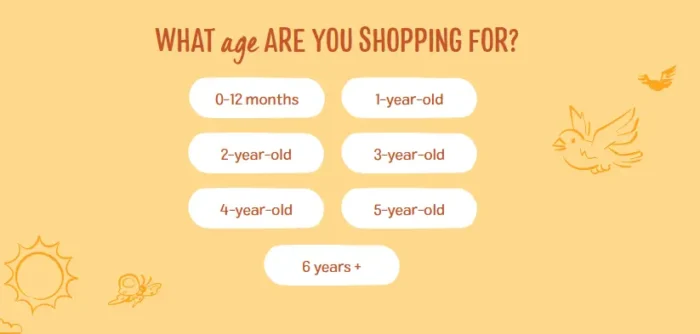
Source: Melissa and Doug
4. Analyze Content Types and Formats That Rank Well
Searching Google will give you a pretty good idea of the kind of content it considers relevant. Once you see what is working, say tutorials or videos, you can produce similar pieces that match user intent.
In my example, the searcher is looking for the best air fryer and has commercial intent. In response, Google provides a list of comparison pieces and reviews:
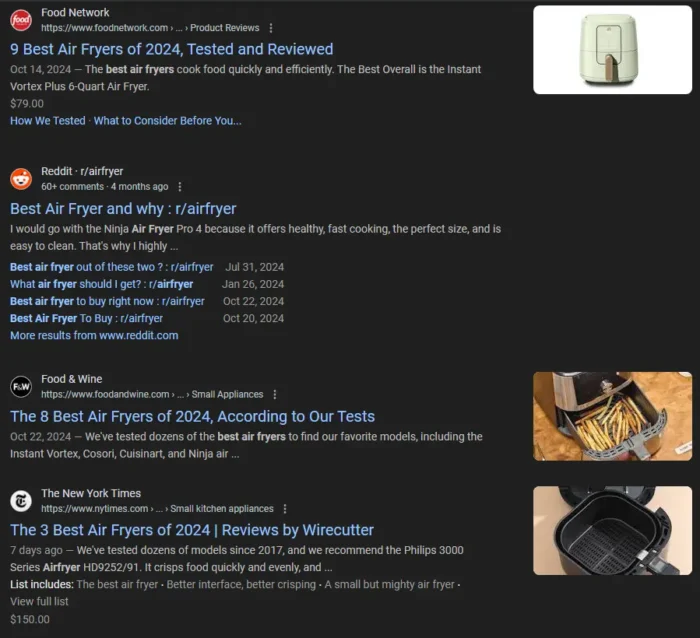
You’ll also want to look at content formats. Are lengthy, comprehensive guides winning on Google, or are shorter, pithier posts doing well? Perhaps opinion pieces, product demos, unboxing, or reviews perform the best.

Source: Food and Wine
5. Refresh Your Existing Content
Before you refresh everything, you might want to limit your editing to underperforming content or pieces that need updating, or go for some easy wins with keywords you’re already ranking for in the SERPs on pages 2-3.
Ubersuggest can help identify articles that could perform better. Then, you can research for keyword intent and update your existing content.
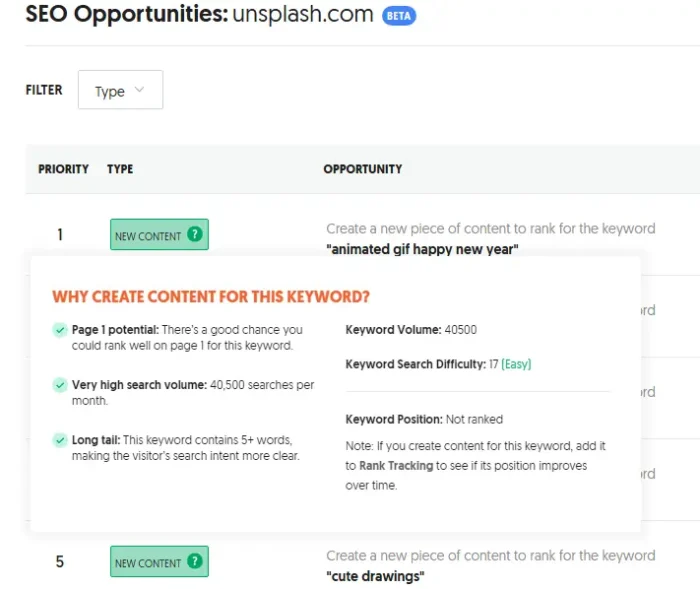
When refreshing, titles are one of the first things to look at. For example, if you’ve got an article called ‘How to Optimize Your Blog Posts for SEO,’ you could update it to ‘How to Learn SEO’ or ‘SEO Guide: Everything a Beginner Needs to Know’. These titles are currently doing well and attract searchers with informational intent.
Other areas you’ll want to consider editing are:
- Meta data
- Content format
- Images. For example, if you’ve published or refreshed a tutorial, add more images illustrating each step.
Then:
- Add an FAQ page and answer ‘People also ask’ questions.
- Update CTAs for search intent.
FAQs
What is search intent?
Search intent is the underlying reason why someone conducts a search. Understanding what people are looking for can help you create content that meets their needs and helps them find what they want.
How to determine search intent?
There are several ways to determine search intent, including viewing the SERPs for clues, using Google’s ‘People Also Ask’ feature, and using software tools.
What are the types of search intent?
There are four different types of search intent: informational (when a searcher wants more information), transactional (when someone is ready to buy), commercial(when someone is researching the best products/services), and navigational (when someone is looking for a specific page or website).
Conclusion
Understanding search intent is key to providing the best user experience possible. Search is consistently evolving and becoming increasingly sophisticated, and consumers’ demands change over time. Now, they want content that answers their questions, understands and addresses their pain points, and makes the buying decision easier.
By aligning your content with user search intent, you can deliver the answers they seek, improving both user satisfaction and SEO performance.When you can deliver content that meets searchers’ needs, you’re more likely to rank higher on Google and win customer confidence. In time, this can mean you have a better chance to engage your lead and ultimately convert them into buyers.