 Sign In






The Firsthand Evidence Smaller Brands Have Available
Info
-
Source: NP Digital
-
Date: October 2026
-
Category: AI & GEO Optimization
-
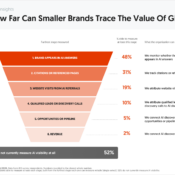
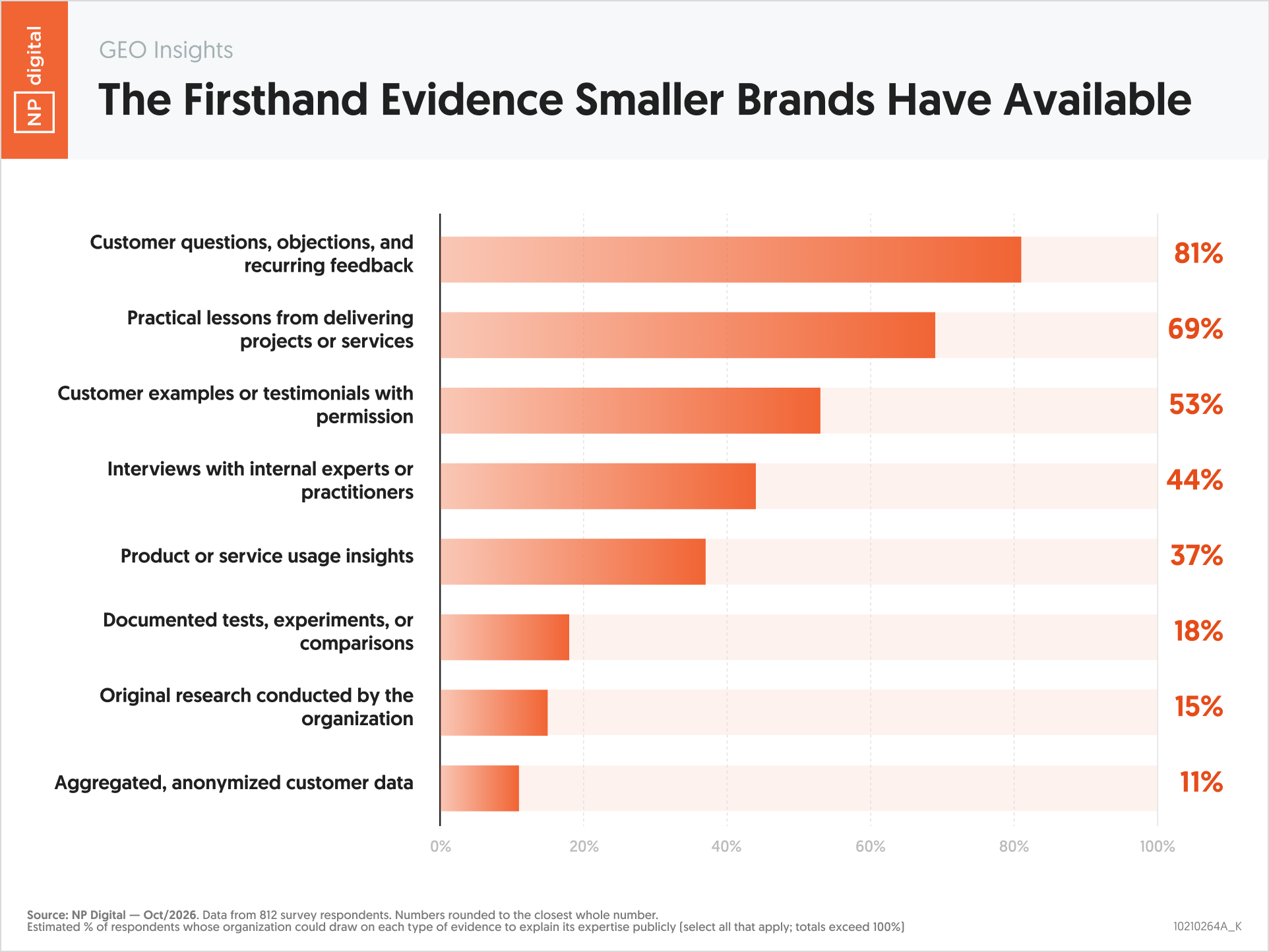
Study Methodology: Data from 812 survey respondents. Estimated share whose organization could draw on each type of evidence to explain its expertise publicly; select all that apply, totals exceed 100%.
Smaller brands often assume they’re at a disadvantage against bigger competitors when it comes to proving expertise, but a survey of 812 marketers suggests they’re sitting on more usable evidence than they might realize. Customer questions and recurring feedback top the list of evidence available, followed closely by practical lessons from delivering projects or services. Original research and aggregated customer data rank lowest, suggesting these are the areas smaller teams are least equipped to produce.
Essential Statistics
- 81% of smaller brands have customer questions, objections, and recurring feedback available as evidence of expertise.
- 69% have practical lessons from delivering projects or services.
- 53% have customer examples or testimonials with permission.
- 44% have interviews with internal experts or practitioners.
- Only 15% have original research conducted by the organization, and only 11% have aggregated, anonymized customer data.
Key Takeaways
- Customer questions and feedback ranking highest suggests smaller brands already have a steady, low-cost source of authentic expertise evidence most aren’t yet fully using.
- Practical lessons from delivery work ranking second suggests day-to-day operational experience is an underused but widely available asset for proving expertise.
- Original research ranking lowest suggests this remains a resource-intensive form of evidence that most smaller teams can’t easily produce, even though it often carries high perceived authority.
- The gap between customer feedback availability and original research availability suggests smaller brands should lean into the evidence they already have rather than chasing the evidence bigger competitors can more easily produce.
- This pattern suggests the firsthand, experience-based evidence smaller brands already possess may be a more realistic starting point for authority building than trying to replicate larger competitors’ research output.
Actionable Insights
- Start turning recurring customer questions and objections into public-facing content, since this is the most widely available form of evidence smaller brands report having and is likely underused.
- Document practical lessons from project or service delivery as case studies or how-to content, since this ranks as the second most available form of evidence.
- Collect customer testimonials with explicit permission systematically rather than opportunistically, since over half of brands report having access to this evidence but may not be using it consistently.
- Don’t feel pressure to produce original research if resources are limited. This data shows it’s the least available form of evidence for smaller brands, and firsthand evidence can be a more realistic near-term priority.
- Audit which of these seven evidence types your own organization already has access to, and prioritize publishing the ones you have before investing in the ones you don’t.
‘You don’t need a research study to prove you know what you’re talking about. You need the questions your customers already ask you every week, turned into something public.’ – Neil Patel