 Sign In





 Ubersuggest
  AnswerThePublic
Some YouTube videos gain millions of views, while others struggle to find an audience. The reason often comes down to the algorithm. YouTube’s algorithm isn’t guesswork—it’s a sophisticated system predicting what viewers will most likely watch and enjoy.
Whether you’re a marketer, content creator, or business owner, understanding how the YouTube algorithm works can help you grow your channel and reach more viewers. In this article, we’ll break down how the YouTube algorithm works in 2025 and share strategies to help you succeed.
Key Takeaways
- The YouTube algorithm in focuses on understanding individual viewers through their behavior, preferences, and watch history.
- YouTube serves videos in three main ways. The homepage shows videos based on viewer history, suggested videos appear alongside a video being watched, and search results combine relevance and viewer preferences.
- Metrics like watch time, click-through rates (CTR), likes, comments, and shares are key factors in determining a video’s visibility.
- Including YouTube Shorts, live streams, and playlists in your strategy can help you connect with wider audiences.
- Regular uploads and active audience engagement signal to the algorithm that your channel offers value.
- Features like polls, Q&A sessions, and multilingual subtitles increase engagement and appeal to diverse audiences.
- Algorithm optimization has seven components: create a click-worthy title, add detail to your description, design an attractive thumbnail, increase watch duration, encourage action after the video, maintain engagement with video series and playlists, and improve content using analytics over the long term.
What Is the YouTube Algorithm?
The YouTube algorithm is a recommendation system that serves videos to users based on their histories and (if they’re actively searching) search queries. The algorithm evaluates over 80 billion signals, according to the official YouTube blog.
The algorithm matters because YouTube is a powerful organic channel. Understanding how to increase the reach of your videos can increase revenue significantly.
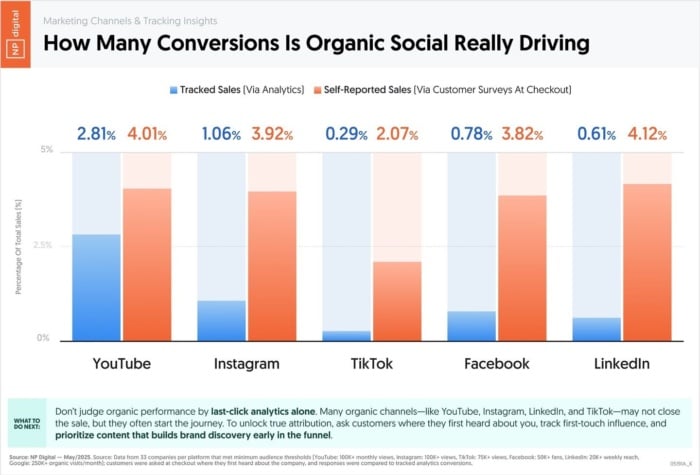
In fact, research conducted by my team at NP Digital found it’s the top organic social channel, outperforming sales from all other platforms by a large margin.
YouTube provides recommendations in four main areas:
- Homepage: Features videos based on viewer history and content performance.
- Suggested videos: Highlights related content next to the video being watched.
- Search results: Combines relevance and viewer preferences to rank results.
- Shorts: Shows short-form videos in the shorts feed based on user history.
Let’s look at each of these in detail.
Recommended Videos: A Whopping 70% of All Views
Recommended videos appear on the homepage and alongside videos on “watch pages,” on-screen at the end of videos, and in the suggested videos sidebar.
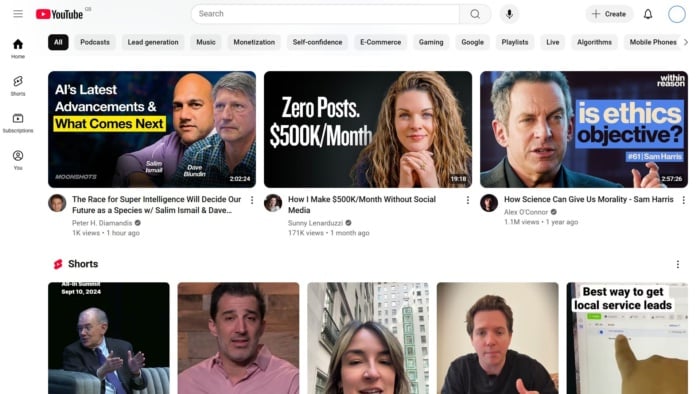
YouTube’s recommendation algorithm drives 70% of views, according to a study by the Institute of Strategic Dialogue.
A mixture of personalization factors—based on the user’s history—and individual video performance signals are used to make recommendations.
Search Results: The Web’s Sixth Biggest Search Engine
Results page videos are served in response to YouTube search bar queries. The algorithm uses a mix of relevance (in relation to the search phrase) and personalization to rank videos.

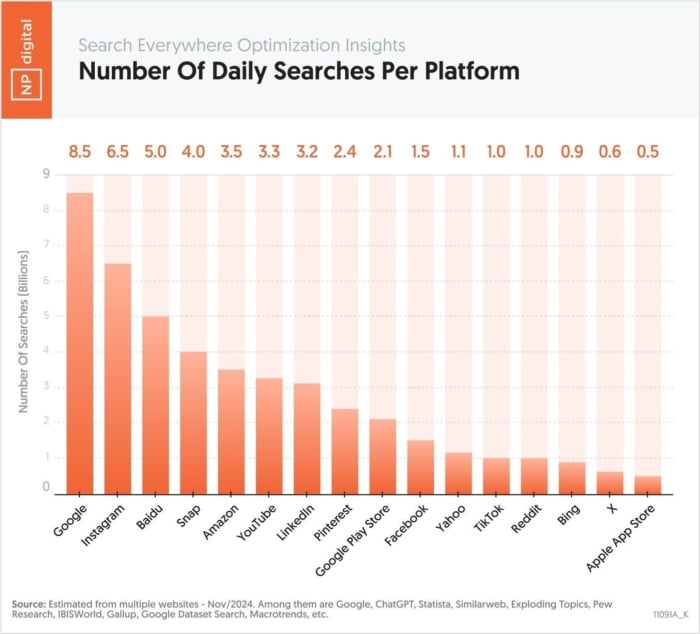
Despite accounting for only 30% of views, the number of searches on YouTube is still high enough to make it the sixth largest search engine on the web. My research found that YouTube has 3.3 billion searches every day.
Shorts: Casual Scrolling
The “shorts algorithm” serves videos based on user history, in a similar way to the homepage and watch page suggestions. However, videos are viewed in a scrolling format, typically on mobile.
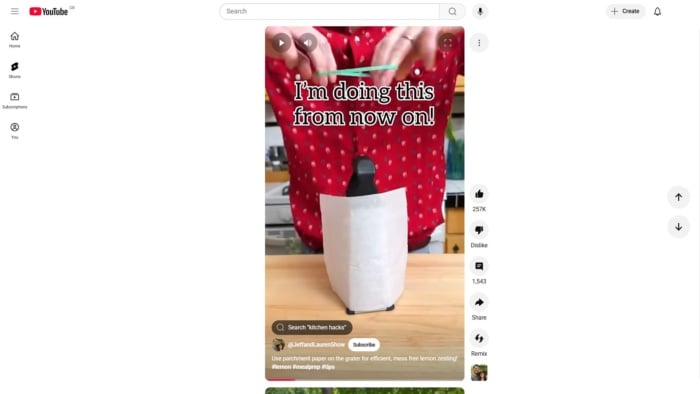
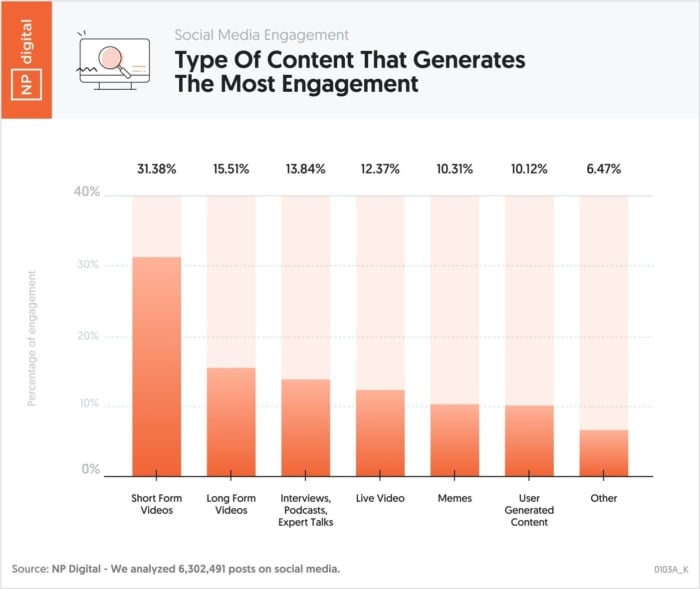
My team and I looked at the engagement levels of different types of content and found that shorts account for 31.3% of all social media content engagement, beating every other category. Shorts are excellent for building your audience, and I publish them regularly on my channel.
Trending: What’s Hot In Your Country
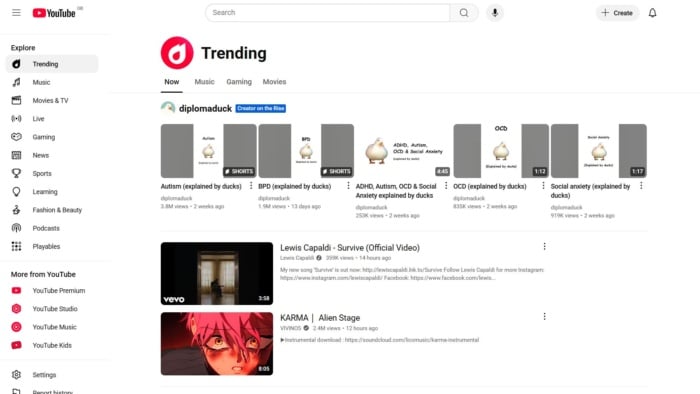
The “Trending” tab in YouTube displays videos that are going viral and generating high viewing figures. According to the YouTube Help Center, “Trending isn’t personalized and displays the same list of trending videos to all viewers in the same country.”
The YouTube Algorithm’s Evolution
The YouTube algorithm has evolved significantly over the years. Early versions rewarded videos based on view counts alone, encouraging clickbait tactics. In 2012, the focus shifted to watch time, prioritizing videos that kept viewers engaged for more extended periods.
In 2025, AI-driven personalization will play a central role. The algorithm analyzes viewer behavior to recommend videos that align with individual preferences. Metrics like watch time, click-through rates (CTR), and satisfaction surveys have a major impact on video ranking.
Short-form videos, like YouTube Shorts, are now a major factor in discoverability. They grab attention quickly, making them effective for engaging new viewers. Creators who include Shorts in their strategy often see significant growth in views and subscribers.
The evolution of the algorithm shows that success on YouTube depends on adaptability. Content that engages viewers across formats and metrics is more likely to gain visibility.
How the Algorithm Works: A Complete Overview
So, how does the algorithm work?
Let’s look at official and reputable third-party sources to piece together an understanding of what YouTube looks at to recommend and rank videos.
Official YouTube Documentation: Personalization and Performance
YouTube has stated that it uses a comparison system on its official blog:
“…we start with the knowledge that everyone has unique viewing habits. Our system then compares your viewing habits with those that are similar to you and uses that information to suggest other content you may want to watch.”
YouTube has also explicitly said that it measures user activity:
“Our algorithm doesn’t pay attention to videos, it pays attention to viewers. So, rather than trying to make videos that’ll make an algorithm happy, focus on making videos that make your viewers happy.”
In addition, a paper published in 2016 titled Deep Neural Networks for YouTube Recommendations explained that the YouTube recommendation model works in two stages. Although it has evolved since the paper was published, there’s a strong likelihood that the underlying ideas have remained the same.
First, the algorithm goes through a “corpus” of millions of videos to retrieve a subset of videos that match the user’s preferences based on their history. Second, it evaluates multiple video and user factors to rank these candidates, returning what it determines to be the best-fit recommendations.
A Discussion Between YouTube Insiders: No One “Number”
In early 2025, YouTube Creator Liaison Rene Ritchie and Todd Beaupré, who leads the Growth and Discovery team, discussed the YouTube algorithm in depth.
Rene Ritchie asked, “We often hear from creators, ‘What’s the one number? Is it click-through rates? Is it watch time?” How do creators optimize for all of these factors?”
Beaupré answered by saying, “One thing to understand is there’s no single answer to that question, as much as creators would love to have one. But the reality is that we’ve enabled the system to learn that different factors have different importance in different contexts.”
He also added, “While we do look at how long people watch videos, it’s only one of the factors we consider…we introduced this concept of satisfaction…where we’re trying to understand not just viewers’ behavior but also how they feel.”
The key point is that YouTube considers a wide range of context-dependent factors. But the emphasis is on user “satisfaction.” Factors like relevance, watch time, and engagement all fit neatly into this category.
7 Key YouTube Algorithm Signals
A mix of official documentation and third-party testing highlights seven key areas that YouTube looks at in order to evaluate what Todd Beaupré calls “satisfaction.”
Here’s a working roundup of YouTube algorithm signals:
- Content characteristics: The algorithm uses metadata, such as titles, descriptions, and transcripts, to determine a video’s relevance to a viewer’s query. Optimized metadata increases a video’s chances of being recommended.
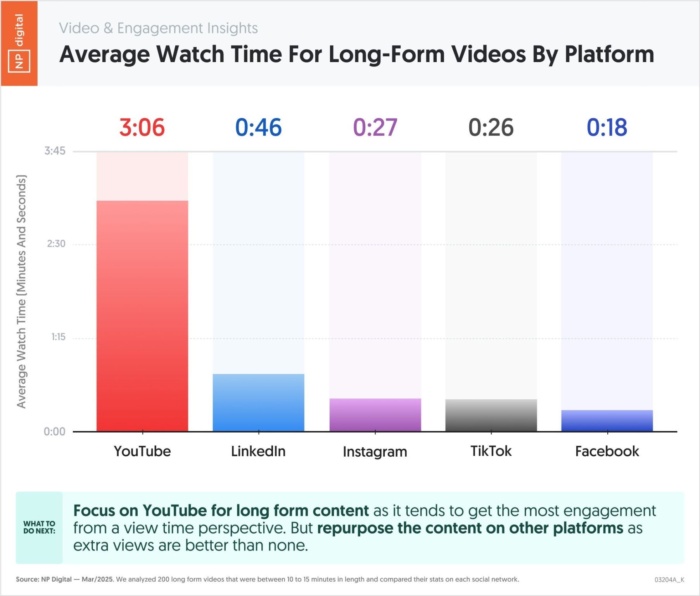
- Watch time: Longer viewing sessions suggest valuable content. While there is significant variance across topics, my team and I found that 3.06 minutes is the average watch time on YouTube, and this is a good benchmark to keep in mind for longer videos.
- Click-through rate (CTR): This is the percentage of impressions that turn into clicks. Attractive titles and thumbnails draw more clicks and indicate relevance.
- Likes, comments, and shares: Viewer interactions show the content’s relevance and appeal. Videos with strong engagement are more likely to be promoted.
- Viewer behavior: Content is prioritized based on individual viewing history, likes, and repeated interactions. It also considers patterns among viewers with similar interests to recommend content.
- Relevance: Research by the Pew Research Center found that 32% of adults in the US use YouTube to stay up to date with current events, making it one of the web’s most popular news platforms. Because of this, the relevance of news-related content is likely a strong ranking factor.
- Handling misinformation: Channels with authority and consistent, trustworthy content are favored. The algorithm also flags and limits the reach of misleading videos, so aligning with YouTube’s policies is critical. According to YouTube, consumption of “borderline content” recommended by the algorithm is lower than 1%. This is content that doesn’t violate YouTube’s terms of service but comes close.
How to Improve Your Organic Reach: 7-Step Framework
Improving organic reach on YouTube is about focusing on three factors: engagement, relevance, and viewer satisfaction.
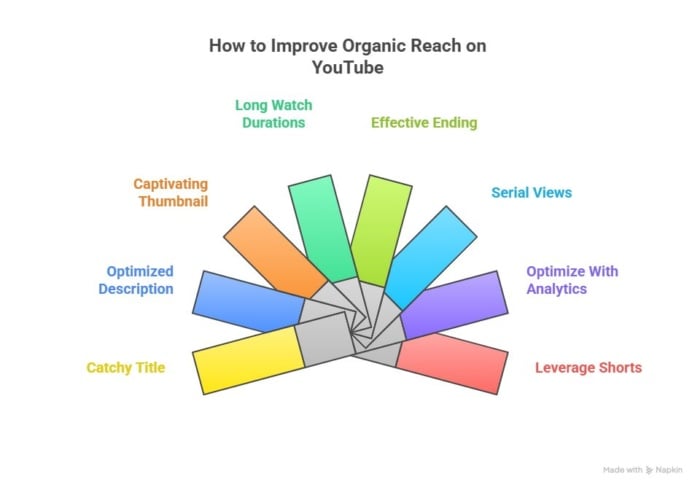
Creating useful, attention-grabbing content should be your priority. However, there are also powerful tweaks that can give your rankings an extra lift.
1. Pick a Catchy Title
YouTube looks at your video’s title to understand what it’s about. A well-crafted title makes it more likely that you’ll be recommended to users and appear in search results for relevant queries.
Here’s how to nail your video titles:
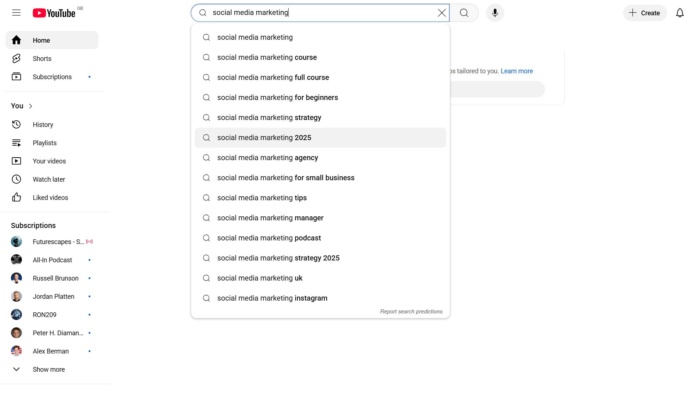
- Pick a primary high-volume keyword: Enter the core topic of your video into the YouTube search bar to generate specific keyword variations and pick one of these for your title. You can also run potential keywords through a tool like Ubersuggest, as there is significant overlap between Google and YouTube search term volumes.
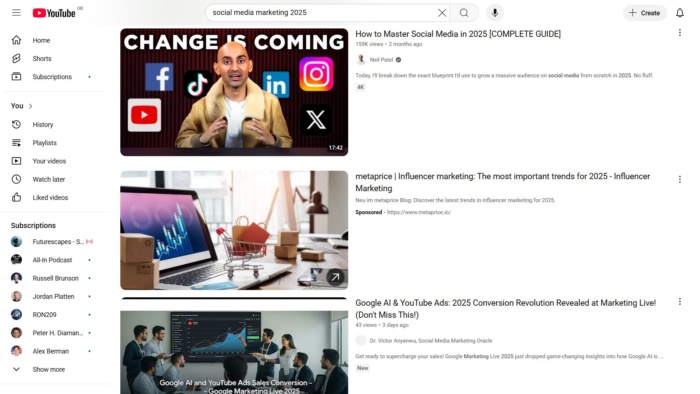
- Describe a clear benefit: A catchy title isn’t just for telling the algorithm what your video is about. It’s also for building interest and driving clicks. Articulate a clear, precise outcome or benefit, as I have done with “social media mastery” in my video below. “How to” titles also work very well on YouTube.
- Don’t get too hung up on tags: There’s no harm in adding tags in the Show more section of the Details page of the upload window. However, don’t worry too much about these as their value is limited. Three or four keywords that describe your video will do the job.
2. Optimize Your Description
Descriptions do more than summarize your video—they help the algorithm understand and categorize your content.
Here’s how to create a killer description:
- Focus on the first two lines: These appear in search results. Start with an engaging preview that highlights what viewers will learn.
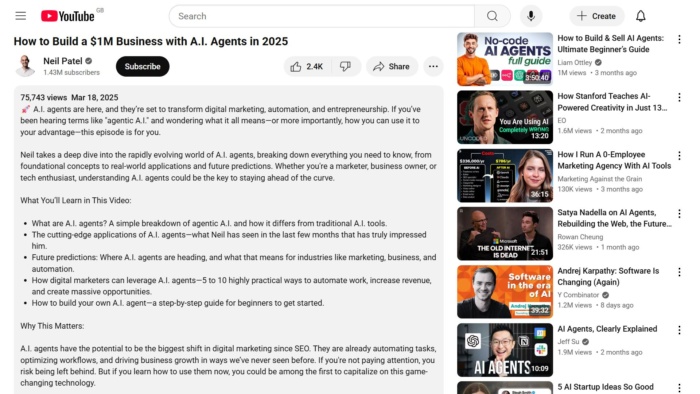
- Provide details: Outline key takeaways and include timestamps for longer videos. Use bullets in your description to make it easy for readers to skim.
- Add calls to action (CTAs) where appropriate: Direct viewers to related videos or encourage them to subscribe when it’s appropriate to do so.
Here’s an example of a helpful description from one of my videos. It’s comprehensive—giving plenty of info to YouTube—and pulls readers in with a clear description of what they’ll learn.
3. Create a Captivating Thumbnail
Your thumbnail is an invaluable opportunity to stop scrollers, restate the benefits of watching your video, and encourage clicks. And if you’re not a natural designer, AI tools can fill the gap.
Here’s how to create thumbnails that get noticed:
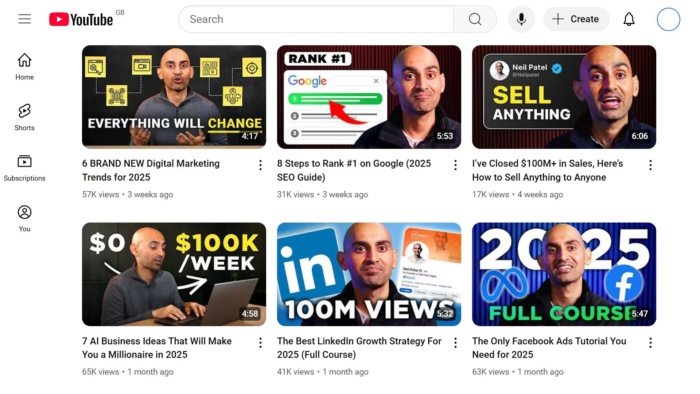
- Reiterate the benefit in a different way: Use the thumbnail as an opportunity to reiterate the main promise or learning of your video in a slightly different way to attract viewers that may not have found your title compelling.
- Include a picture of your face: Research shows that we’re drawn to content that includes human faces.
- Keep your design professional (without breaking the bank): Platforms like Canva and Adobe Express, which now have AI features, create professional-looking thumbnails that grab attention.
- Split Testing: Test different thumbnails across your videos to see which combinations perform best.
You can see a selection of thumbnails for my videos below. In all cases I include my ugly mug—ahem, beautiful visage—and reiterate the main promise of the video in a slightly different way to the title.
4. Aim for Longer Watch Durations
The algorithm rewards content that keeps viewers watching from start to finish. Strong video storytelling holds those eyeballs and boosts watch time.
Here are my four top tips for improving average watch duration:
- Start strong: Hook your audience in the first 10 seconds with a clear and engaging statement.
- Match expectations: Align your video content with what the title and thumbnail promise.
- Add chapters: Divide longer videos into sections with timestamps so viewers can skip to the parts they’re most interested in.
- Modify your strategy based on feedback: Analyze audience retention graphs in YouTube Studio to see where viewers drop off and refine your content strategy accordingly, removing sections that might be seen as boring or not useful.
I hit all these criteria in my video “I’ve Closed $100M+ in Sales, Here’s How to Sell Anything to Anyone.” It opens strong, provides exactly what it promises (with practical examples), includes chapters, and cuts all nonessential fluff.
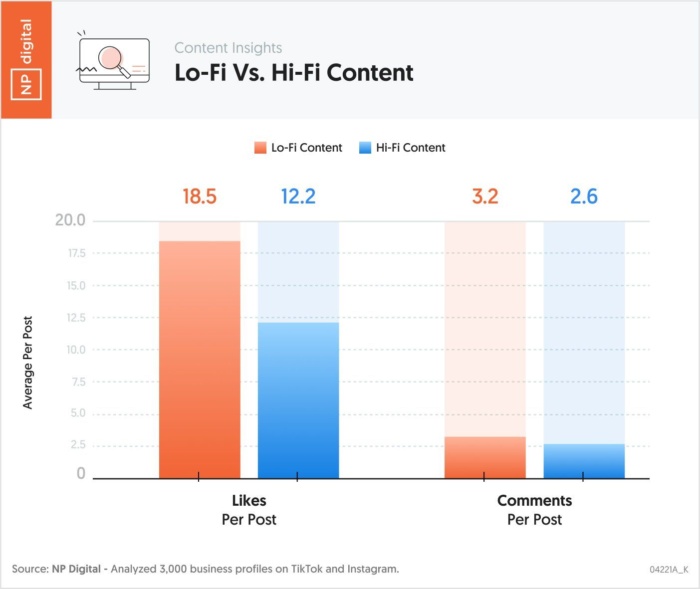
Oh, and don’t be afraid of creating lo-fi (or low-fidelity) videos if your audience is already engaging with content that’s more casual. This content isn’t overly polished and is designed to communicate authenticity. My research found that it tends to outperform high-fidelity content.
5. Don’t Skip the Conclusion
How you end your videos matters. A good conclusion keeps viewers engaged and encourages them to either subscribe, watch another video, or visit a landing page.
Add all of the following to your conclusions:
- End screens: Add an end screen with a CTA and a link to your landing page or subscribe button.
- Verbal calls to action (CTAs): Suggest specific videos or playlists that viewers can watch next.
- Add cards: Reference related content from your channel and use clickable cards to drive traffic to it.
Here’s an example of a video from Russell Brunson with an end screen that includes a CTA, a card of a related video, and links to his channel page (the picture of his face) and his commercial website.

6. Create Series and Playlists
Serial content keeps viewers engaged for longer and increases session time as they watch the whole series, which the algorithm values. Creating binge-worthy videos also encourages viewers to subscribe to your channel.
There are two ways to offer serial content:
- Playlists: Group related videos into playlists that autoplay. This keeps viewers watching without needing to search for the next video.
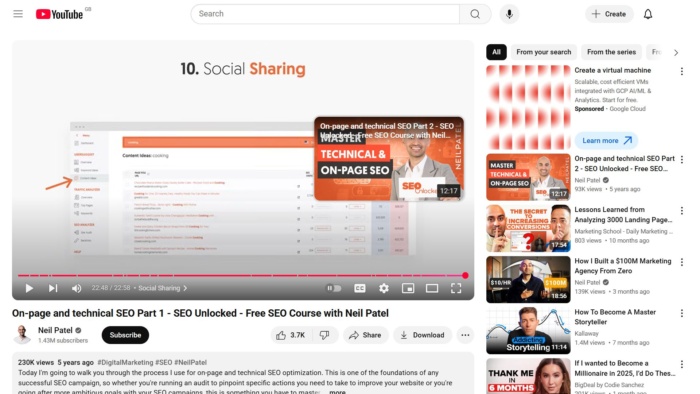
- Episodic, well-labeled series: Structure your content in a way that builds anticipation, such as a step-by-step tutorial or a multi-part series that is clearly labeled—“Part One,” “Video One,” etc.
When signing off from videos in a series, don’t underestimate cliffhanger endings. A teaser for what’s coming next can make all the difference in keeping viewers watching.
Here’s an example from my SEO Unlocked course on SEO fundamentals, with a link at the end of the video to part two.
7. Monitor Analytics to Find Opportunities
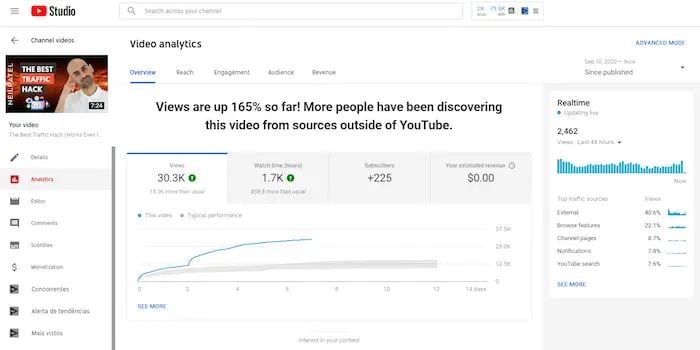
YouTube Studio offers tools to analyze your performance, refine your strategy, and align content with audience preferences.
Here are the key metrics to track in YouTube analytics:
- Audience retention: Identify drop-off points and adjust your content to keep viewers engaged.
- Click-through rate (CTR): Measure how well your titles and thumbnails attract clicks.
- Engagement metrics: Look at likes, comments, and shares to understand what resonates.
- Demographics and traffic sources: Learn about your audience and adjust to appeal to core groups.
Bonus Tip: Make the Most of YouTube Shorts
As we’ve mentioned before, YouTube Shorts are a powerful way to reach new audiences and promote your main content. Their quick, engaging format is perfect for grabbing attention. But they work slightly differently from long-form videos.
Follow these best practices for maximizing the reach of your shorts:
- Focus on one idea: Keep it simple and clear. Shorts are most effective when they focus on a single concept.
- Use captions: Many viewers watch without sound, so captions help convey your message.
- Repurpose content: Highlight key moments from your long-form videos to attract new viewers.
Here’s an example from my YouTube channel. In under a minute, it delivers a quick lesson on social media engagement.
Adapting to Trends in 2025
Staying competitive on YouTube in 2025 requires keeping up with audience expectations and platform trends. Interactive content and a focus on sustainability and inclusivity shape how creators connect with viewers.
Interactive Content
Interactive features like polls, Q&A sessions, and community posts help you connect with your audience on a deeper level. These tools encourage participation, making viewers feel more connected to your content. This engagement also signals to the algorithm that your videos resonate with your audience.
Here’s an example of how Marvel used a poll:
Source: Clipchamp
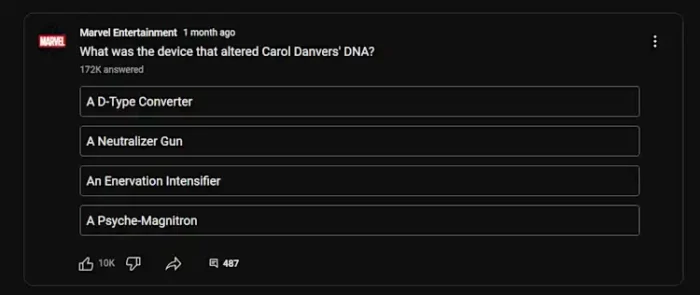
This simple and easy addition makes the video more engaging and can even spark future conversations and video ideas.
Live streams are another way to build engagement. Use live chats to answer questions or collect feedback directly from viewers. These real-time interactions create a sense of community and keep your audience coming back for more.
Sustainability and Inclusivity
Audiences are increasingly drawn to creators who reflect their values. Content incorporating sustainable practices, like reducing waste during production, can appeal to eco-conscious viewers. Inclusivity is equally important. Multilingual subtitles, diverse representation, and accessible formats help you reach a broader audience while improving viewer satisfaction.
Focusing on these areas can strengthen your brand and improve your chances of gaining visibility on the platform.
Is AI Changing the Way the Algorithm Works?
I believe that the future looks bright for YouTube creators in the age of AI.
The algorithm has evolved significantly over the years. Early versions rewarded videos based on view counts alone, encouraging clickbait tactics. In 2012, the focus shifted to watch time, prioritizing videos that kept viewers engaged for more extended periods.
In 2025 and beyond, AI algorithms will continue to focus on relevance, watch time, click-through rates (CTR), and satisfaction. My view is that it will get better and better at measuring these signals, which means that high-quality content is the best path to success.
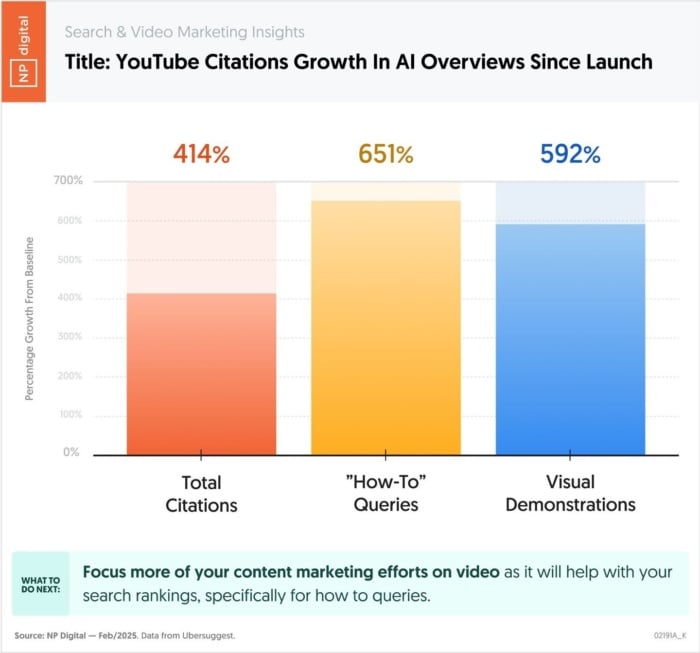
In addition, my team and I have found that AI engines often cite YouTube videos, with a 414% uptick in citations in AI overviews since launch. This points towards continued growth in the consumption of YouTube videos as AI search becomes more pervasive.
FAQs
How does the YouTube algorithm work?
The YouTube algorithm matches videos to viewers based on relevance, engagement, and personal preferences. It analyzes metadata, watch time, and viewer behavior to recommend content that keeps audiences engaged.
What is the YouTube algorithm?
The YouTube algorithm is powered by artificial intelligence (AI) and machine learning (ML) to determine which videos to recommend to users. It evaluates individual preferences, engagement metrics, and channel authority to prioritize content.
What 4 things does the algorithm prioritize on YouTube?
Watch Time: Videos with longer viewing durations and those contributing to session watch time perform better.
Engagement: Likes, comments, and shares improve visibility.
Relevance: Titles, tags, and descriptions matched to user queries.Viewer History: Recommendations based on past watch and search behavior.
Conclusion
Mastering the YouTube algorithm\ is about creating engaging content that connects with your audience. The algorithm prioritizes watch time, relevance, and engagement, so aligning your videos with these factors is critical.
Focus on building quality content that addresses viewer needs, optimizing it with strong YouTube SEO practices. Use features like interactive tools, live streams, and Shorts to connect with your audience and expand your reach. Embracing sustainable and inclusive practices can also strengthen your brand and attract diverse viewers. Whether you’re improving your video marketing strategy or experimenting with new formats, staying focused on your audience will keep your channel growing.
Are You Using Google Ads? Try Our FREE Ads Grader!
Stop wasting money and unlock the hidden potential of your advertising.
- Discover the power of intentional advertising.
- Reach your ideal target audience.
- Maximize ad spend efficiency.