 Sign In













Want to know a fun fact?
If you Google “make money blogging,” you get 78,000,000 results.

That’s no surprise.
There has been an online business boom over the past few years. The web is plastered with stories of average Joes making millions from their blogs.
If you made the same Google search for social media, guess how many results you’d get?
Not half as many. Not even close.
There are plenty of people in our industry who will tell you that social media isn’t monetizable.
You’ll hear comments like these:
“You need your own website.”
“It’s too risky.”
I’ve got news for you.
I’m not one of those people.
Sure, it’s risky.
What business doesn’t come with a risk?
You may even decide to get your own website to scale your business further.
That’s fine.
But right now? You can absolutely monetize your business idea on social media.
There are many people actively making money from their social media accounts. The rise of YouTube business moguls and Instagram influencers bear testament to that.
By the end of this article, you’ll have a viable business idea that you can monetize using your social media channels.
Let’s get started.
1. Decide what you want
Before we even get into business ideas and monetization strategies, I just have to ask:
What do you want from all of this?
What is your purpose?
It could be money. It could be freedom. You decide.
Come up with a very visceral response to these questions and put it down on paper.
When business gets tough (and it will), you can go back to your purpose for an extra dose of motivation.
After you’ve come up with a concrete “why,” you need to decide what you want the result to be.
That’s where you need to get specific.
Here are some examples:
- Gain 50,000 Facebook fans
- Make $5000 per month in affiliate income
- Launch two online products by the end of the year
Why do this?
You can’t attain something that is not concrete and measurable.
More importantly, you can’t reverse-engineer a plan if you don’t begin with the end result in mind.
Now that you know what you’re working toward and why you’re doing it, let’s get into the action steps.
2. Define your idea and craft your niche market
My guess is that you have a few general ideas already.
However, you don’t want to be painting in broad strokes.
That’s not a business model that works.
Instead, you want to narrow down your idea to a particular niche.
Here’s how.
Decide who you want to do business with. Don’t worry about alienating people or confining your idea to a box.
While it sounds counterintuitive, if you focus on one audience, you will have more impact.
You can always revisit this. Your niche is not set in stone.
Aim to be as specific as possible.
For example, you can decide that you’ll be targeting young female entrepreneurs between the ages of 21 and 30.
What service or product will you be providing to your target audience? This is a matter of reducing your idea to suit your target audience.
Again, this needs to be very specific.
Let’s say that your general idea is in the marketing field. Perhaps you want to provide marketing services and use your social media channels to get clients.
If you were to narrow “marketing” down, here’s what it would look like:
- Content marketing
- Copywriting
- Direct response copywriting
- Direct response copywriting in the health niche
- Direct response copywriting in the alternative/natural health niche
Do you see how many layers you can peel off your general idea?
3. Validate your business idea
Most people skip this step and go full throttle with their business ideas.
Now is the time to take a step back.
You have a concrete idea, but you’re missing some crucial insights.
- Does your niche market actually exist?
- Does your idea conform to your long-term, result-oriented goal?
- Are there enough people out there with the problem that you’re solving?
- Are they willing to pay you to solve it?
That’s where validating your idea comes into play.
Here’s how you can do it.
Step #1: Go to Google Trends to get an overview of your niche market.
Plug in your niche keyword in the search bar and press enter.

You’ll get a graph showing the interest for your keyword over a particular period.

If the graph is steady or on the rise, these are good signs.
If there’s a decline, you may want to reconsider your niche or do some further research.
You can also scroll to the bottom of the page to find “related queries” and “related topics.”
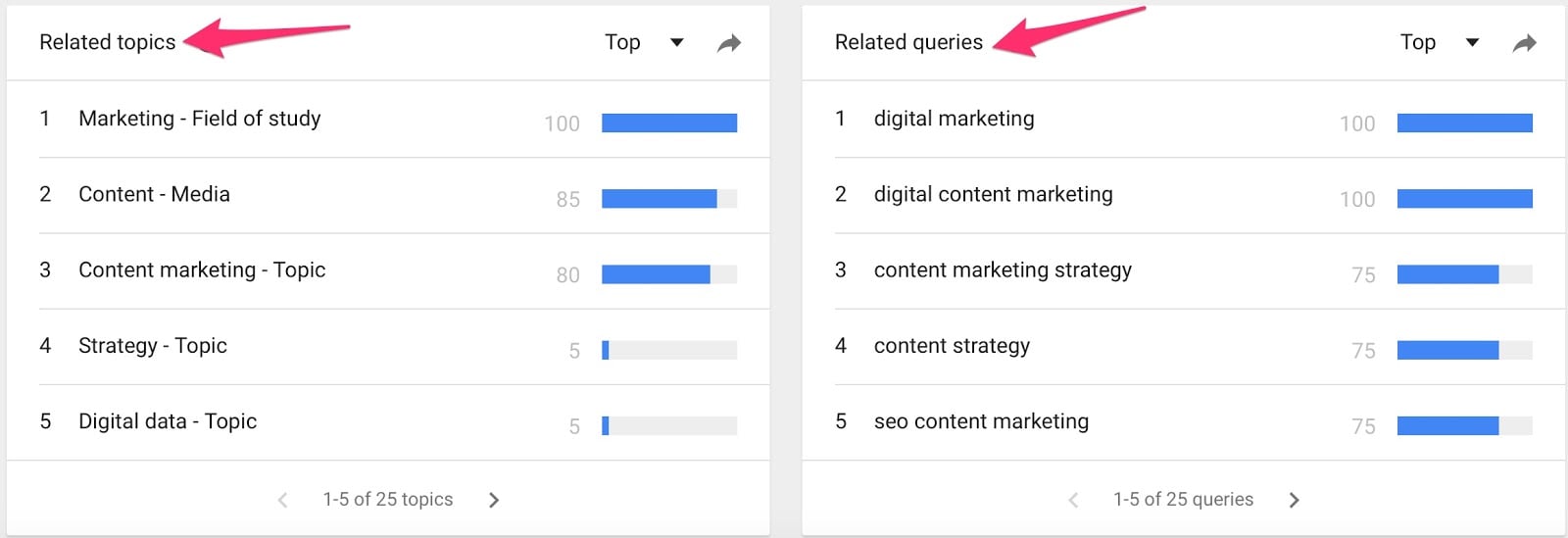
These will also give you ideas for narrowing down your niche. You can click on the individual queries to see the overall trend for them, as well.
Step #2: Find competing products on online marketplaces.
Competition shouldn’t scare you.
In fact, it tells you that there’s a market for your business.
It doesn’t matter what you’re trying to sell, be it a service or a product. You only want to know if there’s demand for your topic.
Here’s how you can do that.
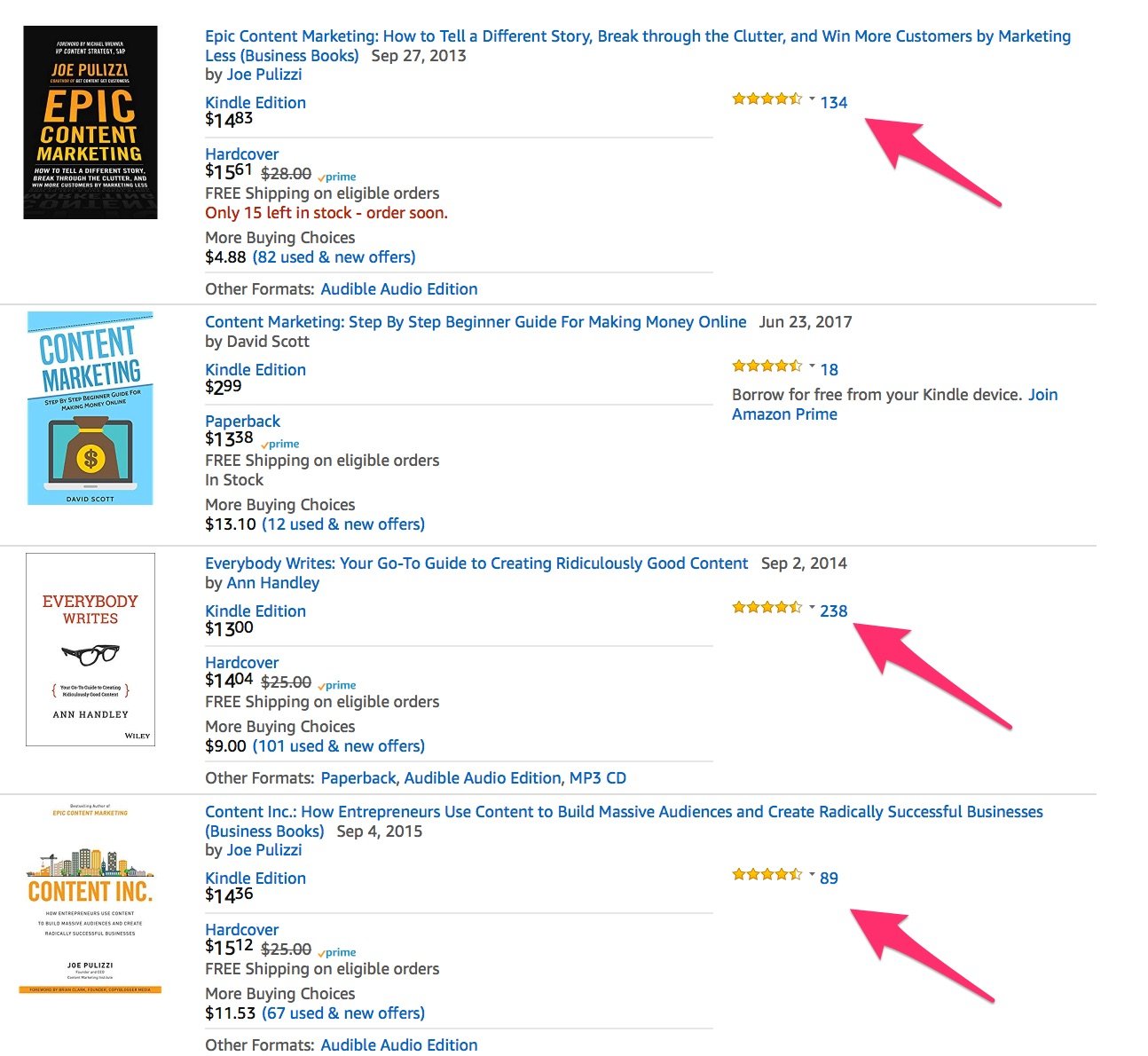
Search for your niche topic on Amazon. Browse through the books and evaluate the overall demand.
Books with lots of reviews, good or bad, are a good sign.
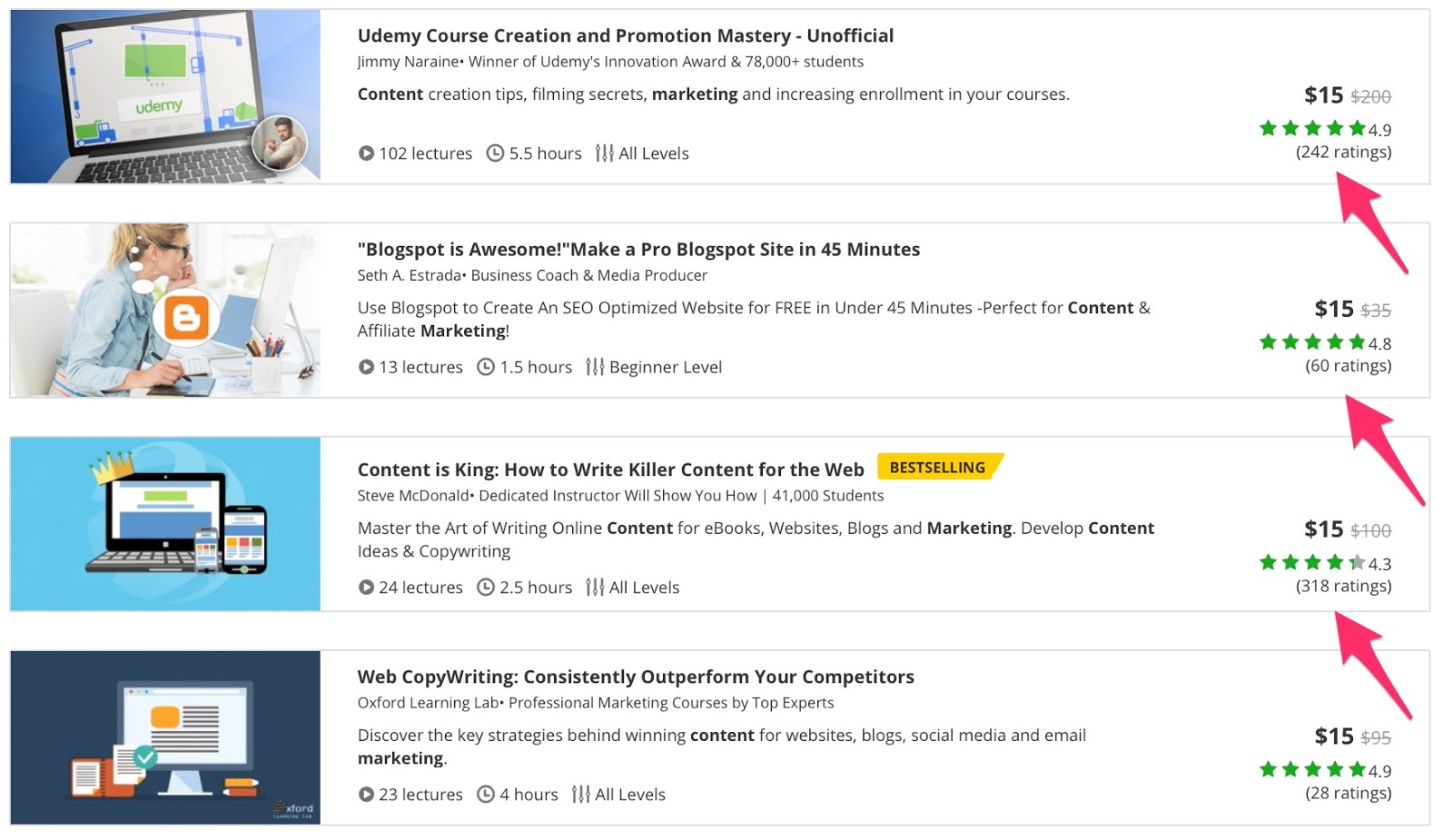
Go to Udemy to check out the online courses in your niche. Again, you’re looking for proof of demand.
Lots of courses with ratings are a positive indication.
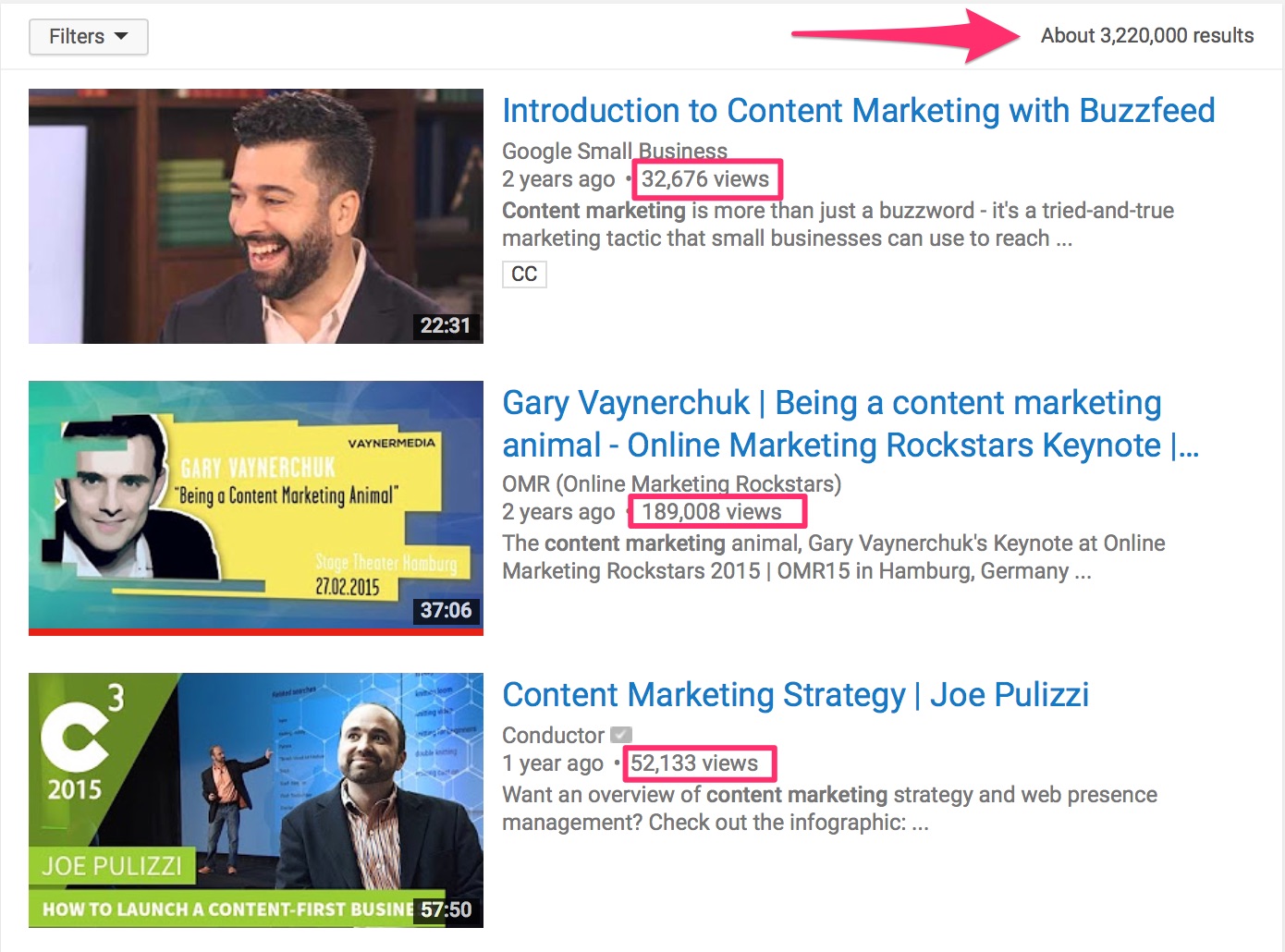
Go to YouTube to see if there are popular videos on your topic. If people are viewing video content on your topic, there’s definitely demand.
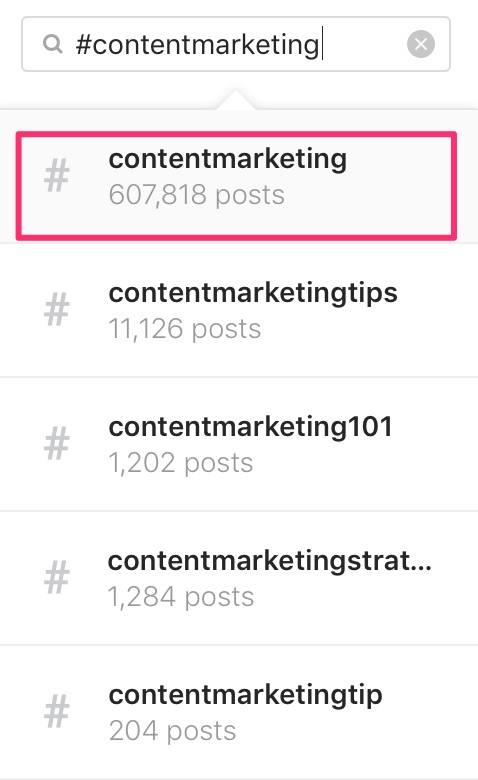
Search for your niche hashtag on Instagram. I plugged “content marketing” in the Instagram search bar and saw that the hashtag had over 600,000 posts. That’s a great sign.
After you validate your idea, it’s time to start thinking about how you can monetize it.
4. Come up with a monetization strategy.
This is perhaps the most-asked question.
How do you monetize your idea?
Do you sell a product? Trade your time for money? Advertise other people’s products?
The choice is yours.
Deciding how you’ll monetize your business idea is the easy part.
Doing the work is a whole other ball game.
Before you decide on a strategy, you need to know what is involved and what resources you’ll need.
Here are the common monetization methods.
Affiliate marketing
Affiliate marketing is massive in the blogging world.
This is where you promote other people’s products. You get to earn a commission on every sale that you bring for the company.
It’s an excellent strategy, but you need a decent-sized following to make a reliable revenue stream.
Here are some popular affiliate networks that you can sign up for.
Note that these networks will have their criteria that you have to meet to join.
Sponsored posts/advertising
This is another method of promoting other people’s products. It’s very common on blogs and networks like Instagram.
Typically, you’ll earn a flat fee for publishing a post about a particular product.
Brands that pay for sponsored posts usually want to maximize their reach. It means you’ll need a sizeable following.
How do you land these posts?
You can reach out to brands directly if you have enough leverage. Alternatively, you can use a network that connects brands with social media influencers.
IZEA is an attractive option.
Informational products
Information products have an enormous market right now.
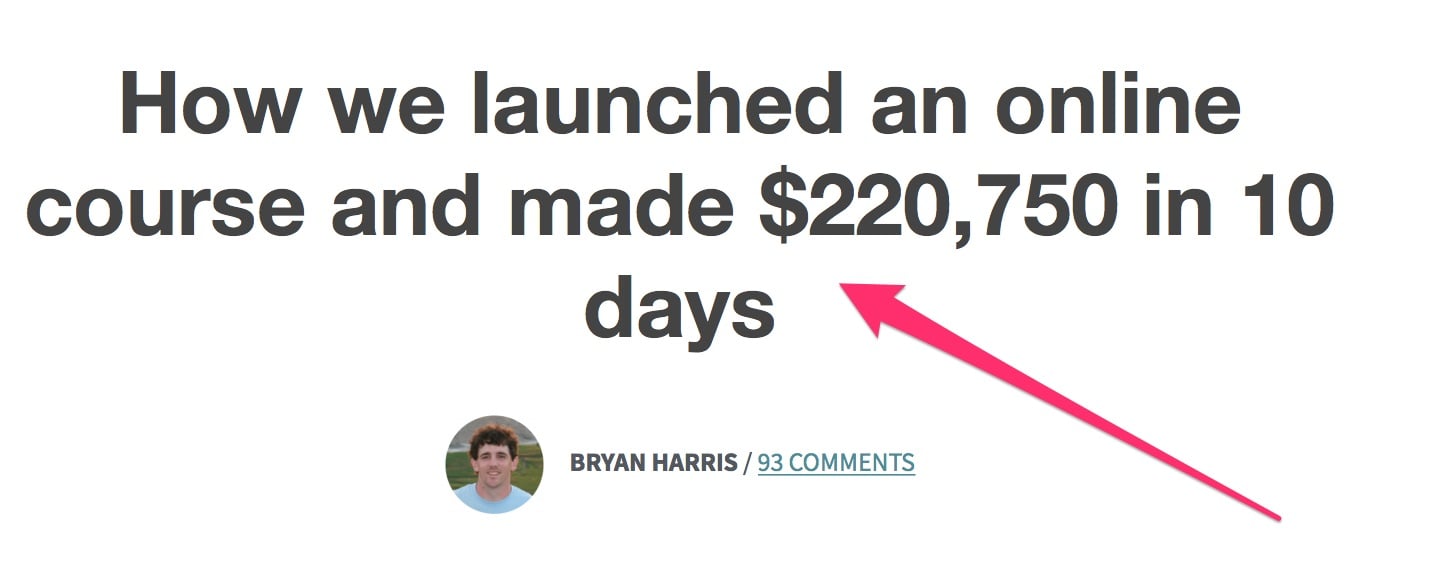
Brian Harris reported that his blog made more than $220k in online course sales. He did it in 10 days!
What are some examples of info products?
- Online courses
- Ebooks
- Online events
Don’t you need a website to host these digital products?
Not necessarily.
You can set up sales funnels without a website. All you need are landing pages and an email management system.
There are also platforms that host your online courses for you. Thinkific, Teachable, and Udemy are excellent options.
Offer a service
Do you have a skill that you do exceptionally well?
I’ve got news for you.
There’s someone out there willing to pay you for it.
Create a few service packages based on your skill and market it on your social media networks.
Want some ideas?
- Coaching
- Consulting
- Freelance writing
- Social media management
5. Choose the right social media channel
This is perhaps one of the most important decisions that you’ll make.
You can’t spread your time and resources across several channels. Instead, decide on one social media platform.
While you can diversify as your business grows, I don’t recommend starting with more than one channel.
How do you know which is the right one?
It depends.
Here’s what you should consider.
- Who’s your target audience and where do they hang out?
- What’s the nature of your idea?
- What type of content would you primarily need to promote your business?
- Which platform is the best fit for your content strategy?
Whatever you decide, you’re not short of options.
Facebook, YouTube, Instagram, and Pinterest can all be monetized.
Let’s say that your niche is photography.
You’d want to choose a platform with a strong visual focus. In that case, Pinterest and Instagram would be excellent picks.
If you produce more video content, YouTube might be a better bet.
That’s not to say that you can’t use the other platforms. But you need to select your home base.
6. Get your social media profiles ready to win business
After you decide which platform is best, it’s time to optimize your profile to attract and convert clients.
While you’ve already validated your idea, a sales conversion is the real deal.
It’s the truest form of validation.
Let’s get your profile ready.
While it depends on the social media network that you choose, here are some general best practices.
Ensure that you have a professional headshot as your profile photo. Be sure to name your photo with your niche keyword before you upload it.
For example, if you’re a wedding photographer located in Seattle, you can name your photo “Best wedding photographer in Seattle.”
This will ensure that your image is optimized for Google image search.
Note: If you use multiple platforms, use the same profile photo. This way, your brand will be immediately recognizable.
Complete your social media profile. A full profile is good for the optics. And what’s good for the optics is good for business.
A complete profile is also more likely to surface in a search compared to one that isn’t. That organic traffic is important.
Include a message that resonates with your target customer. Your profile is the first thing that a prospective customer will see.
It’s your digital billboard.
Here’s what you should include.
- Unique value proposition: How you make your prospects lives better.
- Unique selling point: How you’re different from competitors.
- Call to action: Why and how your prospects should contact you now.
7. Have a content strategy
The bottom line?
All of the steps up to this point will be irrelevant if you don’t have a marketing strategy.
Content marketing is by far the superior option.
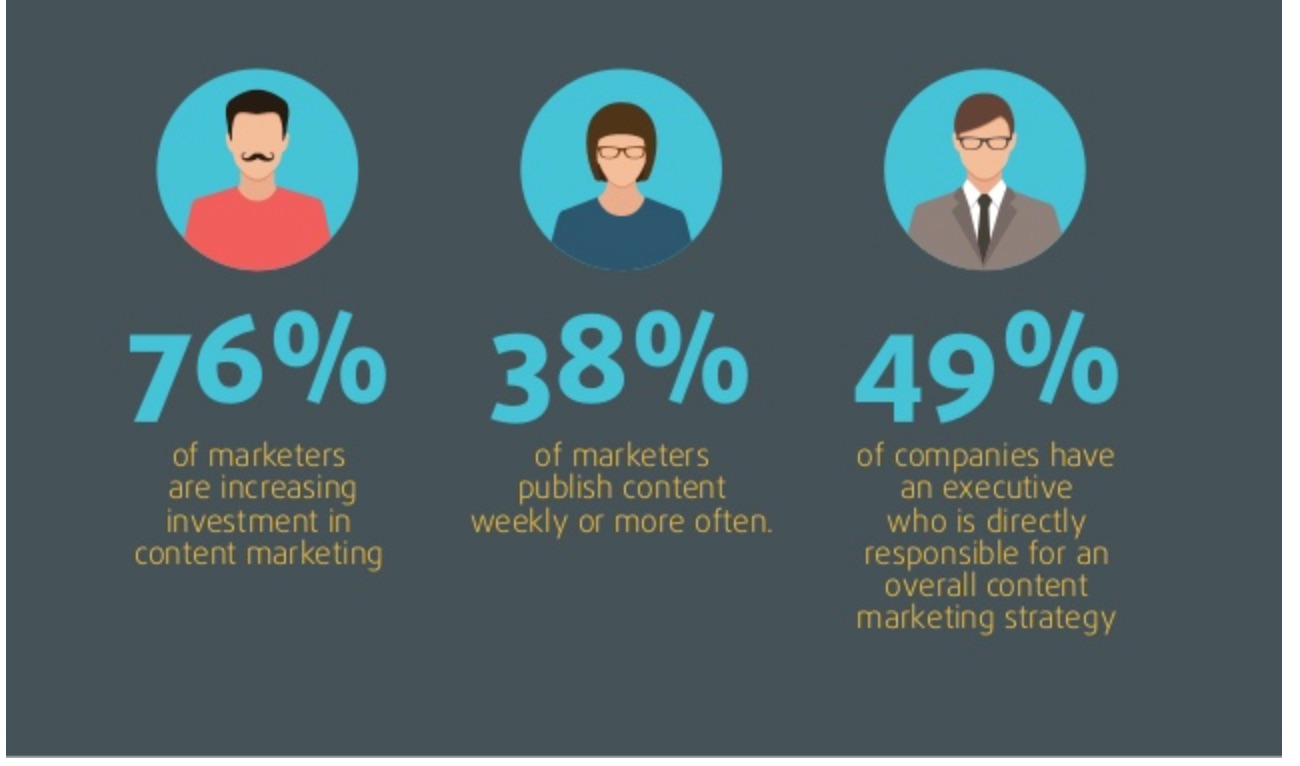
It’s likely why 76% of marketers are increasing their content marketing spend.
You can’t survive on social media without producing exceptional content for your audience.
The good news is, you already have your business objectives.
You simply have to create content that will drive you toward these goals.
The social media platform that you select has a lot to do with the type of content that you’ll distribute.
This makes it fairly simple.
If you choose YouTube, video is the only way to go.
If you choose Facebook, you have far more diverse options.
It’s a good idea to consider a platform that will allow you to distribute a variety of content.
So how do you create the type of content that drives engagement?
Here’s how.
Step #1: Explore the content that’s already out there.
The point of this is to analyze what type of content has the most impact in your niche. An easy way to do this is to search through the platform that you selected.
Let’s say that you chose Instagram.
Type in your niche hashtag and analyze the top posts.

Don’t stop there.
Click on the individual posts and find the profiles with large followings and high engagement levels.
You can then analyze their content to see what’s working for them.
Do this for several accounts in your niche, and you’ll begin to see a pattern.
Step #2: Find your differentiating factor.
Yes, you want to find high-performing content, and then do it better. That’s just good marketing.
But if you want to create a distinct personal brand, you need a differentiating factor.
Figure out what your competitors are doing and take a different route.
This is not about reinventing the wheel. In fact, that may hurt you.
You could simply have consistent brand elements on your content. That would be sufficient to set you apart.
Whatever you decide, make sure it’s distinctly yours.
8. Start building an email list immediately
Let’s talk about the one thing that all online entrepreneurs need.
It’s the holy grail of online assets
I’m referring to your email list.
A whopping 93% of marketers practice email marketing.
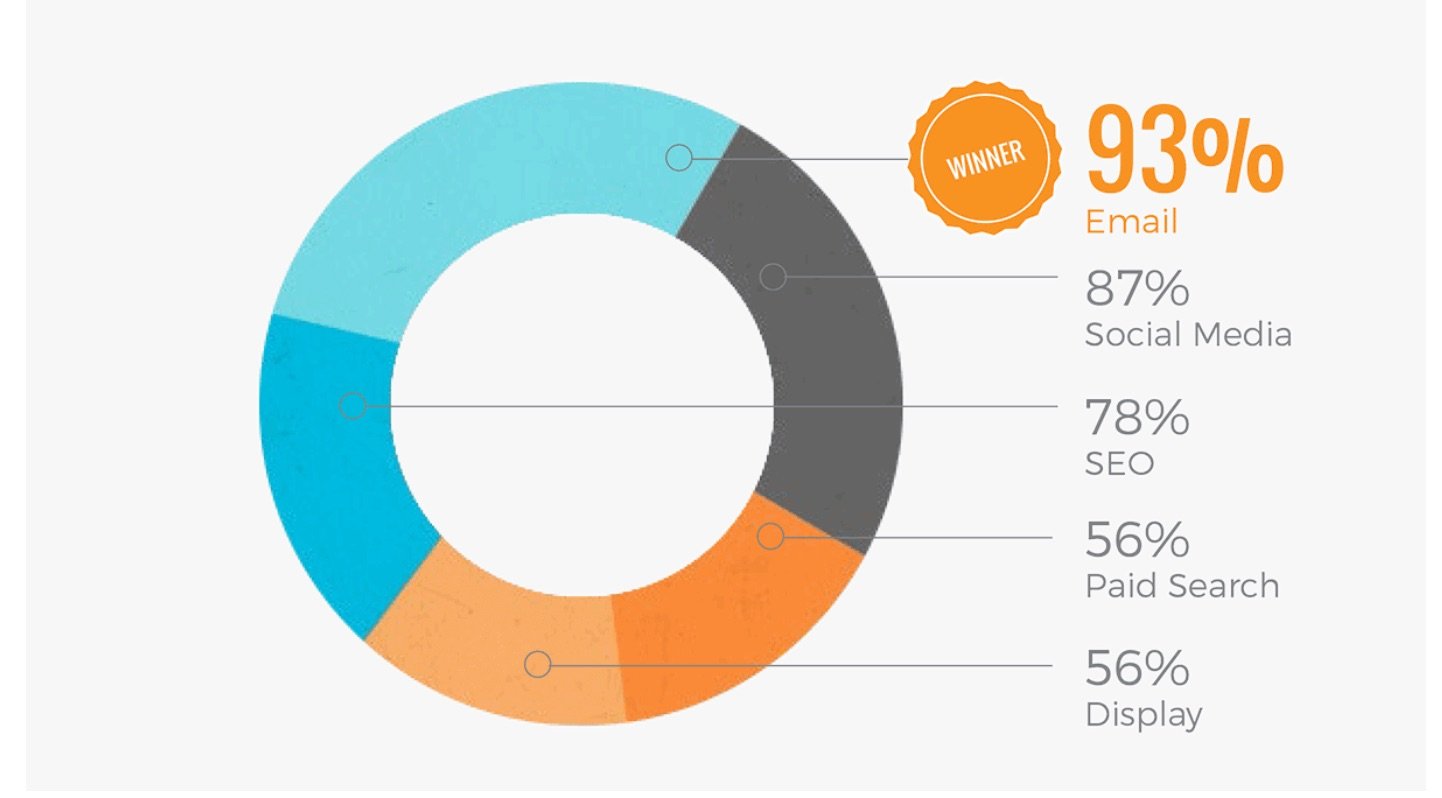
Without it, you’re missing a massive opportunity to nurture a lasting relationship with your social media audience.
That relationship can lead to sales, maximize your profits, and fuel your business years down the line.
The best part is, it doesn’t take much to set this up.
You can sign up for an email management system and start collecting email addresses right away.
There are plenty of low-cost or free options like MailChimp.
There is one thing to note.
Your audience will not submit their personal information without a valid reason.
This means that you need to incentivize them. You can offer a high-value piece of content in exchange for emails.
Ebooks, cheat sheets, checklists, and mini online courses make great offers.

After you have all this figured out, you can place your email capture forms on your social media profiles for maximum visibility.
Facebook is the best platform for this as it allows integrations with many email management platforms.
For other social media channels, you can leave a link to your form where appropriate.
Simple, right?
Conclusion
Making money has never been this easy.
The opportunity that we have to sit from home and pull a profit is remarkable.
The Internet has made sure of it.
Don’t get me wrong: It will take a lot of time and work for your business to come together.
The strategies discussed in this article are just the beginning.
Execute them, and you’ll have a clear path forward.
The best part is, you don’t need a website.
At least, not in the beginning.
You can completely monetize your idea on your social media channels.
It’s inexpensive and easy to set in motion.
The tricky part is remaining committed to scaling your business. Put the steps in action, and you’ll have a stable platform for your business to take off.
What strategies do you use to monetize your social media channels?