
 Sign In











What first attracts people to your content or blog entry?
It’s the title (aka “the headline”).
The title is the first thing people will see on a page. It’s your first impression on readers.
Copyblogger estimated that 8 out of 10 people read the title. However, the title doesn’t keep them reading through your blog content.
That’s the job of the introduction. If your introduction is weak, it’ll discourage the reader from reading further – even if the title was captivating. You could have a great blog post, but if the intro doesn’t cut it – the rest of the content won’t.
As a blog editor, writer and content marketer, you already know how to write compelling and powerful titles. You’ve undoubtedly read step by step articles on this blog and countless others that helps you to choose the right blog post ideas, create great blog post content, and get your work shared across social media accounts.
But how many times have you seen a guide to writing blog post introductions?
There’s no doubt that penning good blog posts can help you build a successful online business. According to FactBrowser, “B2B marketers who create great blogs generate 67% more leads per month than those who do not.” Great introductions help you accomplish that goal.
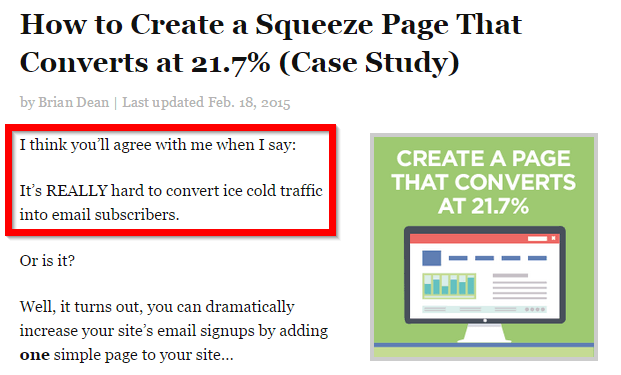
Brian Dean knows how to craft an irresistible blog post introduction, and it’s helped him build a loyal blog audience who want to read his blog topics and share these great blogs on their social networks:
I’ve received several emails from my clients and readers who’ve seen plenty of great content about headlines – they now want to learn how to craft great blog post introductions.
If you’ve followed me closely, you know that I contribute to several industry blogs as a guest blogger. I always take time to nail the introduction, because I know that it’s what keeps people reading my content. I can’t afford to put them off my good blog posts with a weak, generic, or boring intro. If people don’t read my content it will affect my search engine optimization, my social networks, and my whole career.
Neither can you.
Are you ready to open your blog posts with a bang?
What’s an Introduction?
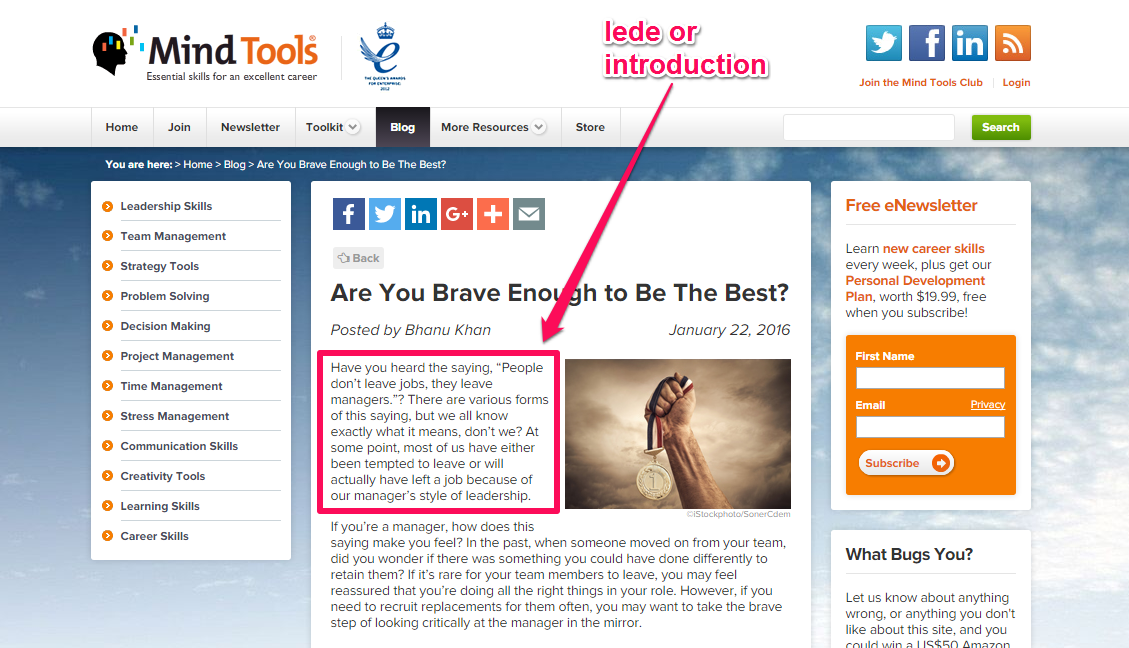
In journalism, the introduction is referred to as a lead or “lede,” which simply means the opening paragraph of a news story, essay, or article.
For bloggers, the introduction is basically the first paragraph that appears right below the blog post title. Depending on the blog design, the introduction usually displays above the fold (the section readers see when they visit a blog, without scrolling down).
Elements of an Introduction
There are 3 important elements of a good blog post introduction. Let’s briefly look at them:
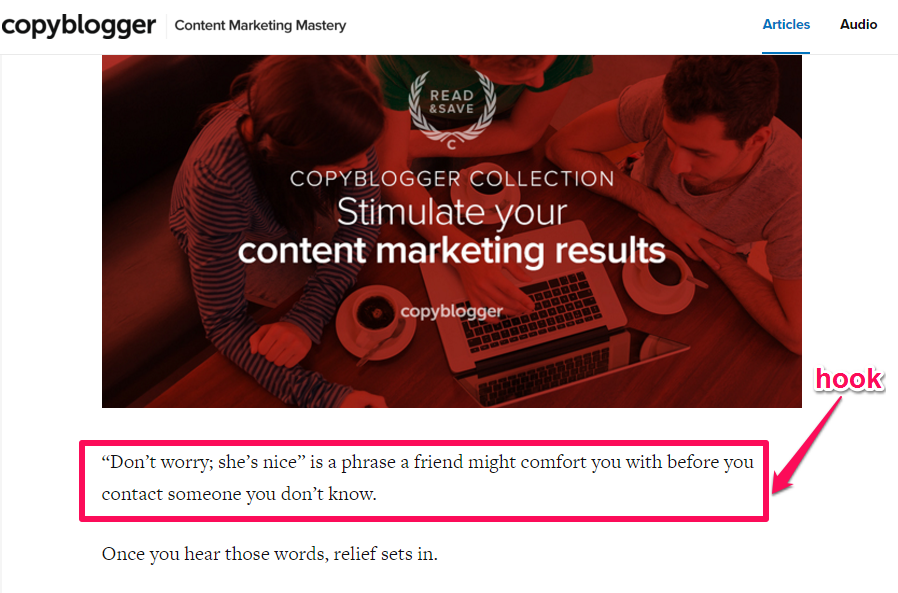
1. Hook: This is what pulls the reader into your blog entry. Make it specific, brief, and interesting. It can be a single sentence, a phrase, or even a word. Your hook could be a question (open-ended or closed). It could be what inspired you to come up with this blog post idea.
2. Transition: The hook grabs your attention and then leads the reader into the transition. The transition is usually a sentence that connects the hook to the body of the post and clarifies the title. This is how you lead people through your blog entry.
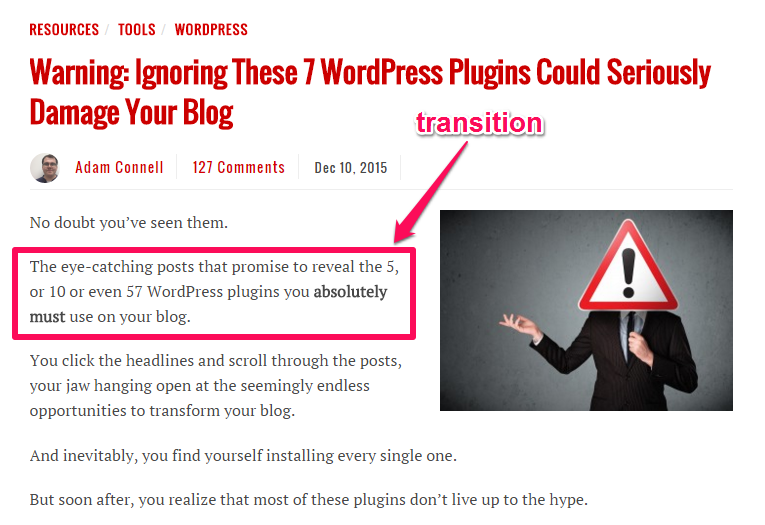
3. Thesis: The last element of an introduction is the thesis. It summarizes the topic and strengthens the reason why the reader should continue with your blog post idea. If you do a great job at the transition stage, the thesis will likely fall into place and make a great blog post. This is what a perfect blog post looks like.
The thesis might reiterate the title, like this:
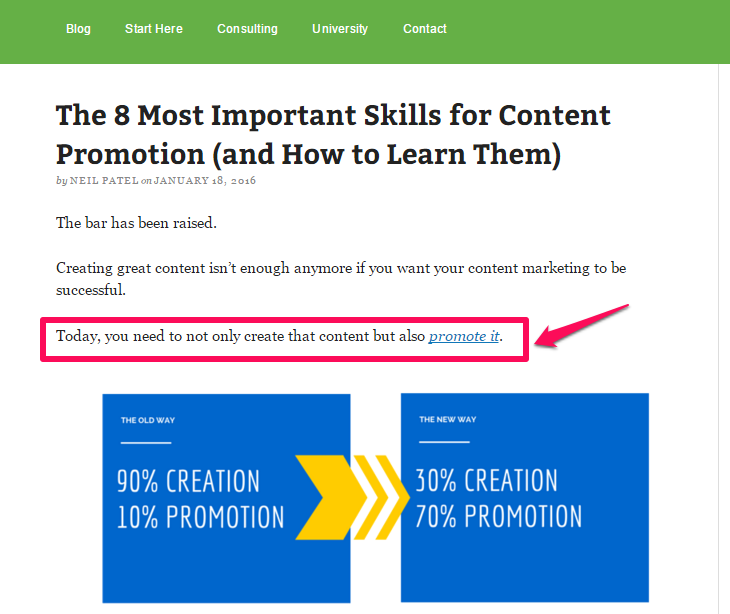
Let me show you the 6 strategies that can help you nail the introduction for creating great blog posts:
1. Hit With a Controversial Opening
One of the key purposes of creating great blogs is to build an audience that trusts, believes, and buys from you.
Content marketers love blog posts because of the results it produces. In fact, many bloggers believe that good blog posts are the most valuable type of content marketing.

However, your blogging success isn’t in the quantity of blog posts you publish, but the quality. It’s not enough to just have a good blog post idea, your blog post ideas and titles must attract people, and your introductions must hook them further.
One way to hook readers correctly after you’ve captured their attention with your title is to leverage a controversial topic in your blog introduction.
But you need to use caution with this tactic. Whether you’re using controversy in your title, introduction, or body of the blog post, be careful not to hurt your loyal audience and remember to stay loyal to your personal brand.
According to HongKiat, controversy may sell, but leaving it at that is “an invitation to trouble.”
Controversy can be a compelling force. But you need to use it well.
The essence of opening your introduction with a controversial statement or assertion is quickly connecting with and grabbing the reader. Sure, it’s a great way to build blog engagement, but what if your readers are offended?
In the final analysis, you must be able to provide reasonable explanations, answers, and clarifications to the controversial topic.
Better yet, play devil’s advocate with integrity. This means that when you take the unpopular side of a controversial, you also use facts to back up your arguments. It boils down to bridging the gap between people’s perception and reality.

Contrary to popular belief, you don’t need to be an experienced professional copywriter to write a great blog post brimming with compelling content.
In fact, it’s 100% possible to create irresistible content that converts by approaching every element of your content with an open mind. In other words, put yourself in the reader’s shoes, and see things through their eyes.
When it comes to content creation, there are several challenges. 72% of B2B content creators say that producing engaging content to build great blogs is one of those challenges, and it’s a big one.
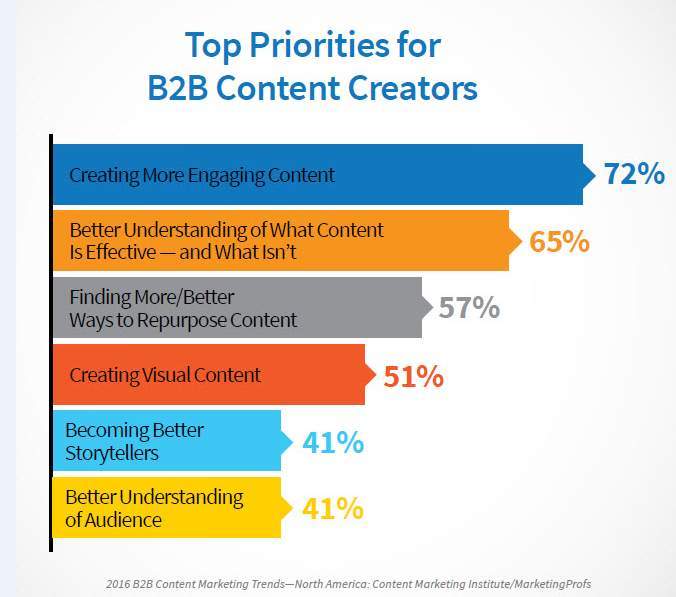
In order to overcome the challenge of “producing engaging content,” you have to always upgrade your knowledge.
Because the amount of vital information you’ve collected about your audience, and how well you use that information, will determine what kind of impact your content will make in their lives.
In the past, I found controversial topics as a blog entry a bit confusing. I didn’t want to write about controversy, because I didn’t want to hurt someone or piss off my readers. However, I discovered two years ago that with a careful touch, you can nail it.
All you need is a 3-step process:
- Identify a controversial topic.
- Boldly begin your introduction with it.
- Provide proof to backup your argument.
If you’re not sure how to produce useful content out of a controversial topic, you can at least open your introductions with it.
Regardless of your industry, you’ll find controversial topics. As an example, in the email marketing industry, here are just a few of the controversial topics:
- Email personalization
- Email segmentation
- Email list quality vs. quantity
Why are these controversial topics for blog posts? Well, not all internet marketers believe that email segmentation (that is, dividing your list into groups or segments based on where they are in the buying journey) is necessary.
On the other hand, some smart marketers say it’s worth it because it improves open rates and click-through rates.
Email segmentation isn’t easy. Worse, if you’re using an autoresponder service that doesn’t make segmentation easy, it can be an almost insurmountable challenge. You’d have to do it manually and that can take months, depending on the size of your list. Can’t you get these benefits without segmenting your list?
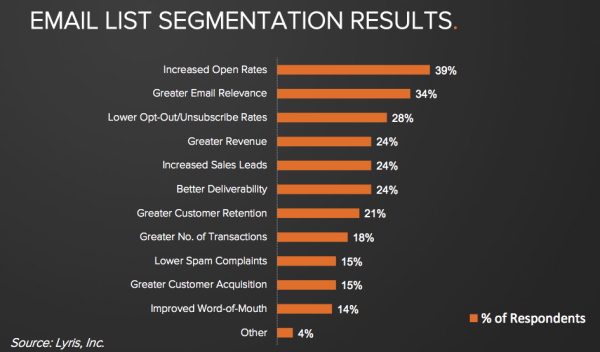
Another controversy in building an email list is the “quality vs. quantity” debate.
That is, how many subscribers do you need before you can succeed at email marketing? Is a list of 500 loyal and responsive email subscribers truly better than a list of 10,000 subscribers who aren’t as responsive?
So back to our context: opening your blog post introductions with controversy. You can use controversies like these in your introduction, even if you want to stay away from writing a truly controversial post.
If you truly know what your target audience is struggling with on a daily basis, you’re already a few steps ahead of your competitors who don’t know, and you can use that information to your advantage by using them as your blog post ideas.
So why not begin a great blog post introduction with it?
Here’s an example:
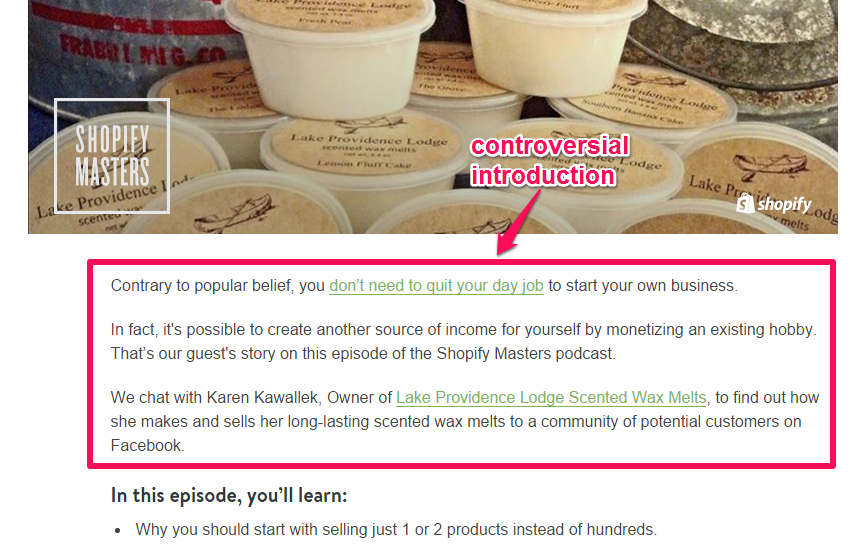
From the screenshot above, you’ll notice how Felix Thea begins the introduction addressing a controversial topic: whether you must quit a job and start a business, instead of starting a business while holding on to your day job.
The issue of quitting a job to start a business has been a hard nut to crack. Several authors have expressed their opinions in that respect.
But the truth is that you can still build a business without quitting your job. There are numerous success stories attesting to that fact.
No matter which side you’re on, you can learn from this great blog post. (Side note: I read the post above word for word, because the opening captured my attention.)
Every once in awhile, I discover blog posts that begin in controversy. And when I do, I usually feel compelled to keep reading and even would consider sharing on my social media accounts.
In a recent article at Moz, Aaron Friedman touched a controversial topic (Google’s ranking factors). The topic sometimes puts people off balance – even knowledgeable SEOs.
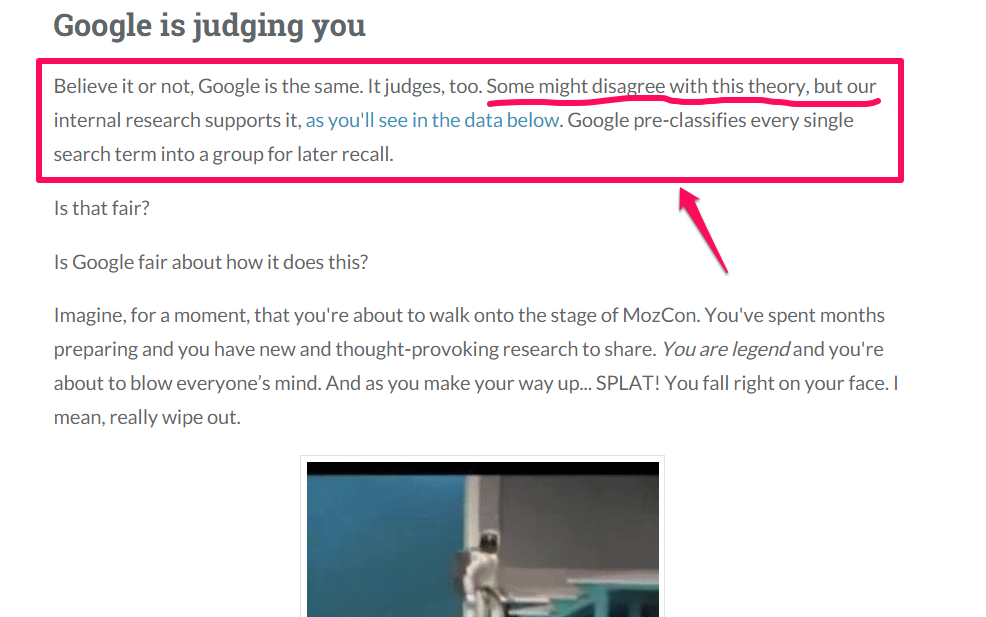
That’s because Google hasn’t made known how many factors they use to produce its organic rankings. Brian Dean highlighted 200 ranking factors, but is that the perfect and definitive list? Absolutely not.
In the screenshot above, Friedman demonstrates his understanding that most people don’t think Google in essence pre-judges them (i.e., their web pages) to determine where their web pages should rank in the organic listings.
Sometimes, a controversial topic might be one that bloggers apparently just don’t want to talk about. They’re afraid to raise these topics, because they’re worried about how people will perceive them.
Whenever you find a confusing topic that most bloggers haven’t been willing to create a blog entry about, quite possible you’ve found a winning card. You can open your blog post introduction with it in a mild way. Marie Forleo does that all the time. Here’s an example:
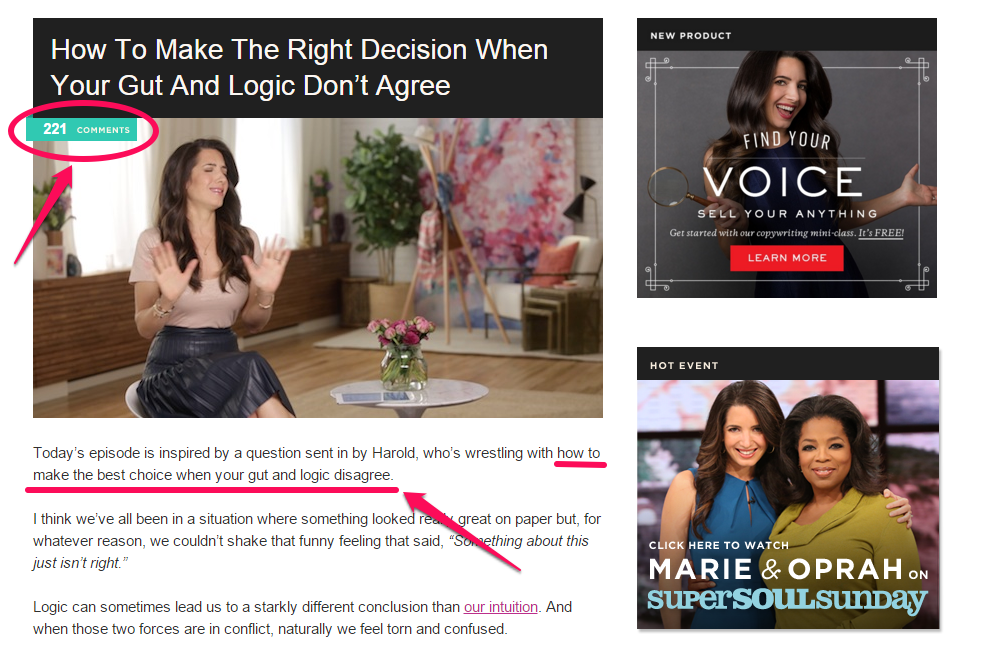
Making a wise choice when your intuition disagrees with your logic is a confusing topic. Most bloggers and writers would rather ignore it and write about a popular blog topic (e.g., personal development), instead of meddling with issues of the heart.
But Marie Forleo went for it with her blog entry. When her reader asked the question, she created a piece of video content, but this written introduction was powerful because of the subject matter.
Thousands of people are stuck in the corner when it comes to making smart decisions when they’re not ready, and would gladly read this blog post. No wonder the post generated over 220 valuable comments.
So the next time you write a blog post introduction, see if you can find a controversial angle and begin with it. As long as you can support your argument and convince readers with a high quality thesis, you’ll be fine.
2. Offer the “Why” of Your Content
I once heard a public speaker say that customers don’t buy the product – they buy “why” you made it.
For example, if your product helps people get rid of bad breath, the compelling reason behind the product is what people want to relate with. It’s the experience that people want to buy.
In the same vein, you can engage readers by offering the “why” of your content. Why should people read your content considering there are over 2 millions of blog posts published every day? After all, that’s enough potentially great blogs to fill TIME magazine issues for 770 years.

Do you have a strong reason behind your content? That’s your “why.”
Here’s an example of a post that offers a strong “why” and prompts you to get on it immediately:
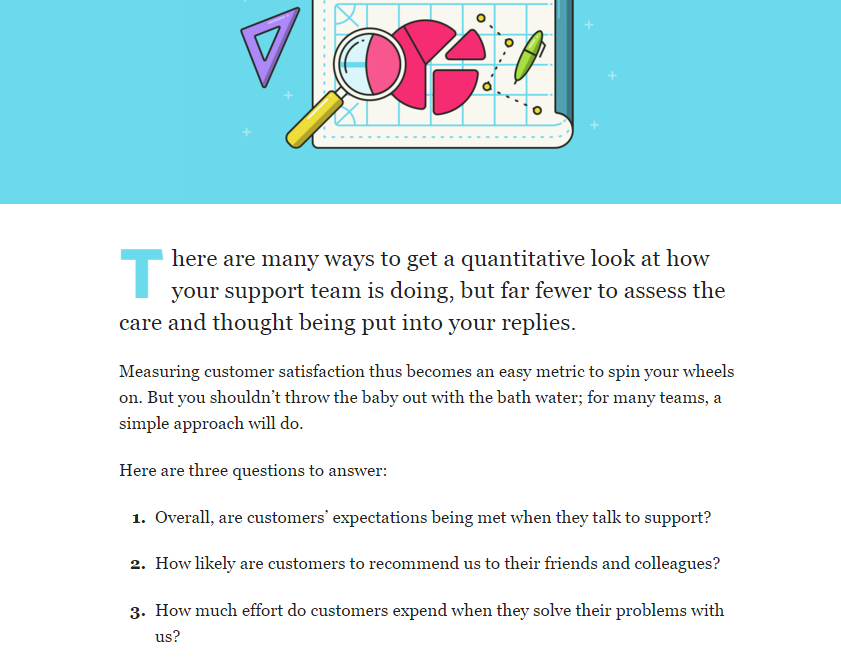
At a glance, you can see how Gregory Ciotti, a marketing expert writer at HelpScout, introduced his blog post.
He even went further to give three quick questions. He’s offering you reasons “why” you should read his blog entry, instead of a competitor’s article.
The “why” of any piece of content is its benefits, as it were. There could be lots of reasons why people buy a certain product, but the most compelling reason is because of the benefits.
Benefits drive your message and sell your products, while features highlights the makeup of the product.
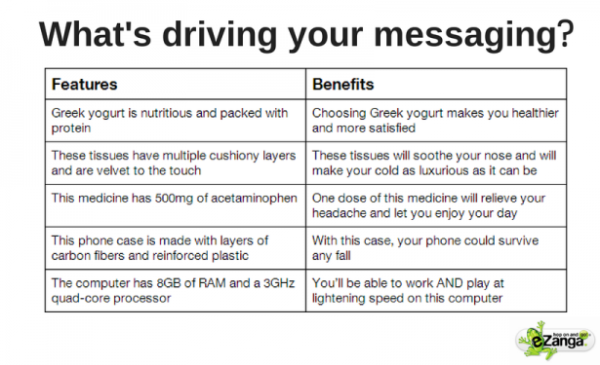
One of the core reasons why customers switch to competitors is that they believe you don’t care about them. Your content doesn’t offer any helpful information before or after they purchase your product.
One recent study by UffindellWest on Employee Loyalty found that 70% of a consumer’s brand perception is determined by the experiences that consumer has with people – in other words, how they were treated, or the benefits they derive from the brand.
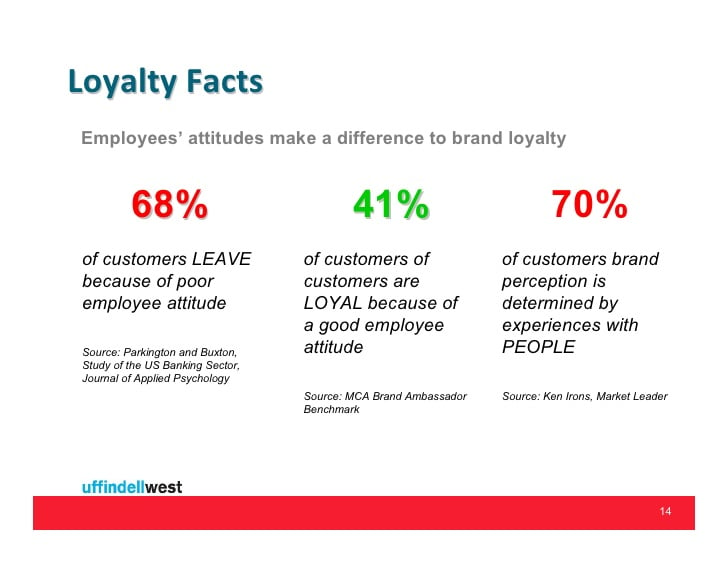
People are only interested in the benefits of your product. Nobody cares about your opinion, unless it can help them.
It’s the same thing with buying cars. According to Charles Kurasky of Selling Power,
People don’t buy a car to own a good-looking sculpture made of steel, plastic and glass. They buy cars to get to work safely, to travel in comfort, to impress the world or to express their good taste.
As a blogger, it’s easy to introduce your blog post idea by offering the “why.” Let’s assume that you’re writing about “link building.” You could begin like this:
You already know that Google uses backlinks to gauge the authority of a content page. Truth is, there are lots of reasons why people struggle to get authority links.
In this blog post, I’ll walk you through the 5-step process of generating the right links, even if you’re a beginner. If you’re worried that you’re not getting organic traffic, this post will help you. Read on…
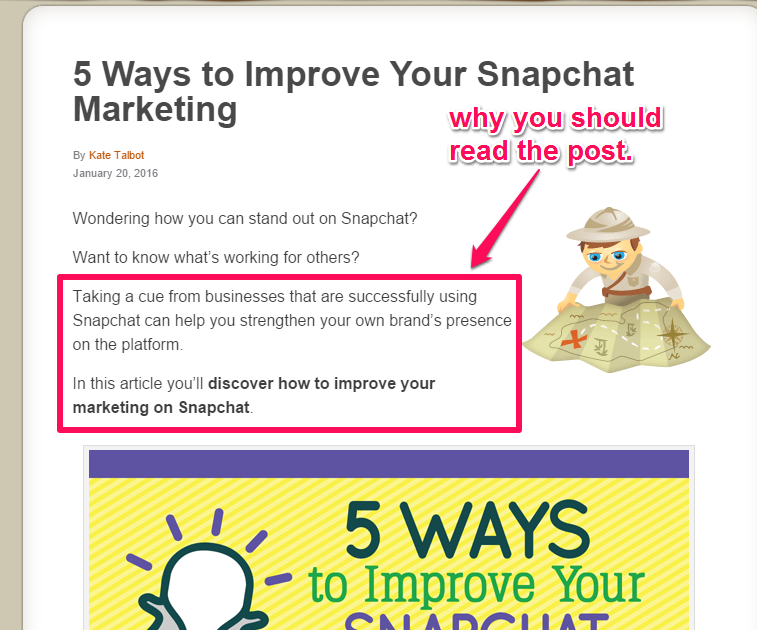
Michael Stelzner, founder of Social Media Examiner, understands how to deliver the benefits of content in the introduction. Take a closer look:
3. Lead With a Memorable Story
Successful brand-marketing stories that are interesting express the personality of a target persona (the brand’s ideal consumer) or someone the target persona cares about. – Flora Richards-Gustafson
Leading your blog post introduction with a memorable story is a great way to grab your readers. According to the LinkedIn Technology Marketing Community, “57% of what makes content compelling is storytelling.”
The web is powered by content. In fact, content is the reason search began in the first place. Learning how to craft better content will give you a significant advantage over your competition. This is why good blog posts make for a good business.
Derek Halpern, founder of Social Triggers and Zippy Courses, is an expert at storytelling. He introduces almost all of his blog posts with a story.
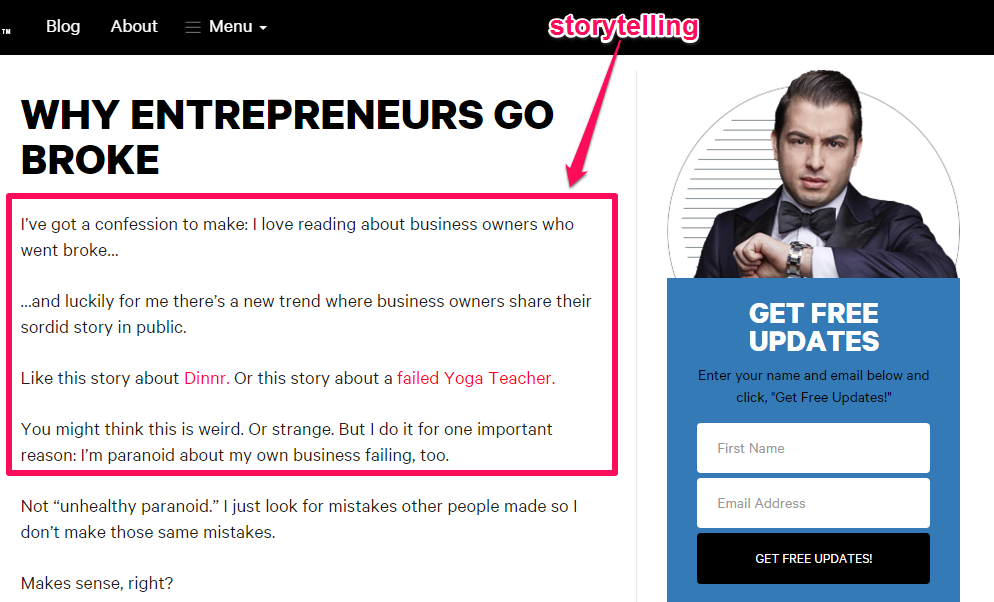
Infusing your personality in the form of a story can work a little magic when building a great blog. A memorable story attracts people like ants to honey.
Whether the story is about you, your environment, or someone else doesn’t matter. Stories evoke emotions, and trigger discussions and thoughts that can have a lasting impact over time.
A story helps customers make the right decisions. Data from DemandGen Report found that 67% of B2B customers rely more on content to research and make purchasing decisions than they did the previous year.
Humans have always loved stories. As early as the Stone Age, folklore was how we humans shared knowledge. Storytelling is about making an impact. Stories help us remember.
And you don’t have to bare your soul or tell all your life stories, either. You can and should be selective and strategic.
We’re living in the age of information overload. You need to catch the user’s attention, or something else will. Here are some eye-opening statistics from HubSpot:
- Every 60 seconds, 700,000 Google searches are conducted.
- More than 5.3 trillion ads are shown online each year.
- The average consumer processes 100,500 digital words per day.
One way to engage with customers is to show results. To a large extent, storytelling helps people visualize what you’re talking about. In this age of information overload, abide by the mantra, “Show, don’t tell” when creating great blog posts.
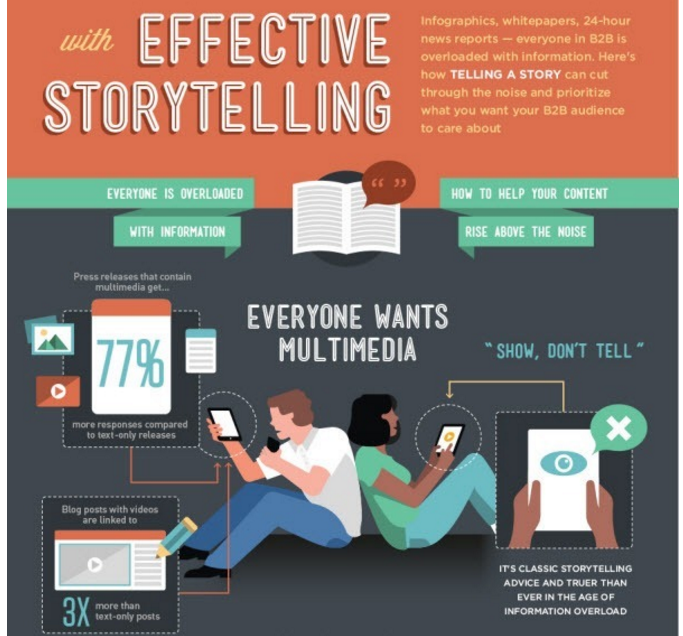
Storytelling simplifies the topic. It breaks it down into simpler forms, causing the reason to put the instruction to work. In Pixar’s Andrew Stanton’s TED talk, he said, “don’t give them 4, give them 2 + 2.”

Most great blogs that are successful have made storytelling a culture. They use it more often than beginners who still struggle.
Whether you accept it or not, you can only go far when it comes to SEO purpose, email marketing, social media marketing, and so on – at some point you will need to start a blog and bring your A game. When you start to infuse personality via storytelling into your content, you’re making room for content amplification.
In other words, people will naturally share good blog posts on their media accounts because it has captured their attention in a profound way.
Kevin Lee of the Buffer App blog is another guy who understands the power of a story:

It gets even better when you combine visuals with storytelling. You quickly drive your message deeper into the user’s mind.
Visa, one of the most widely used credit cards in the world, identified an emotional distance between its customers and their loyalty. Aware of the customer’s short attention span, Visa created a short video, consisting of only six words:

The campaign ran across all of the company’s social channels. In the process, Visa inspired influencers to upload their own GoInSix stories.
Interestingly, Visa saw a dramatic reversal in customer brand loyalty trends. Its Facebook engagement score ranking increased from 7th to 1st in “finance” and climbed to second in all lifestyle brands.
And more specifically, the campaign delivered 284 million earned impressions, 5X more than a previous Visa campaign, which had 18X more media spend.
In the same way storytelling works in ads, commercials, and visual content, it can work in blog posts – especially when you use it to craft your hook in the introduction.
4. Get Readers Nodding by Stating the Obvious
More people are embracing content marketing. A joint study by Content Marketing Institute and MarketingProfs found that 88% of B2B marketers in the UK use content marketing in their businesses.
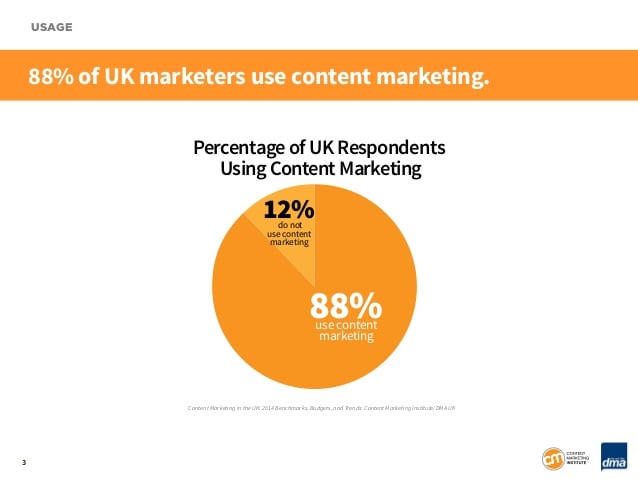
That’s good news. Right?
But the real concern should be how well the target audiences receive all that content. Because if they don’t welcome it and read it, it’s a wasted investment.
Often when picking blog post ideas, bloggers approach and write about topics they’re not too familiar with or knowledgeable about. This can be risky, especially if you don’t adequately research such a topic before offering your opinion.
It can even harm your online reputation, which is your most precious asset as a blogger and should be protected at all costs.
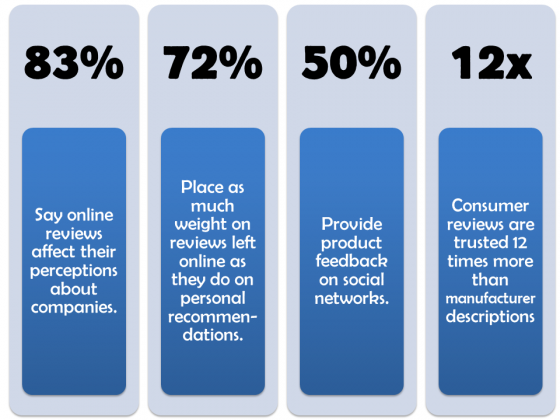
The best advice I can give you is to write a post or create blog content about topics you know well and in which you have first-hand experience. Those are the blog topics you can most authoritatively write about in your content and persuade readers to share with their friends.
When people do share your post, you might think that they’re helping you amplify your content reach – but that’s not all they’re really sharing.
They’re actually sharing the good experiences that you’ve delivered to them in the past.
They might not explicitly understand why they’re so passionate about mobilizing others to read your blog entry, because the “push” is internal, not external.
One way to give them a better experience is to get them to agree with you right off the bat.
When you start your blog post, immediately after crafting a powerful title, you can get readers nodding by stating the obvious.
Jon Morrow, one of the smartest bloggers I’ve ever seen, often takes this approach by stating something obvious in his blog post introductions.
This post has generated over 200 comments. And beyond the powerful introduction, the content is useful and interesting and makes for a great blog post. You’ll find yourself agreeing with Jon’s statements throughout the post. It’s obvious he knows his subject.
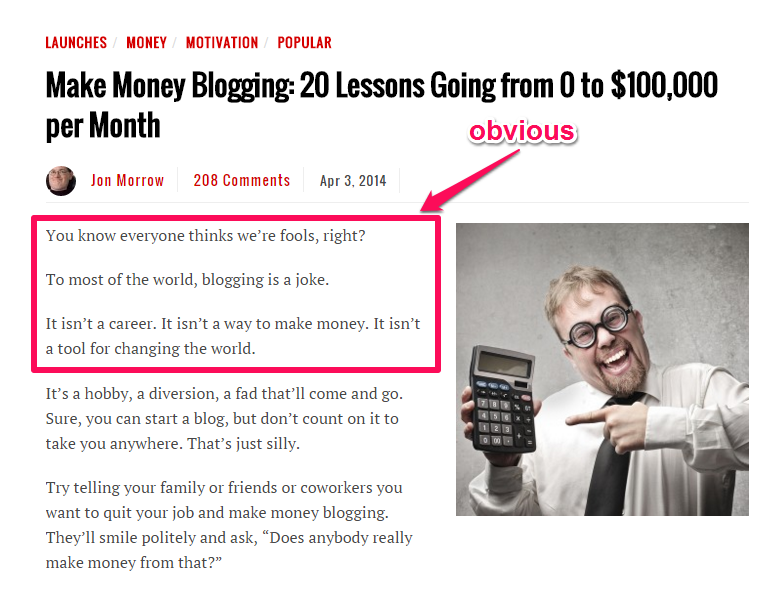
Tell them what they already know and you’ll instantly establish rapport with your readers. They’ll instantly feel that you truly understand what they’re going through.
Nobody wants to listen to amateurs. As bloggers and consumers, we get excited when experts offer us their help. Do you know why most people buy Seth Godin’s books?

It’s because people trust Seth.
Another way to establish that kind of trust is to let them “peek behind the curtain,” so to speak. For instance, over the years Pat Flynn, founder of Smart Passive Income, has shared his monthly income report.
So even brand new readers can tell pretty quickly that he’s all about sharing the “inside scoop” – how much he’s made the previous month, his expenses, the lessons he learned, mistakes he made, and his upcoming projects.
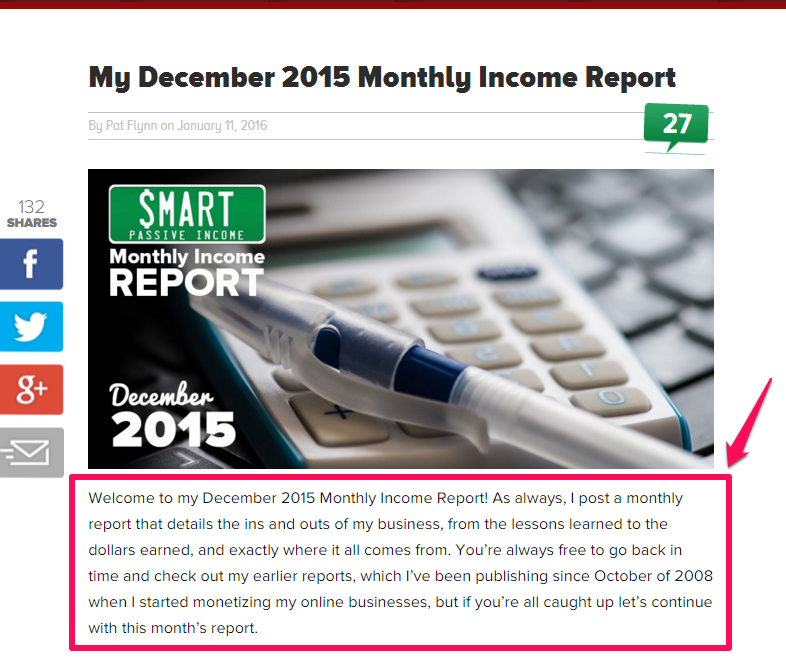
If you find there’s a missing link between your content and what the reader truly wants to see, try opening your next blog post by “stating the obvious.”
Contrary to what many people believe, stating the obvious doesn’t mean that you’re weak or lack creativity. It simply helps your audience perceive you better. When you can do this via a great blog, you can win friends and influence people.
Many people think they’re not creative (including many of your readers, probably). According to Adobe, only about 25% of us truly believe we’re living up to our creative potential. So by adding something new to your blog post, you’re helping them to perceive you as a creative person.
For example, if you want to write a blog topic on something that most people are familiar with, such as “Twitter marketing,” you could start your blog post introduction by stating the obvious like this:
Twitter is a powerful social marketing tool. Most marketers use it, and I know you do too. You also know that Twitter can help you build your online business, in terms of lead generation. But I want to take it a step further, and show you a 3-step formula that can triple your Twitter marketing results in just 90 days.
Did you notice how obvious this introduction is? I simply stated what the readers already know, but I made it actionable and full of benefit. How?
- I promised to share a 3-step formula.
- I gave a time frame of 90 days.
These two persuasive elements have redefined the obvious blog post introduction. If readers don’t read the post eventually, then you know it’s got nothing to do with the introduction!
Listen up: Successful content creation and a good blog post boils down to creating powerful imagery of what the customer or reader wants to see.
You can also take an old topic and breathe life into it with your creativity. Your blog post may not be successful (because success is relative), but it can be valuable. That’s what you should aim for when crafting your blog post ideas.

It doesn’t matter what you’re writing – a title, introductions, copy, product benefits, reviews, email copy, or whatever: as long as you truly understand what your audience is going through and answer their questions without being boring or coming across like one of those marketers, your content will be shared.
5. Use an Analogy, Metaphor, or Simile.
If you want to add new life to your blog post introductions, the right analogy can make all the difference. Analogies shift perspective and blast away boredom which is one of the hallmarks of a good blog post.
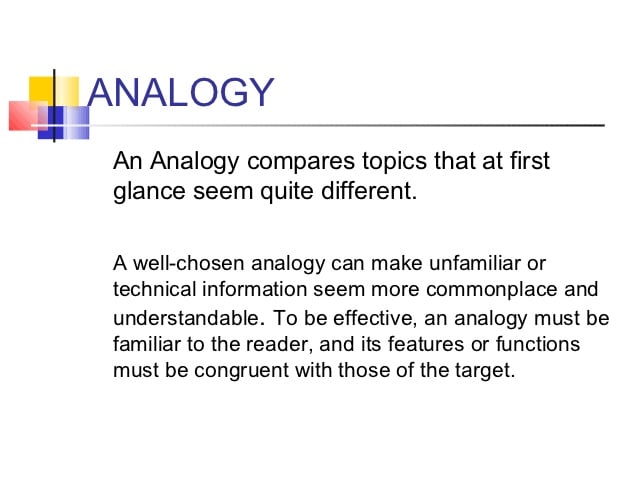
Sometimes, you might want to explain something complicated with the help of an analogy.
Both metaphor and simile are types of speech, either written or oral, that make reference to one particular thing in order to explain another thing.

Simile is not always an indirect comparison. It uses words such as “as” and “like.” For example:
- The writer drinks like a fish.
- That guy is as handsome as a model.
Metaphor, on the other hand, is usually a direct comparison between two things. For example:
- Nature’s green is gold. (i.e., “youth is better than old age”)
- The spy is a ghost. (i.e., “you’ll never find him”)
Out of these 3 important writing techniques, the analogy is probably the most commonly used in blog post titles, introductions, and body of the content.
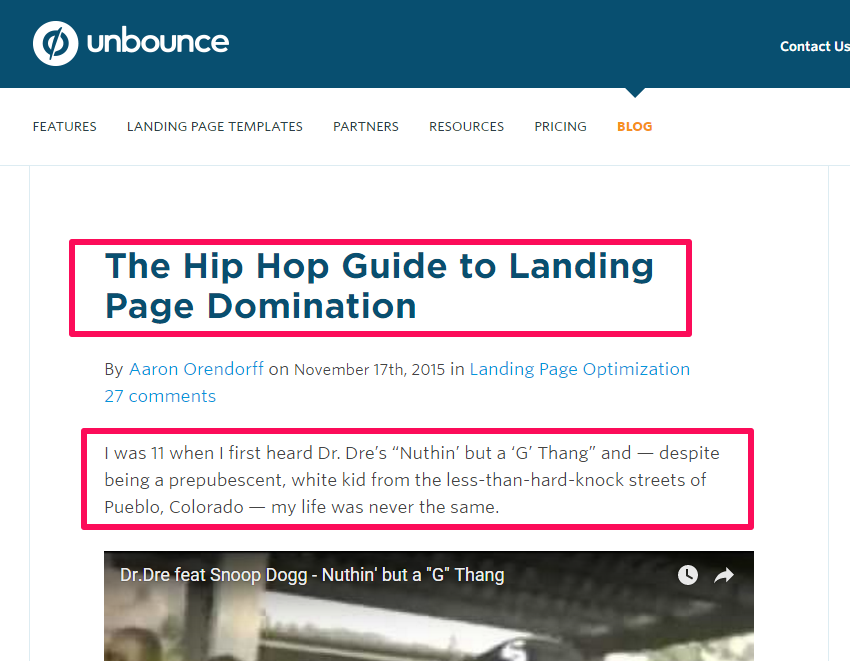
Aaron Orendorff used analogy to introduce his blog post at Unbounce. He first crafted the title with it, and throughout the rest of this great blog post he explained landing pages by making references to hip hop. Take a closer look:
I use analogy every now and then to introduce my blog posts. When I published the post, “How Spending $162,301.42 on Clothes Made Me $692,500,” one thought consumed me – “how are my readers going to reach to this?”
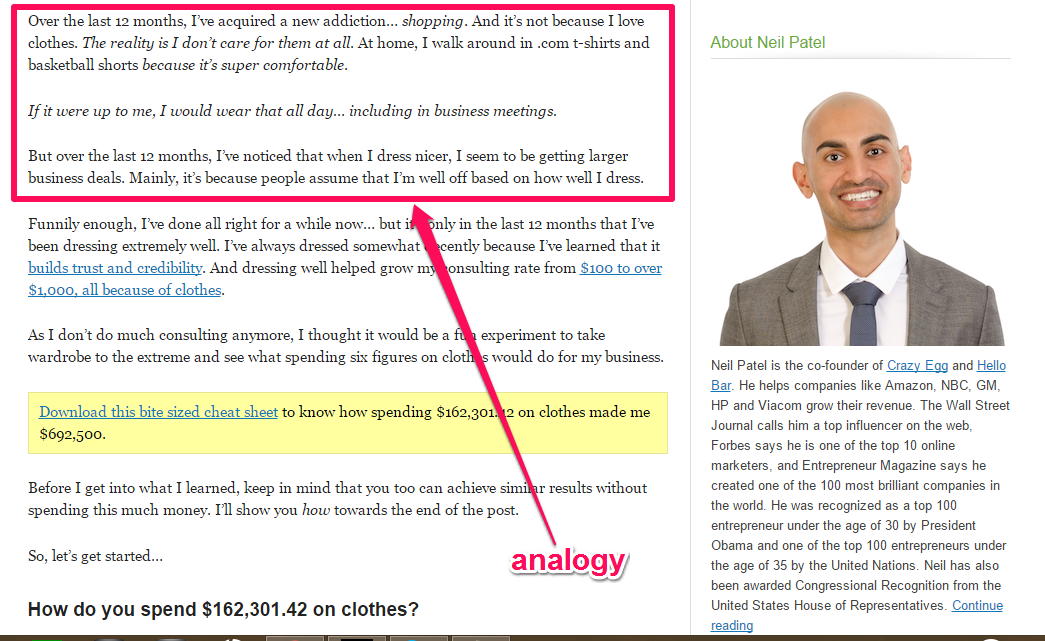
An analogy connects a topic or an object that may not be relevant to your topic to your audience. It’s a way to bridge the gap between your topic and your audience and is worth considering when creating blog post ideas.
Like in the example above, what’s the relationship between spending over $162,000 on clothing and content marketing? On the surface, there’s no correlation.
But take a look at a few thoughts I shared that helped my readers derive value from the post:

Use analogy when writing your blog post introductions. You’ll make more impact. It’s the “underused writing trick that makes you more powerful, popular and persuasive” – Glen Long, Managing Editor of Boost Blog Traffic.
6. Cite a Shocking Statistic.
Readers love statistics.
Creating data-driven blog posts can help you stand you out from the crowd and persuade potential clients to work with you.
The article I wrote titled “38 Content Marketing Statistics Every Marketer Needs to Know” was one of my more successful posts, at least so far. It generated over 300 social shares and more than 40 comments.

Think about what B2B and B2C marketers are searching for in Google and blogs. Do you think they’re merely looking for articles to read or videos to watch?
No. I don’t think so.
What they’re truly after is results. Sure, articles, videos, and other types of content can entertain, but the ultimate goal is to get results from reading any piece of content.
Statistics are the best way to prove results.
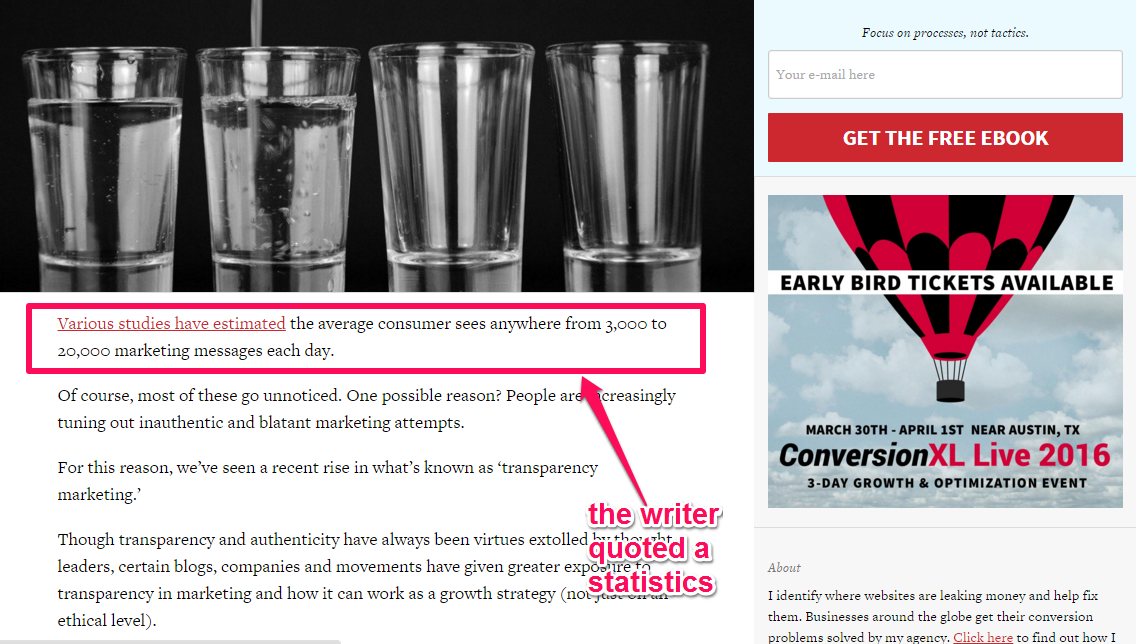
Peep Laja does this well. In his latest post, he quoted a shocking statistic right in the introduction, in order to hook readers and draw them inside this blog entry.
Let’s bring it closer to home: When you read a blog entry or books, isn’t it because you want your life, business, family, or career to improve in some way?
In a nutshell, what you’re looking for isn’t really the well-written words of the post or the production values of the video (although both are important), but the results, benefits, and purpose that come with the content.
On several occasions, I’ve quoted shocking statistics in my title and introduction.
“Statistics” aren’t just the data from experiments you conducted yourself, by the way. It’s totally fine if you use other people’s statistics and data, as long as you give proper credit.
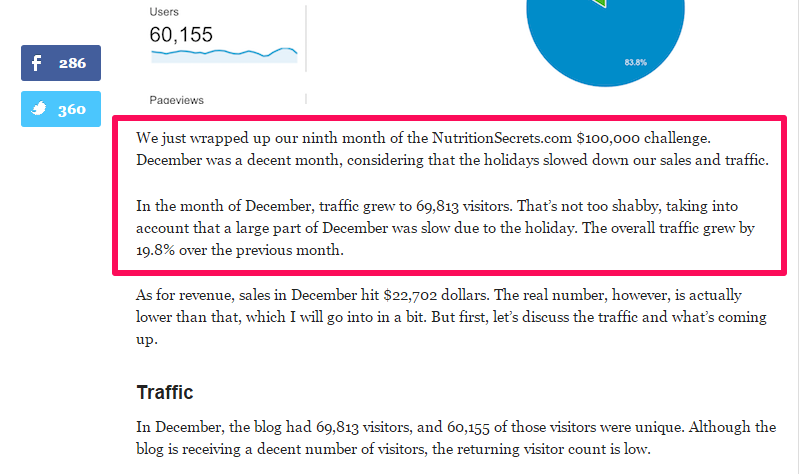
In my last $100,000 challenge for December, I started the introduction by highlighting how much traffic our blog generated in December. It was an experiment because every step taken so far has been documented.
You can put this to work immediately. Instead of starting your blog post introduction with boring words, phrases or sentences, why not cite statistics and give credit accordingly?
For example, if you want to write about “How to Create an Effective Content Marketing Campaign,” you could begin a good blog post like this:
Are you ready to get results from content marketing?
One recent study found that 42% of B2B marketers feel somewhat effective at content marketing. The question is, what specific goal do you want to achieve with your content campaign?
Take a minute to write down one core goal. Because this post will give you a wake-up call and the right tools to help you achieve that goal.
7. Open With a Thought-Provoking Question.
The right questions will always trigger the search for the most appropriate answer. Anytime you ask people a question in your introduction, human nature will compel them to keep reading for the answer.
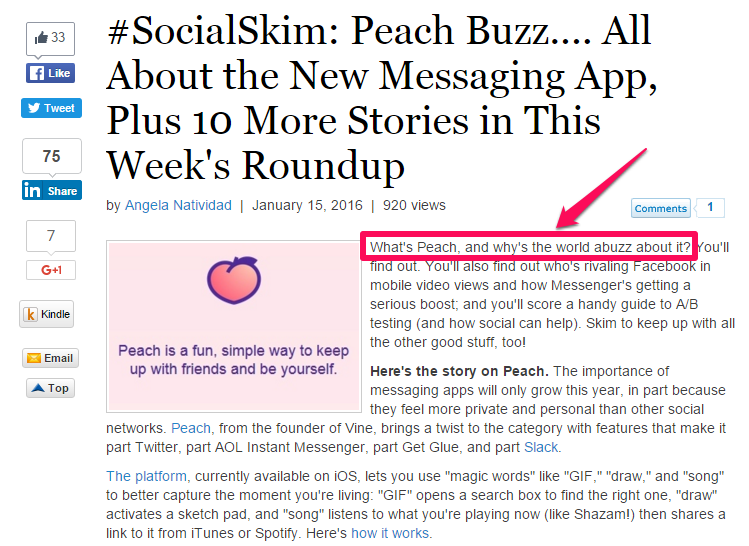
That’s because they want to see whether their answer matches yours.
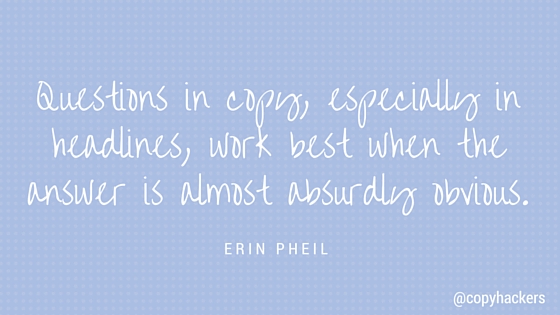
However, it’s better to ask questions with answers that are absurdly obvious. That way, people won’t be confused or put off by your question or answer. Studies have found that asking a question in a particular way can prompt biased responses and change the respondent’s behavior.
In my experience, I’ve found that each time I begin a blog post introduction with a question, the number of comments I get within 24 hours is usually high, compared to when I use other introduction techniques.
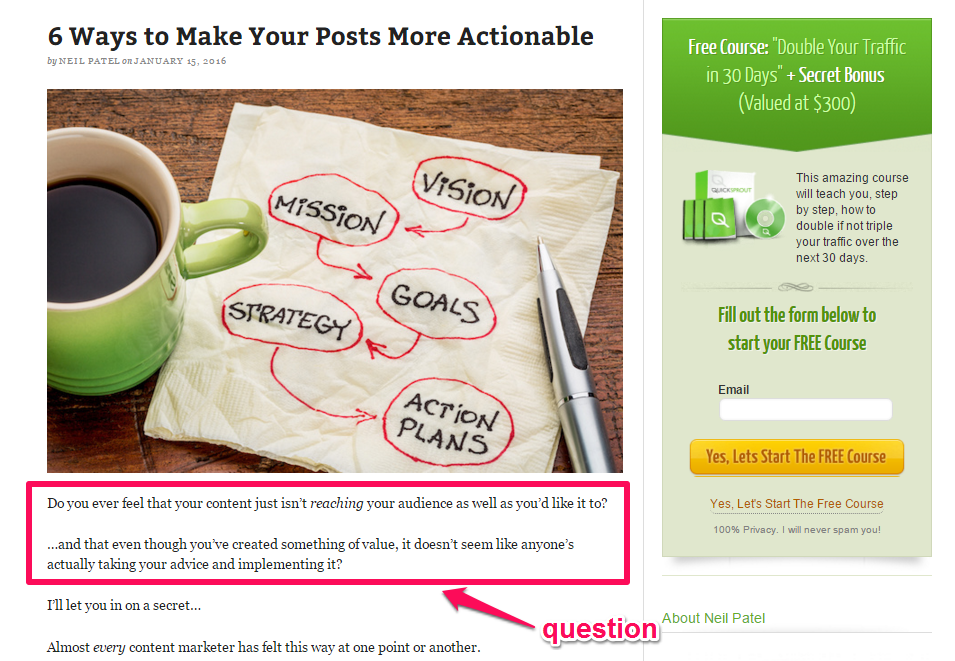
No matter what the topic is, you can use questions to make introductions for your great blog posts catchy, relevant, and shareable.
Conclusion
There are nearly as many bloggers who don’t quite understand how to create the right type of content as there are blogs that don’t generate at least 100 readers per day.
Of course, some of these great blogs have the potential to get noticed if only the blogger could craft powerful titles and blog post introductions for the content.
Yes, promotion is the ultimate ingredient for growing a blog, but if the blog posts aren’t aligned to the right audience or don’t offer value, no amount of promotion can save a blog . It’ll still fail. For a great blog you need great blog posts, and great blog posts come from understanding what your readers want.
Professor Jonah Ledger of the Wharton School of the University of Pennsylvania and his colleague conducted a study about virality, and then wrote a book about that study titled Contagious: Why Things Catch On. They found that viral content was most likely to meet the following criteria:
- Practical, useful and helpful
- Evoke emotions (e.g., awe, laugher)
- Made up of a positive idea (positive ideas are shared more than negative ones)
It’s vital to spend adequate time researching, writing, and revising your content. Don’t just rush your blog post introductions – you could lose them at this delicate point.
The more irresistible your introductions are, the more engagement via these good blog posts you’ll create with readers and customers.
Did I miss out on anything? Which other strategies do you use when writing your blog post introductions that have produced results for you?