 Sign In











Traditional marketing is getting a facelift.
Not the scary kind, where you can’t move your eyebrows anymore — but the kind where you look well-rested and ten years younger, and no one can put their finger on the reason why.
Smart organizations recognize the need to change how they spend their time and money to increase brand exposure and cement their footprint in the market.
Every strategy and every dollar spent should point toward one goal: growth.
Digital consumption of information by consumers is on the rise. With that comes a prolific increase in competition for organizations of all ages and sizes.
Consumers are drowning in choices.
So how do companies like Slack knock it out of the park in today’s competitive SaaS market?
We’ve all witnessed their Cinderella stories and wished we were in on their secret.

The truth is, it’s not a secret.
It’s a combination of hard work and knowing where and how to meet your audience.
Here are 12 growth hacking techniques you can start doing right now to see immediate results and leave the competition in your rear view.
1. Blog like your brand depends on it (because it does)
Customers can’t love you if they can’t find you.
If you haven’t already started a blog, fire one up and start writing today.
Blogging is one of the least expensive, simplest ways to get in front of an audience and connect with influencers.
Today’s consumer goes straight to the Internet for information at the outset of the buying process before they ever consider talking to a human.
Meet them there.
Just do everyone a favor, please: don’t launch a great blog with a few weeks’ worth of mindblowing content and then neglect to write another word.

Once you hook your readers, they’ll want to hear from you on a regular basis.
The more content they read about your brand, the more likely they are to trust you, choose you and recommend you to their friends.
If you disappear, so will your readers.
2. Conduct experiments
Now that you’ve got a blogging strategy and your website is up and running, it’s time to take a close look at how consumers are responding (or not responding) to you.
So dust off that Bunsen burner, growth hacker — it’s time to experiment. You’ll be glad you did.
Whether it’s A/B testing your homepage content or seeing which email subject lines resonate with readers, experimentation can uncover quick fixes that lead to big results.
Here’s a real-world example: InsightSquared recently evaluated their long forms and the data they asked for from readers.
After removing one measly field (phone number), they saw an uptake in conversions of 112%.
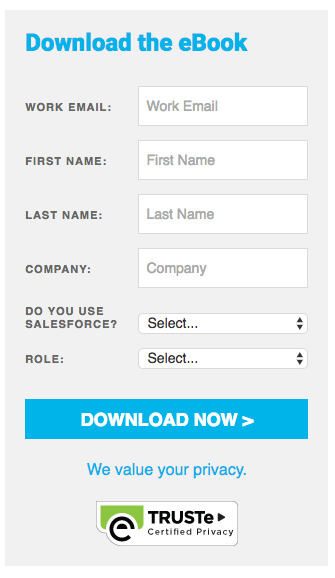 Simple tweak. Huge impact.
Need some help getting started with your first experiment? Check out HubSpot’s marketing growth experimentation template for some ideas.

3. Be a shameless self-promoter
Vince Lombardi said “Confidence is contagious. So is lack of confidence.”
Ask for guest posting opportunities and backlinks. And be gracious with linking back and cross promotion to other like-minded experts in return.

It’s intimidating to pitch your content to the people and brands you look up to, but remember that you are the foremost expert on your products and services.
No one knows what you do like you do.
Your confidence will not go unnoticed by influencers, and your pervasiveness will catch the attention of prospects.
Be everywhere.
It’s free publicity for your brand with the added “halo effect” that comes from being in the same club with established influencers.
Check out online communities and forums that relate to your business and start actively posting helpful information in them. No gratuitous selling, though. You’re just there to be helpful.
Trust comes first. Pitches come later.
And remember, once you’ve made it big in the world of “digital somebodies,” don’t neglect to pay it forward with others who are just getting their start. Throw them some backlinks and guest posting opportunities.
Relationships are one of the most valuable currencies in growth hacking.
4. Find the low-hanging fruit
Periodically, it’s wise to take a step back from your marketing strategy to check out the big picture.
What areas are falling a little flat?
Where could you improve engagement?
Buffer recently ran a test to see which variant of a blog headline would create the most interest.
By adding one data point to their original headline, they increased click-through rates by over 40%.
 But as you uncover tactics that aren’t performing the way you’d like, don’t panic. No need to torch them and start from scratch.
With some incremental adjustments and a little A/B testing, you can turn those naughty little underperformers into shining stars.
The key is to dig deep into the nooks and crannies of your data and use it to take action.
Start by taking a look at your lead funnel.
- Are you making it easy enough for prospects to give you their information at the top of your funnel?
- What do you do with those leads once they’re in the funnel? Make sure you aren’t letting them slip through the cracks. They may not all be juicy leads, but don’t rule them out for future nurture campaigns.
- Lastly, do you know where exactly it is that leads fall out of your funnel? When do prospects stop engaging with you?
Search for the holes in your process and start plugging them with fresh tactics.
Now stop, test your results and watch for a lift in growth.
Funnel hacking isn’t an exact science, but the basic equation tends to follow an “identify, adjust, repeat” model.
While funnel hacking and A/B testing alone may not supercharge growth immediately, they will shine a light on your weak spots to make your strategy better over time.
5. Create an email stockpile
Email marketing is the growth hacker’s secret weapon, and still one of the fastest-growing marketing channels.
Over 91% of consumers check their email at least once a day, and over two-thirds of those consumers will purchase as a direct result of an email they receive.
Email marketing actually has an average ROI of almost $44 for each $1 spent.
Crazy, right?
From a revenue generation perspective, email is the monster truck of purchasing vehicles. And best of all, it’s relatively simple and inexpensive to use.
Here’s the key: your email marketing strategy is only as good as your email list.
Don’t know where to start?
First, are you asking for email addresses?
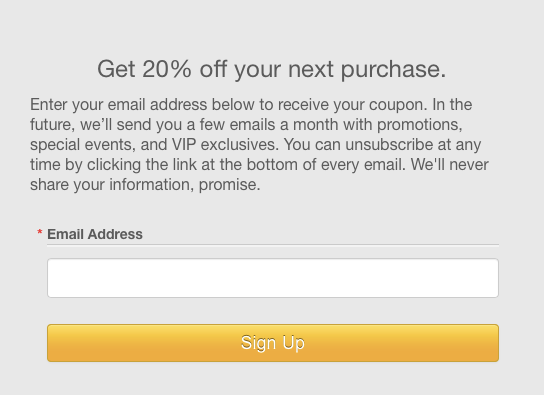 Start asking. No one is going to offer that information.
Consumers are flooded with emails they didn’t ask for and won’t read.
They hang on to their contact information like a Kardashian clinging to youth. Your job is to coax them into giving it to you.
If you don’t have a clear, visible opt-in form on your website and blog, add one today.
For extra “notice me” power, add a polite pop-up or exit intent form with an offer they can’t refuse (like a free piece of content or a discount).
This is also an easy way to test conversion points.
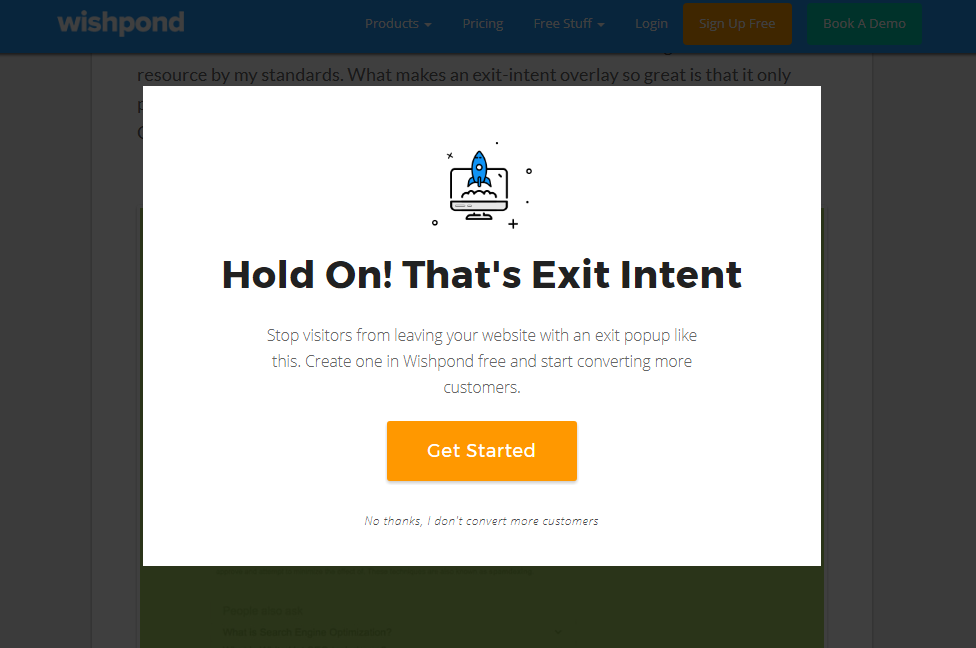
Are you getting sign-ups on certain web pages and not others?
Losing readers as soon as they hit your homepage?
Dig around in the data to find out where you’re weak, and then entice your audience to give you a chance.
Play around with different types of content.
Do your readers prefer infographics? Do they like a little more text?
Have you tried embedding video? According to Hootsuite, over 72% of businesses who use video say that it has increased their website conversion rates.
Again, don’t be afraid to experiment a little to find your secret sauce.
Another email hoarding goldmine is social media.
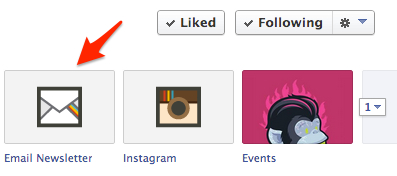 Make it easy for readers to sign up to your subscriber list with one click. Ask for an email address in every unique place that you interact with your audience.
Once you’ve gotten your ambitious little hands on this beautiful pile of email addresses, use them wisely.
Every email you send should provide value and leave your readers wanting to hear from you again.
6. Poke your audience in the grey matter
Studies have shown that when readers are asked a question, they almost feel obligated to answer. Why is that? (See what we did there?)
The human brain is stimulated by questions and the desire to provide answers to them.

Gamification has always been an effective marketing channel, thanks to a basic human desire to be right and to win.
Use this to your advantage by pulling your audience in with quizzes and polls to spark engagement and camaraderie with your brand.
Make the content entertaining, but make sure you keep the mantra of providing value in mind.
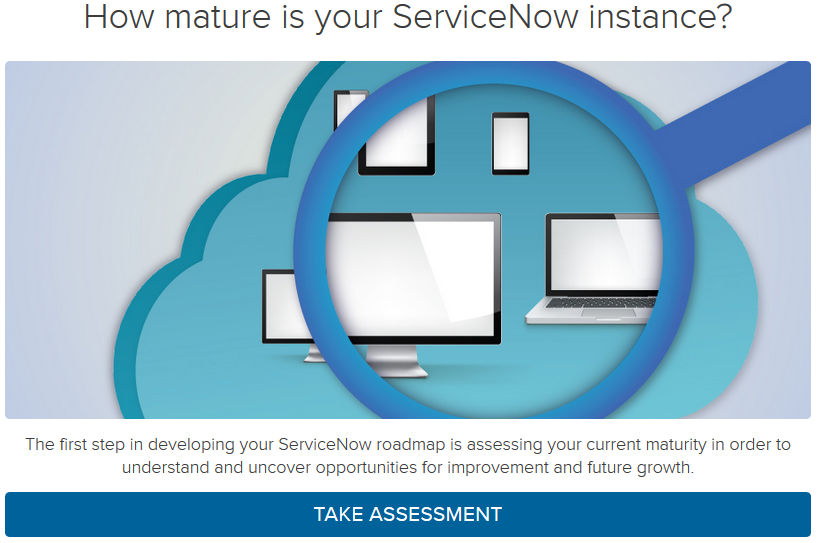
This is your chance to let your particular brand freak flag fly. Show your personality. Be an actual human being with an actual sense of humor. Be memorable.
And once you’ve hooked your audience and gathered their information, make sure your quiz or poll is shareable with others in one click.
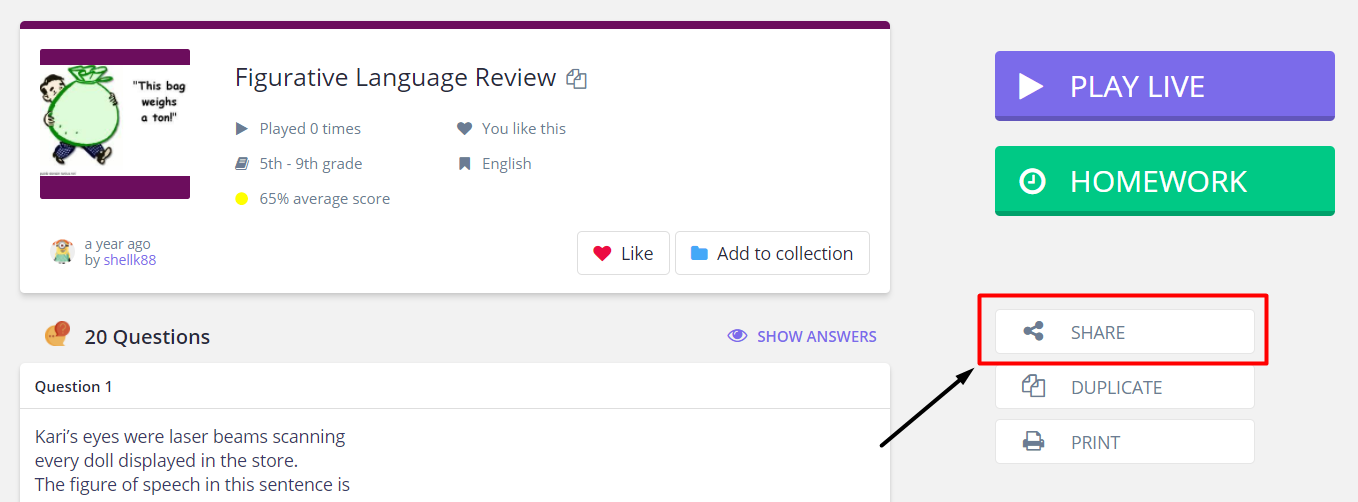
Good quizzes offer immediate gratification to your audience and give them a chance to stroke their own egos a bit.
More exposure for you, fun for your readers, and a simple way to create buzz about your brand.
7. Don’t hate, integrate
Sure, you know your product is the best thing since sliced bread.
But what if you took that awesome-sauce to the next level by partnering with a company that complements yours?
You get access to a new customer base, and your integration partner gets to extend what their solution can do to solve problems and draw in new buyers.
More value for customers, more cross-marketing for your brand and more doors opening to potential new markets.
Bonus points if you can integrate with a social platform.
It not only makes your product way easier for consumers to access and use, but it opens the door for shared content, audience engagement, and faster growth.
Check out this example of sleek social media integration from RevNGo.
They have a strong call to action, clearly stated benefits, and a simple sign-up process:
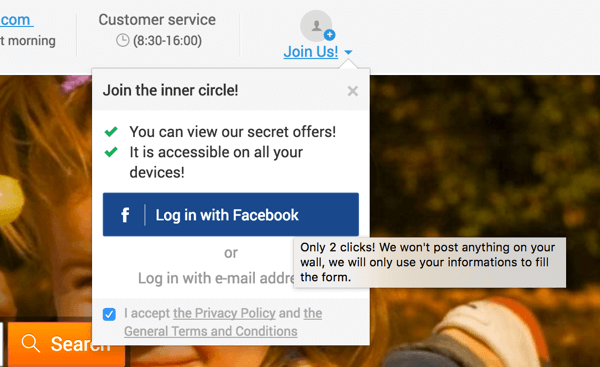
You don’t need a massive marketing budget to leverage social media.
Its accessibility levels the marketing budget playing field. Even the smallest of businesses have the potential to go viral with one well-timed, shareable post.
If you can integrate your email marketing efforts with your social media outreach, you’ll get even more bang for your marketing buck. Double the exposure and content reach.
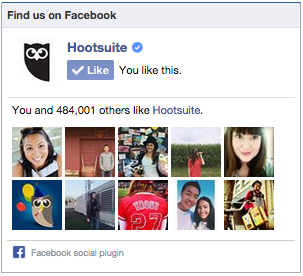
And don’t forget to flaunt your social proof with inline social widgets that prove your social media popularity and point users to the friends who already love your brand.
8. Be contagious (in the best way)
What’s the predominant feature of a loop? It never ends.
Viral loops work much the same way.
One user recommends or “loops” in another; they loop in a few more people and before you know it, your user base has exploded into exponential growth.
To get the ball rolling (or the loop…looping?), you might offer users an incentive to get friends or co-workers to join.
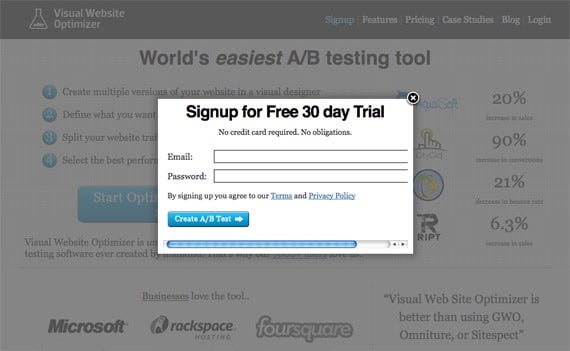
For SaaS companies, a great place to start is pitching the value of your solution to decision makers within organizations.
Offer a free trial to get a few teams using your solution, and then ask to be the solution of choice for the entire business.
On average, six out of ten free trials convert to paid subscriptions.
IT leaders and administrators are sick and tired of disparate, rogue business tools that are hard to keep track of and don’t connect their employees.
Your job is to become the one, “official” solution and create that viral loop of growth as new employees and business units come on board.
For social or individual consumer solutions, add a layer of gamification where users “win” by inviting new users and earn online badges or free services.
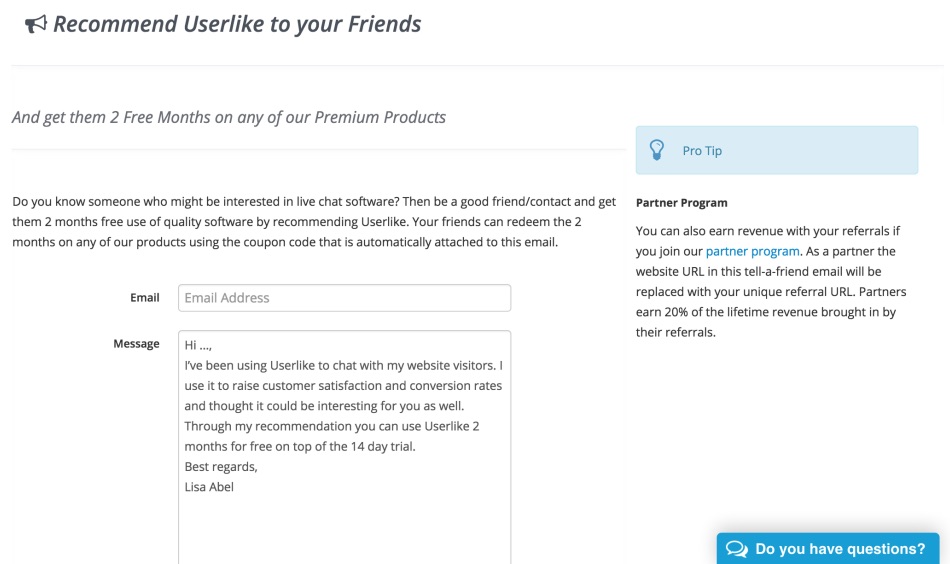
Take it even further by appealing to social consciences.
Offer to donate to charity or some other good deed in exchange for users sharing your solution with others who sign up.
It creates goodwill with your audience, and it literally makes the world a better place.
Full disclosure: viral loops are hard to pull off.
That doesn’t mean you shouldn’t try, though. Especially if you’re a SaaS company with an easy sign-up process and the right incentives and referrals in place.
It may take a bit of testing to see what your audience responds to, but once you get the momentum going, the sky is the limit.
9. Show your customers a good time
It might sound basic, but each bad consumer experience is a nail in your business growth coffin.
Don’t let a sloppy foundation topple your growth hacking strategy.
-
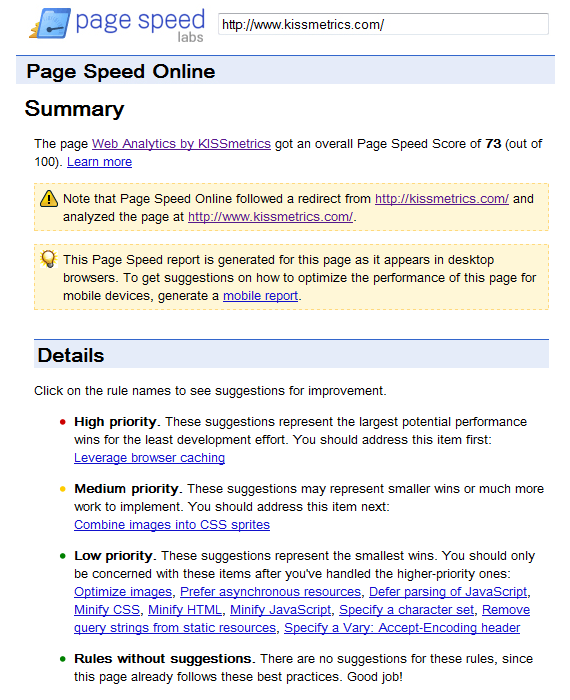
- First thing’s first: how is your site speed? Does it take forever to load pages and graphics? If so, fix it. Fix it now. You have a very short window to catch the attention of your readers. Don’t squander it with slow site speeds. Run some quick analytics to gauge your current site performance.
- Secondly, how’s that homepage looking? If you have enough text to bore Tolstoy, it’s time to trim it back. Simply state who you are, and how you’re going to solve your customer’s problems. You don’t have to cram an entire site’s worth of content on your homepage.
- Lastly, make sure you remember your current customers with the user experience. Make it easy for them to navigate to the content they need, and keep the shiny new prospect marketing hooks separate from it.If you advertise a developer forum for customers, point them to it. Offer an open API library? Make it easy for your customers to access.
Walk each step of your prospect and customer experience as if you’re seeing the information for the first time, and take a long, hard look at the impression you’re making.
After you make some honest adjustments, ask an objective third party (or a helpful customer) to walk through the experience and offer candid insight.
Target a few users and ask them for interviews using a tool like Survey Monkey’s Website Feedback template.
And thicken up that skin. You can take it. You’re a growth hacker.
10. Recycle everything
You’re socially and environmentally responsible. You are aware of your carbon footprint. You reduce, reuse and recycle.
Hats off to you, green friend, but there is another type of recycling that leads to quick growth: content recycling.
69% of marketers say they don’t have enough time to create enough great content.
Time to repurpose.
What has the most engagement? What consistently gets shared and quoted and adored by the masses?
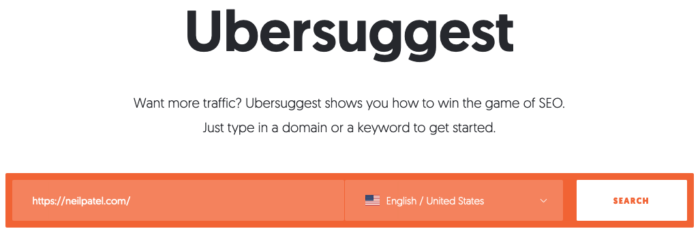
Use Ubersuggest to find your top-performing content.
Step #1: Enter Your URL and Click “Search:
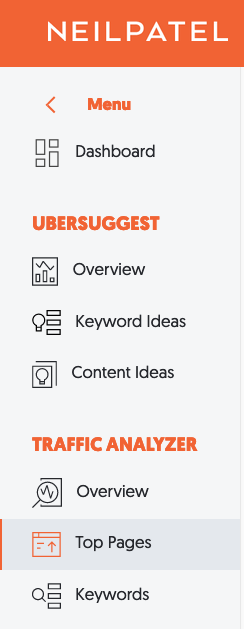
Step #2: Click “Top Pages” in the Left Sidebar
Step #3: Analyze the Results
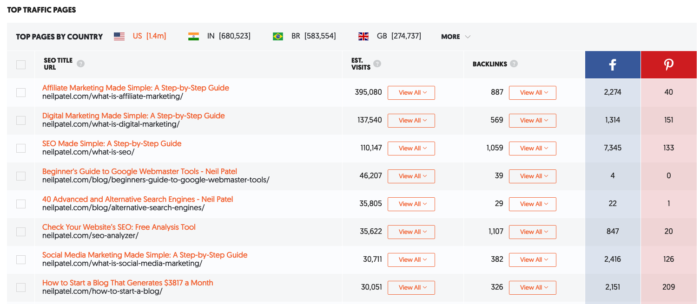
This is where you’ll find the content you want to recycle. You already know that your audience loves these blog posts, so it only makes sense to take a similar approach with future content.
Along with the list of top pages, the results also display:
- The estimated number of monthly visitors to the page
- The number of backlinks to the page
- The number of social shares on Facebook and Pinterest
Take for example the top result, Affiliate Marketing Made Simple: A Step-by-Step Guide.
With 887 backlinks and more than 2,300 social shares, it’s one of my most popular posts measured by traffic, backlinks, and social shares.
Great content can be molded in many different ways to appeal to many types of consumers.
Don’t limit your great ideas to one marketing bucket. See how many times you can flavor the same great idea to keep it fresh and working hard for your brand.
11. Create community, not tyranny
One of the most overlooked growth hacking techniques is the simple value of letting your customers promote your brand for you.
Social communities are an easy way to help your users engage with your brand and each other.
The trick to fostering a successful community is to stay engaged without being intrusive.
You’ll need to initiate conversations (especially at the outset) and respond quickly to questions, but try to stay out of the way and let your community feed itself. Take Buffer, for example. They are huge proponents of community with loyal advocates to show for it.
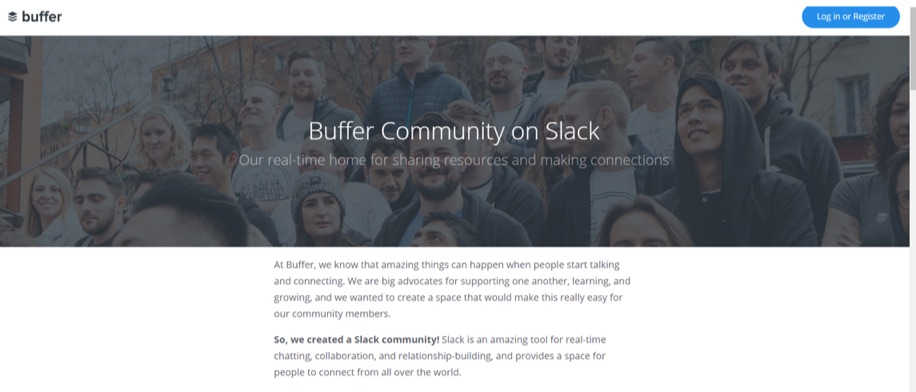
Your job is to offer support, show community members love with periodic discounts or swag and to point new users to your thriving tribe of users.
As tempting as it may be to lead the group in a certain direction, don’t.
When your users are invested in your brand, they will willingly engage with other users. Give them ample reason to remain invested and then back off.
Delighted customers tell your story better than you ever could.
12. Bask in the glow of praise
Organizations can talk all day about the magnificence of their own products and services. But after a point (and very quickly), it’s just noise.
Instead, the savviest growth hackers know the fastest way to a prospect’s heart is a good customer testimonial.
Here’s the catch — while you want happy customers to provide these endorsements, you absolutely cannot incentivize them, bribe them, coerce them or guilt them into saying nice things they don’t mean.
Don’t be that company.
It’s miserably obvious when a customer is being strong-armed into a positive review (not to mention incredibly off-putting).
Instead, find the customers that you’ve done a great job with.
The ones whose implementations and user experiences have been smooth. The ones who are comfortable coming to you when there is a bump in the road because they know you’ll fix it.
And then let them tell their story their way.
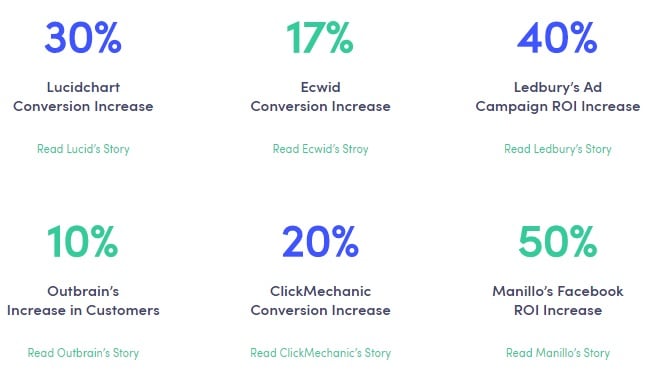
The legitimacy will speak for itself, and the credibility you’ll build with prospects will pay off far more than a cheesy infomercial testimonial ever would.
Conclusion
In the words of the great Bob Dylan, “the times, they are a-changin’.”
Growth hacking isn’t just a fancy buzzword you can ignore while you shake your fist at the heavens and pull your pants up higher.
Competition, especially among SaaS companies, is everywhere, and consumers have more choices than ever before. You can’t afford to write a few whitepapers and sit back on your laurels.
Make everything you do about solving problems, growing your audience and extending your brand.
Great products and services certainly help sell themselves, but you need to set that growth plan in motion.
Recruit customer evangelists. Partner with like-minded companies. Create content with wild abandon. Set yourself apart with world-class customer support.
With so many simple ways to launch growth, there has never been a more exciting time to see what your brand can really do.
What growth hacking techniques have worked for your business?