 Sign In




YouTube Citations in AI Overviews Grew 34% in 6 Months
Info
-
Source: NP Digital
-
Date: March 2026
-
Category: AI & GEO Optimization
-
Study Methodology: Data from Google, SEJ, findings reflect observed change in YouTube citation frequency within Google AI Overview responses comparing current period to six months prior.
Video has always been part of the content mix. Now it is becoming part of the AI citation mix. Google’s large language models have expanded beyond transcription to process audio, video structure, chapter markers, and metadata, and the result is a 34 percent increase in YouTube citations appearing in AI Overviews over just six months. That growth rate signals a structural shift in how AI systems select and surface video content alongside traditional web pages.
Essential Statistics
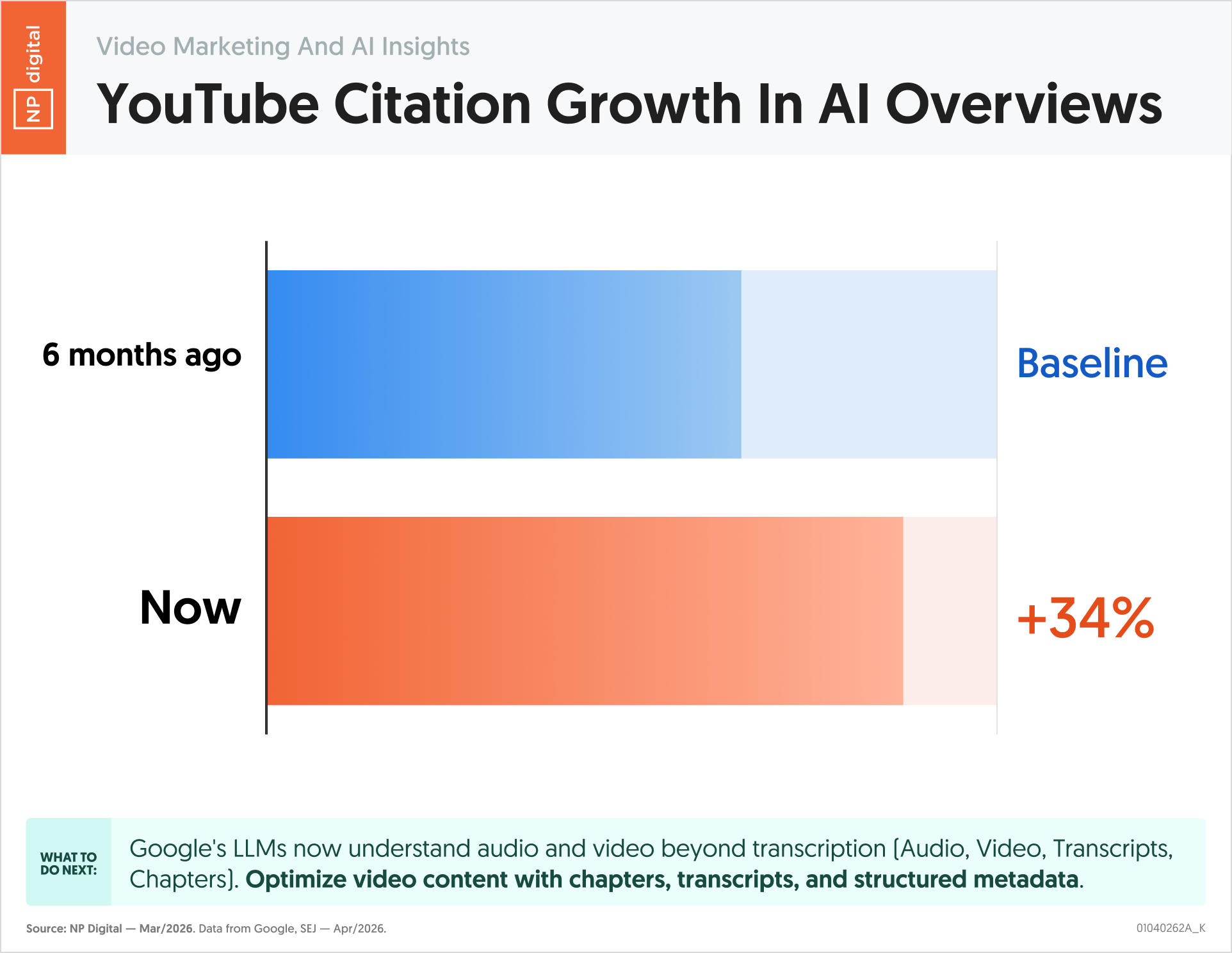
- YouTube citations in Google AI Overviews grew 34 percent compared to the baseline measured six months prior.
- The growth reflects Google’s LLMs processing video content beyond transcription, now incorporating audio signals, chapter structure, and metadata into citation decisions.
- The chart uses a baseline-versus-now comparison format, showing the current citation volume extending significantly beyond the six-month-ago reference point.
- The finding aligns with broader AI citation trends showing non-traditional content formats gaining share in AI-generated responses relative to standard web page citations.
Key Takeaways
- YouTube is no longer just a traffic channel. It is becoming a citation source for AI systems, which means video content now competes directly with written content for AI Overview placement.
- The 34 percent growth in six months suggests this is an accelerating trend, not a one-time measurement artifact. As Google’s models improve at processing video signals, citation rates for well-structured YouTube content are likely to keep rising.
- The specific mention of audio, video, chapters, and transcripts in the “What To Do Next” callout indicates that Google’s citation algorithm rewards videos with structured metadata, not just videos with high view counts or strong SEO rankings.
- Brands that publish video content without chapters, transcripts, or structured metadata are likely underrepresented in AI Overview citations relative to their video production investment.
- The convergence of video and AI citation optimization creates a new category of content work: structuring existing YouTube libraries to improve AI extractability, separate from traditional video SEO optimization.
Actionable Insights
- Add chapters to every existing YouTube video in your library. Chapter markers give Google’s LLMs a structured map of your video content, making it easier to extract and cite specific segments in AI Overviews. This is a retroactive optimization that improves citation eligibility for content you have already produced without requiring new recordings.
- Publish transcripts for all new and existing YouTube content. Transcripts give AI systems a text layer to index alongside video signals. Upload transcripts directly to YouTube or publish them as companion blog posts linked from the video description; both approaches increase the AI-readable surface area of your video content.
- Treat video titles, descriptions, and tags as AI citation metadata, not just YouTube search optimization. The same keywords and structured information that help YouTube’s algorithm surface your video also help Google’s LLMs identify it as a relevant citation candidate for related AI Overview queries.
- Identify which of your existing videos cover topics that currently appear in Google AI Overviews. Search those queries yourself and note whether any video content appears in the AI response. For queries where your written content is cited but your video is not, the chapter and transcript optimizations above are most likely to close that gap.
- Build a video content brief template that includes chapter structure as a required element before production begins. Starting with a defined chapter outline makes the final video more AI-extractable and also improves the production process by giving creators a clearer content structure to record against.
“A 34 percent increase in YouTube citations in AI Overviews in six months tells you the window to get ahead of this is right now, not after it becomes standard practice. Video with chapters, transcripts, and clean metadata will earn AI citations. Video without that structure will not, regardless of view count or watch time.” – Neil Patel