 Sign In









 Ubersuggest
  AnswerThePublic
 Old vs New Marketing Dashboard Metrics
Info
-
Source: NP Digital
-
Date: February 2026
-
Category: Measurement & Strategy
-
Study Methodology: Sample size: 500 marketers; Source: NP Digital; Method: Survey
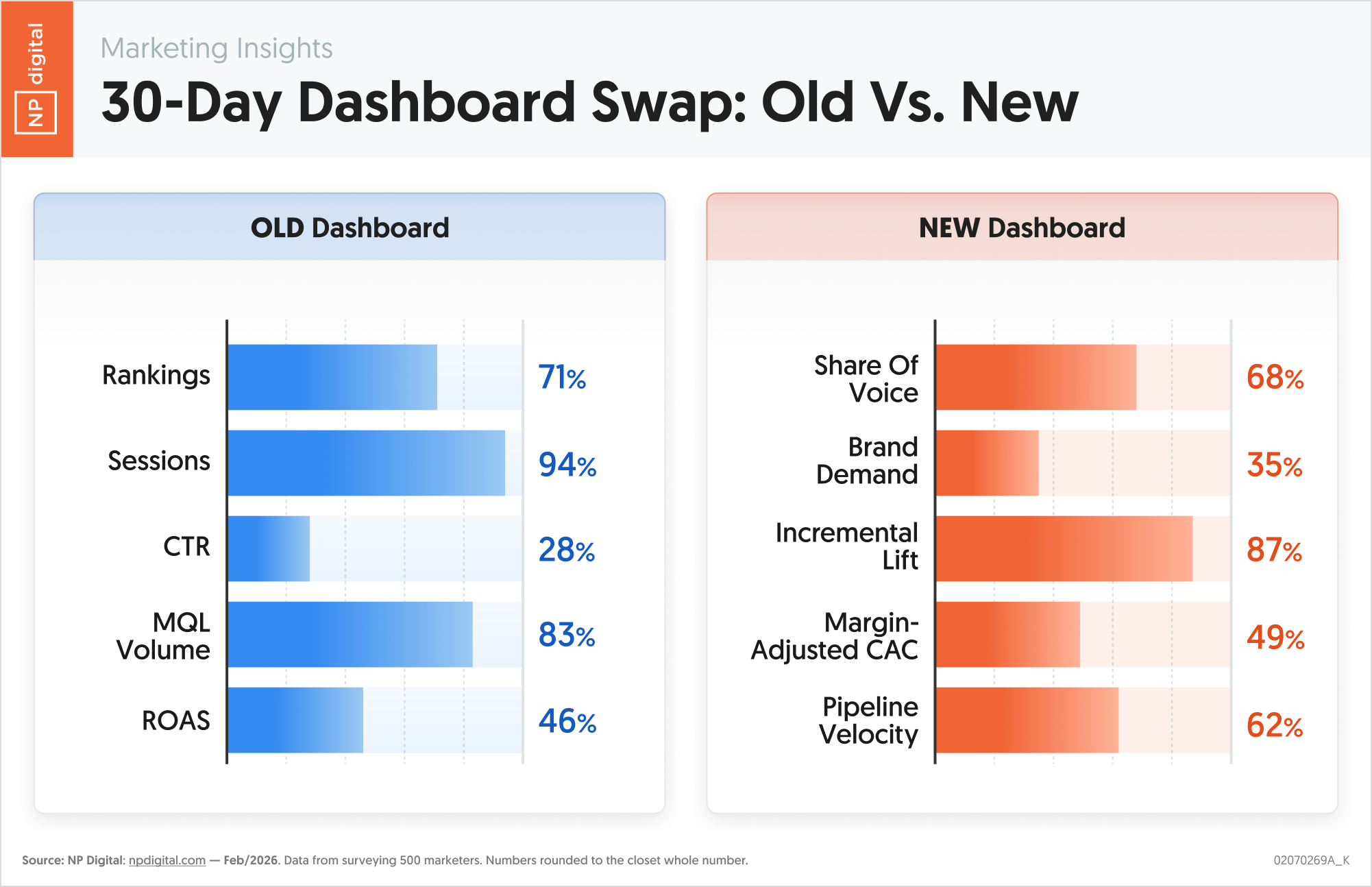
This chart compares traditional dashboards with modern ones. Old dashboards focus on activity metrics like sessions and rankings. New dashboards prioritize outcomes like pipeline and CAC. The shift reflects changing expectations for marketing accountability.
Outcome-based dashboards provide clearer business insights.
Essential Statistics
- 94 percent track sessions in old dashboards.
- 71 percent track rankings in traditional setups.
- 87 percent track incremental lift in new dashboards.
- 68 percent prioritize share of voice.
- 62 percent track pipeline velocity.
- 49 percent measure margin-adjusted CAC.
Key Takeaways
- Marketing measurement is shifting toward outcomes.
- Activity metrics are losing importance in modern dashboards.
- Pipeline and CAC provide better business insights.
- Incremental lift is becoming a core KPI.
- Share of voice still plays a role in visibility tracking.
- Modern dashboards align marketing with revenue goals.
Actionable Insights
- Replace vanity metrics with outcome metrics. Sessions and rankings do not reflect business impact, so prioritize pipeline and revenue-focused KPIs.
- Introduce incremental lift into reporting. This metric shows true marketing impact and improves decision-making.
- Track pipeline velocity to measure efficiency. Faster movement through the funnel indicates stronger marketing performance.
- Incorporate CAC into dashboards. Understanding acquisition cost helps optimize budget allocation.
- Align dashboards with executive priorities. Leadership cares about revenue and growth, not traffic alone.
- Continuously audit dashboard relevance. Remove metrics that do not influence decisions to keep reporting focused.
Your dashboard shapes your decisions. If you track the wrong metrics, you will optimize the wrong things. – Neil Patel