 Sign In







 Ubersuggest
  AnswerThePublic
It’s high time that you truly engage your audience.
Why?
Engaging, high-quality content is the lifeblood of content marketing.
But I’m not suggesting you do so in the traditional way, but by using real-time content that inspires and nudges readers in the right direction.
Whether you’re a content marketer or a business owner who only blogs a couple of times a month, you have a choice to make: you can either learn how to produce a variety of content that supports your customers, or you can hire experienced copywriters to do it for you.
There are thousands of writers available for hire. But, finding a professional writer who truly understands how to grow and nurture an audience is difficult.
According to one study in 2019, a staggering 90% of marketers report that hiring marketing content talent is difficult.
Custom content plays a vital role in the lead nurturing process. Not every type of content will successfully engage your audience.
You need content that brings satisfaction to your customers.
Have you ever read some post by a popular blogger or writer telling you to create “valuable content?” Did you wonder “what does that mean?” After all, what’s “valuable” is entirely relative.
What I consider to be a valuable blog post may sound like crap or regurgitated content to you.
One way that you can stand out in the midst of intense competition is by focusing on creating custom content. No need to worry, because I’ll walk you through the 3-step process.
First, the basics…
What is Custom Content?
Digital marketers have different definitions of “custom content.” However, the most relevant definition that I’ve seen is from Adotas. It gives us a clearer picture of what custom content truly means:
Custom Content — pioneered by folks like Pohly & Pohly over 50 years ago with the airline magazine — was typically the creation of content meant to build an affinity with your existing audience. This content would reinforce the brand, communicate the value of the product and create new opportunities. Custom Content is the creation of ‘branded content’ for a customer. And, for the most part, custom content is created for the client to communicate with their own existing customers.
From this definition, you can see that the focus is usually on the existing customer. (Of course, custom content can also attract new customers when effectively distributed.)
Content Marketing vs. Custom Content
Both content marketing and custom content are customer relationship processes that require unique and well-crafted content. Whichever approach you take, you need to invest either your time or money in content creation. It’s a must if you want your marketing strategy to be successful.
Marketers are increasingly committed to spending more on content creation. Hubspot created a great infographic showing the state of content marketing in 2019.
But, what exactly is the difference between custom content and content marketing? Honestly, I agree with many digital marketers that several of the terms used in our industry are really pointing to the same thing.
That’s true here, too. Many people view content marketing as “the new term” for custom content.
Branded content, custom media, consumer media, brand journalism, customer publishing, and content marketing are some of the inter-related terms that people use when describing what it requires to produce great content for customers.
However, I think it’s a mistake to view custom content through the exact same lens as content marketing. Custom content is often tailored to suit the target audience that you’ve already built.
Content marketing is usually “outward facing.”
In other words, it’s about creating and publishing useful content that will attract new prospects and customers for your business. It’s also geared towards improving search engine rankings.
On the other hand, custom content is focused not on attracting a new audience, but rather on engaging the existing one.
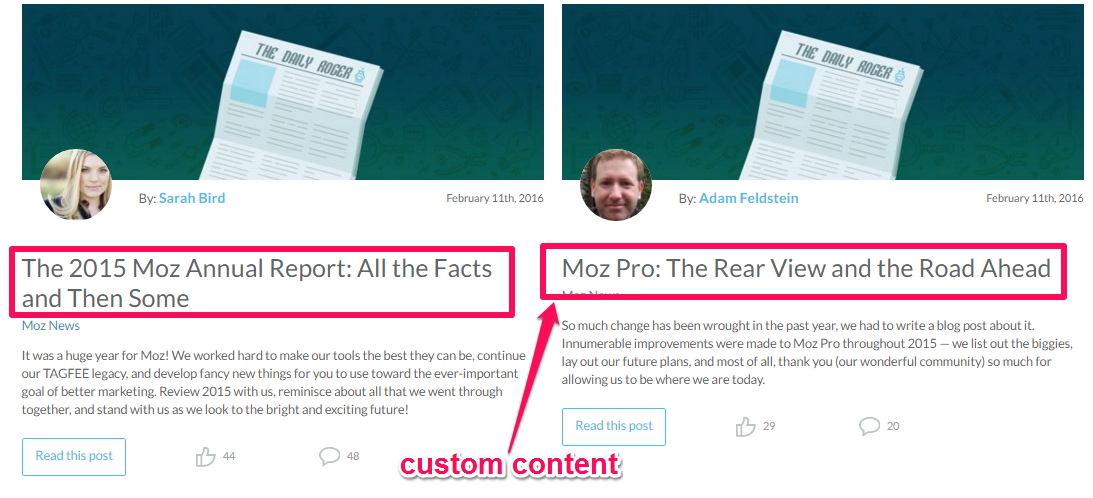
For example, Moz usually creates custom content for their existing site users and premium members. This type of content will be of little benefit to new visitors who first visit the site.
Now that you know the difference between content marketing and custom content, as well as the relationship between the two, you may be wondering why you need to create custom content as part of your content strategy.
Let’s examine the core benefits of adding custom content to your marketing strategy:
i). It bridges the gap: Most customers give up when they search Google for answers related to a particular product they use and find no relevant search results.
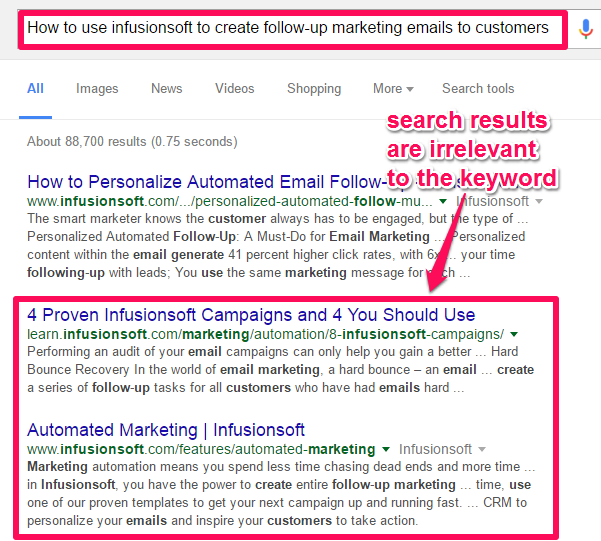
But, when you tailor your custom content to answer popular questions within your niche, you’ve successfully bridged the gap.
That helpful combination of environment and circumstances will encourage your existing customers to stay.
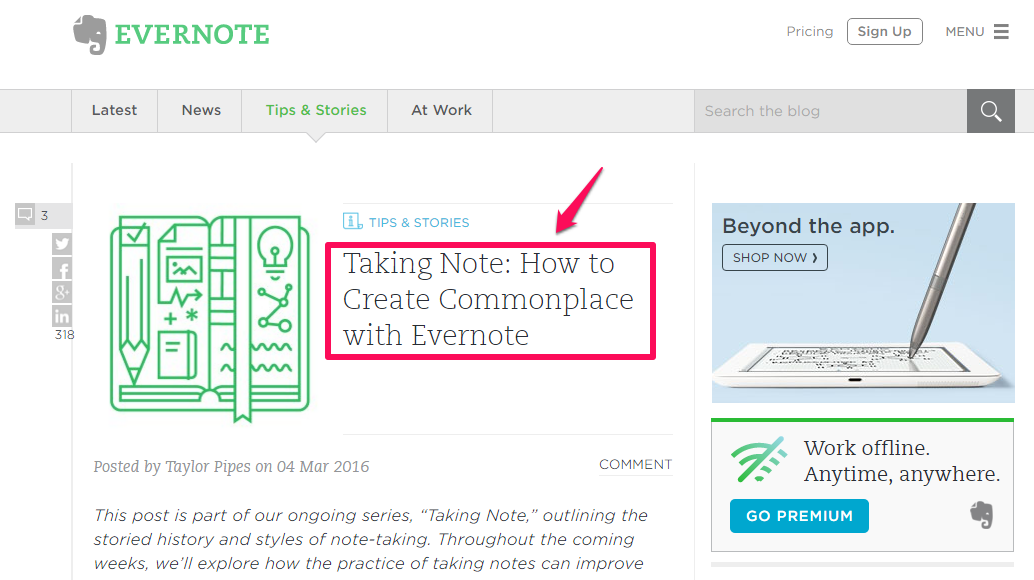
Here’s an example of what I mean: Evernote. This company understands how to bridge the gap and provide helpful answers to its existing users.
They once shared a post, titled “Taking Notes: How To Create Commonplace with Evernote,” to answer its users’ questions.
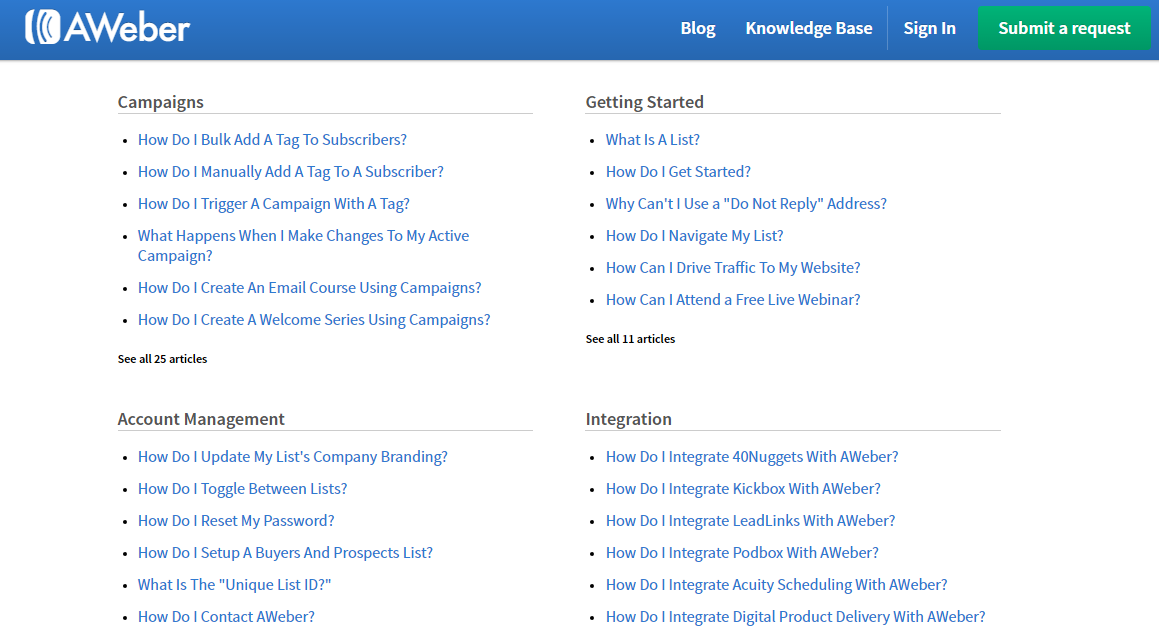
Many brands have a Frequently Asked Questions (FAQs) page on their site that helps existing and interested customers understand how the product works.
Other companies refer to the same type of page as the “knowledge base.” From the label alone, you can tell that customers will find more information about the product than new site visitors.
AWeber’s knowledge base page is in-depth, useful and well-formatted.
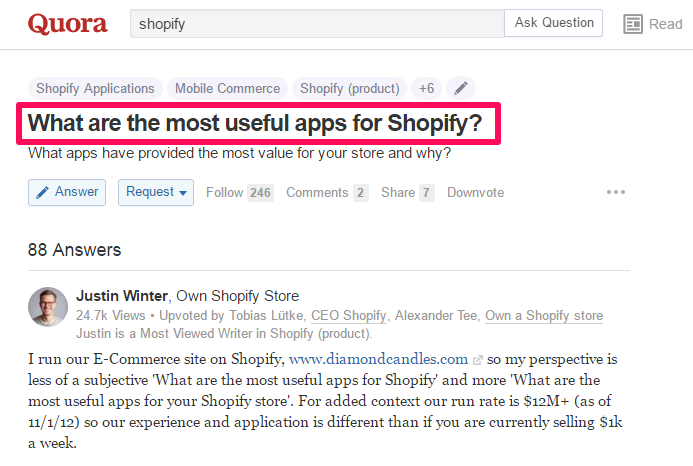
If you already have customers or a loyal audience with questions and you’d like to provide better answers to, you might want to scour Quora for those questions.
When you find one, create a video out of it, or a blog post, an in-depth article such as this one or perhaps an infographic. The opportunities are almost endless.
ii). It provides much-needed help to existing customers: The success of every online business depends on how well you help customers when they need it.
When you create resourceful guides, you position yourself as an authority. And, you set your business apart from the crowd. My advanced guide to SEO has created a deeper connection with my blog readers. How do I know?
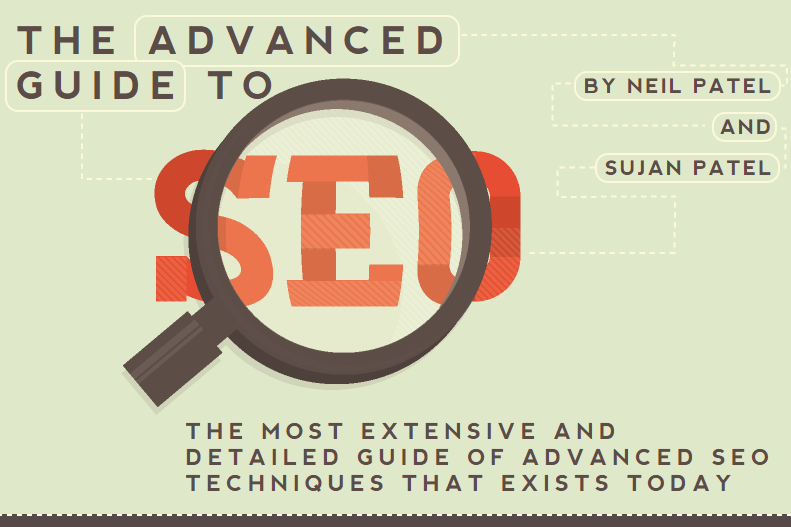
After publishing these advanced guides, my blog engagement increased dramatically. Specifically, comments on Quicksprout went from 50 to 200 per post, in many cases.
Sometimes, all that you need to do to earn the respect of your existing customers is to become a thought leader.
In other words, go beyond creating content. Start giving useful answers that take your prospect from point A to point B. Use this suggestion as a guiding marketing strategy.
iii). It nurtures a loyal audience: Content marketing is your secret weapon for attracting a new audience.
But, it’s not enough to attract them. You’ve also got to nurture and retain them. It’s estimated that a 5% increase in customer retention can increase a company’s profitability. This makes sense when you factor the costs of finding a new customer versus retaining an existing one.
So, how do you retain the customers that you acquired through content marketing?
The answer is obvious: Create useful, great content that’s tailored to them. Answer their questions and provide a killer post-purchase customer service experience. That’s what custom content is all about.
Custom content that shows the user/customer how to achieve better results with the site, software, product or tool that they already use will most assuredly engage them. If they’re engaged, they’ll stick around.
iv). Custom content leads to improved visibility for brands: As I’ve said from the beginning, the goal of using either content marketing or custom content or a combination of both is to attract and satisfy the customer.
Satisfaction will make customers purchase again, refer others to your site, mention you on social media, and use your product to solve their problems, instead of switching to your competitors.
In fact, 81% of satisfied customers are more likely to do business with you again if they have a positive experience.
Your brand is your identity online. In this information age, prospects and customers may not know who’s behind a great product, but the brand will always be known.
As an example, the majority of the people I’ve come across don’t know the founder(s) of the Coca-Cola brand. But, that doesn’t stop them from buying Coke products frequently.
Truly, it’s all about the brand. When you create great content that’s custom-made for your audience, you give them an open invitation to tell others about your brand, whether they do so on social media or good old word of mouth.
If you can successfully improve your personal brand online, you’ll boost your search engine appeal, sales, and revenue.

So, how can you make custom content marketing work for your business?
Follow these three steps:
1. Understand your customer’s persona.
With your existing customers in focus, map out their persona to hone your understanding of your target audience. A persona is not merely a description of your customers but the actual or perceived qualities that they have.
To gain deep knowledge about your audience persona, you need to dig for insights into what your customers think about when doing business with you.
What do they expect to gain by sticking with your brand? Don’t take this information for granted, because it’s the substance (or essence) of their loyalty.
When developing a standard buyer persona that will help you deliver your custom content more effectively, you should include the customer’s background, demographics, goals, challenges, common objections, and biggest fears.
Here’s Frank Founder’s persona. It depicts his traits and characteristics:
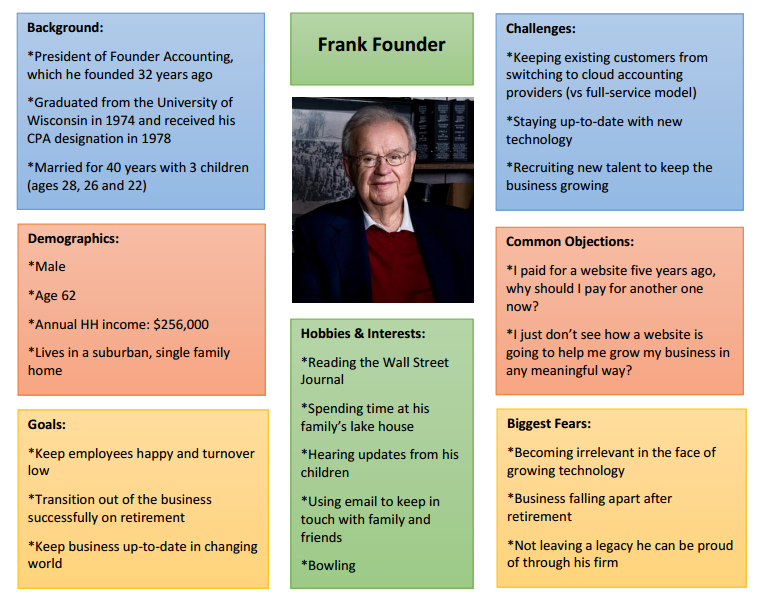
At a glance, you can see that creating suitable content for Frank is much easier now because of the information about him that you’ve identified.
No matter what your niche is, mapping out your customer’s persona should be a vital part of your content strategy.
It’s easy to get your customer’s demographics if they’ve purchased your product or service. It’s even easier when they’re in your discussion group or membership site. Easier still if you’re connected on social media.
Hubspot has a great resource called Make My Persona that facilitates the buyer persona creation process.
2. Research and target customer-centered keywords.
A good content marketer understands the importance of organic search users. You can generate more leads and sales when you optimize for the right keywords. According to NewsCred, “59% of B2B marketers say SEO has the biggest impact on lead generation.”
Before you work on custom content creation for your users or known audience, you need to research and pick the most relevant keywords to attract future users. Generic keywords just won’t get the job done.
Armed with branded keywords, as well as other search terms that will answer a specific question for the user, I can create custom content that benefits the immediate users and ranks highly in Google’s search results.
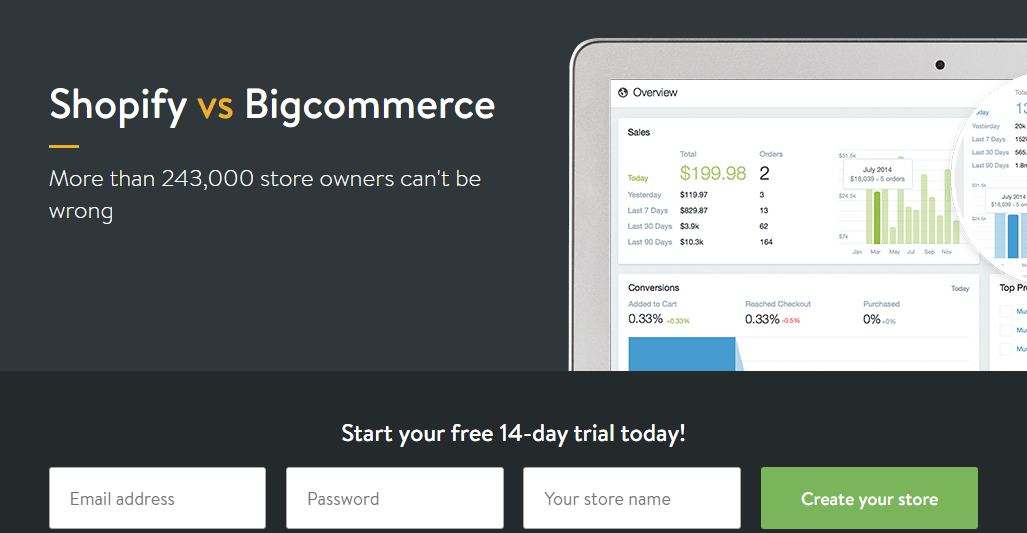
Here’s a piece of relevant, custom content that reveals the pros and cons of Shopify vs. BigCommerce. This post is an answer to the keyword “Shopify vs. bigcommerce.”
3. Produce irresistible content in the most desired format.
If you want custom content to work for your business and engage your customers, then you’ve got to make it irresistible.
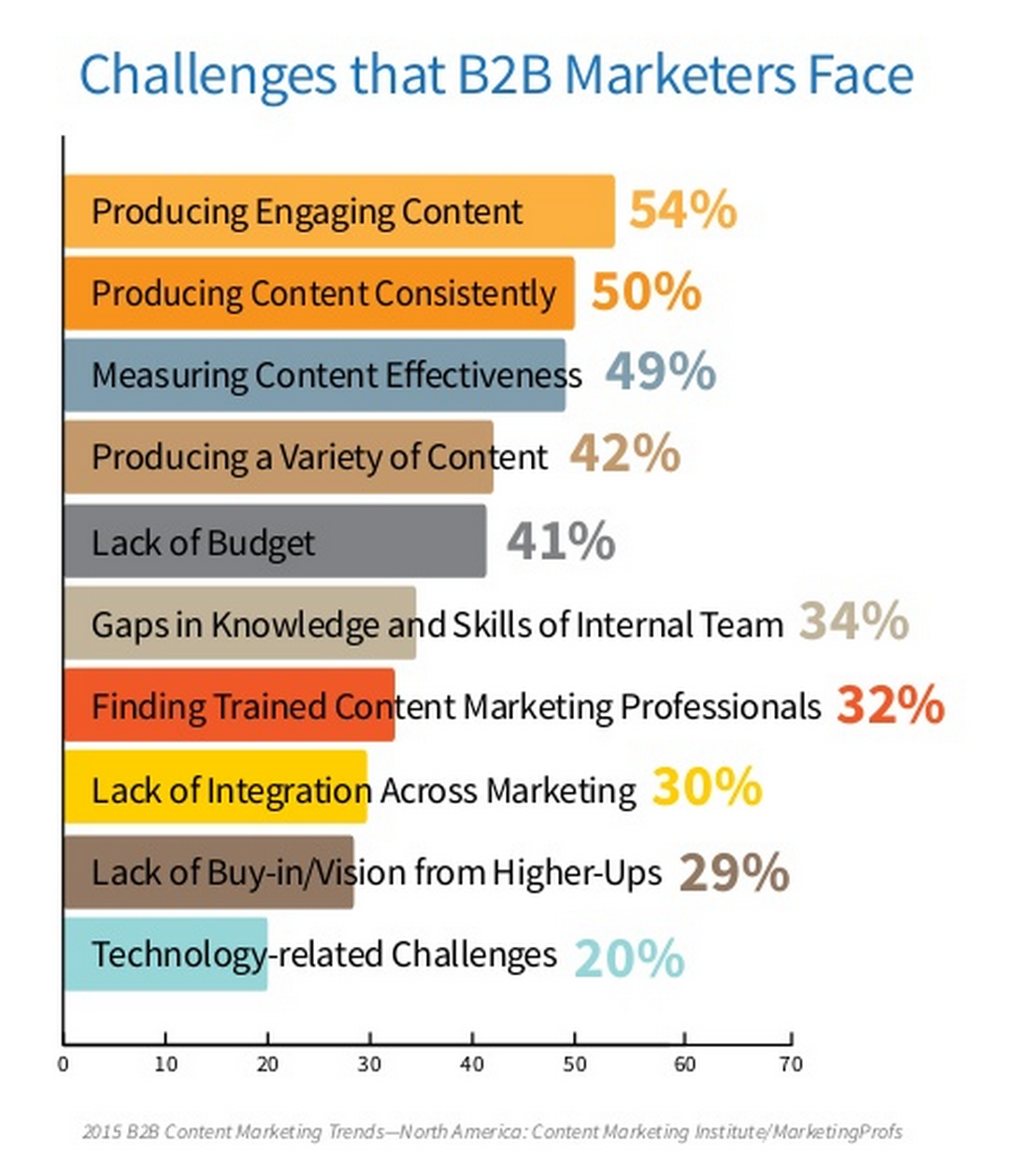
One of the reasons why 54% of B2B marketers struggle to produce engaging content is because they haven’t really taken the time to study their target audience.
The content that goes viral capitalizes on one thing: customer questions. Like I always say:
Your site is by you, but not for you.
So, content creation, in any format, should be inspired by your users and customers.
No matter what type of content they want or need, ensure that you use the AIDA formula to make the content persuasive.
There are customers who prefer videos over written content. Others would go all out to view and share your infographic. When you’re confused as to what content format to produce, ask the question.
You could send a survey questionnaire to your email subscribers. A simple single-question survey with four options will do. Here’s an example:
What content format do you enjoy?
- Blog posts and articles?
- Videos?
- Infographics and images?
- Ebooks?
Always focus on and work primarily with the content format that your audience prefers.
A word of caution: If you prefer written content (e.g., a blog post or an article), but you found that most of your customers want visual content, then you need to adapt and find a way to incorporate more visuals. It’s your responsibility.
Conclusion
Don’t forget the marketing aspect of custom content.
If your existing audience is small, it won’t matter how much time, resources and creativity you put into producing your content if you don’t have a content marketing strategy in place. In short, you won’t get the maximum benefit.
For this reason, you should look for ways to improve your next piece of content by rewarding your existing customers and loyal audience.
When people are rewarded, they’ll gladly refer others to the same blog or platform that inspired them.
You’ll see your audience grow, the moment you start to reward your existing customers.
Hosting a Facebook contest where you give away valuable gifts (such as the first 2 chapters of your new book, a beta version of your software, access to a membership program or your precious time) can help you build momentum for your new content.
On the flip side, become conscious of the thoughts behind custom content marketing. You need to make the content exclusive to your target audience.
If your target audience is large enough – or you simply want to serve your customers, irrespective of the size – then it’s advisable to send custom content via email or share it in your private members-only social media groups.
Whatever works best – provided it makes the customers feel loved, appreciated and respected – will work towards achieving the goals you outlined in your marketing strategy.
Do you have questions regarding custom content marketing and how to use it to nurture and retain a loyal audience for your blog?
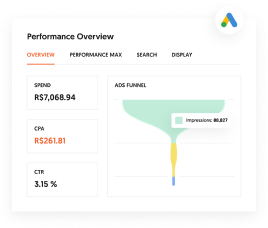
Are You Using Google Ads? Try Our FREE Ads Grader!
Stop wasting money and unlock the hidden potential of your advertising.
- Discover the power of intentional advertising.
- Reach your ideal target audience.
- Maximize ad spend efficiency.