 Sign In








AI Citation Frequency by Content Type: Lists Win at 48%
Info
-
Source: NP Digital
-
Date: May 2026
-
Category: AI & GEO Optimization
-
Study Methodology: Analyzed 1,000 prompts for content type citation frequency. Categorization of cited content by format type across 1,000 AI prompt responses.
Not all content formats are cited equally by AI systems. This analysis of 1,000 prompts identifies which content types AI platforms pull from most frequently, and the results reveal a clear preference for extractable, structured formats over opinion-driven or exploratory content. Understanding this hierarchy is the most direct available input for shaping a content format strategy around AI citation eligibility.
Essential Statistics
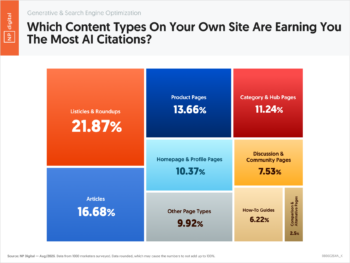
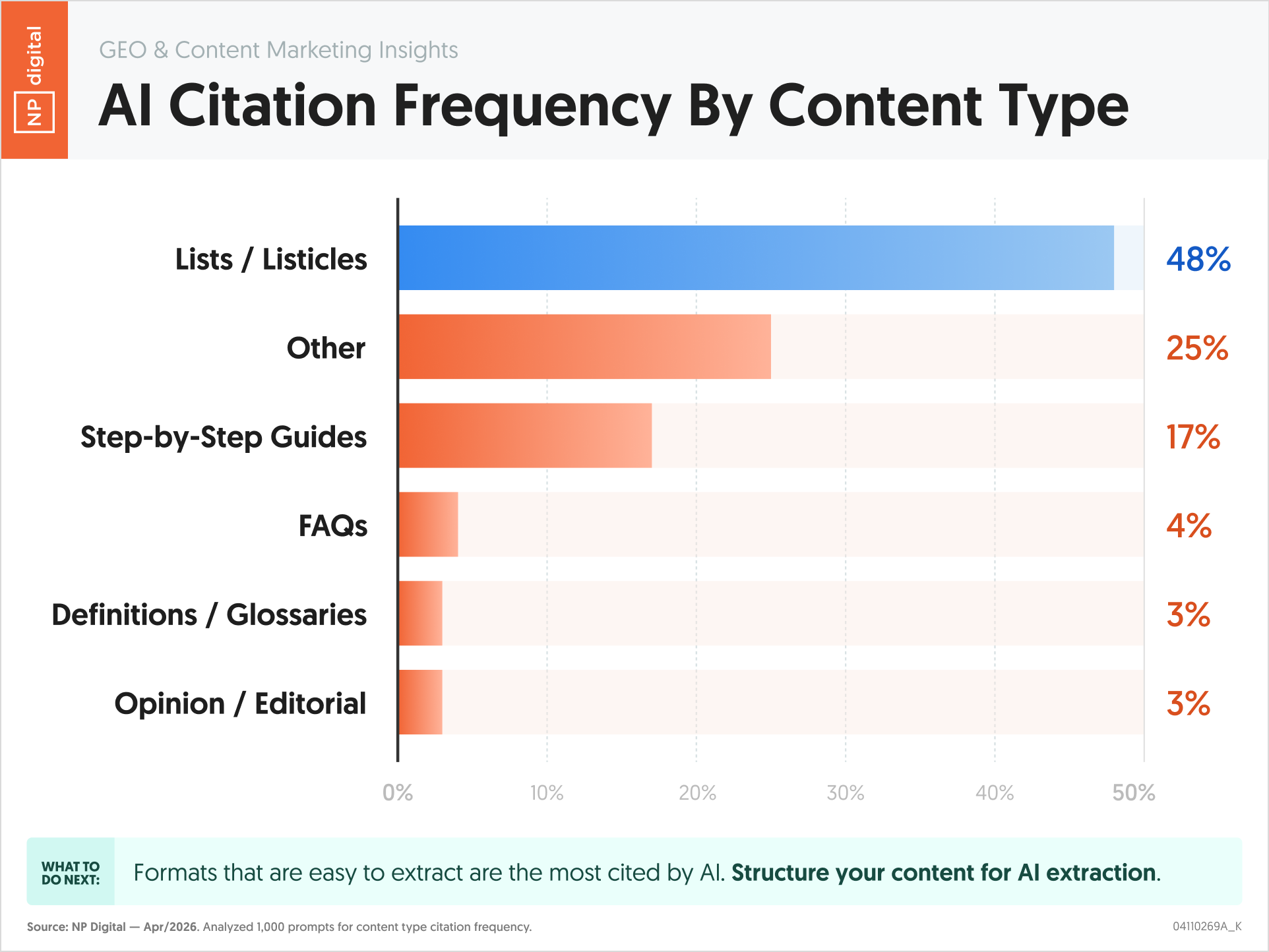
- Lists and listicles account for 48 percent of AI citations across 1,000 prompts analyzed, the dominant content format by a significant margin.
- Other content types account for 25 percent of citations, representing a broad mix of formats not separately categorized.
- Step-by-step guides earn 17 percent of AI citations, the second specifically identified content format after lists.
- FAQs receive 4 percent of AI citations, definitions and glossaries earn 3 percent, and opinion and editorial content earns 3 percent.
- Lists and step-by-step guides together account for 65 percent of identifiable AI citations, confirming that structured, sequential formats dominate citation selection.
Key Takeaways
- Lists and listicles dominate AI citations at 48 percent because AI systems are optimized to extract and present structured information. A list format gives a language model a clean, segmentable structure to pull from and attribute, making it the path of least resistance for citation in AI-generated responses.
- Step-by-step guides at 17 percent earn their citation share through the same structural logic as lists: they are sequential, numbered, and easy to extract as discrete actionable units. The format signals to AI systems that the content answers a procedural query with clear, attributable steps.
- FAQ content at only 4 percent underperforms relative to its intuitive match with question-based AI queries. This may reflect the quality distribution of FAQ pages across the web, where many are thin or not sufficiently detailed to serve as citation-worthy sources even when the format aligns with the query type.
- Opinion and editorial content at 3 percent confirms that AI systems cite factual, structured, and instructional content far more readily than perspective-driven or narrative formats for now.
- The 25 percent other category is large enough to suggest meaningful citation volume exists in formats not captured by the named categories, potentially including data studies, research reports, and case studies that combine structure with original data.
Actionable Insights
- Audit your existing content library and identify which pieces are already in list or step-by-step format, then prioritize those for GEO optimization first. The 48 percent citation rate for lists means your existing list content is the most citation-eligible material you have. Optimizing it for AI extractability through structured headers, numbered formatting, and schema markup improves citation eligibility faster than creating new content.
- Convert high-traffic prose articles in your top topic clusters into hybrid formats that lead with a structured list or step-by-step section before expanding into narrative detail. Many existing blog posts can be restructured with a numbered summary section at the top that gives AI systems an extractable citation target without requiring a full rewrite of the underlying content.
- Build FAQ sections onto your highest-priority landing pages and topic cluster articles even though FAQ citation rates are only 4 percent. The low citation rate for FAQs likely reflects quality issues across the web rather than the format’s inherent citation ineligibility. A well-structured, detailed FAQ on a high-authority page addresses a real structural gap that most competitors have not filled.
- Reduce investment in opinion and editorial content as a primary GEO channel. At 3 percent citation frequency, opinion pieces are unlikely to generate meaningful AI citation returns regardless of quality. Redirect that content production capacity toward list format guides, step-by-step tutorials, and structured comparison pieces that earn citations at 16 times the rate of editorial content.
- Use the 25 percent other category as an argument for testing original data studies and research reports in your content mix. The large unclassified share of AI citations may include data-driven format types that are harder to categorize but represent high-authority citation sources. Publishing original research with structured data tables and numbered findings combines the citation-friendliness of structured formats with the authority signal of original data.
“Lists earn 48 percent of AI citations. Step-by-step guides earn 17 percent. Opinion content earns 3 percent. If your content strategy is built primarily around thought leadership and editorial pieces, you are producing the format that AI systems cite least often and skipping the formats they cite most. That is not a content quality problem. It is a format allocation problem.” – Neil Patel